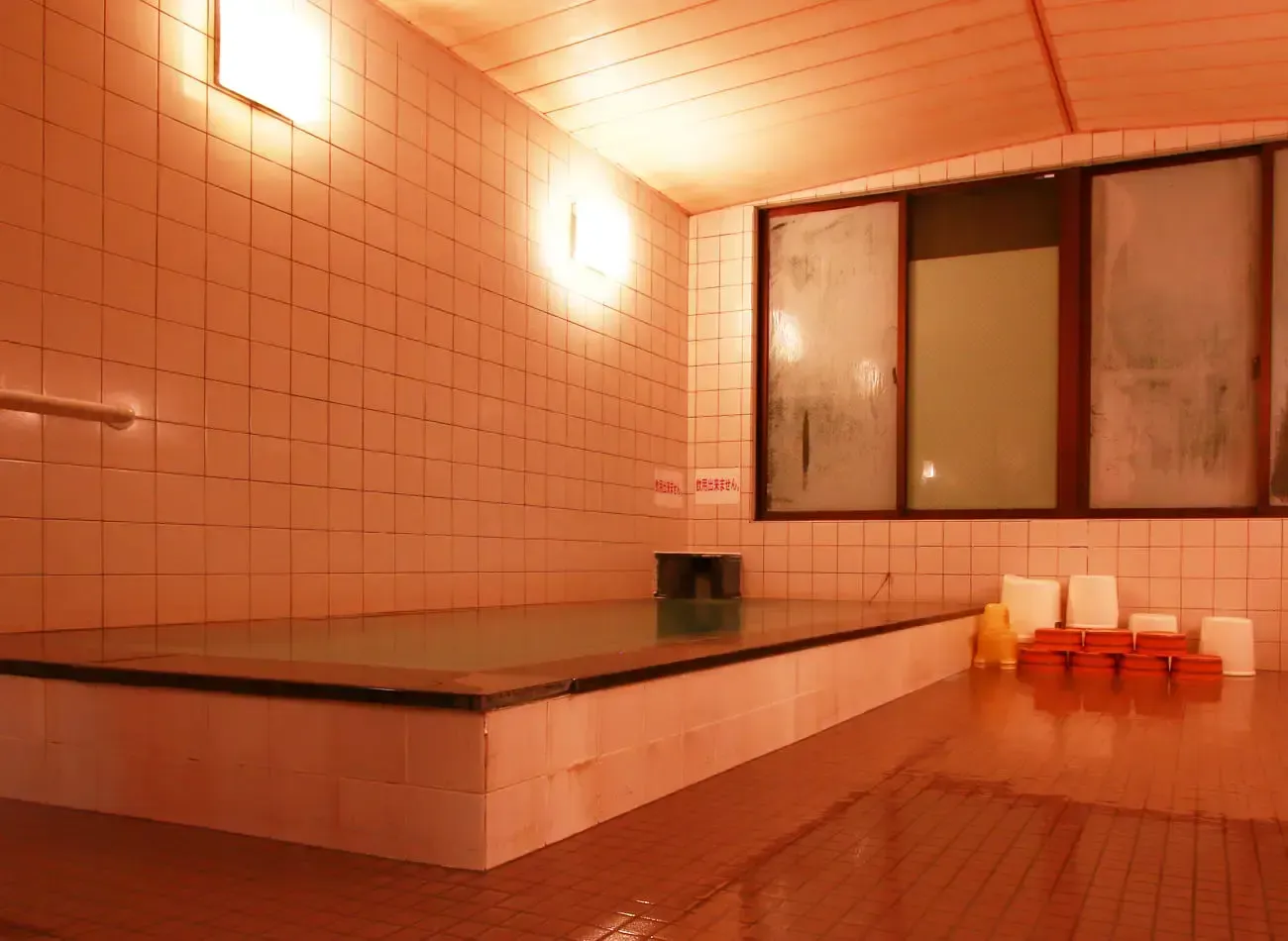
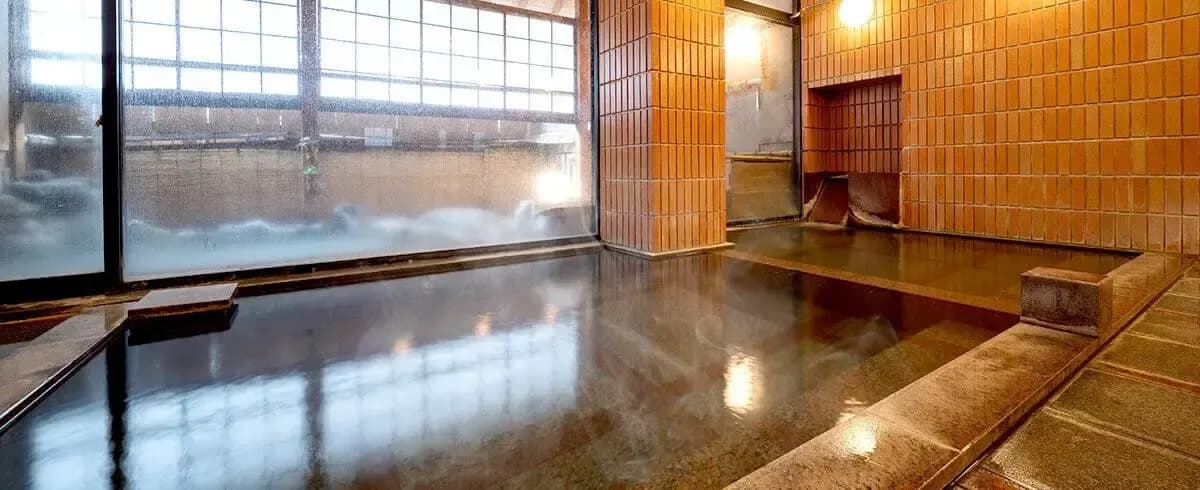
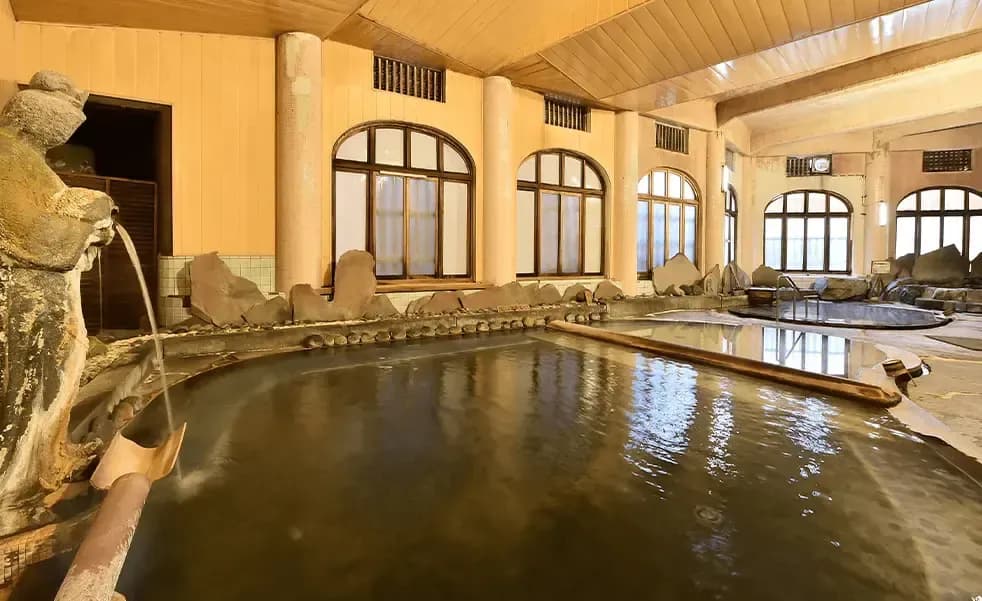
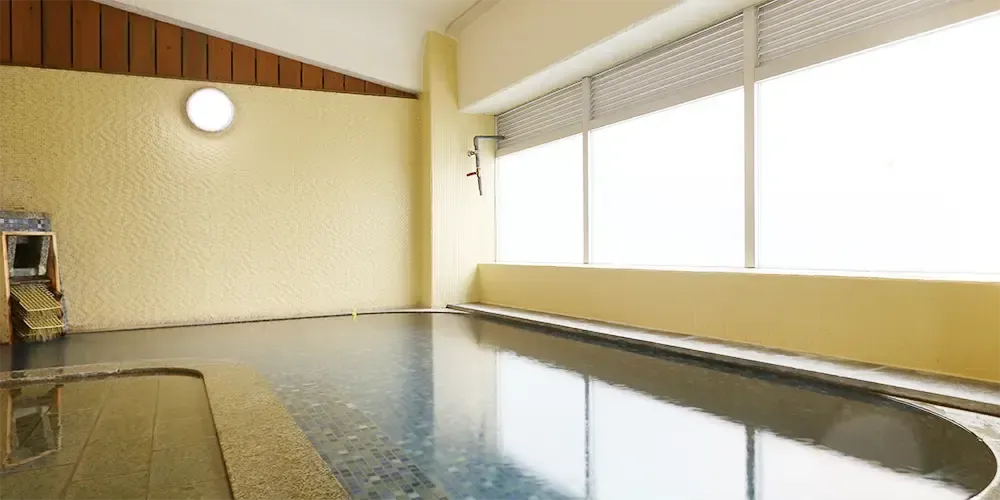
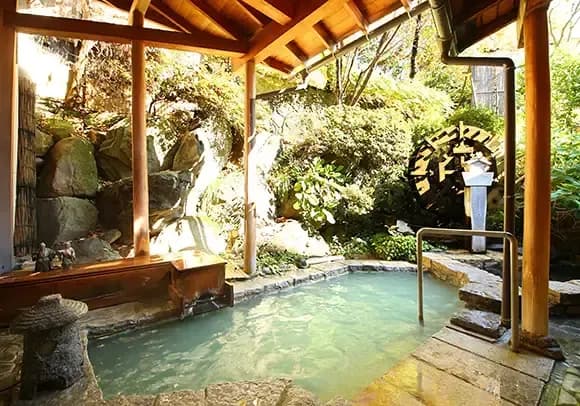
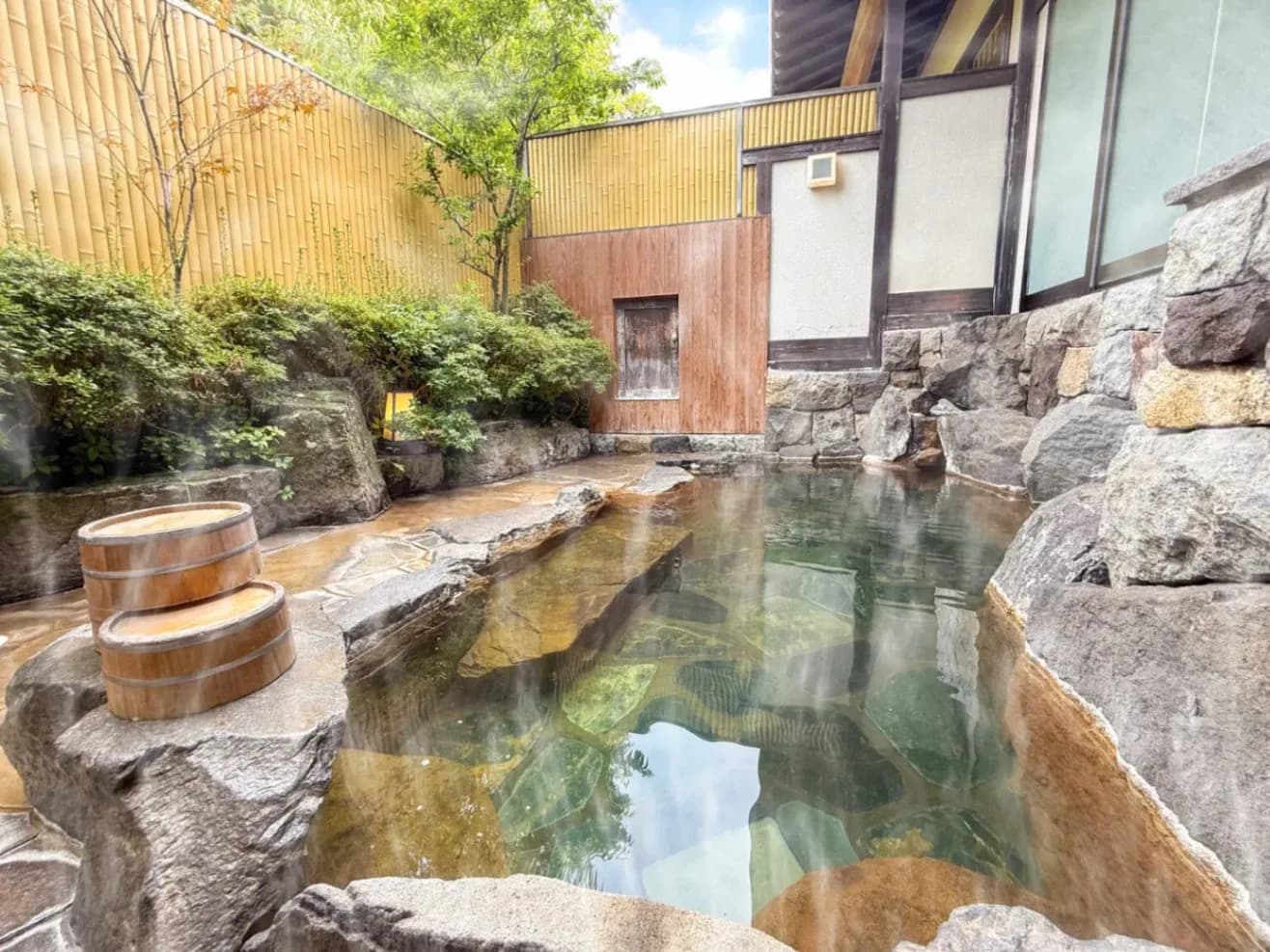
Most hot spring inns in Japan sell you one night, dinner and breakfast included. A toji (湯治) inn sells you a fortnight and a kitchen.
Toji means a long stay at a single spring for the sake of your body rather than your holiday. The inns that still run this way are usually split into two parts under one roof: a ryokan-bu with meals and a toji-bu — a self-catering wing with a shared kitchen, a coin laundry and much plainer rooms. Sukayu Onsen divides its 139 rooms exactly this way. Osawa Onsen keeps a building over 200 years old as its self-catering wing. Goshogake Onsen, Ryokan Ohnuma and Takashige Ryokan all do the same.
This guide lists 21 such inns across 12 prefectures, sorted into three types: inns with a self-catering wing, inns built around strongly mineralised water, and inns where the water is lukewarm enough to sit in for an hour. Water type, pH, source temperature and whether the bath is free-flowing are on each inn's data page.
What this guide covers:
- What toji actually is, defined by how the inns are built rather than by tradition
- Three types of toji inn, and which one suits a first long stay
- 21 inns across 12 prefectures with data pages
- Booking, seasons, mixed bathing, tattoos, payment and getting there without a car
What Toji Is
Toji is a stay of several days or weeks at one source, taken for the body. The word covers both the practice and the places built for it.
Japan recognised this formally. In 1954 the government designated its first three kokumin hoyo onsenchi (National Health Resort Hot Springs), and one of them was Sukayu Onsen (酸ヶ湯温泉), high on Mount Hakkoda in Aomori. The other two were Shima in Gunma and Nikko Yumoto in Tochigi.
The older evidence is in the sayings. Goshogake Onsen (後生掛温泉) in Akita is known by a line that translates roughly as "come by horse, leave on wooden clogs" — arrive too weak to walk, leave on your own feet. Kamasaki Onsen (鎌先温泉) in Miyagi has been called Ou no kusuriyu, the medicinal water of the northeast, since a farmer struck the spring with the tip of his sickle in 1428. Namegawa Onsen (滑川温泉) in Yamagata was opened as a toji ground in 1763 under a permit from the Uesugi lords of Yonezawa, and the Fukushimaya family has kept the spring for fourteen generations.
One caution. Japanese law lists tekiosho — indications, not cures — for each water type, typically neuralgia, muscle and joint pain, and poor circulation. Hot springs are not medicine. If you have a medical condition, ask a doctor before planning a long soak.
Three Types of Toji Inn
Type 1: Inns with a self-catering wing
You rent a room, use the shared kitchen and cook. Osawa Onsen Jisuibu Tojiya (大沢温泉 自炊部・湯治屋) in Iwate keeps this wing in a building more than 200 years old, separate from the modern Sansuikaku ryokan on the same grounds. At Kuroyu no Takatomo Ryokan (黒湯の高友旅館) in Miyagi, the main building facing the road is the ryokan side and a 1977 annexe is the toji side.
Facilities vary widely. Wakamatsuya Murai Rokusuke (若松屋村井六助) in Yamagata has two cooking areas and a coin laundry. Takeya Ryokan Honkan (竹屋旅館 本館) in Kagoshima provides a shared kitchen with tableware, a refrigerator, a stove, a microwave, a washing machine and a sink. Geto Onsen Kanko Hotel (夏油温泉観光ホテル) in Iwate serves no meals at all — it reopened on 3 October 2025 as a room-only, self-catering inn.
Self-catering toji survives outside the northeast too. Ryokan Shirasagi (旅館しらさぎ) at Tsubaki Onsen in Wakayama is one of the few inns in the Kansai region still set up for it. Nakashima Onsen Ryokan (中島温泉旅館) in Kagoshima keeps three self-catering rooms on the ground floor and lends cooking equipment free of charge.
Type 2: Inns built on strongly mineralised water
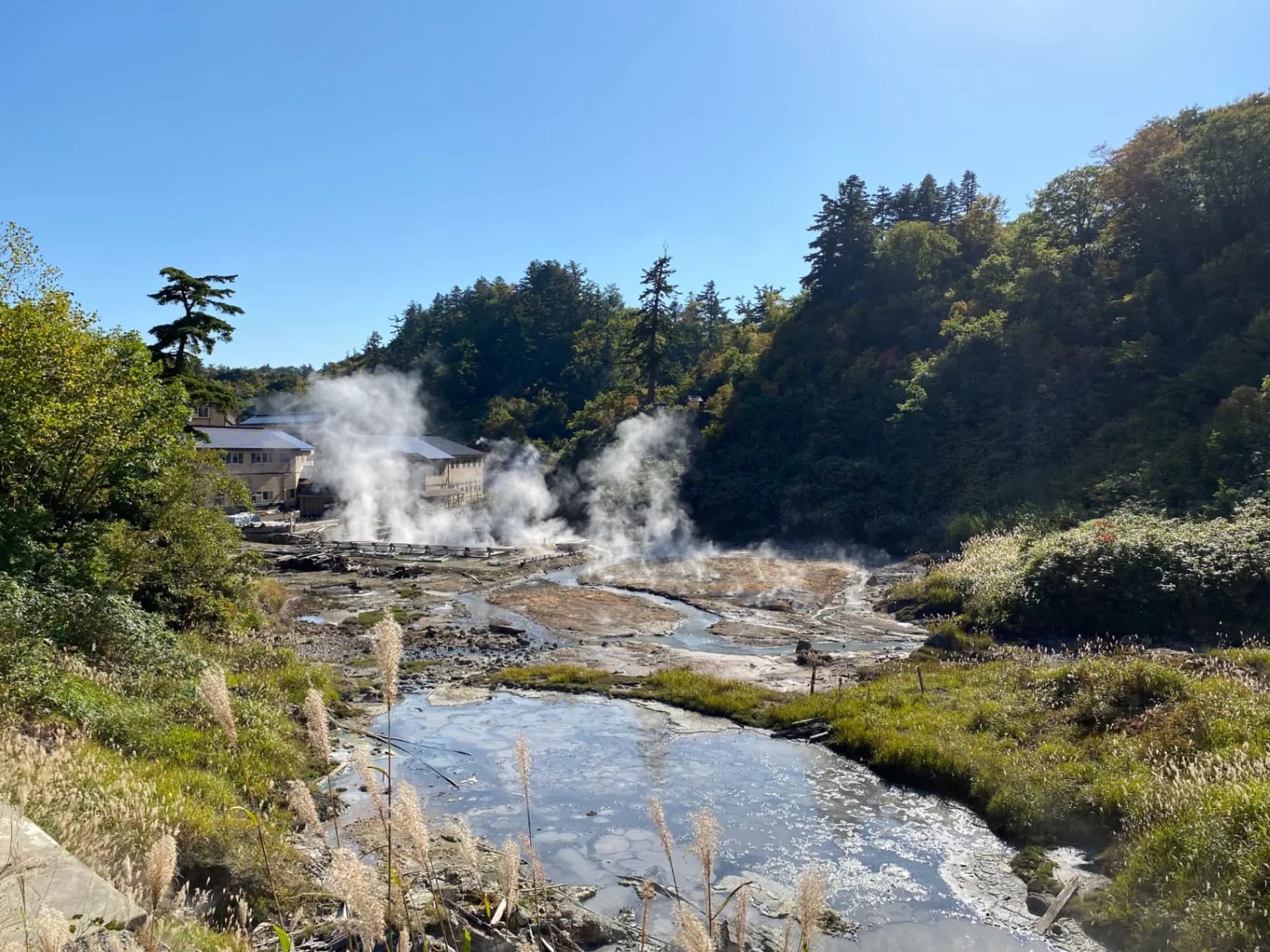
Here the point is the water, and you build up your tolerance over days. Tamagawa Onsen (玉川温泉) in Akita measures pH 1.2. Its vent, called Obuke, discharges 9,000 litres a minute and runs off as a stream three metres wide. It opened as a toji ground in 1885 and has drawn long-stay guests from across the country for over 140 years.
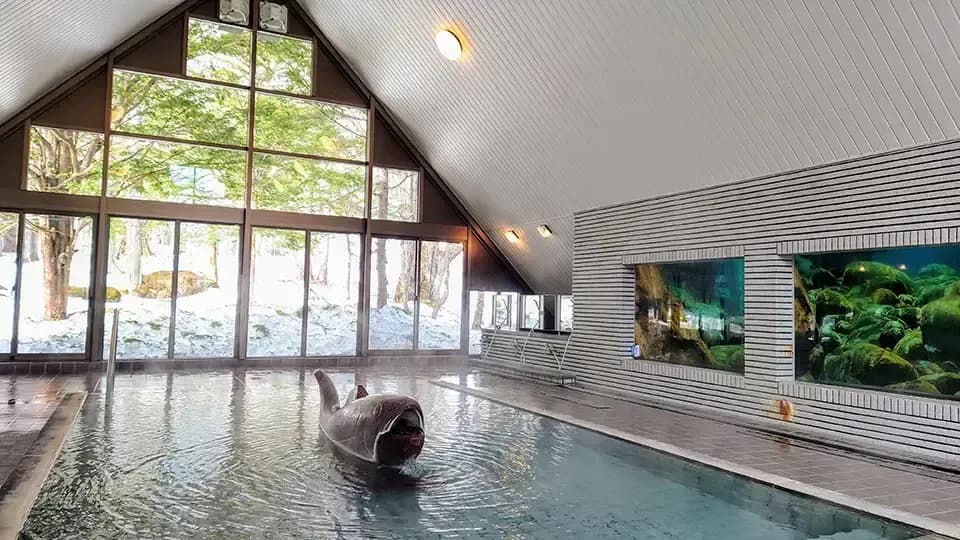
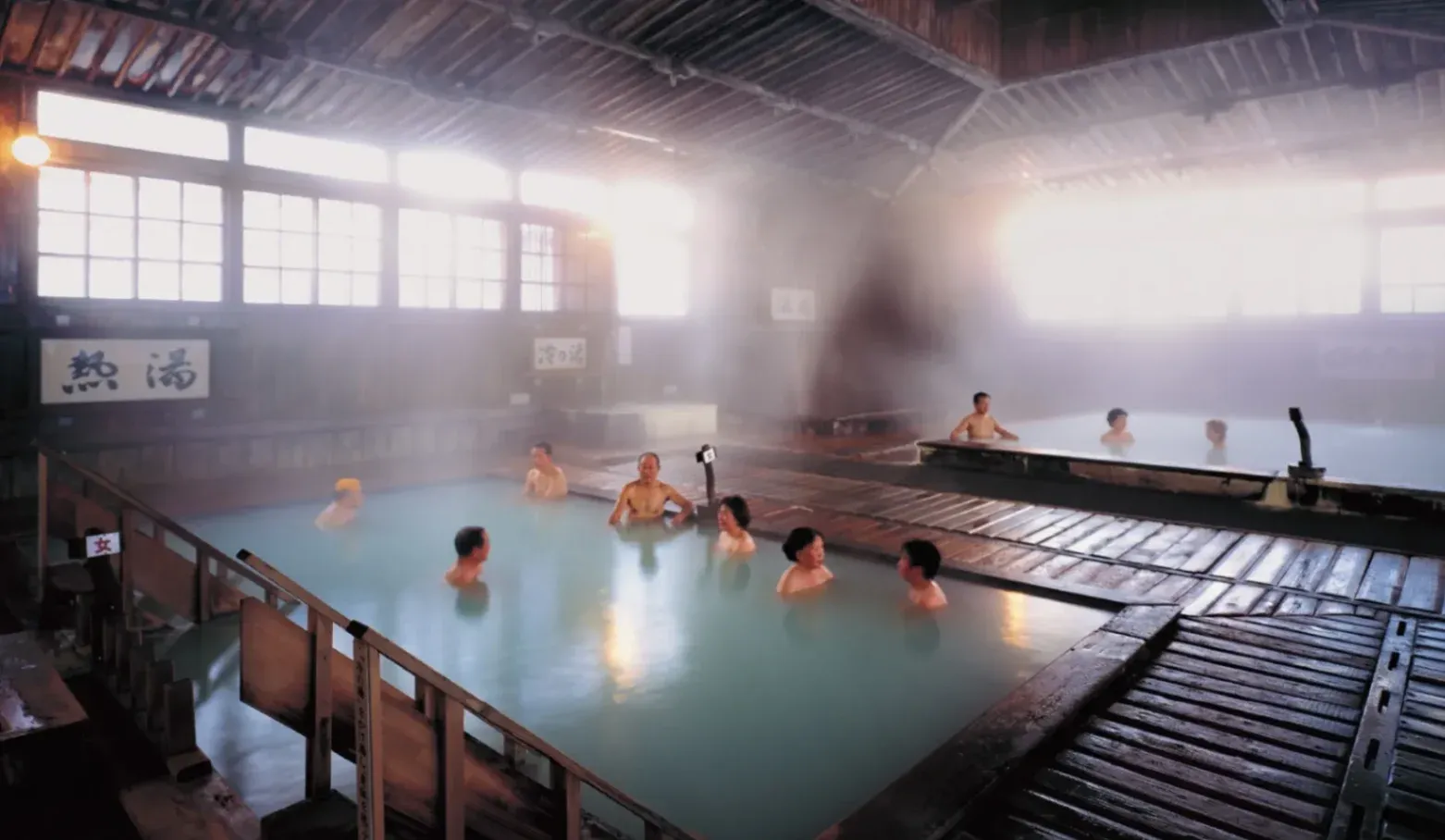
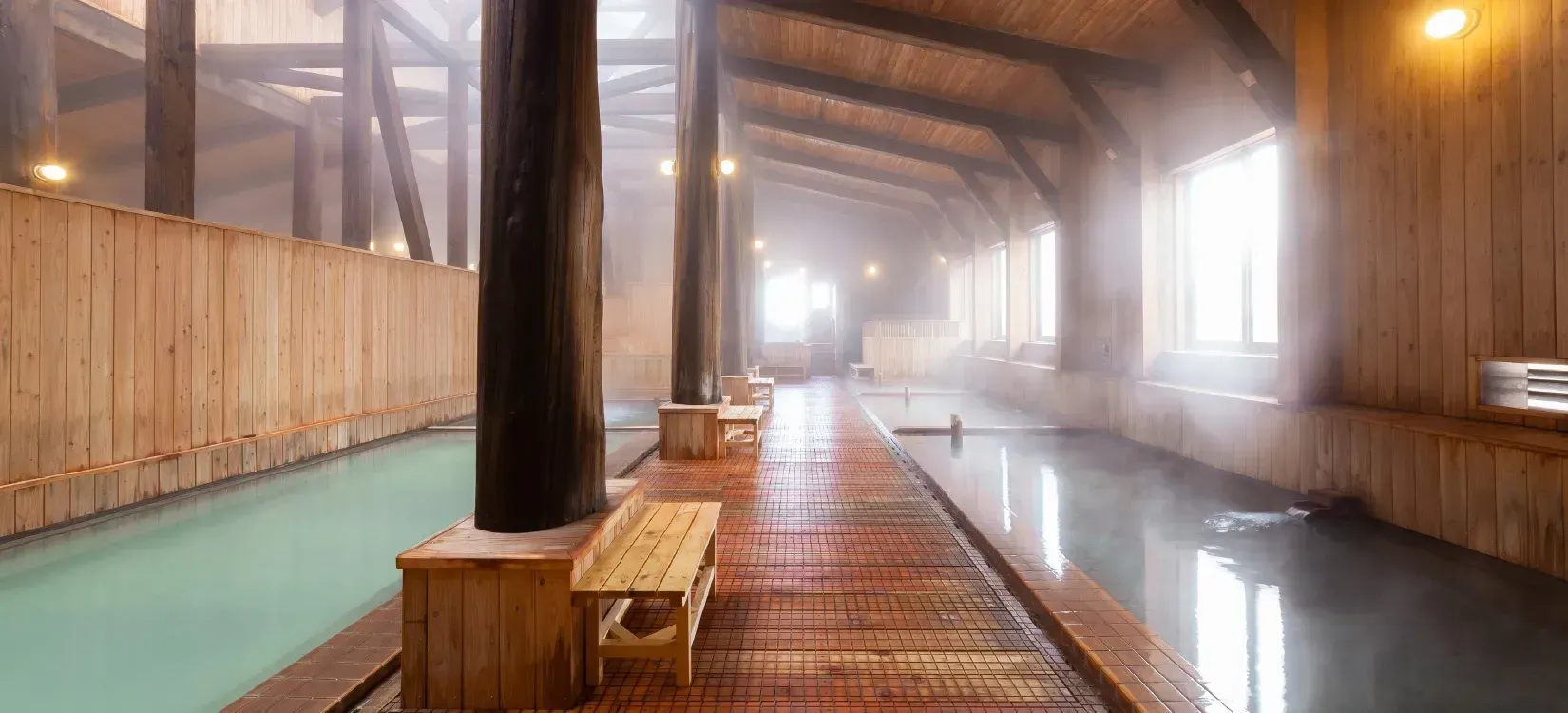
Sukayu Onsen measures pH 1.8. Its bath hall, Hiba Sennin-buro, is built entirely of hiba cypress, covers about 260 square metres and has no supporting pillars. Four separate sources feed it, each at a different temperature.
Ryokan Nikaido (旅館二階堂) at Nuruyu Onsen in Fukushima posts an analysis reading acidic iron-aluminium-sulphate spring, pH 2.9, source 31.8°C — an alum-vitriol water long associated with eye complaints. The Nikaido family acquired the rights to the spring in 1803. Three thatched buildings on the site were listed as Registered Tangible Cultural Properties in 2017.
Type 3: Inns where the water is lukewarm
Not every toji bath is hot. Nishiyama Onsen Motoyu Horaikan (西山温泉 元湯 蓬莱館) in Yamanashi runs at 34–38°C, pH 9.1, rising without pumps. It has self-catering rooms reserved for toji guests and takes long stays with or without meals.
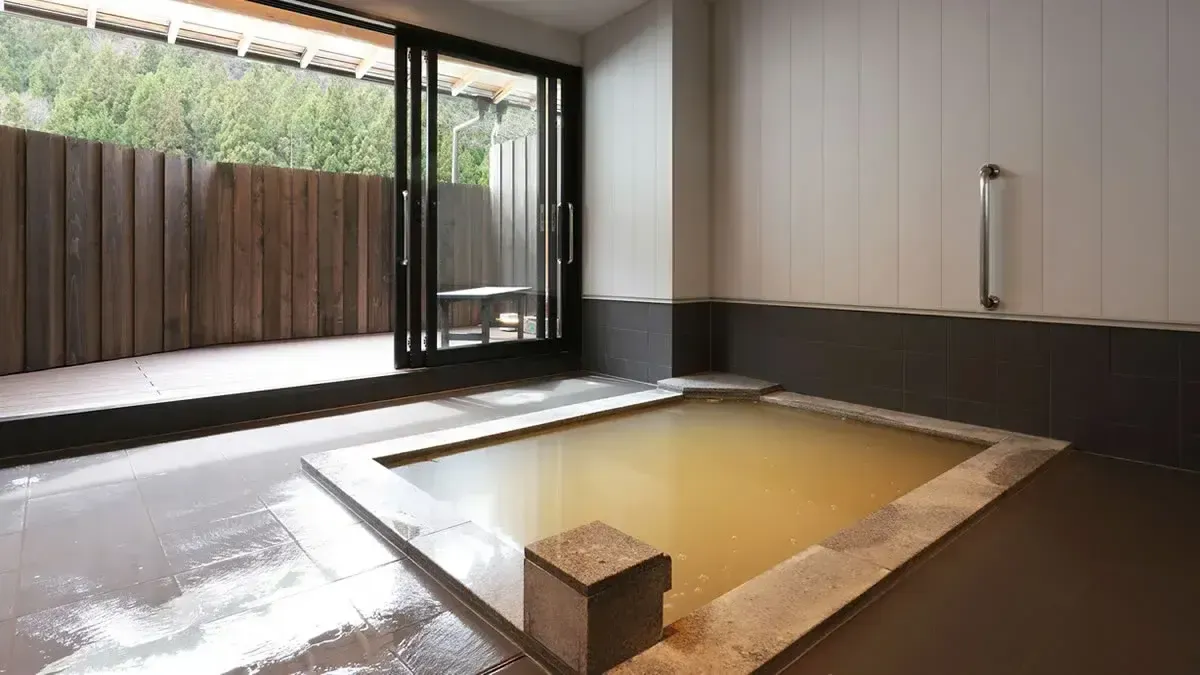
The source at Yuya Onsen Okudaya (湯屋温泉 奥田屋) in Gifu is a 15.4°C cold mineral spring. Of 6,451 mg total dissolved content, 1,947 mg is free carbon dioxide. It comes out of the spout clear and prickling, and turns yellow-brown in the tub. It is heated by heat exchanger, never diluted.
Futamata Radium Onsen (二股らぢうむ温泉) in Hokkaido has no kitchen at all, yet has taken long-stay guests for over a century across 53 rooms sleeping 130. Its calcium carbonate terrace dome was designated a Hokkaido Natural Monument in 1965.
How These 21 Were Chosen
Three conditions.
- You can stay the night. Day-trip-only baths are excluded, since the subject is the long stay.
- The inn itself has a self-catering wing, a long-stay plan, or a documented history as a toji ground. Inns whose descriptions merely mention the word were dropped.
- Geographic spread. Toji inns really do cluster in the northeast, but Hokkaido, central Japan, Kansai and Kyushu are represented, across 12 prefectures.
The numbering follows how widely each inn is carried by Japanese online booking sites. Being listed is not the same as being bookable, though — read the notes below before you settle on one.
1. Sukayu Onsen (酸ヶ湯温泉) — Aomori City, Aomori

| Mon | Tue | Wed | Thu | Fri | Sat | Sun | Hol | |
|---|---|---|---|---|---|---|---|---|
| 07:00 - 18:00 | 07:00 - 18:00 | 07:00 - 18:00 | 07:00 - 18:00 | 07:00 - 18:00 | 07:00 - 18:00 | 07:00 - 18:00 | 07:00 - 18:00 | 07:00 - 18:00 |
| Mon | Tue | Wed | Thu | Fri | Sat | Sun | Hol | |
|---|---|---|---|---|---|---|---|---|
| 07:00 - 20:30 | 07:00 - 20:30 | 07:00 - 20:30 | 07:00 - 20:30 | 07:00 - 20:30 | 07:00 - 20:30 | 07:00 - 20:30 | 07:00 - 20:30 | 07:00 - 20:30 |
| Mon | Tue | Wed | Thu | Fri | Sat | Sun | Hol | |
|---|---|---|---|---|---|---|---|---|
| 08:00 - 18:00 | 08:00 - 18:00 | 08:00 - 18:00 | 08:00 - 18:00 | 08:00 - 18:00 | 08:00 - 18:00 | 08:00 - 18:00 | 08:00 - 18:00 | 08:00 - 18:00 |
| Mon | Tue | Wed | Thu | Fri | Sat | Sun | Hol | |
|---|---|---|---|---|---|---|---|---|
| 10:00 - 16:00 | 10:00 - 16:00 | 10:00 - 16:00 | 10:00 - 16:00 | 10:00 - 16:00 | 10:00 - 16:00 | 10:00 - 16:00 | 10:00 - 16:00 | 10:00 - 16:00 |
| Mon | Tue | Wed | Thu | Fri | Sat | Sun | Hol | |
|---|---|---|---|---|---|---|---|---|
| 10:00 - 18:00 | 10:00 - 18:00 | 10:00 - 18:00 | 10:00 - 18:00 | 10:00 - 18:00 | 10:00 - 18:00 | 10:00 - 18:00 | 10:00 - 18:00 | 10:00 - 18:00 |
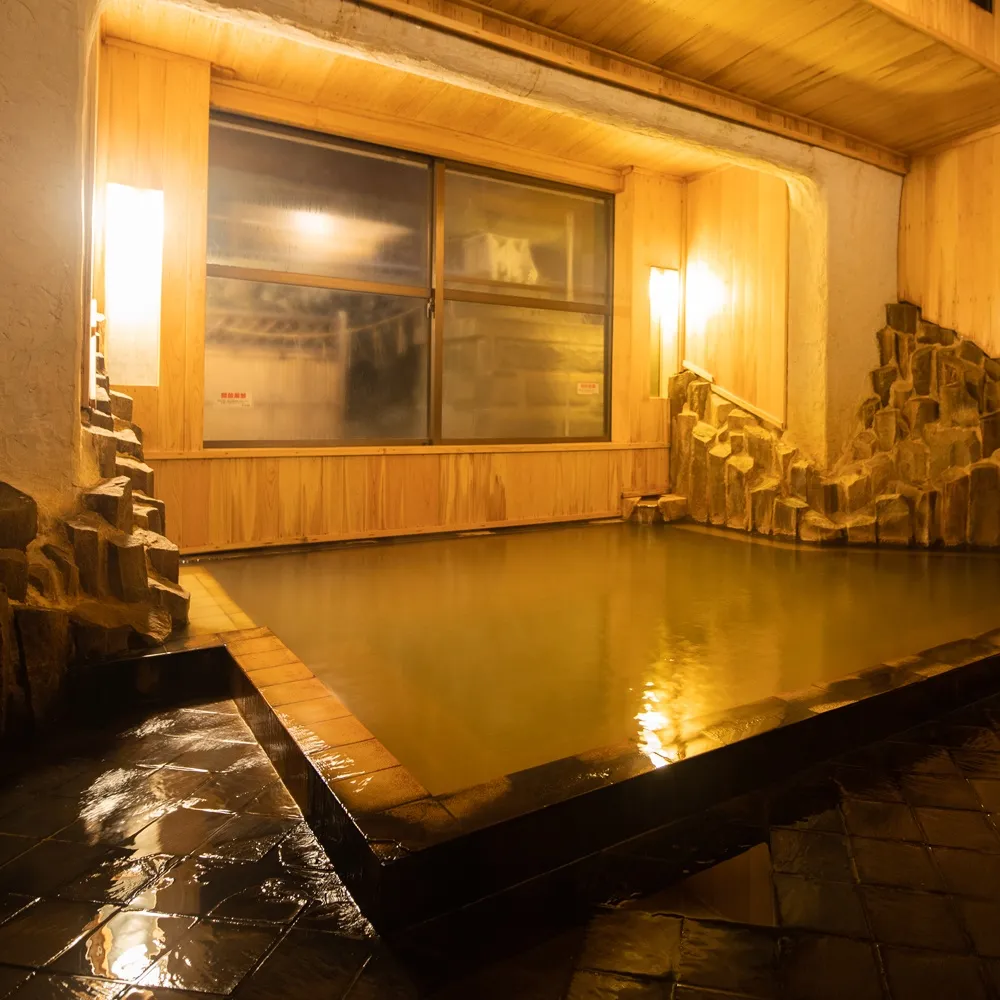
| Mon | Tue | Wed | Thu | Fri | Sat | Sun | Hol | |
|---|---|---|---|---|---|---|---|---|
| 11:00 - 14:00 | 11:00 - 14:00 | 11:00 - 14:00 | 11:00 - 14:00 | 11:00 - 14:00 | 11:00 - 14:00 | 11:00 - 14:00 | 11:00 - 14:00 | 11:00 - 14:00 |
| Mon | Tue | Wed | Thu | Fri | Sat | Sun | Hol | |
|---|---|---|---|---|---|---|---|---|
| 10:00 - 15:00 | 10:00 - 15:00 | 10:00 - 15:00 | 10:00 - 15:00 | 10:00 - 15:00 | 10:00 - 15:00 | 10:00 - 15:00 | 10:00 - 15:00 | 10:00 - 15:00 |
| Mon | Tue | Wed | Thu | Fri | Sat | Sun | Hol | |
|---|---|---|---|---|---|---|---|---|
| 10:30 - 14:00 | 10:30 - 14:00 | Closed | 10:30 - 14:00 | 10:30 - 14:00 | 10:30 - 14:00 | 10:30 - 14:00 | 10:30 - 14:00 | 10:30 - 14:00 |
| Mon | Tue | Wed | Thu | Fri | Sat | Sun | Hol | |
|---|---|---|---|---|---|---|---|---|
| 09:00 - 16:00 | 09:00 - 16:00 | 09:00 - 16:00 | 09:00 - 16:00 | 09:00 - 16:00 | 09:00 - 16:00 | 09:00 - 16:00 | 09:00 - 16:00 | 09:00 - 16:00 |
| Mon | Tue | Wed | Thu | Fri | Sat | Sun | Hol | |
|---|---|---|---|---|---|---|---|---|
| 07:00 - 19:00 | 07:00 - 19:00 | 07:00 - 19:00 | 07:00 - 19:00 | 07:00 - 19:00 | 07:00 - 19:00 | 07:00 - 19:00 | 07:00 - 19:00 | 07:00 - 19:00 |
| Mon | Tue | Wed | Thu | Fri | Sat | Sun | Hol | |
|---|---|---|---|---|---|---|---|---|
| 10:00 - 15:00 | 10:00 - 15:00 | 10:00 - 15:00 | 10:00 - 15:00 | 10:00 - 15:00 | 10:00 - 15:00 | 10:00 - 15:00 | 10:00 - 15:00 | 10:00 - 15:00 |
| Mon | Tue | Wed | Thu | Fri | Sat | Sun | Hol | |
|---|---|---|---|---|---|---|---|---|
| 11:00 - 20:00 | 11:00 - 20:00 | 11:00 - 20:00 | 11:00 - 20:00 | 11:00 - 20:00 | 11:00 - 20:00 | 11:00 - 20:00 | 11:00 - 20:00 | 11:00 - 20:00 |
| Mon | Tue | Wed | Thu | Fri | Sat | Sun | Hol | |
|---|---|---|---|---|---|---|---|---|
| 08:30 - 19:00 | 08:30 - 19:00 | 08:30 - 19:00 | 08:30 - 19:00 | 08:30 - 19:00 | 08:30 - 19:00 | 08:30 - 19:00 | 08:30 - 19:00 | 08:30 - 19:00 |
| Mon | Tue | Wed | Thu | Fri | Sat | Sun | Hol | |
|---|---|---|---|---|---|---|---|---|
| 06:00 - 21:00 | 06:00 - 21:00 | 06:00 - 21:00 | 06:00 - 21:00 | 06:00 - 21:00 | 06:00 - 21:00 | 06:00 - 21:00 | 06:00 - 21:00 | 06:00 - 21:00 |
| Mon | Tue | Wed | Thu | Fri | Sat | Sun | Hol | |
|---|---|---|---|---|---|---|---|---|
| 07:30 - 20:20 | 07:30 - 20:20 | 07:30 - 20:20 | 07:30 - 20:20 | 07:30 - 20:20 | 07:30 - 20:20 | 07:30 - 20:20 | 07:30 - 20:20 | 07:30 - 20:20 |
| Mon | Tue | Wed | Thu | Fri | Sat | Sun | Hol | |
|---|---|---|---|---|---|---|---|---|
| 11:00 - 14:00 | 11:00 - 14:00 | 11:00 - 14:00 | 11:00 - 14:00 | 11:00 - 14:00 | 11:00 - 14:00 | 11:00 - 14:00 | 11:00 - 14:00 | 11:00 - 14:00 |
| Mon | Tue | Wed | Thu | Fri | Sat | Sun | Hol | |
|---|---|---|---|---|---|---|---|---|
| 10:00 - 17:00 | 10:00 - 17:00 | 10:00 - 17:00 | Closed | Closed | 10:00 - 17:00 | 10:00 - 17:00 | 10:00 - 17:00 | 10:00 - 17:00 |
| Mon | Tue | Wed | Thu | Fri | Sat | Sun | Hol | |
|---|---|---|---|---|---|---|---|---|
| 09:00 - 17:00 | 09:00 - 17:00 | 09:00 - 17:00 | 09:00 - 17:00 | 09:00 - 17:00 | 09:00 - 17:00 | 09:00 - 17:00 | 09:00 - 17:00 | 09:00 - 17:00 |
| Mon | Tue | Wed | Thu | Fri | Sat | Sun | Hol | |
|---|---|---|---|---|---|---|---|---|
| 10:00 - 15:00 | 10:00 - 15:00 | 10:00 - 15:00 | 10:00 - 15:00 | 10:00 - 15:00 | 10:00 - 15:00 | 10:00 - 15:00 | 10:00 - 15:00 | 10:00 - 15:00 |
Practical Notes for Visitors from Abroad
Booking: several of these cannot be booked online
This is the single biggest difference from a standard ryokan. Kuroyu no Takatomo Ryokan takes no bookings through online travel agencies, its telephone line is often unreachable, and its website no longer exists. Its spring is also running below strength, so only three baths — Kuroyu, Ramune and Hyotan — are usable, and it closes on irregular days. Several other inns here list rooms on Japanese-language booking sites only. If an inn matters to you, plan a fallback.
Seasons: some inns close for the winter
Ryokan Nikaido opens from late April to late November and shuts for the winter. The prefectural road up to it is narrow, partly unsurfaced and occasionally closed, and there is no bus and no pickup service — you drive yourself to 920 m. Takashige Ryokan sits in one of the snowiest districts in Japan, so check road conditions before a winter stay.
Payment: bring cash
Small inns of this kind frequently do not accept cards. Takatomo Ryokan states cash only. Assume the same at the others unless you have confirmed otherwise. Withdraw yen before you leave the city; convenience-store ATMs are scarce in these valleys. Day-trip bathing, where offered, runs roughly ¥300–¥1,100 for adults at the inns listed here — the exact figure is on each data page.
Mixed bathing (konyoku)
Some of the signature baths here are mixed. Osawa Onsen's large riverside open-air bath Osawa no Yu is mixed, with a separate women-only open-air bath, Kawabe no Yu. Takatomo Ryokan's Kuroyu is a mixed hall. Ryokan Ohnuma's Yakushi Sennin-buro is mixed but sets women-only hours. Ohnuma also has five private baths that can be used free of charge without reservation, which is the simplest option if you would rather bathe alone. None of these inns publishes a swimwear policy; Japanese hot spring baths are normally entered unclothed, so plan on that and pick an inn with a private bath if it matters to you.
Tattoos
None of these inns publishes a tattoo policy in the data we hold, so no general rule can be given. Small toji inns tend to be more relaxed than large resort hotels, but the practical answer is to ask when you book, and to prefer inns with private or family baths if you would rather not test it.
Getting there without a car
More of these are reachable without a car than you might expect. The three Higashi-Naruko inns are a 3–5 minute walk from Naruko-Goten'yu station on the JR Rikuu East Line, which makes them the easiest entry point to toji for anyone travelling by rail. Sukayu is reachable by bus from Aomori city, and Osawa Onsen by bus from Hanamaki.
Several more are served by local buses. Yamada Ryokan is 35 minutes on the village bus from Minami-Otari station on the JR Oito Line (¥700), and the stop is at the door. Takeya Ryokan is 40 minutes on the Satsumasendai city loop bus from JR Sendai station, a flat ¥150. Wakamatsuya Murai Rokusuke is 55 minutes by Okura village bus from JR Shinjo station (¥600). Horaikan is 80 minutes by Hayakawa community bus from Minobu station (¥1,500), but there are only four services a day.
Where there is no bus there is often a taxi or a pickup. Futamata is about 30 minutes by taxi from JR Oshamambe station, and runs a shuttle for overnight guests who reserve it. Namegawa Onsen collects overnight guests from Toge station on the JR Ou Line free of charge. Mogamiya Ryokan is about 15 minutes by taxi from Shiroishi-Zao shinkansen station.
Only Nuruyu genuinely requires your own car. There is no bus and no pickup, and the approach road is narrow and partly unsurfaced.
Where the Inns Cluster
Thirteen of the 21 are in the six northeastern prefectures, strung along the Hakkoda, Hachimantai, Azuma, Zao and Kurikoma volcanic belts. Three are in the single hamlet of Higashi-Naruko, which held a goten-yu — a bath house reserved for the Date lords — in the Edo period and has stayed a quiet self-catering village since. For a wider view of the region, see the guide to the hidden hot springs of Tohoku.
https://www.tan-ken.com/en/blog/dp0ubfgjgk
Three more are in Kagoshima. Tajima Honkan is the founding inn of Myoken Onsen, begun when Tajima Jurojiro found the spring welling up in a paddy field in the late Edo period, and it has never converted itself into a resort hotel. Sendai-Taki Onsen appears in a Kamakura-period land register, and Saigo Takamori stayed there repeatedly in the Meiji era. Fukiage's Nakashima Onsen Ryokan inherited a bath once reserved for the Isaku branch of the Shimazu clan, in a village where baths were formerly graded by rank. The rest of Kagoshima's hidden springs are covered separately.
https://www.tan-ken.com/en/blog/2v__hzci7
The Yamagata and Miyagi inns above also appear in the prefectural guides.
https://www.tan-ken.com/en/blog/ds2y_mqv3
https://www.tan-ken.com/en/blog/bsjx4i18djjd
For hidden hot springs generally, beyond toji, start with the three great hidden onsen of Japan.
https://www.tan-ken.com/en/blog/j5hf5xrd1sp
Choosing by Length of Stay
Two or three nights, as a first try. Take the train. The three Higashi-Naruko inns are minutes from the station and share a yumeguri ticket for neighbouring baths. Osawa Onsen and Sukayu are both reachable by bus.
Five nights or more. Choose an inn with an explicit long-stay plan. Ryokan Nikaido prices stays of five nights and over separately; Horaikan takes toji guests both self-catering and with meals; Tamagawa and Goshogake both run a distinct toji wing and still draw long-stay regulars.
Winter. Mountain inns close. Nuruyu shuts in late November, and the road to Takashige Ryokan needs checking in deep snow. For a long winter soak, the three Kagoshima inns and Tsubaki Onsen in Wakayama sit at low elevation and stay open.
Kitchen facilities, long-stay pricing and booking methods differ sharply from inn to inn. Check water type, pH, source temperature and free-flow status on each data page, and confirm opening season and reservation method with the inn itself.
Frequently Asked Questions
Q. How many nights counts as toji?
There is no official threshold. Inns draw the line themselves: Ryokan Nikaido prices stays of five nights and over as a long stay. Self-catering wings will usually take a single night, and the cost per night tends to fall as the stay lengthens. Check current rates with each inn.
Q. What is the difference between the toji wing and the ryokan wing?
Buildings and pricing, mostly. At Ryokan Ohnuma the main building is the ryokan side, sold with dinner and breakfast, while the toji building is sold room-only or with kitchen access. Sukayu splits the same way, between a Showa-era ryokan wing and a plain toji wing for self-catering and long stays. The water is normally the same in both.
Q. Do I need to bring cooking equipment?
It depends on the inn. Nakashima Onsen Ryokan lends cooking equipment free. Takeya Ryokan Honkan's shared kitchen has tableware, a refrigerator, a stove and a microwave. Geto Onsen Kanko Hotel provides only a simple cooking area. Ask at the time of booking, and also ask where the nearest food shop is.
Q. Is the water free-flowing at all 21?
All 21 use gensen kakenagashi or a close equivalent, but the detail differs. Osawa Onsen Jisuibu Tojiya runs partly recirculated. Okudaya and Horaikan heat their low-temperature sources but add no water. Each data page states whether the bath is heated, diluted, recirculated or chlorinated.
Q. Can I visit for the day instead of staying?
At most of them, yes — 19 of the 21 accept day bathers. Hijiori Wakamatsuya Murai Rokusuke and Yuya Onsen Okudaya take overnight guests only. Hours change seasonally, so check the data page and the inn's own information before travelling.
Disclaimer
- Information in this article (admission fees, opening hours, water analysis data, opening seasons) reflects the time of research. Errors and changes are possible. Please confirm current details with each facility's official website or the local tourist association.
- Indications listed for hot spring water under Japanese regulation are not claims of treatment or cure. If you have a medical condition or are pregnant, consult a doctor before a long course of bathing.