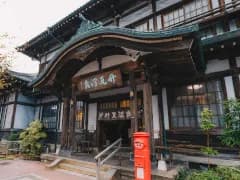
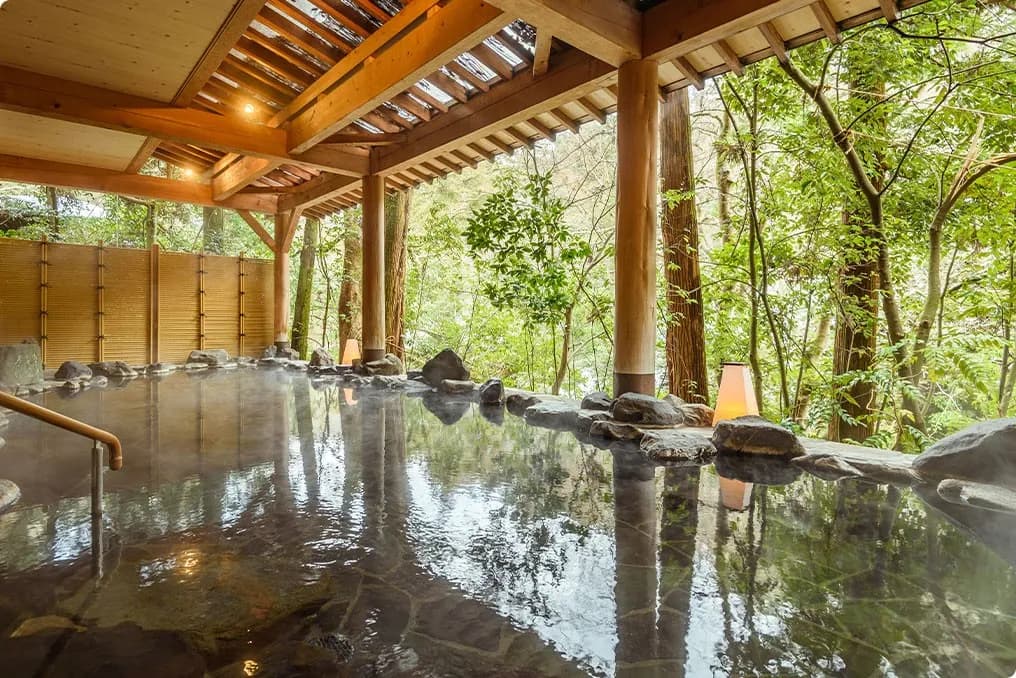
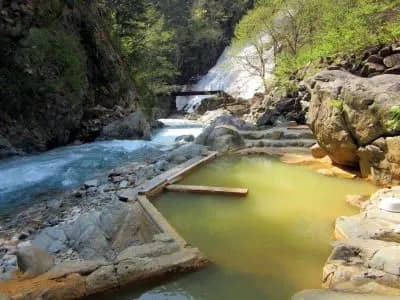
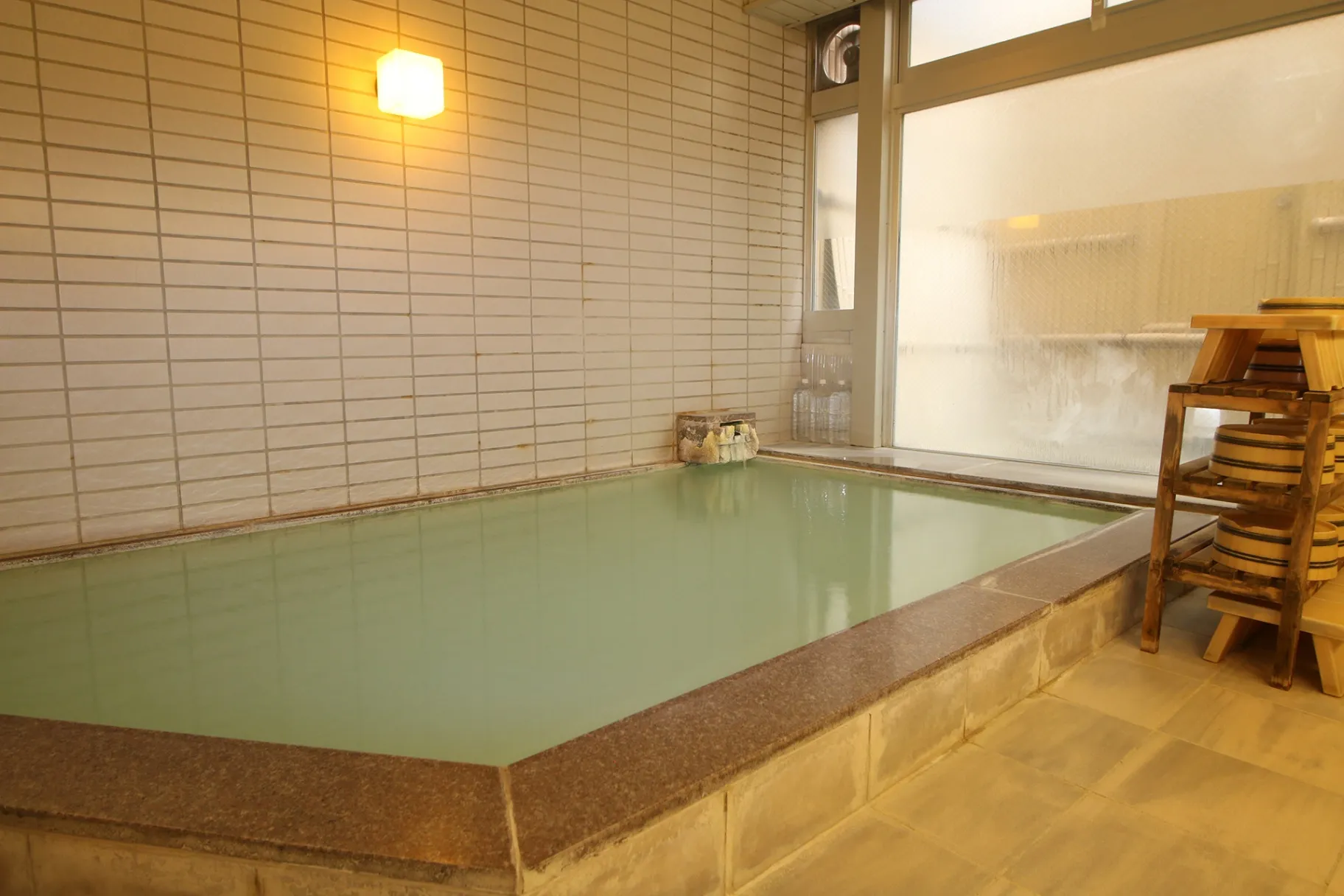
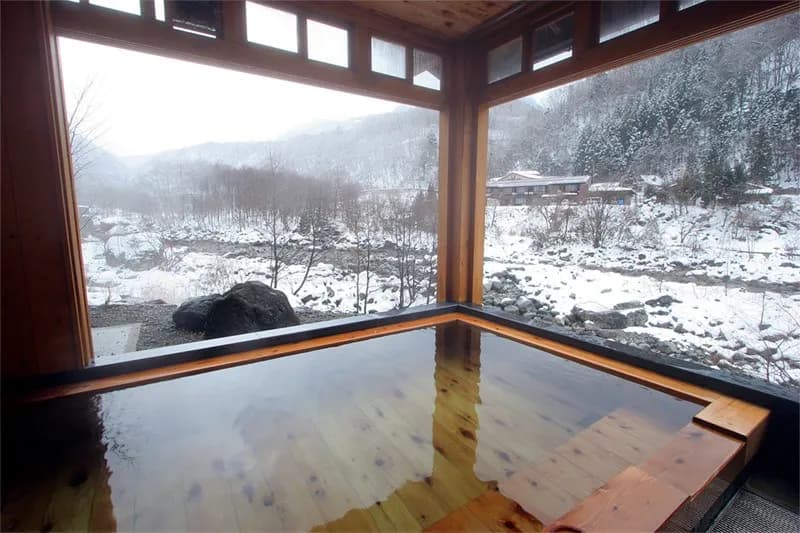
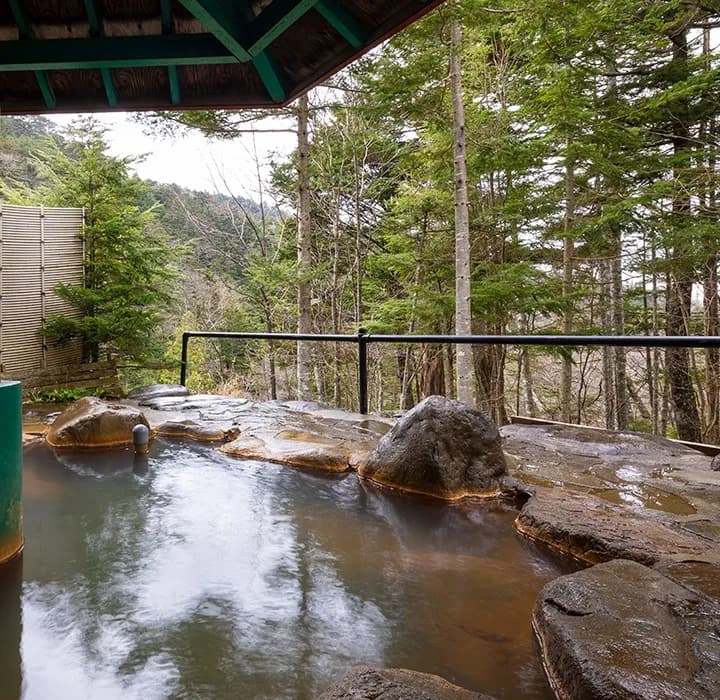
Shizuoka's hot springs split into two mountain regions with almost nothing in common. The Izu Peninsula (伊豆半島), jutting into the Pacific, is dotted with small, single-inn hot springs. Follow the Abe or Oi rivers inland instead, and the road climbs into the southern foot of the Southern Alps, where the narrower it gets, the quieter the bath.
This guide lists 9 inns where you can stay overnight, each linked to a data page showing whether you can stay, the water type, pH, and whether the bath is fed by free-flowing spring water. The prefecture has 18 registered hot spring entries in total; the 10 hardest to reach are covered in a separate guide to Shizuoka's hidden hot springs, and this guide keeps overlap with that list to a minimum.
What this guide covers:
- Why the water in Izu and the Southern Alps foothills comes from two different sources
- What separates Shuzenji, Yugashima, Umegashima and Sumatakyo
- 9 inns with overnight stays, each linked to its full data page
- Why Atami and Ito, Shizuoka's biggest hot spring towns, are not on this list
- Practical answers on tattoos, mixed bathing, reservations, payment and trains
Two Kinds of Hot Water
Shizuoka's springs come from two different sources.
The first is the Izu Peninsula. Izu is generally understood to have formed as a separate chain of undersea volcanoes riding the Philippine Sea Plate northward, colliding with the main island of Honshu several hundred thousand years ago. It remains one of Shizuoka's most volcanically active areas, and small sources are scattered through valleys across the peninsula as a result. The source at Kouchi Onsen Kanaya Ryokan, covered below, is a hypotonic simple thermal spring at 49.8°C and pH 7.7. Izu Hatake Onsen Seizan, near the base of the peninsula, is an alkaline simple spring at pH 8.7. Neither contains sulfur, and both are colorless and clear.
The second kind rises in the valleys at the southern foot of the Southern Alps, reached by following the Abe or Oi rivers upstream. Umegashima, Sumatakyo and Sessokyo onsen belong to this group. Rather than volcanic heat, the water here is thought to have circulated deep underground for a long period before reaching the surface. Even within this group, water types are not uniform. Umegashima Onsen Omoide no Yado Yunoshimakan is pH 9.2 and Sumatakyo Onsen Tekarisanso is pH 9.1, both strongly alkaline simple sulfur springs. Sessokyo Onsen Tabunoie, by contrast, is a sulfur-free sodium bicarbonate spring at pH 8.4, with a source that emerges at only 21°C and is heated before use.
The Izu side runs pH 7.6 to 8.7 and contains no sulfur; the Southern Alps foothills run pH 9-plus, and even there sulfur content varies from inn to inn. Both exist within the same prefecture, and that contrast is the point of travelling here.
The Main Onsen Towns
Shuzenji Onsen (修善寺温泉), Izu City
Grew up around Shuzenji Temple, associated with the Buddhist monk Kobo Daishi, and Tokko-no-Yu, a source that wells up in the middle of the river. Walking paths, including a well-known bamboo grove path, run through town, and inns founded in the Meiji era are still open today. As the usual entry point for Izu Peninsula sightseeing, this is often the first name that comes up for a first visit to Shizuoka's hot springs.
Yugashima Onsen (湯ヶ島温泉), Izu City
Stretches along the Kano River at the foot of Mount Amagi. Known as the setting of Yasunari Kawabata's novel The Izu Dancer, it sits on the road between Shuzenji and the Amagi Pass. Inns here draw on calcium-sulfate springs, and the pace along the river is unhurried.
Yoshina, Funabara and Kouchi Onsen (吉奈・船原・河内温泉), Izu and Shimoda Cities
Funabara and Kouchi are each the single inn of their hot spring, relatively little known even within the Izu Peninsula. Yoshina is a small hot spring town on the Yoshina River, at the foot of the Amagi mountains, and Oyado Sakaya stands at its center. Funabara sits on Route 136 between Shuzenji and Toi, and Kouchi lies in the hills a short way inland from central Shimoda. What they share is that visitors come for the water itself rather than for sightseeing.
Umegashima Onsen (梅ヶ島温泉), Aoi Ward, Shizuoka City
Sits near the end of the road that follows the Abe River upstream, in the mountains at the southern tip of the Southern Alps. Said to have opened roughly 1,700 years ago, it is also remembered in local accounts as a hidden bath used by the warlord Takeda Shingen. The simple sulfur spring here runs strongly alkaline and is known as a water that leaves the skin smooth.
Sumatakyo and Sessokyo Onsen (寸又峡・接岨峡温泉), Kawanehoncho
Two hot springs along the Oi River valley in the Southern Alps, reached by different parts of the Oigawa Railway network. Sumatakyo is also known as a sightseeing spot for its suspension bridge, the Yume-no-Tsuribashi; it is not on the rail line itself, and is reached by a roughly 40-minute bus ride from Senzu, the terminus of the railway's main line. Sessokyo lies further into the mountains, about 70 minutes from Senzu on the railway's Ikawa Line, an 8-minute walk from Sessokyo-Onsen Station. Part of the main line has been closed since 2022 typhoon damage, so some rail connections require a bus transfer. Public transport to both runs infrequently — check the Oigawa Railway's official site before travelling.
Izu Hatake Onsen (伊豆畑毛温泉), Kannami Town, Tagata District
An alkaline simple spring at the base of the Izu Peninsula, in Kannami Town. Its location near the entrance to Izu makes it relatively easy to reach from the Tokyo direction.
The Izu Peninsula also holds several large, well-known hot spring towns not covered above: Atami, Ito, Inatori, Izunagaoka and Atagawa. Atami Onsen alone has more than 500 sources, with total flow approaching 20,000 liters per minute and an average source temperature of about 63°C, according to the City of Atami's official site. None of the inns in these five towns currently have a data page on this site, so they are not covered individually in this guide.
How These 9 Were Chosen
Selection was based on water data, not on the size of the property. Three conditions:
- Overnight stays are possible (day-use-only bath houses are not included here)
- Water type, free-flowing status, and any dilution or reheating are documented on the site's own data page
- Overlap with the inns already covered in our guide to Shizuoka's hidden hot springs (linked below) is kept to a minimum
Of the 9, seven are free-flowing spring water (some with reheating). Shuzenji Onsen Arai Ryokan is only partly free-flowing, with every bath using circulation and filtration and some seasonal dilution. Sessokyo Onsen Tabunoie heats its 21°C source before bathing, and whether the water is free-flowing or recirculated is not published. The pH range runs from 7.6 at Yoshina Onsen Oyado Sakaya to 9.2 at Umegashima Onsen Omoide no Yado Yunoshimakan; Yugashima Onsen Yumotokan has no pH on record, so it is excluded from that range.
1. Kouchi Onsen Kanaya Ryokan (河内温泉 金谷旅館), Shimoda City

| Mon | Tue | Wed | Thu | Fri | Sat | Sun | Hol | |
|---|---|---|---|---|---|---|---|---|
| 09:00 - 22:00 | ◯ | ◯ | ◯ | ◯ | ◯ | ◯ | ◯ | ◯ |
2. Yoshina Onsen Oyado Sakaya (吉奈温泉 御宿 さか屋), Izu City
3. Yugashima Onsen Yumotokan (湯ヶ島温泉 湯本館), Izu City
| Mon | Tue | Wed | Thu | Fri | Sat | Sun | Hol | |
|---|---|---|---|---|---|---|---|---|
| 12:00 - 14:30 | ◯ | ◯ | ◯ | ◯ | ◯ | ◯ | ◯ | ◯ |
4. Shuzenji Onsen Arai Ryokan (修善寺温泉 新井旅館), Izu City
| Mon | Tue | Wed | Thu | Fri | Sat | Sun | Hol | |
|---|---|---|---|---|---|---|---|---|
| 11:30 - 14:00 | ◯ | ◯ | ◯ | ◯ | ◯ | ◯ | ◯ | ◯ |
5. Funabara Onsen Funabarakan (船原温泉 船原館), Izu City
| Mon | Tue | Wed | Thu | Fri | Sat | Sun | Hol | |
|---|---|---|---|---|---|---|---|---|
| 12:00 - 15:00 | ◯ | ◯ | ◯ | ◯ | ◯ | ◯ | ◯ | ◯ |
6. Izu Hatake Onsen Seizan (伊豆畑毛温泉 誠山), Kannami Town
| Mon | Tue | Wed | Thu | Fri | Sat | Sun | Hol | |
|---|---|---|---|---|---|---|---|---|
| 09:00 - 20:00 | ◯ | ◯ | ◯ | ◯ | ◯ | ◯ | ◯ | ◯ |
7. Umegashima Onsen Omoide no Yado Yunoshimakan (梅ヶ島温泉 おもいでの宿 湯の島館), Aoi Ward, Shizuoka City
8. Sessokyo Onsen Tabunoie (接岨峡温泉 たぶの家), Kawanehoncho
9. Sumatakyo Onsen Tekarisanso (寸又峡温泉 光山荘), Kawanehoncho
| Mon | Tue | Wed | Thu | Fri | Sat | Sun | Hol | |
|---|---|---|---|---|---|---|---|---|
| 14:00 - 17:00 | ◯ | ◯ | ◯ | ◯ | ◯ | ◯ | ◯ | ◯ |
Practical Notes Before You Book
Tattoos. There is no single national rule, and policies differ from one inn to the next. Small ryokan with private or family baths are usually the easiest option, because you bathe alone or with your own party. Ask when you reserve rather than on arrival — many places will answer by email, and some allow covering a small tattoo with a patch.
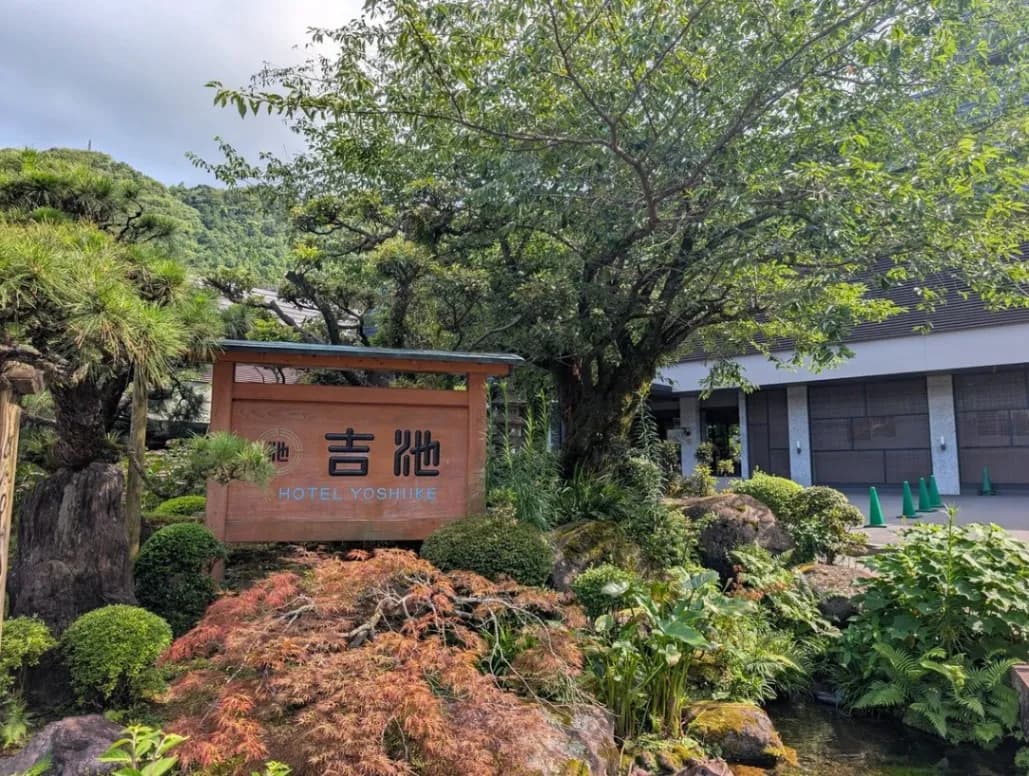
Mixed bathing and swimwear. Most baths in Shizuoka are separated by gender, and you bathe without clothing. Swimwear is generally not allowed in indoor baths. One exception is Kouchi Onsen Kanaya Ryokan's Senninburo, a large mixed-gender (konyoku) bath; women may bathe there wearing a bathing garment or towel and have a separate entrance. The individual data page for each inn notes the bath layout.
Reservations. Overnight stays at small ryokan should be booked in advance; several of the inns above are single-property hot springs with limited rooms. Day-use bathing normally does not require a reservation, but hours are short, and Yoshina Onsen Oyado Sakaya and Sessokyo Onsen Tabunoie have no day-use bathing at all.
Payment. Assume cash. Larger inns accept credit cards, but small mountain ryokan and vending machines for bath tickets often do not, and ATMs accepting foreign cards are scarce once you leave central Izu. Carry enough Japanese yen for the trip.
Getting there by train and bus. Southern and central Izu are the easiest areas to reach without a car. Take the Izukyu Line to Izukyu-Shimoda for the southern coast, or the Izuhakone Railway to Shuzenji for central Izu. Kouchi Onsen Kanaya Ryokan is within walking distance of Rendaiji Station. Sumatakyo is reached by bus and Sessokyo by the Oigawa Railway's Ikawa Line, both infrequent. Umegashima has bus service from JR Shizuoka Station, about 1 hour 50 minutes with infrequent departures; check the timetable in advance, and the inn can arrange a pickup with notice.
Looking for Something Wilder
This guide required that you can sleep there, and that overlap with our hidden hot springs list stays small, which leaves out most of the Southern Alps' deepest inns and many of the quieter finds around Shimoda and southern Izu. Our guide to Shizuoka's hidden hot springs covers those, along with two inns also featured here — Shuzenji Onsen Arai Ryokan and Yugashima Onsen Yumotokan — plus places like Kannon Onsen, Sawada Koen Rotenburo, and Minami Alps Akaishi Onsen Shirakabaso.
10 Hidden Hot Springs in Shizuoka: From the Izu Peninsula to the Southern Alps
Across the Border
Shizuoka borders Kanagawa, Yamanashi and Nagano prefectures. Cross the mountains from the Izu Peninsula and you reach Hakone in Kanagawa; head further north from the Southern Alps foothills and you reach the mountains of Yamanashi and Nagano. For a trip that crosses the prefectural border, these guides cover the other side.
Yamanashi's 10 Secret Hot Springs: From Southern Alps Hideaways to Shingen's Hidden Baths
Nagano Onsen Guide: 20 Hot Springs and the Village Bathhouse Circuit
Planning a Route
The Izu Peninsula and the Southern Alps foothills are far apart, and trying to see both on one trip means spending most of it in transit. Pick one area.
Southern Izu and Shimoda. Izukyu-Shimoda Station is the starting point. Kouchi Onsen Kanaya Ryokan is about 10 minutes away by taxi, or reachable on foot from Rendaiji Station on the Izukyu Line. Pairs well with Shimoda's beaches and its late-Edo historical sites.
Central Izu: Shuzenji to Yugashima. Shuzenji Station on the Izuhakone Railway is the gateway. Shuzenji Onsen Arai Ryokan is about 10 minutes away by bus or taxi; Yugashima Onsen Yumotokan, Yoshina Onsen Oyado Sakaya and Funabara Onsen Funabarakan are all further into the mountains from there, and moving between inns means driving.
Izu's gateway: Kannami. Izu Hatake Onsen Seizan sits in Kannami Town, at the base of the peninsula, with relatively easy access from Tokyo. Works well as a first or last night on a wider Izu trip.
Deep in Shizuoka City: Umegashima. About 50 minutes by car from the Shin-Shizuoka IC on the Shin-Tomei Expressway via prefectural Routes 27 and 29, the old Abe Kaido. A bus runs from JR Shizuoka Station, but departures are limited, so check the timetable first.
Southern Alps foothills: Sumatakyo to Sessokyo. Senzu Station is the starting point, though part of the Oigawa Railway's main line to Senzu has been closed since 2022 typhoon damage, so some rail connections require a bus transfer. Sumatakyo Onsen Tekarisanso is about 40 minutes from Senzu by bus. Sessokyo Onsen Tabunoie is further on, about 70 minutes from Senzu on the railway's Ikawa Line and an 8-minute walk from the station. Both routes run infrequently — check the Oigawa Railway's official site before you go.
Late autumn through winter is when the open-air baths in the mountains are best, with visible steam in the cold air. Roads and rail lines around the Southern Alps foothills can be affected by winter conditions, so check before travelling. Izu stays comparatively mild year-round and pairs well with a trip to the coast.
Frequently Asked Questions
Can I visit these inns just for a bath, without staying?
It depends on the inn. Kouchi Onsen Kanaya Ryokan and Izu Hatake Onsen Seizan both accept day visitors. Yoshina Onsen Oyado Sakaya and Sessokyo Onsen Tabunoie, by contrast, are overnight guests only and have no day-use bathing (day visitors to the Sessokyo area can instead use the municipal Sessokyo Onsen Kaikan). Hours change, so check the data page and the official site.
Which of these are free-flowing spring water?
Seven of the 9, including some with reheating. Shuzenji Onsen Arai Ryokan is only partly free-flowing, with circulation and filtration used in every bath and some seasonal dilution. Sessokyo Onsen Tabunoie heats its source, and its free-flowing status is not published. Tubs within one inn can differ, so check the individual data page.
Are Atami and Ito inns included?
Not in this list of 9. The list is limited to properties whose water type, pH and free-flowing status are documented on our own data pages, and none of Atami, Ito, Inatori, Izunagaoka or Atagawa currently have a listing on this site.
How much Japanese do I need?
Enough to reserve by email or through a booking site. Staff at small inns often speak little English, but written communication and translation apps work well, and bath etiquette is signposted with pictograms in most places.
When should I come?
Late autumn through winter for the open-air baths, when the steam is most visible in the cold air. The Southern Alps foothills can see icy roads in winter. Izu stays milder year-round.
Notice
The information in this article (admission fees, operating hours, water quality data, etc.) is based on research conducted at the time of writing. Details may have changed or contain errors. Please verify the latest information on each facility's official website or through the local tourism association.