8 Best Hidden & Notable Hot Springs in Kanagawa Prefecture — From Hakone's Ancient Baths to Tanzawa's Beauty Waters

秘湯

Kanagawa Prefecture is home to Hakone, one of Japan's most famous hot spring destinations. Yet beyond Hakone's well-known resort hotels lie remarkable hidden gems: foot-source springs where thermal water wells up directly through the bath floor, ultra-alkaline waters with pH levels above 10, and centuries-old bathhouses steeped in samurai legend. The Tanzawa mountain range, just an hour from central Tokyo, conceals secluded inns surrounded by pristine forests and crystal-clear streams. Here, we present 8 carefully selected destinations, each offering a distinctive and authentic hot spring experience.

1. Nakagawa Onsen Ao no Sanso (Yamakita Town, Ashigarakami District)

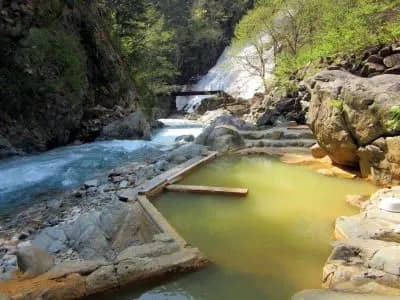
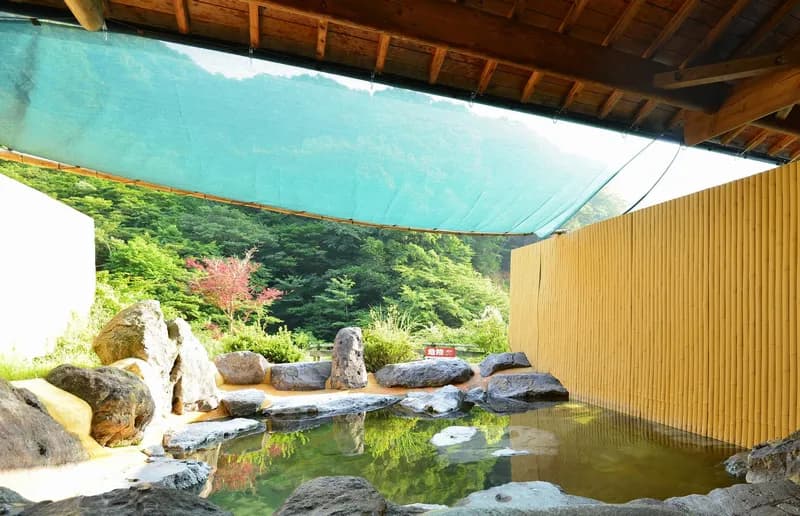
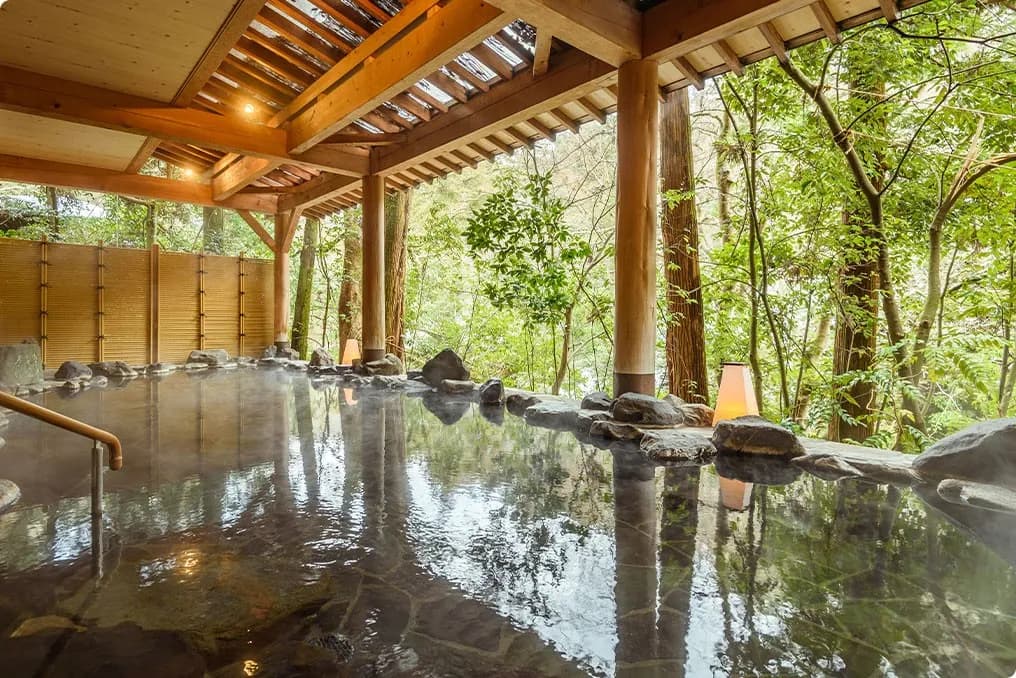
Ao no Sanso is a secluded inn at the deepest reaches of Nakagawa Onsen in the Tanzawa mountains of Kanagawa Prefecture — a spring long known as one of Takeda Shingen's kakushi-yu (hidden healing springs), where the warlord is said to have sent his wounded soldiers to recover after battle. Despite being just 90 minutes from central Tokyo by car, the inn is enveloped in the deep quiet of a mountain valley. It is the sole member inn of the Nihon Hitoyu wo Mamoru Kai (Society for the Preservation of Japan's Hidden Hot Springs) in Kanagawa Prefecture. The inn's defining feature is its on-site self-flowing spring at an exceptional pH 10.5 — one of the highest alkalinity readings of any hot spring in Japan. The water flows undiluted and chemical-free into all six baths, leaving skin remarkably smooth and soft — a classic "beauty spring." The facility has been recognized as a model site under the Japan Spa Association's natural hot spring certification program. The grounds span roughly 33,000 m² (one mantubo), attracting over 60 species of wild birds annually. In early summer, the trees fill with the egg masses of Kajika tree frogs, and nightly guided firefly-watching tours are held along the property. Inside the inn, a gallery dedicated to Koji Fukiya — a beloved Taisho and Showa-era lyrical artist who evacuated to nearby Yamakita Town during the war — houses around 2,000 works including original paintings and publications. Nature and art coexist here in a way found nowhere else.
View detail page

2. Nakagawa Onsen Shingenkan (Yamakita Town, Ashigarakami District)

3. Kabutoyu Onsen Sansuiro (Atsugi City, Nanasawa Hot Spring District)

View detail page

4. Iiyama Onsen Motoyu Ryokan (Atsugi City)

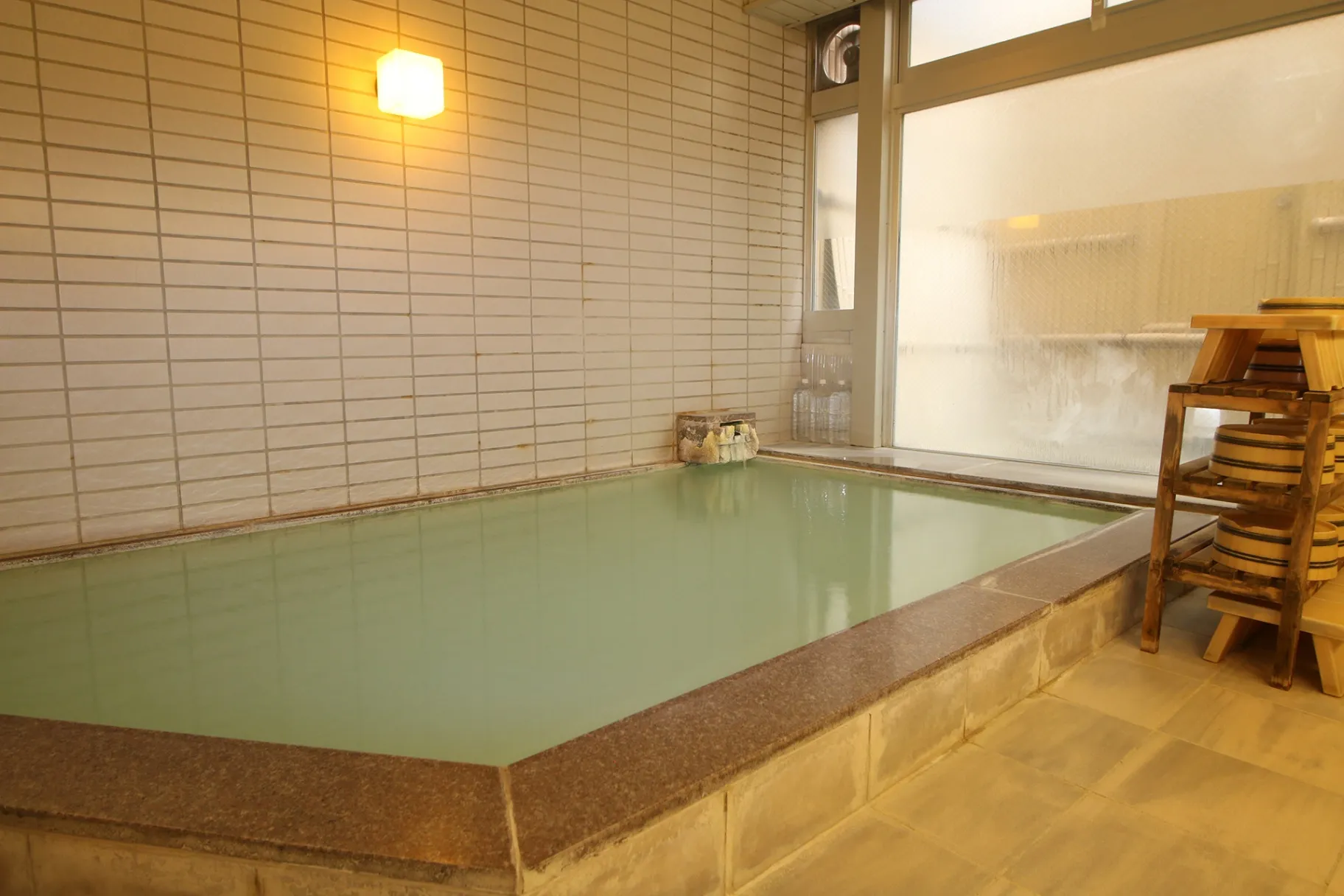
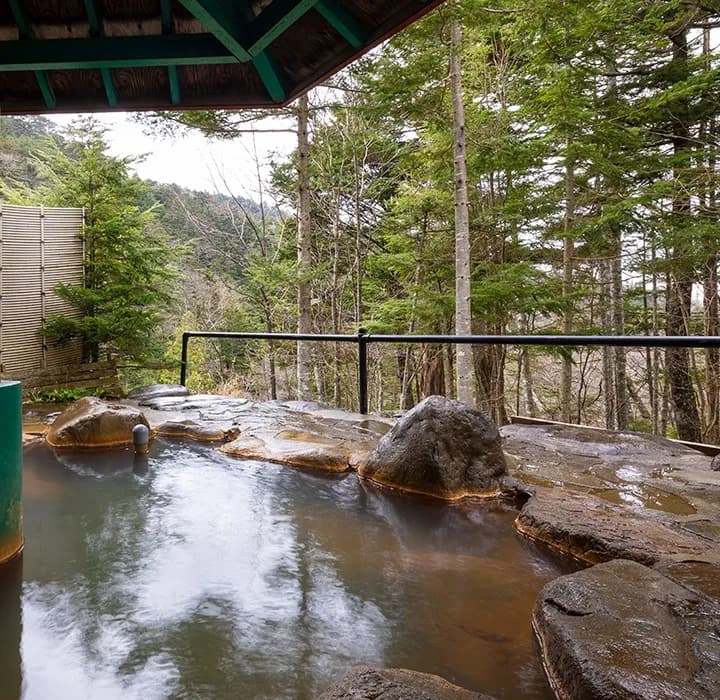
Iiyama Onsen is a historic spa town nestled along the Koayu River at the eastern edge of the Tanzawa mountain foothills in Atsugi City, Kanagawa Prefecture. Its origins trace back to the late Edo period, and its reputation as a thriving therapeutic bathing destination was significant enough to be documented in the "Kokoku Chishi" (Imperial Geography) published in 1875. Motoyu Ryokan, whose name literally means "original source inn," has faithfully preserved the foundational spring of Iiyama Onsen for generations. The inn's distinctive layout connects its various buildings through narrow alleyways reminiscent of a castle town, transporting guests into a world apart from everyday life. Despite being just 20 minutes from Ebina Service Area and roughly 60 minutes from central Tokyo, the tranquil setting surrounded by Tanzawa's mountains and rivers feels like a secluded retreat deep in the wilderness.\n\nThe crowning jewel of Motoyu Ryokan is its remarkably alkaline hot spring water, boasting a pH of 11.3 — placing it among the highest in all of Japan. This exceptional spring was successfully tapped during development work in 2003, and unlike many alkaline springs that feel viscous or slimy, Iiyama's water is characteristically smooth and silky to the touch. Upon immersion, the alkaline water gently softens the skin's keratin layer, and bathers emerge with a sensation often compared to wearing a layer of luxurious moisturizer. This extraordinary skin-smoothing quality has earned it nationwide acclaim as a "beauty water" spring. The water is classified as a simple alkaline hot spring and is served as free-flowing source water — an increasingly rare luxury in Japan's hot spring world.\n\nThe inn houses several distinct bathing facilities, each offering its own atmosphere. The "Tanuki-buro" (Raccoon Dog Bath) is the main bathhouse that preserves the ambiance of the original Edo-period therapeutic bathing hall, surrounded by charming tanuki figurines that add a playful touch to the historic setting. The "Keiryu Rotenburo" (Mountain Stream Open-Air Bath) provides an immersive experience where bathers can listen to the gentle murmur of the Koayu River while gazing at the ever-changing Tanzawa scenery through the seasons. The "Utaseyu Rotenburo" features a waterfall shower that kneads away tension in tired muscles, while the intimate "Yu-asobi" bath offers a quiet retreat fed by the inn's own private source. A reservable private bath is also available for those seeking a more personal soaking experience.\n\nThe cuisine at Motoyu Ryokan is another compelling reason to visit. The kitchen showcases the bounty of both the Tanzawa mountains and nearby Sagami Bay, crafting seasonal menus that celebrate the region's finest ingredients. Summer brings fresh sweetfish (ayu) from the Koayu River, while winter features the hearty botan-nabe — a rich wild boar hot pot that is a beloved Tanzawa specialty. Atsugi's signature marinated grilled pork (ton-tsuke-yaki) and the inn's original sun-dried sweetfish are standout delicacies not to be missed. The day-trip plan "Yuagari Bijin" (Post-Bath Beauty) starts from 7,500 yen with a meal included, making it easy to enjoy both the springs and the cuisine without an overnight stay. While the inn rewards visitors in every season, the mountain stream open-air bath is particularly spectacular during fresh green season in spring and the fiery foliage of autumn, offering a restorative escape that feels worlds away from the city.
View detail page

5. Ubako Onsen Shumeikan (Hakone Town, Ashigarashimo District)

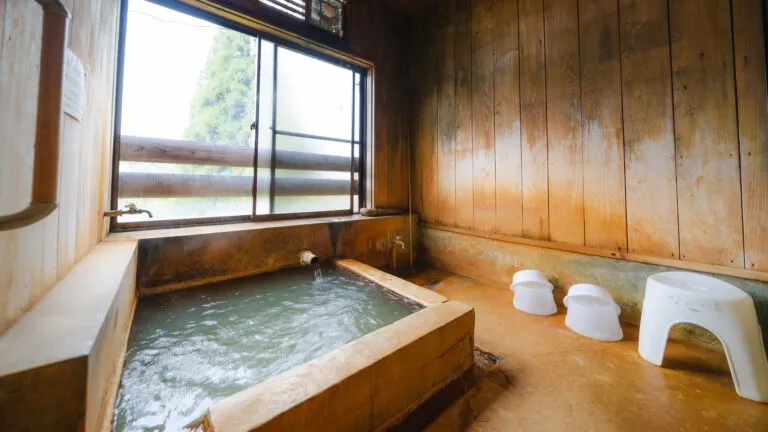
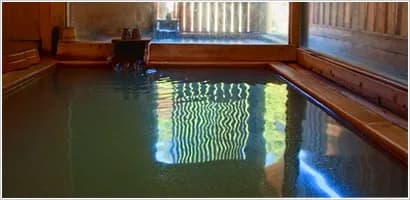
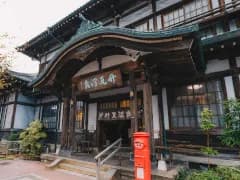
Ubako Onsen Shumei-kan is a traditional toji (therapeutic bathing) inn tucked into the forest of Hakone's Ubako area at 885 meters elevation, founded in 1902. Its history stretches back to ancient legend: it is said that Kintoki's mother, the mountain witch Yamauba, washed her son's injured eyes in this spring at the divine instruction of Hakone Gongen — and they healed instantly. This legend earned Ubako Onsen a place among the "Three Great Eye-Healing Hot Springs of Japan." The inn's greatest treasure is its ashimoto yushutsu-sen — a spring that wells up directly from cracks in the bedrock of the bath floor, marked with a sacred shimenawa rope. The water is completely natural, with no dilution, heating, or disinfection of any kind. During the rainy season in summer, the flow can reach an astonishing 3,000 liters per minute. The spring is a simple hot spring (pH 3.3, mildly acidic), and the clear, soft water leaves a refreshingly clean feeling on the skin characteristic of acidic springs. The inn occupies a beautifully preserved Taisho-era wooden building on a roughly 10,000 m² plot. It runs no advertising, serves no meals, and admits only around 15 guests per day. The experience is simple and intentional: rent a private room, alternate between soaking and resting, and do nothing else. Private room use is ¥2,500 for 2 hours or ¥4,000 for 4 hours; bathing only (from 15:00) is ¥1,500. Lowering yourself into the spring-fed water in the dimly lit bath, feeling the warmth rise from the ancient bedrock below, is a primal, quietly moving experience unlike anything else in Hakone — and among hot spring enthusiasts, Shumei-kan is simply known as "the most authentic hot spring in Hakone."
View detail page

6. Ashino-yu Onsen Matsuzakaya Honten (Hakone Town, Ashigarashimo District)

7. Ashino-yu Onsen Kinokuniya (Hakone Town, Ashigarashimo District)

8. Sokokura Onsen Kanrei (Hakone Town, Ashigarashimo District)

Summary — What to Know Before Exploring Kanagawa's Hot Springs

The hot springs of Kanagawa Prefecture can be efficiently explored by dividing them into two main areas.

Tanzawa Area: Ao no Sanso and Shingenkan in Nakagawa Onsen, Kabutoyu Onsen Sansuiro, and Iiyama Onsen Motoyu Ryokan are all nestled in the Tanzawa mountain range. The most accessible from Tokyo are Iiyama Onsen Motoyu Ryokan (about 20 minutes from Tomei Atsugi IC) and Kabutoyu Onsen Sansuiro (about 30 minutes from the same IC), both feasible as day trips. The two Nakagawa Onsen inns are located deeper in the Nishi-Tanzawa mountains, making an overnight stay the ideal way to enjoy the early morning baths. A 1-night/2-day itinerary from Iiyama Onsen to Kabutoyu Onsen to Nakagawa Onsen allows visitors to compare the different skin textures of alkaline waters ranging from pH 11.3 down to pH 10.0 — a luxurious bathing tour. Public bus service in the Tanzawa area is limited, so a rental car is recommended. Winter road conditions around Nakagawa Onsen require caution due to potential icing.

Hakone Area: Ubako Onsen Shumeikan, Matsuzakaya Honten and Kinokuniya in Ashino-yu, and Sokokura Onsen Kanrei are all located within Hakone's mountainous interior. Sokokura Onsen Kanrei in the Miyanoshita area offers the easiest access from Hakone-Yumoto. The two Ashino-yu inns sit along Route 1, while Ubako Onsen Shumeikan is conveniently reached by the Hakone Ropeway. Hakone's excellent public transportation network allows visitors to use the Hakone Free Pass to connect mountain railways, cable cars, ropeways, and buses for an efficient circuit. A rewarding day itinerary would be to enjoy day-trip bathing at Kinokuniya in Ashino-yu, then take the ropeway to Ubako for the rare foot-source spring experience at Shumeikan. Matsuzakaya Honten is accommodation-only, so an overnight stay is necessary to savor its 360 years of heritage. During winter (December to February), be aware of potential road icing and snowfall in the Hakone mountains. Note that Shumeikan is closed throughout February and Kanrei operates by reservation only — always confirm before visiting.

The information in this article (admission fees, operating hours, water quality data, etc.) is based on research conducted at the time of writing. Details may have changed or contain errors. Please verify the latest information on each facility's official website or through the local tourism association.
Recommended Hot Springs

Popular hot springs from Hitou Map

HomeMapSearchBlogMy Page