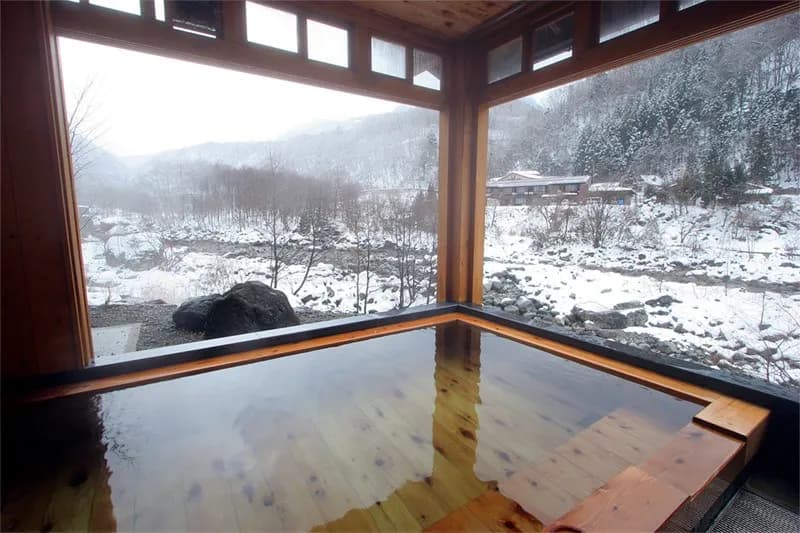
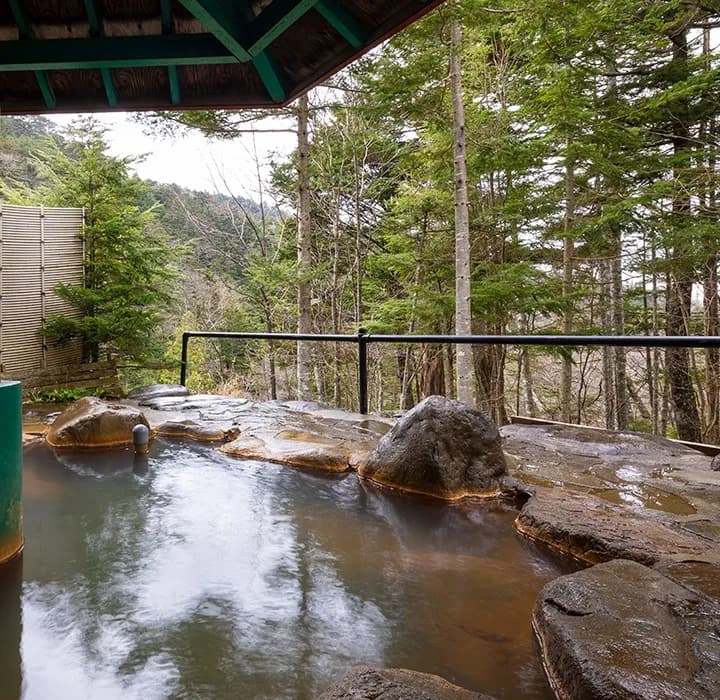
11 Best Hidden & Notable Hot Springs in Nara Prefecture — From Sacred Mountain Springs to the Deepest Gorges of the Kii Peninsula

秘湯

Nara Prefecture is a treasury of hidden hot springs shaped by the spiritual landscape of the Kii Mountains and the deep gorges that carve through Japan's ancient heartland. Along the great spine of the Omine mountain range — opened by En no Gyoja, the legendary founder of Shugendo ascetic practice — remote valleys from Yoshino to Totsukawa harbor centuries-old therapeutic baths and the hot spring villages of Totsukawa, which in 2004 became the first municipality in Japan to declare all its springs 100% natural free-flowing. Here you will find a thousand-year-old carbonated spring, a hidden bath where travertine formations engulf the very bathtubs, and an ultra-alkaline spring exceeding pH 10 — each one a direct reflection of the region's geology and spiritual heritage. We have selected 12 destinations of exceptional character from among these remarkable springs.


---

1. Shionoha Onsen Yamabatoyu (Kawakami Village, Yoshino District)
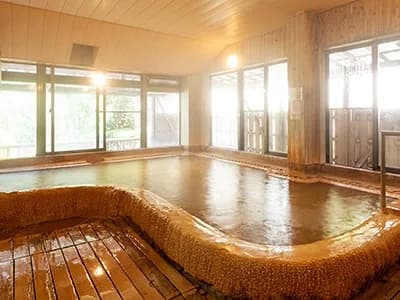
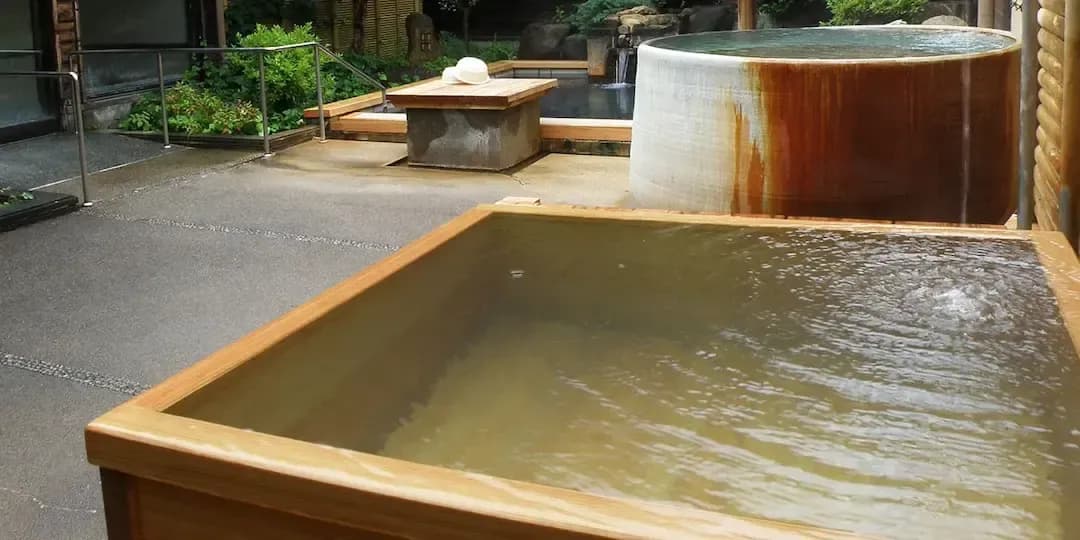
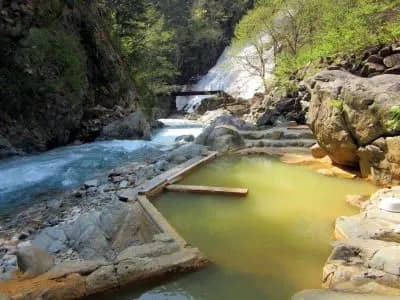
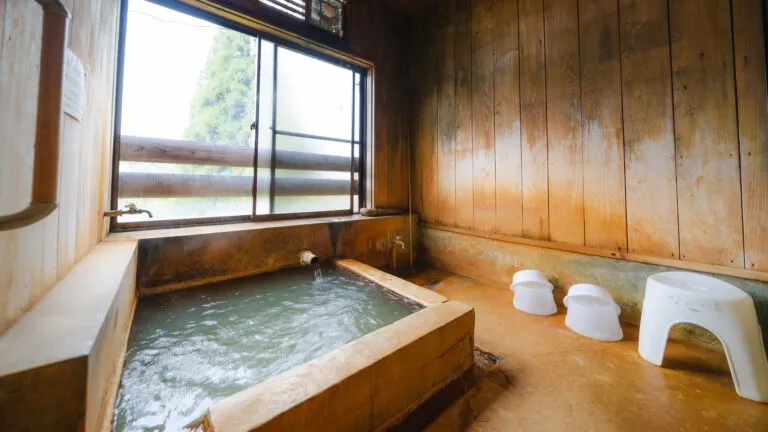
Shionohа Onsen Yamabato-yu is a hidden gem hot spring (秘湯) with over 1,000 years of history, nestled on the shores of Osako Dam Lake in Kawakami Village, Nara Prefecture. Its origins trace back to the Heian period, with legend holding that En no Ozunu, the founder of Shugendo mountain asceticism, discovered the spring. When the dam was completed in 1973, the original source was submerged beneath the reservoir — but the local Nakamura family drilled 150 meters underground to find a new source, and the ryokan Yamabato-yu was reborn in 1977. The spring is a sodium-calcium chloride bicarbonate spring (source temperature 39.6°C, pH 6.6). Its defining features are a remarkable natural flow of 500 liters per minute and an exceptionally high dissolved CO₂ concentration of 768.3 mg/kg — among the highest of any natural carbonated spring in Japan. The water emerges clear, but on contact with air, calcium carbonate precipitates out, turning the water a striking golden to reddish-brown. This mineral deposit — known as travertine — accumulates at 1–2 cm per year, coating the tubs and rock surfaces in a cave-like, almost otherworldly formation. The bathing facilities include an indoor bath of rustic cedar log construction and an outdoor bath hollowed from an enormous keyaki (Japanese elm) log. The outdoor bath looks out over Osako Dam Lake and the deep gorges of Oku-Yoshino. In autumn, the contrast between the blazing mountain foliage and the golden water is simply breathtaking. The dining room serves local mountain cuisine, and the winter-only bear hot pot (kuma nabe) draws food lovers from far afield.
View detail page

2. Kamiyu Onsen Kamiyuso (Totsukawa Village, Yoshino District)

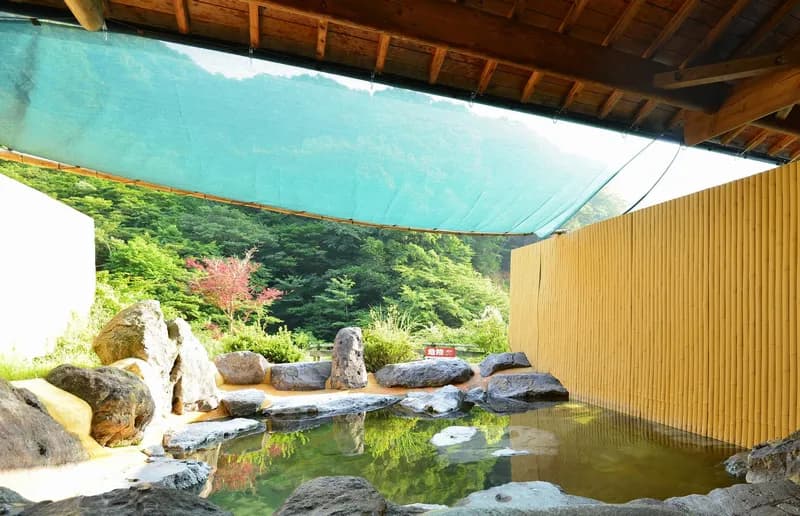
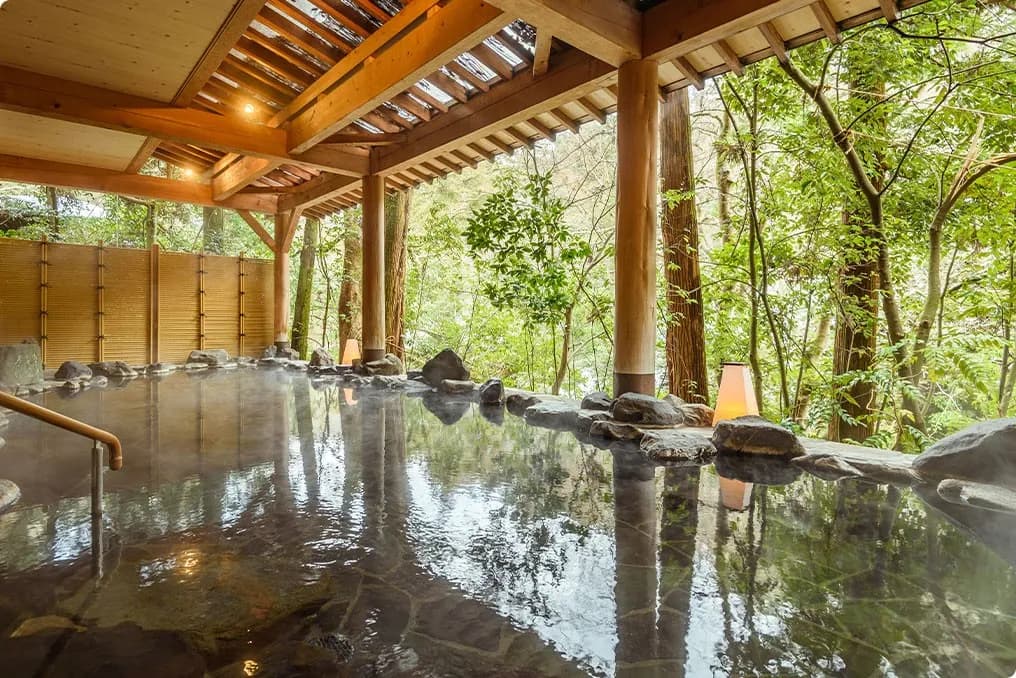
Kamiyu Onsen Kamiyuso is a secluded single-inn hot spring ryokan along the Kamiyugawa river in Totsukawa Village, deep in the Kii Peninsula of Nara Prefecture. The spring's history dates to the Kyoho era (1716–1736), when locals discovered hot water bubbling up from the mountainside. The celebrated author Ryotaro Shiba visited while researching his landmark work Kaido wo Yuku, and was so captivated by the tranquil surroundings that he stayed for an extended period to write. In 2004, Totsukawa Village became the first municipality in Japan to officially declare a commitment to 100% free-flowing, undiluted hot spring water (gensen kakenagas hi sengen). The spring is a sodium bicarbonate hot spring (source temperature 76.6°C, pH 8.3), served completely undiluted and without chlorine treatment. Large flakes of yubana (mineral sediment) float in the water, and the characteristic silky feel of a bicarbonate spring envelops the skin. Long prized as a "beauty spring," it gently removes dead skin cells to leave the complexion smooth and supple, and is said to benefit those with atopic dermatitis. A faint scent of hydrogen sulfide adds to the authentic hidden-spring atmosphere. The inn features 8 baths in total — 2 indoor and 6 outdoor. The large riverside outdoor baths, Lamp no Yu and Mizu no Kami, offer views of the Kamiyugawa stream and the ancient forests of the Kii Mountains. Private outdoor baths are also available, and overnight guests can enjoy a full yu-meguri (bath-hopping) experience across all bathing areas. Kamiyuso is a member of the Nihon Hitoyu wo Mamoru Kai (Society for the Preservation of Japan's Hidden Hot Springs).
View detail page

3. Dorogawa Onsen Hanaya Tokubei (Tenkawa Village, Yoshino District)

Hanaya Tokubei, located in the village of Dorogawa, Tenkawa, Yoshino District, Nara Prefecture, is the oldest inn in the Dorogawa Onsen district, with a lineage stretching back five centuries to the present 17th-generation proprietor, Yoshiharu Hanatani. Dorogawa Onsen sits at the foot of Mount Omine, a UNESCO World Heritage site and one of the holiest mountains in the Shugendo tradition of Japanese mountain asceticism. The hot spring village has served as a staging ground for yamabushi pilgrims since ancient times. The legend of Goki, the rear demon, is central to the inn's identity. According to tradition, the founder of Shugendo, En no Gyoja, tamed a husband-and-wife pair of demons known as Zenki and Goki. Goki, the wife, is said to have hailed from what is now Tenkawa Village. On his deathbed, En no Gyoja entrusted Goki with the care of future mountain ascetics, and Dorogawa has honored that charge ever since. Hanaya Tokubei carries forward this 500-year spiritual heritage, preserving spaces where the history of Shugendo is palpable.\n\nThe spring water is classified as a simple hot spring, hypotonic, mildly alkaline, and low temperature, with a pH of 8.29, a source temperature of 29 degrees Celsius, and a flow rate of 140 liters per minute. The water is colorless, odorless, and notable for its exceptionally gentle feel on the skin, a hallmark of mildly alkaline springs that makes it unlikely to cause bathing fatigue even during extended soaks. The alkaline properties gently dissolve old surface skin cells, leaving the skin supple and moisturized after bathing, earning it a quiet reputation as a beauty spring. The waters are recognized for therapeutic benefits including neuralgia, muscle pain, joint pain, frozen shoulder, chronic digestive ailments, cold sensitivity, and fatigue recovery. For centuries, mountain ascetics have restored their bodies in these waters after grueling climbs, and modern travelers receive the same restorative gift.\n\nThe inn houses three distinct bathing facilities. Zenki-no-Yu is an indoor bath renovated in 2017, offering a serene environment for unhurried soaking. Goki-no-Yu is a semi-open-air bath overlooking a Japanese garden, where the changing seasons provide an ever-shifting backdrop. Zekuu-no-Yu is a private reserved bath exclusively for overnight guests, available by reservation for 50 minutes at 2,500 yen, with the garden illuminated at night for a luxurious experience. All three baths are accessible 24 hours a day, and soaking in the quiet hours of early morning or late night is an experience unto itself. The inn accepts only six guest parties per day across its eight rooms, ensuring an atmosphere of deep tranquility. The retro wooden architecture, built with locally sourced Yoshino cedar, and the kaiseki cuisine served in private rooms using mountain and river ingredients further distinguish the experience.\n\nBy car, the inn is approximately 60 minutes (40 km) from Gose-Minami IC on the Keinawa Expressway via National Route 309. By public transport, take the Kintetsu Limited Express from Osaka Abenobashi Station to Shimoichiguchi Station (about one hour), then a Nara Kotsu bus bound for Dorogawa Onsen (about 80 minutes), followed by an eight-minute walk from the terminal stop, with a shuttle available upon advance request. Note that bus service drops to just two round trips per day during winter months from December through April. The yamabushi pilgrimage season from early May to late September brings the onsen village to life, with lantern-lit streets creating an atmospheric backdrop for evening strolls. A stay at Hanaya Tokubei, soaking in waters that have sustained spiritual seekers for half a millennium, is an experience that exists nowhere else.
View detail page

4. Yoshino Onsen Motoyu (Yoshino Town, Yoshino District)

Yoshino Onsen Motoyu is a solitary inn nestled in the mountain village of Mount Yoshino, Yoshino Town, Nara Prefecture, where hot spring waters have flowed for approximately 300 years. Mount Yoshino is celebrated as Japan's premier cherry blossom destination, but it has also served since ancient times as a sacred training ground for Shugendo mountain asceticism on Mount Omine. Literary figures and Shugendo practitioners from across the nation made their way here, and word of 'Yoshino's waters' spread through oral tradition. Yet a curious fate awaited this spring: when ascetics began using bathing as a pretext to break their religious vows, authorities ordered the bathhouse demolished. The people's thirst for the healing waters could not be extinguished, however, and bathing continued in secret through makeshift facilities. The spring became known as 'Yoshino's Hidden Spring' and 'Naisho-buro,' the secret bath, names that carry the whisper of centuries of clandestine devotion. In 1870, the inn was formally established and has operated as a single-inn hot spring ever since. The spring water is classified as a carbon dioxide-calcium-sodium-bicarbonate spring, hypotonic, neutral, and cold mineral, with a pH of 6.2, a source temperature of 13.2 degrees Celsius, and a total dissolved content of 3,620 mg/kg. Its most remarkable feature is the extraordinary free carbon dioxide content of 2,183 mg, more than double the legal threshold of 1,000 mg. Among Japan's three rarest spring types, carbon dioxide springs of such high concentration are exceptionally precious. With 125 mg of metasilicic acid, the water also exceeds the 100 mg threshold for designation as a beauty spring. The water appears pale yellow, turning ochre through iron oxidation, with carbon dioxide bubbles visibly effervescing at the surface. The spring is delivered as a free-flowing source with heating but without dilution, circulation, or chlorination, maintained at a gentle temperature below 41 degrees Celsius. Bathers notice a distinctive slightly rough, gripping sensation on the skin. The men's and women's indoor baths each accommodate three to four people, an intimate scale perfectly suited to a true hidden spring. The natural flow rate is 7.9 liters per minute from a self-surging source. Day-trip bathing is available for 800 yen for both adults and children, from 11:00 to 15:00 with last admission at 14:30, though it is suspended during Golden Week from April through May. Overnight stays are available across seven guest rooms starting from 15,400 yen per night with two meals, with check-in at 14:00 and check-out at 10:00. Access is a 20-minute walk from Kintetsu Yoshino Station via the Sasayaki-no-Komichi trail, with shuttle service available upon request. By car, the inn is approximately 60 minutes from Koriyama IC on the Nishi-Meihan Expressway via National Routes 24 and 169, with parking for 12 vehicles. Whether visiting in spring when Yoshino's cherry blossoms reach their peak, or in the deep silence of a snow-covered winter, sinking into these carbonated waters that Shugendo ascetics secretly preserved for centuries, the story of the Naisho-buro shimmers through the rising steam, transcending 300 years of history.
View detail page

5. Totsukawa Onsen Hotel Subaru (Totsukawa Village, Yoshino District)

View detail page

6. Yusenchi Onsen Yado Yunosato (Totsukawa Village, Yoshino District)

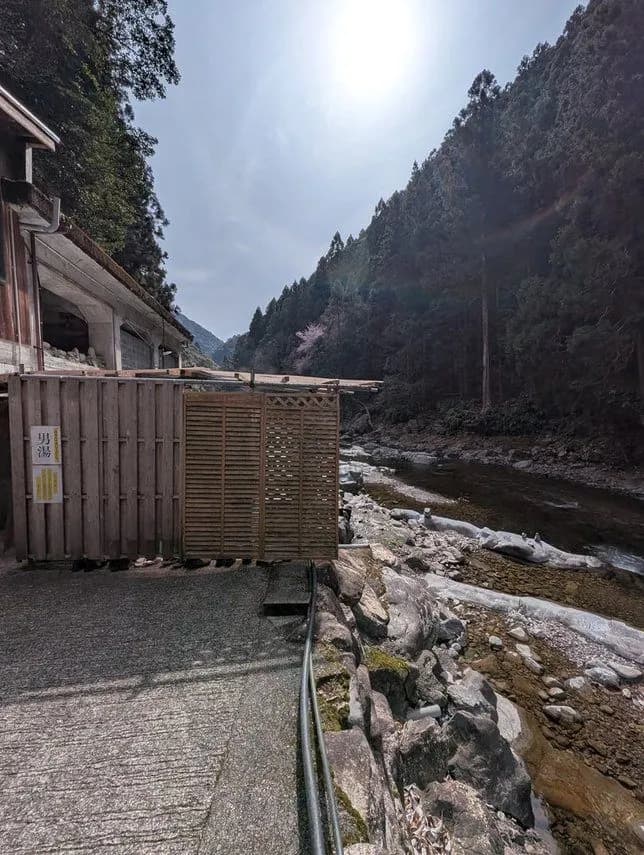
Yusenchi Onsen, nestled in the village of Musashi in Totsukawa, Yoshino District, Nara Prefecture, holds the distinction of being the oldest hot spring in the Totsukawa Onsen-gou. Its origins trace back to the Muromachi period, when a devastating earthquake in 1450 shifted the subterranean thermal veins and caused hot water to surge forth in the hamlet of Musashi, as chronicled in the annals of Tosenji Temple. Tosenji itself carries profound spiritual significance, associated with the legendary mountain ascetic En no Gyoja and the great Buddhist monk Kukai, who is said to have carved a statue of Yakushi Nyorai, the Medicine Buddha, during his training on Mount Omine. The temple lent its name to the hot spring, and the tradition of therapeutic bathing here spans more than five centuries. The earliest documented visitor was Jitsuji, the youngest son of Rennyo, the eighth head priest of Hongan-ji Temple, who came for a curative soak in 1552. In 1581, the exiled feudal lord Sakuma Nobumori also sought solace in these waters. Yado Yunosato, as a member inn of the Association for the Preservation of Japan's Secret Hot Springs, carries forward this extraordinary legacy of toji (hot spring therapy) culture. The spring water is classified as a simple sulfur spring of the hydrogen sulfide type, with a neutral to mildly alkaline pH of 7.6, a source temperature of 55.5 degrees Celsius, and a flow rate of 87 liters per minute. The water is colorless and transparent, with a delicate sulfur aroma that greets bathers upon entering the bathing hall. The inn delivers 100 percent of its private source water in a completely unadulterated free-flowing manner, with no heating, no dilution, and no chlorine treatment whatsoever, ensuring that the freshest possible mineral water fills the baths at all times. On June 28, 2004, the Totsukawa Onsen-gou, encompassing Yusenchi, Totsukawa, and Kamiyu hot springs, became the first hot spring district in all of Japan to issue an official kakenagashi (free-flowing source water) declaration, a bold statement of commitment to authenticity in an era of widespread hot spring adulteration. The water has a silky smooth feel on the skin and is recognized for therapeutic benefits including chronic gynecological conditions, neuralgia, muscle pain, joint pain, chronic skin conditions, and general fatigue recovery. The bathing facilities feature separate indoor and outdoor baths for men and women, one of each. A particularly striking design element is the way water continuously overflows from the indoor bath, cascading past the window frame and flowing directly into the outdoor bath below, a vivid demonstration of the source's generous output. The open-air bath commands sweeping views of the Totsukawa river gorge, offering bathers an immersive experience that shifts with the seasons: fresh green leaves in spring, deep verdant canopies in summer, blazing autumn foliage, and snow-dusted mountain vistas in winter. Bathing is available around the clock during your stay, excluding cleaning hours, and the experience of soaking in the predawn stillness or under a canopy of stars is nothing short of transcendent. The cuisine, drawing on the bounty of the mountains and rivers, is another hallmark of the inn. Reaching Yado Yunosato requires a journey into the heart of the Kii Peninsula. By car, it is approximately two and a half hours south from Gojo IC on the Hanwa Expressway via National Route 168. By public transport, the most efficient route is a two-and-a-half-hour bus ride from JR Shingu Station on the Nara Kotsu bus bound for Yamato-Yagi. Alternatively, from Kintetsu Yamato-Yagi Station, one can board one of Japan's longest bus routes for a four-hour journey through the mountains via JR Gojo Station. The latter route passes the famous Tanize Suspension Bridge, stretching 297 meters above the Totsukawa gorge, and is a memorable experience in itself. Totsukawa is the largest village in Japan by area and lies deep within one of the most remote regions of the Kii Peninsula. The journey demands time and determination, but the reward upon arrival, sinking into a centuries-old sulfur spring flowing directly from the earth without any alteration, is an experience of profound and irreplaceable satisfaction. Winter visits require caution due to potential road icing, and spring through autumn is the recommended season for travel.
View detail page

7. Yusenchi Onsen Taki-no-Yu (Totsukawa Village, Yoshino District)

8. Totsukawa Onsen Iori-no-Yu (Totsukawa Village, Yoshino District)

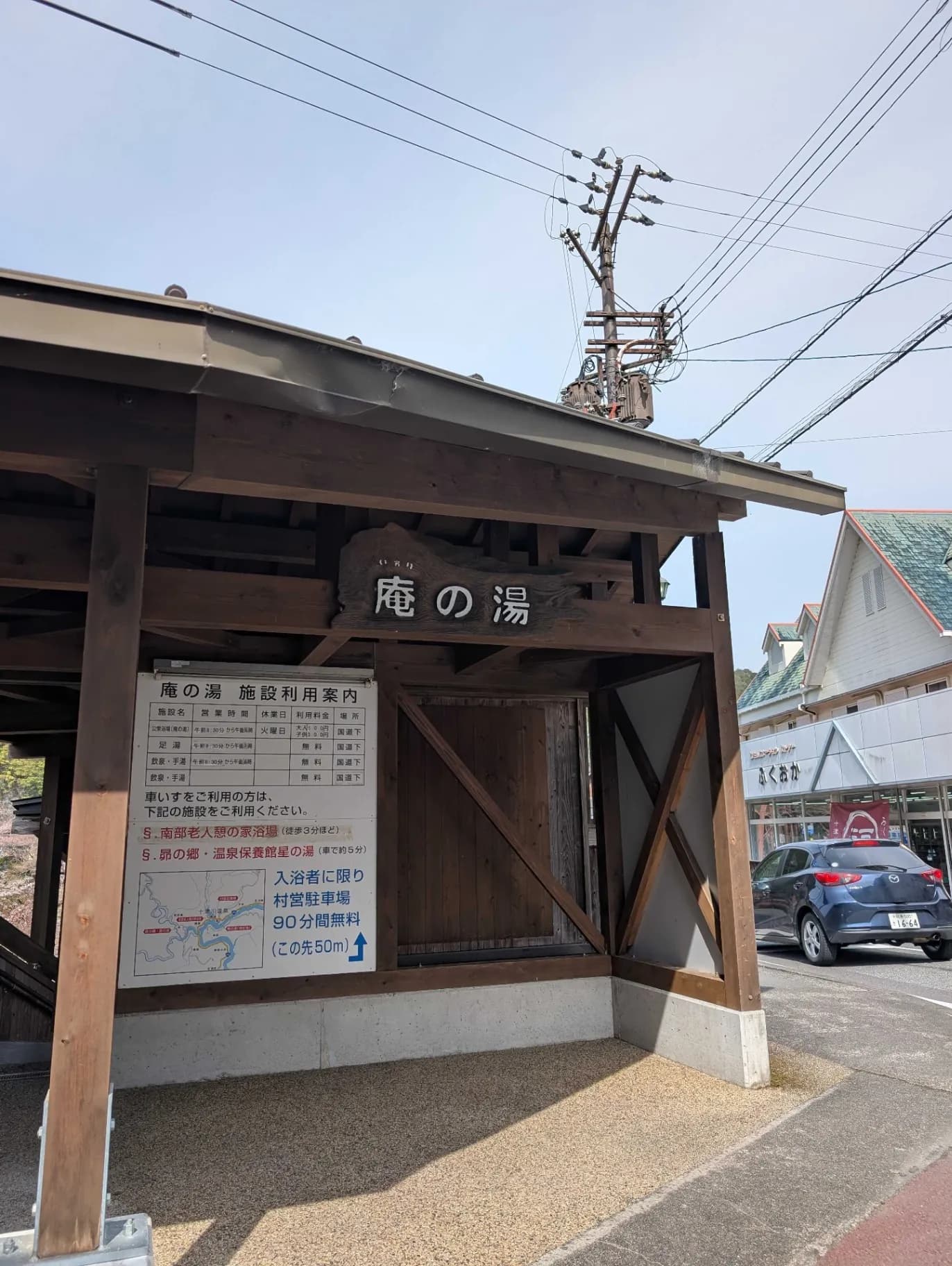
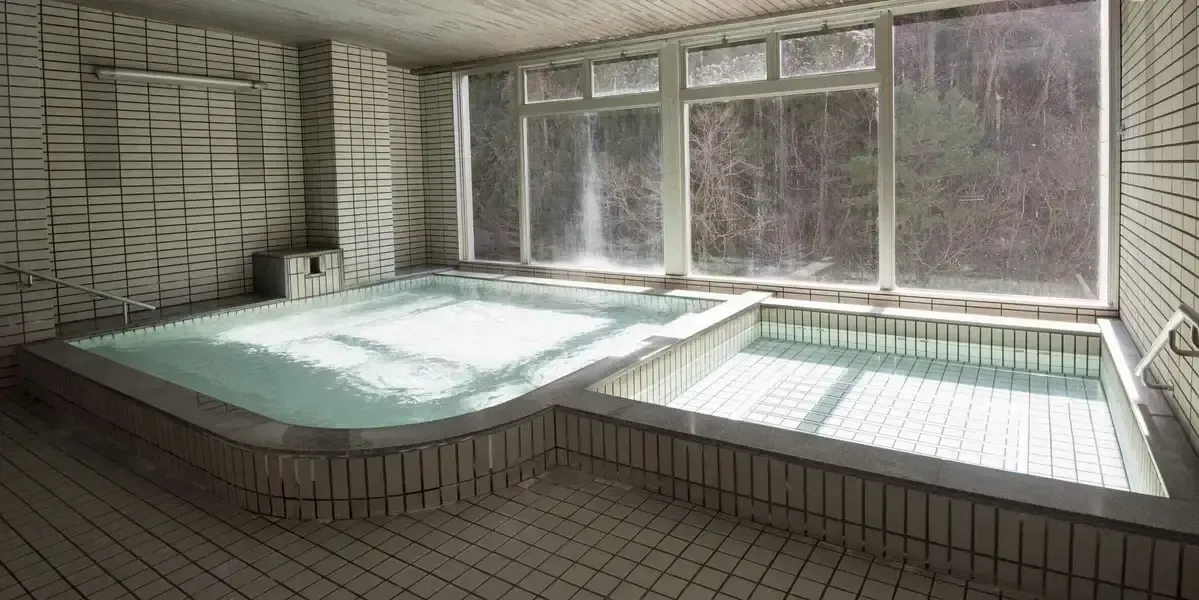
Totsukawa Onsen Iori-no-Yu is a village-operated public bathhouse situated on the shore of Futatsuno Dam Lake in Hiradani, Totsukawa Village, Yoshino District, Nara Prefecture. It opened in June 2005 and immediately drew attention as the first hot spring facility in Nara Prefecture to feature both a drinking fountain for spring water and a foot bath. In 2004, Totsukawa Village became the first municipality in Japan to issue a Source Water Free-Flowing Declaration, pledging that every hot spring facility in the village would provide genuine onsen water without any circulation, reuse, heating, dilution, or chlorine disinfection. Iori-no-Yu embodies this philosophy and serves as the gateway to the Totsukawa Onsen region, welcoming both local residents and travelers from afar. The spring water is classified as a sodium bicarbonate and chloride spring with a source temperature of 70 degrees Celsius and a mildly alkaline pH of 7.9. The high-temperature source water is naturally cooled to a comfortable bathing temperature and delivered to the tubs as 100 percent free-flowing source water. Upon entering the bathing room, one is enveloped by a rich aroma blending sulfur and iron, and the water caresses the skin with a remarkably soft, moisturizing quality. The bicarbonate properties of the spring leave the skin silky smooth after bathing, and the waters are reputed to be beneficial for cuts, sensitivity to cold, and burns. This is a rare bathhouse where one can experience the unadulterated power of a natural hot spring, entirely free of dilution or artificial heating. The facility comprises separate indoor baths for men and women, foot and hand baths overlooking Futatsuno Dam Lake, Nara Prefecture's first drinking spring fountain, and a rest area furnished with benches. Through the large windows of the bathing room, visitors are treated to a sweeping panorama of the emerald-green lake surface of Futatsuno Dam and the deep mountain ranges that encircle it. Cherry blossoms in spring, lush verdure in summer, fiery foliage in autumn, and snow-covered peaks in winter -- the natural canvas transforms with each season, all visible from the warmth of the bath. The foot bath is open free of charge, providing a welcome resting spot for travelers waiting for buses. At the drinking fountain, visitors can sample the spring water directly, which is believed to benefit the digestive system. The facility operates from 8:30 to 20:00 and is closed on Tuesdays. Admission is 600 yen for adults and 300 yen for children of elementary school age and below, with body soap and rinse-in shampoo provided. Directly connected to the Totsukawa Onsen bus terminal, it is reachable in approximately three hours by Nara Kotsu Bus from JR Gojo Station -- a route that forms part of the Yagi-Shingu Line, famed as the longest local bus route in Japan. By car, the journey from Gojo IC on the Keinawa Expressway takes approximately two hours south along National Route 168. There is no dedicated parking lot, but the village public parking lot is available free of charge for up to 90 minutes. Totsukawa Village, cradled deep within the mountains of the Kii Peninsula, is renowned as one of Japan's most secluded regions. The fact that Iori-no-Yu delivers its natural hot spring water entirely free of artificial treatment speaks quietly yet powerfully to the enduring value of authenticity in Japan's rich onsen culture.
View detail page

9. Tennokawa Onsen Center Mokumoku-no-Yu (Tenkawa Village, Yoshino District)

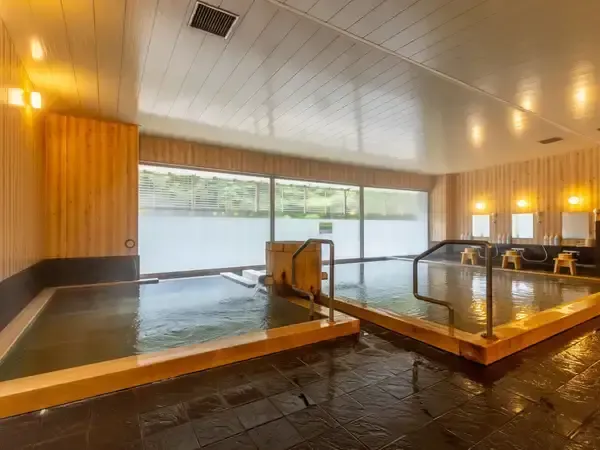
Kikki-no-Yu, the Amanogawa Onsen Center, is a village-run day-trip hot spring facility in Tenkawa Village, Nara Prefecture, open since 1987. Located just steps from Tenkawa Daibenzaiten Shrine — a sacred site of Shugendo mountain asceticism — the baths sit amid deeply spiritual, forest-wrapped surroundings. The spring is a sodium bicarbonate hot spring (source temperature 16.1°C, pH 8.56). Clear, odorless, and mildly alkaline, it leaves skin noticeably soft and smooth — a classic "beauty spring." Because the source water is cold, it must be heated; the facility uses a high-efficiency wood-fired boiler (gasifier) fueled by thinned timber from the surrounding forests. This elegant system links hot spring operation with local forest stewardship, embodying the sustainable mountain lifestyle of Tenkawa. The single-story wooden building makes lavish use of Yoshino cedar, cypress, pine, and maple throughout. The indoor bath features a tub crafted from koyamaki (Japanese umbrella pine) with a cypress-lined floor, while wooden buckets and hinoki stools complete the warmly tactile bathing experience. The outdoor bath offers views of the village mountains and the sound of a nearby stream. From the rest area, guests can watch the wood-fired boiler in operation — a uniquely charming touch. Many visitors combine a soak here with a visit to the neighboring Tenkawa Daibenzaiten Shrine. Wrapped in the scent of Yoshino cedar and cypress, it's a place to experience the nature and wood culture of this mountain village through all five senses.
View detail page

10. Nosegawa Onsen Hotel Nosegawa (Nosegawa Village, Yoshino District)

Hotel Nosegawa Onsen is a solitary inn nestled in Nosegawa Village, Nara Prefecture — the least populated village in Japan outside of remote islands. Sitting at around 700 meters elevation along the Kawarabigawa river, flanked by two UNESCO World Heritage Sites — Mt. Koya and the Kohechi route of the Kumano Kodo — this inn has tended its spring since opening in 1980. The village has a population of just over 300, with no convenience stores and no traffic lights. That such a remote mountain settlement is home to Nara Prefecture's most alkaline hot spring, at pH 10.4, feels like a true gift of nature. The spring is an alkaline simple sulfur cold mineral spring (source temperature 22.5°C, pH 10.4). Its strong alkalinity gently dissolves old skin cells, leaving skin soft and smooth after bathing — a quintessential "beauty spring." The water is clear, odorless, and tasteless, yet has a distinctly silky feel that is characteristic of highly alkaline springs. It is known for its benefits for neuralgia, muscle pain, joint pain, chills, and poor circulation. Bathing facilities include a large indoor bath, an outdoor bath overlooking the Kawarabigawa stream and lush green hillside, and a private rental bath. On clear nights, soaking beneath a sky full of stars is an unforgettable experience. All 30 guest rooms face the river, and despite the "hotel" name, the warm, ryokan-style hospitality is one of the inn's greatest draws. The signature dish is kashiki nabe — an original hot pot featuring three types of wild game (duck, wild boar, and pheasant) in a soy-based broth, a dish that embodies the hunting culture and culinary wisdom passed down through generations in the Kii Mountains. The property also offers bungalows and campsites for forest bathing and BBQ.
View detail page

11. Kamikitayama Onsen Yakushi-yu (Kamikitayama Village, Yoshino District)

Kamikitayama Onsen Yakushiyu is a day-trip hot spring facility located on the second floor of Forest Kamikita, an accommodation complex that reopened under its current branding in 2020, in the village of Kamikitayama, Yoshino District, Nara Prefecture. Situated across a bridge over the Kitayama River from the Yoshinoji Kamikitayama roadside station along National Route 169, it serves as a popular base for hikers heading to Mount Odaigahara and the Omine mountain range. The alkaline simple hot spring water, rich in sodium bicarbonate and piped from a source several hundred meters upstream, boasts a high pH of 8.6 and is renowned as a bijin-no-yu (beauty spring) for its colorless, slippery water that leaves the skin silky smooth. The source temperature is approximately 32.4 degrees Celsius, classified as a low-temperature spring, with a generous flow rate exceeding 300 liters per minute. The water is officially classified as an alkaline simple hot spring (hypotonic, alkaline, low-temperature). Recognized therapeutic benefits include neuralgia, muscle pain, joint pain, frozen shoulder, motor paralysis, joint stiffness, bruises, sprains, chronic digestive disorders, hemorrhoids, cold sensitivity, convalescence, fatigue recovery, and general health improvement. The facility features two types of indoor baths, Ki-no-Yu (Wood Bath) fragrant with Japanese cypress and Ishi-no-Yu (Stone Bath) adorned with black granite, which alternate daily between male and female use. The rock-built open-air bath offers a serene experience surrounded by the murmur of the Kitayama River and a canopy of stars. Day-trip bathing is available from 13:00 to 21:00 (last entry 20:30) at 800 yen for adults and 400 yen for children.
View detail page

---

Summary — What to Know Before Exploring Nara's Hidden Hot Springs

Nearly all of Nara Prefecture's hot springs are scattered deep within the Kii Mountains, and reaching them requires careful planning. The destinations can be efficiently explored by dividing them into four areas.

Totsukawa Area: Five facilities — Totsukawa Onsen Hotel Subaru, Iori-no-Yu, Yusenchi Onsen Yado Yunosato, Yusenchi Onsen Taki-no-Yu, and Kamiyu Onsen Kamiyuso — are concentrated in this area, making it Nara's largest hot spring district. Following the village's 2004 declaration as Japan's first "all-natural free-flowing" municipality, every spring here delivers 100% undiluted, unheated source water. From Kintetsu Yamato-Yagi Station, the journey takes approximately 4 hours and 30 minutes on what is famously Japan's longest local bus route (Nara Kotsu). By car, it is roughly 1 hour and 50 minutes south from Gojo IC on the Keinawa Expressway via Route 168. An ideal itinerary of 2 nights and 3 days would include one night at Totsukawa Onsen, one night at Yusenchi Onsen, and a day trip to Kamiyu Onsen. In winter, be sure to equip snow tires and watch for icy road conditions.

Tenkawa & Omine Area: Dorogawa Onsen Hanaya Tokubei and Tennokawa Onsen Center Mokumoku-no-Yu are located in this area, which serves as the gateway to Mount Omine, the sacred heartland of Shugendo asceticism. The Dorogawa hot spring town retains its traditional atmosphere with rows of wooden inns. It is about 1 hour and 20 minutes by bus from Kintetsu Shimoichiguchi Station. Tennokawa Onsen Center is only about 15 minutes by car from Dorogawa, making it feasible to visit both in a single day. The best season is from spring through autumn, with summer particularly popular as a highland retreat. A 1-night, 2-day trip combined with a visit to Tenkawa Daibenzaiten Shrine is highly recommended.

Yoshino & Soni Area: Yoshino Onsen Motoyu and Soni Kogen Onsen Okame-no-Yu are the most accessible of Nara's hidden springs. Yoshino Onsen Motoyu is a 20-minute walk from Kintetsu Yoshino Station, and a visit during the cherry blossom season in spring or autumn foliage season pairs beautifully with sightseeing on Mount Yoshino. The inn's literary connection to novelist Shimazaki Toson adds a cultural dimension to the journey. Soni Kogen Onsen Okame-no-Yu is about 40 minutes by car from Hari IC on the Meihan Expressway. It is the perfect post-hike destination after walking through the famous pampas grass fields of Soni Plateau in autumn. The two facilities are roughly one hour apart by car, making a 1-night, 2-day circuit entirely feasible.

Nosegawa & Kamikitayama Area: Nosegawa Onsen Hotel Nosegawa and Kamikitayama Onsen Yakushi-yu are the ultimate hidden springs, each located in a village with a population of just a few hundred. Nosegawa Village sits between Mount Koya and the Kumano Kodo pilgrimage trail, boasting an ultra-alkaline spring of pH 10.4 — the highest in Nara Prefecture. Kamikitayama Village serves as the gateway to Mount Odaigahara and offers an ideal post-trek soak. Both require a rental car, and visitors should be aware of road closures due to heavy snowfall in winter. Combining Nosegawa with a visit to Mount Koya or Kamikitayama with a trek up Odaigahara makes for a smart itinerary.

Overall, a rental car is essential for exploring Nara's hidden hot springs. Only Totsukawa Onsen (long-distance bus), Dorogawa Onsen (local bus), and Yoshino Onsen Motoyu (on foot) are reasonably accessible by public transport; the rest have extremely infrequent bus service or none at all. Mountain roads are narrow with sharp curves, requiring careful driving. Mobile phone reception is unreliable in some areas, so route planning in advance is strongly recommended

The information in this article (admission fees, operating hours, water quality data, etc.) is based on research conducted at the time of writing. Details may have changed or contain errors. Please verify the latest information on each facility's official website or through the local tourism association.
Recommended Hot Springs

Popular hot springs from Hitou Map

HomeMapSearchBlogMy Page