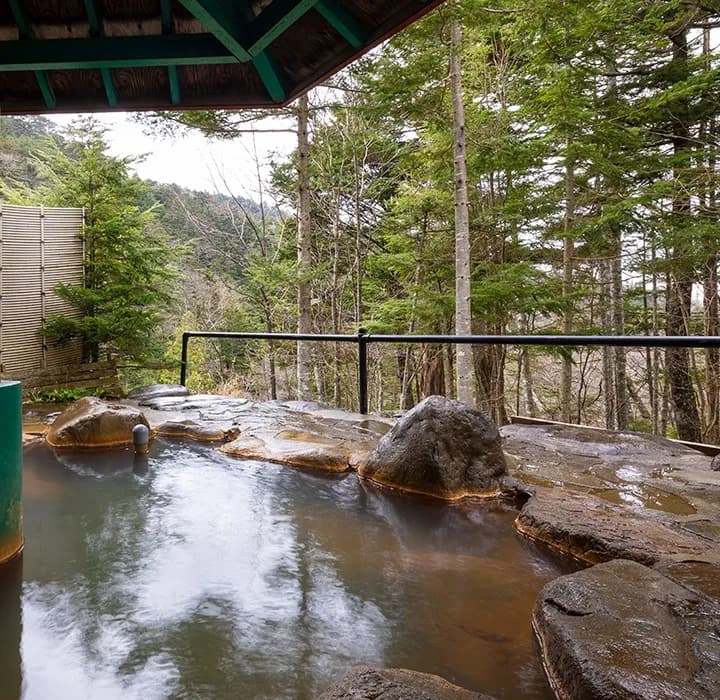
Japan's Hike-In Onsen: 10 Hot Springs Reachable Only on Foot (2026)
No road reaches these baths. You walk, and the bath is the reward at the end of the walk. This guide covers ten hot springs (onsen) across Japan that require hiking to reach, ordered by difficulty — from a cloud-level open-air bath at 2,100m, to Japan's most remote spring that takes three days to reach, to one you can walk to in twelve minutes from a bus terminal.
What this guide covers:
- All ten springs with elevation, hiking time, difficulty and whether day-use bathing is possible
- How to match a bath to your hiking level and the season
- Gear, safety, payment and bathing etiquette for onsen in the mountains
Facility data (spring type, fees, opening season, access) lives on each spring's own page — follow the links in each section.
Why Hike to a Hot Spring?
The value of a hike-in onsen is the approach. After hours — sometimes days — of walking, sinking into water that comes out of the mountain itself is a different experience from a bath you can park beside. At 2,000m and above you soak while looking down on a sea of clouds, at a night sky with nothing between you and it, at ridgelines turning red at dawn.
It also changes the hike. Building an onsen into a traverse gives the itinerary a rhythm that summit-to-summit walking does not have. This guide is written for hikers, and for onsen lovers willing to walk.
Comparison Table: Elevation, Access Time and Difficulty
Difficulty combines fitness, technical demand and the number of days required.
# | Onsen | Prefecture | Elevation | One-way from trailhead | Difficulty | Day-use bath | Typical season |
|---|---|---|---|---|---|---|---|
1 | Toyama | approx. 2,100m | 3 days / 2 nights from Oritate | ★★★★★ | Yes (free) | Mid-Jul–late Sep | |
2 | Nagano | approx. 2,100m | 4–5 hrs from Sarukura | ★★★★★ | Yes | Early Jul–late Sep | |
3 | Nagano | approx. 2,150m | 2–3 hrs from Inagoyu | ★★★★☆ | Yes | Year-round (open-air bath varies in winter) | |
4 | Nagano | approx. 1,534m | approx. 3 hrs from Takase Dam | ★★★☆☆ | Yes (wild bath) | Early Jul–late Oct | |
5 | Niigata | approx. 1,475m | 5–20 min from the lodge to each bath | ★★☆☆☆ | Yes | Mid-Mar–late Oct | |
6 | Toyama | approx. 2,410m | 12 min on foot from Murodo | ★☆☆☆☆ | Yes | Mid-Apr–late Nov | |
7 | Iwate | approx. 1,126m | Reachable by road (Mt. Kurikoma trailhead) | ★☆☆☆☆ | Yes | Late Apr–early Nov | |
8 | Niigata | approx. 880m | approx. 1 hr on foot (guided tour) | ★★☆☆☆ | Tour only | Early Jun–early Nov | |
9 | Tochigi | approx. 1,100m | 1–2 hrs from Meotobuchi | ★★☆☆☆ | Yes | Year-round | |
10 | Kusa-no-yu | Iwate | approx. 1,000m | approx. 30 min from the trail entrance | ★☆☆☆☆ | Yes (wild bath) | Late Apr–late Oct |
Fees, spring types and whether the water is free-flowing are listed on each spring's page. Opening seasons and day-use hours shift with the weather and the year — always confirm before you go.
Serious Mountaineering Required: Four Springs
1. Takamagahara Onsen (Toyama) — the most remote hot spring in Japan
approx. 2,100m / 3 days from Oritate / ★★★★★
Deep in the Northern Alps, at the headwaters of the Kurobe River. Widely called "the most distant onsen in Japan," it takes a minimum of two nights on the trail to reach. Three open-air baths sit beside the stream — men's, women's and mixed — filled with milky blue water that catches the sun.
The 360-degree panorama from Kumonotaira, an unobstructed night sky, and the simple fact of having arrived. Accommodation is Takamagahara Sanso (reservation required).
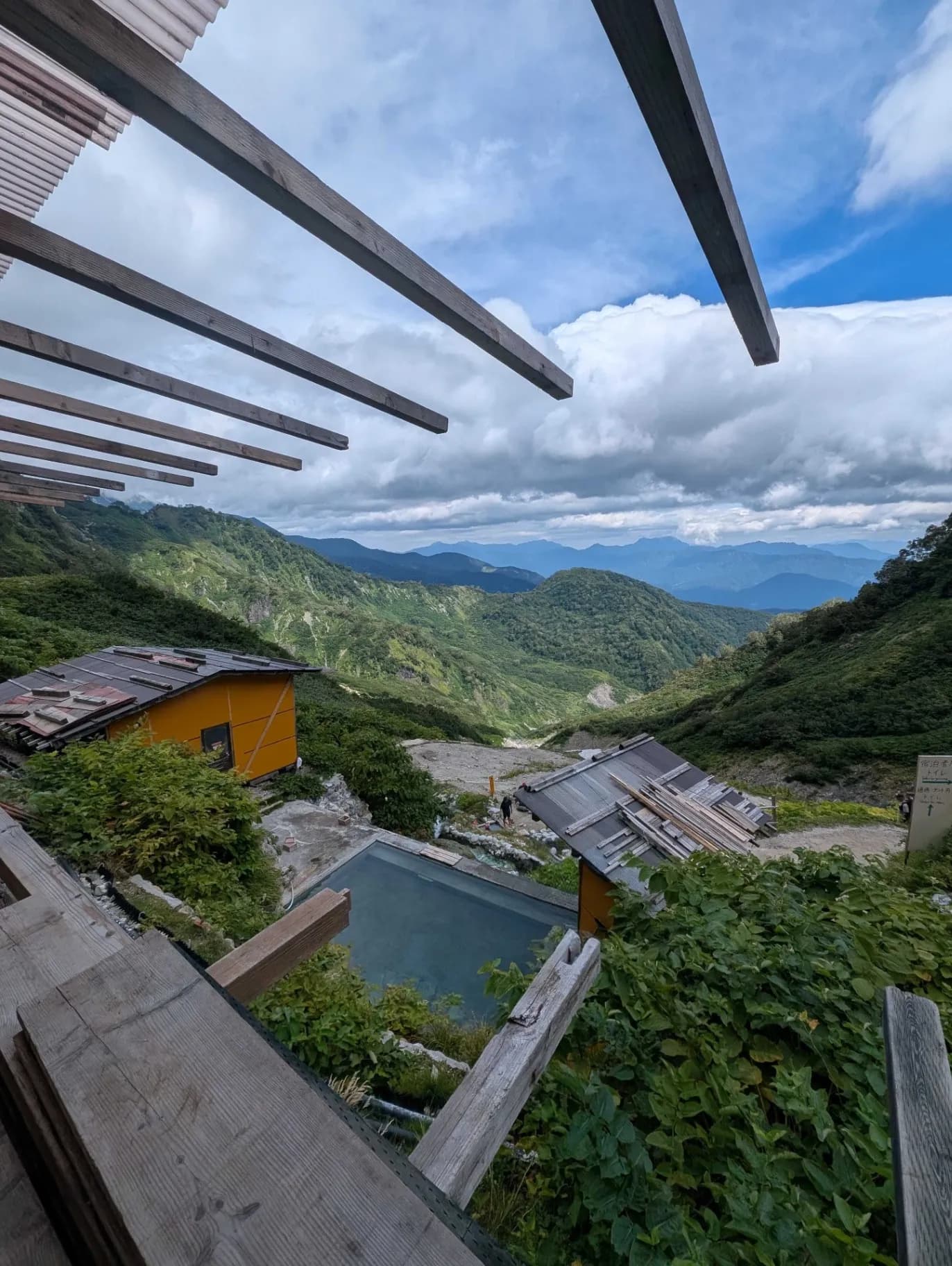
2. Hakuba Yari Onsen (Nagano) — a cloud-level open-air bath
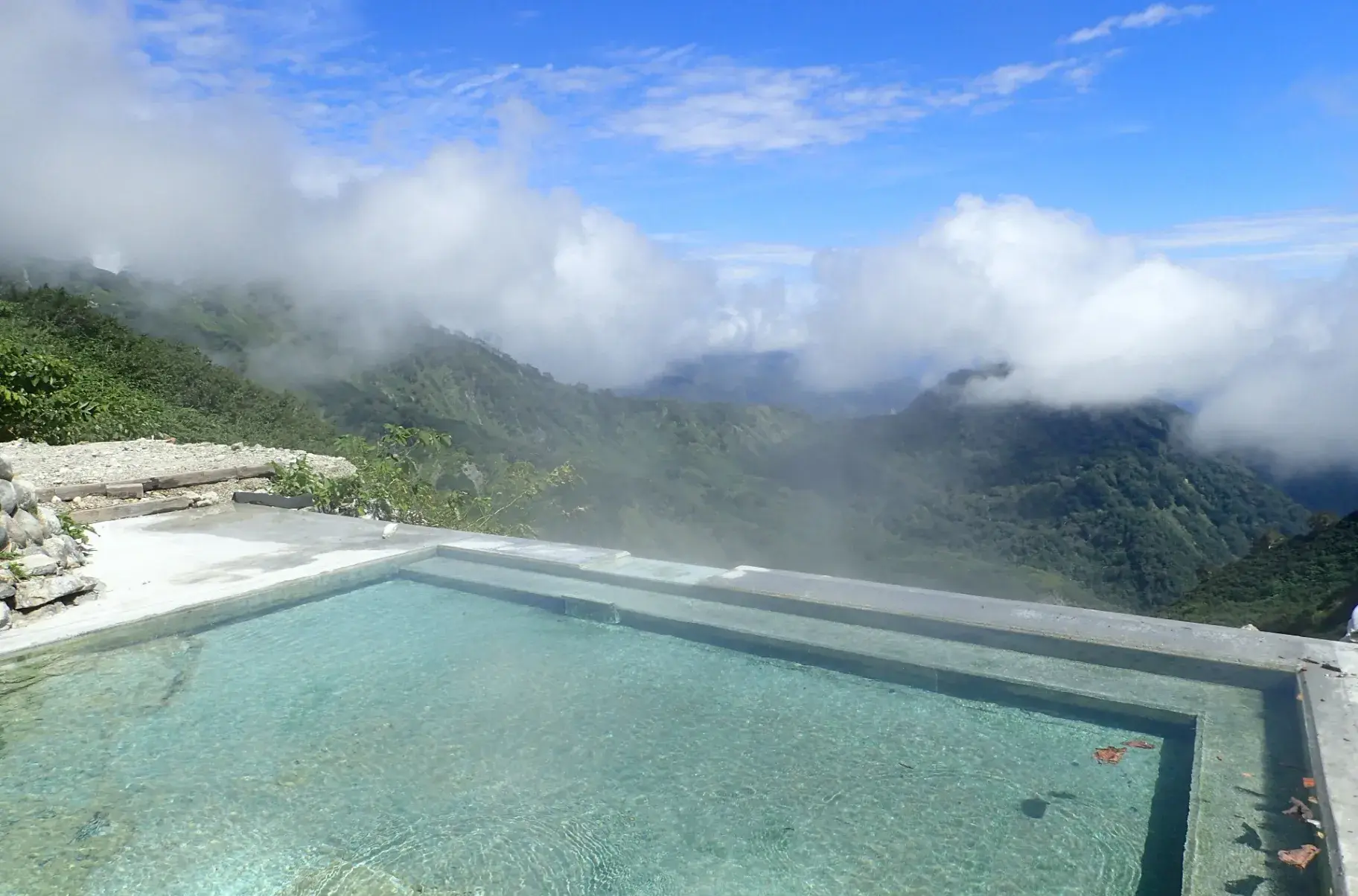
approx. 2,100m / 4–5 hrs from Sarukura / ★★★★★
Water rises naturally on the flank of Mt. Hakuba-yari at 2,100m — the highest natural discharge of its kind in Japan. Sulfur-scented, slightly viscous water, with the three Hakuba peaks filling the view from the bath. Stars at night, sunrise from the water in the early morning, and alpine flower fields such as Oideppara on the way up.
2026 season status: As of the Hakuba trail report dated 10 July 2026, the Yari Onsen route is passable, with snowfields remaining above the hut but no particular hazards noted. However, the Sarukura parking area is closed for road resurfacing work through the 2026–2027 fiscal years (the prefectural road from Futamata to Sarukura reopened on 24 April 2026). The hut has announced that construction was delayed by late snow and poor weather, and that its shop and café are operating at reduced scale for the time being. Plan for non-car access and check the Hakubakan and Hakuba tourism office notices before you go.
3. Honsawa Onsen (Nagano) — Japan's highest open-air wild bath
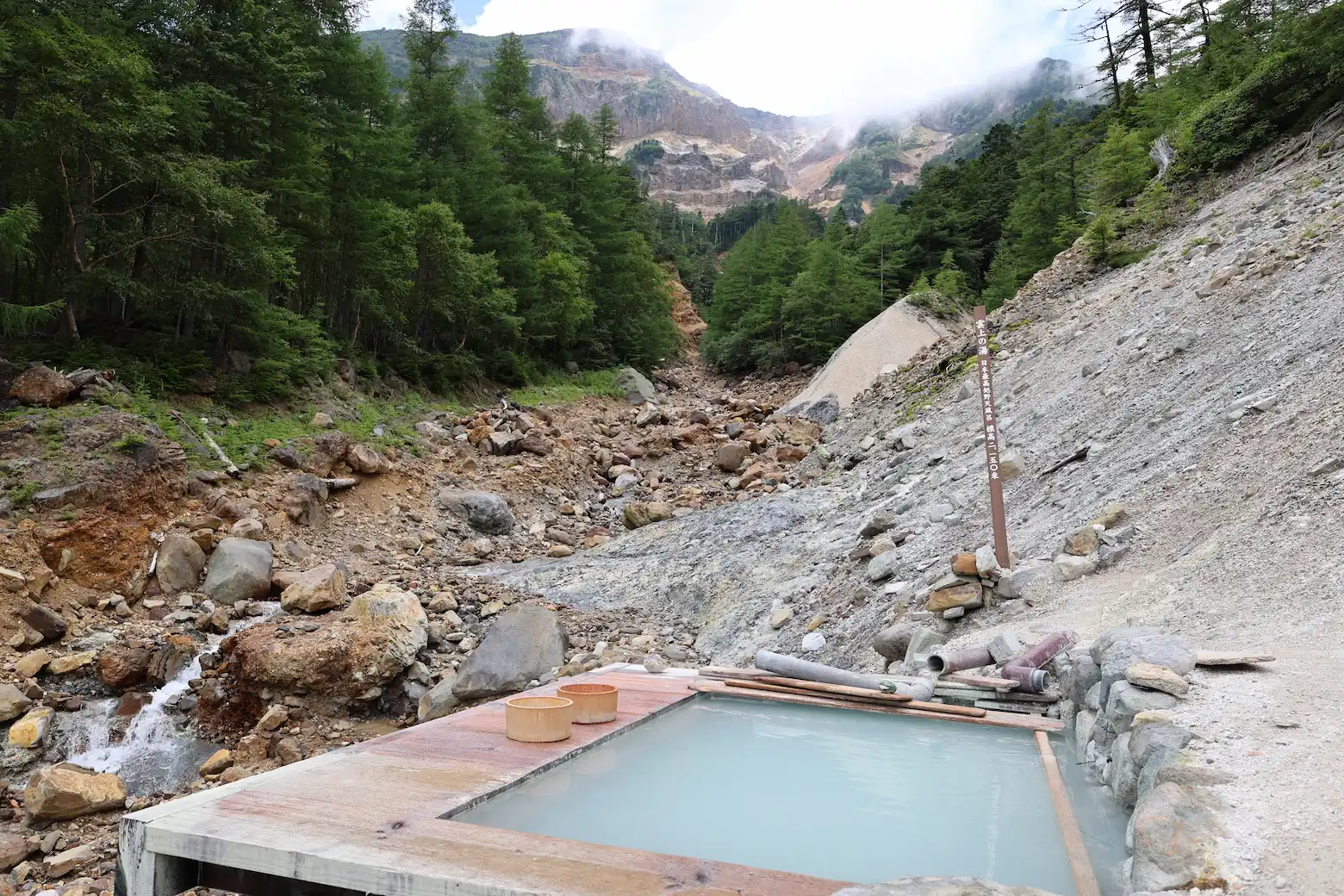
approx. 2,150m / 2–3 hrs from Inagoyu / ★★★★☆
In the Yatsugatake range, between Mt. Io and Mt. Tengu. The outdoor bath "Unjo-no-yu" sits at 2,150m, the highest open-air bath in the country. The inn has two different waters: an acidic spring outdoors, and a sodium-calcium sulfate-bicarbonate spring indoors.
It is also the highest year-round onsen inn in Japan, and hikers come in winter for a snow-framed soak — though that requires full winter mountaineering equipment, and access to the outdoor bath depends on conditions. A practical base for a Yatsugatake traverse.
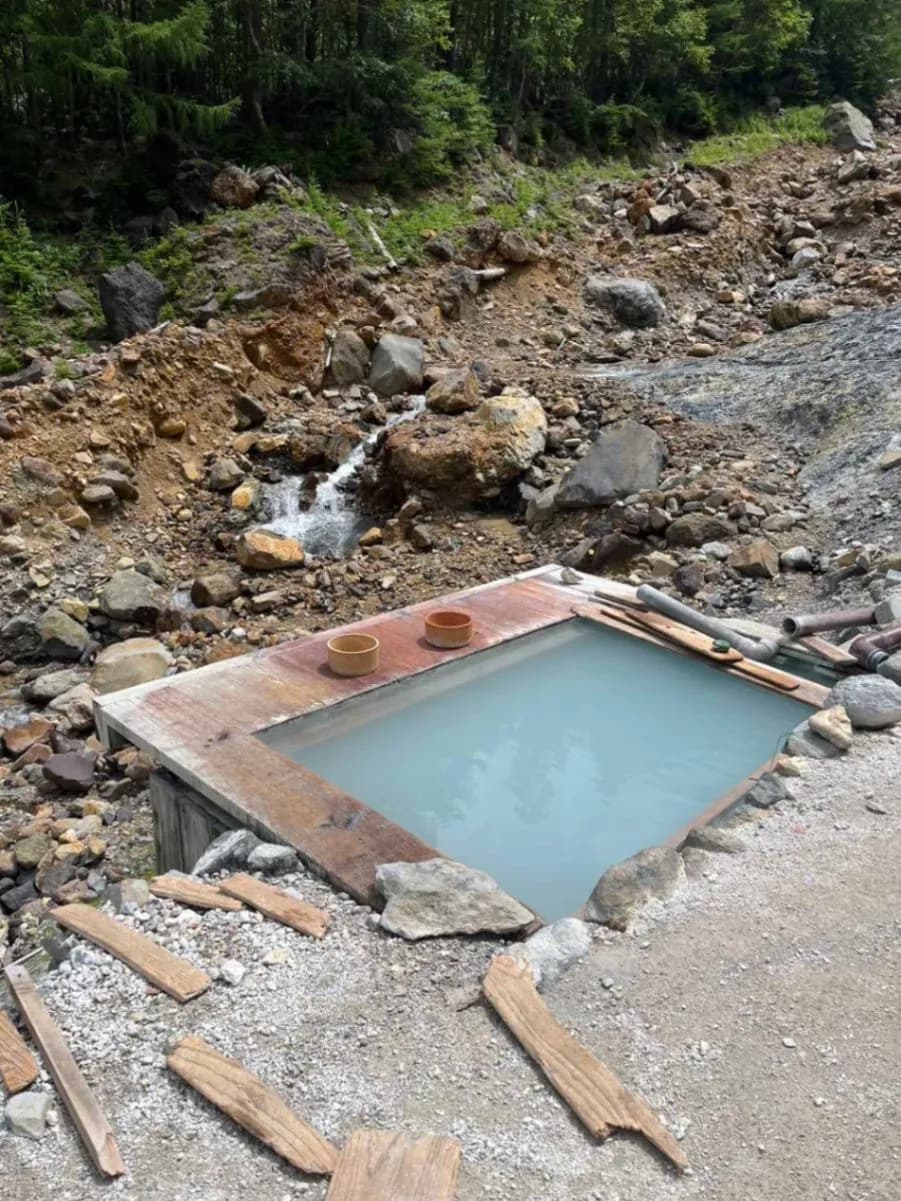
4. Yumata Onsen (Nagano) — a river bath beside a national natural monument
approx. 1,534m / approx. 3 hrs from Takase Dam / ★★★☆☆
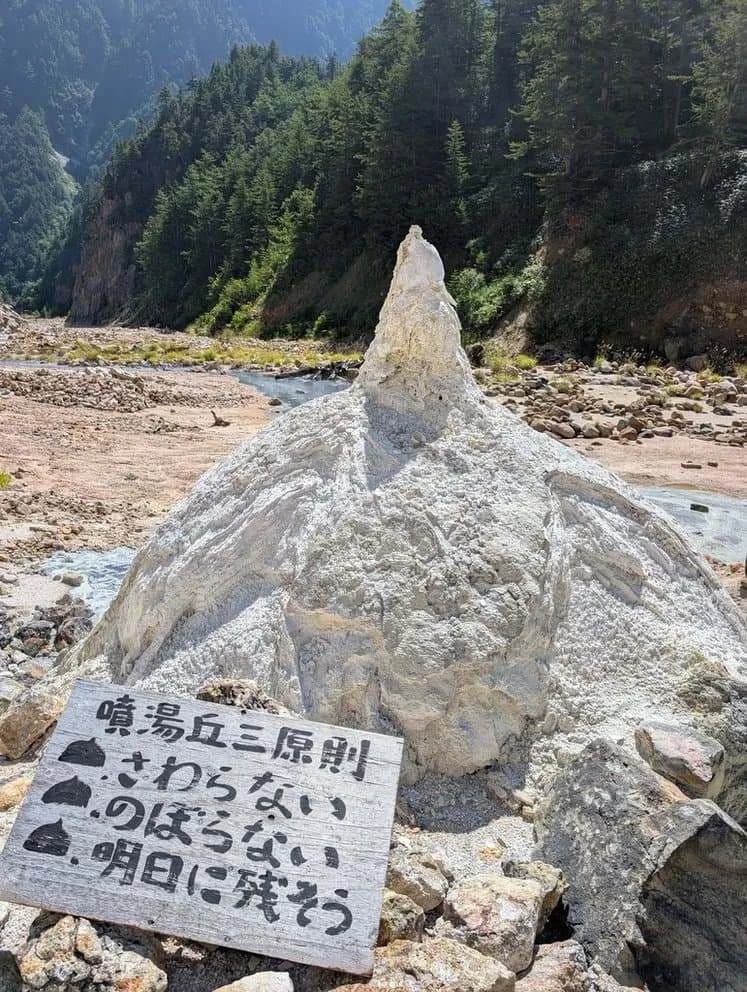
A wild spring in the headwaters of the Takase River, behind Mt. Yari. It is known for its funtokyu (hot spring cones), designated a national natural monument, and for greenish water running straight into the river. You can dig your own tub in the gravel — this is bathing at its most raw.
The site is also the starting point for the Kita-Kama ridge route to Mt. Yari. When the river runs high the bathing pools disappear, so check weather and water levels carefully.
Intermediate: Four Mountain Baths to Pair with a Hike
5. Renge Onsen (Niigata) — four wild baths on one hillside
approx. 1,475m / 5–20 min from the lodge / ★★☆☆☆
The Niigata-side base for climbing Mt. Shirouma. Four open-air baths — Ogon-no-yu, Senki-no-yu, Yakushi-yu and Sangokuichi-no-yu — are scattered around Renge Onsen Lodge, each with its own source and character. There are no changing rooms; you soak in the open with the Hakuba ridgeline in front of you.
The lodge itself is reachable by bus or car from the Itoigawa side, but the baths require walking uphill on mountain paths. Doing all four is a half-day outing.
6. Mikurigaike Onsen (Toyama) — the highest natural onsen in Japan
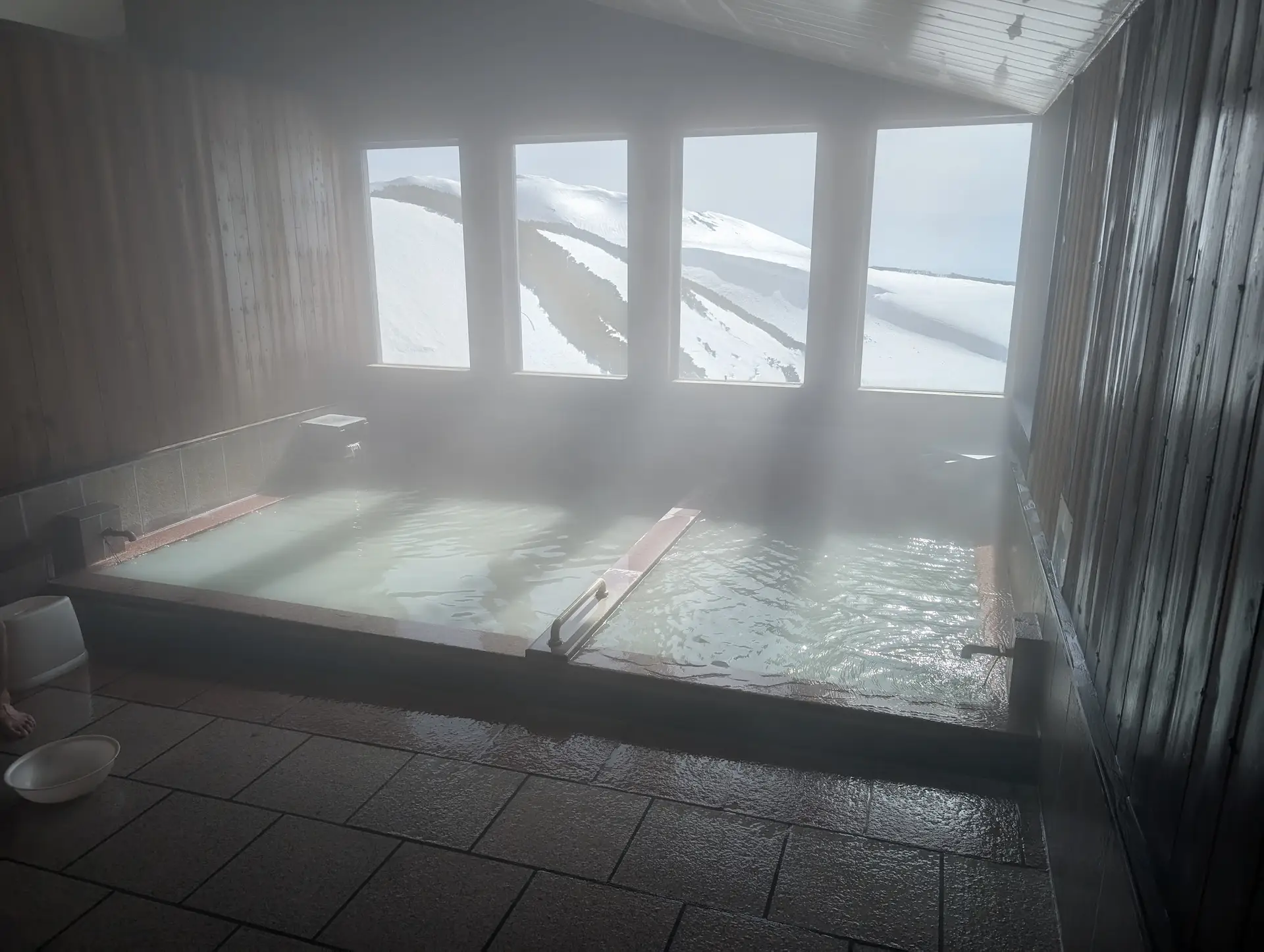
approx. 2,410m / 12 min on foot from Murodo / ★☆☆☆☆
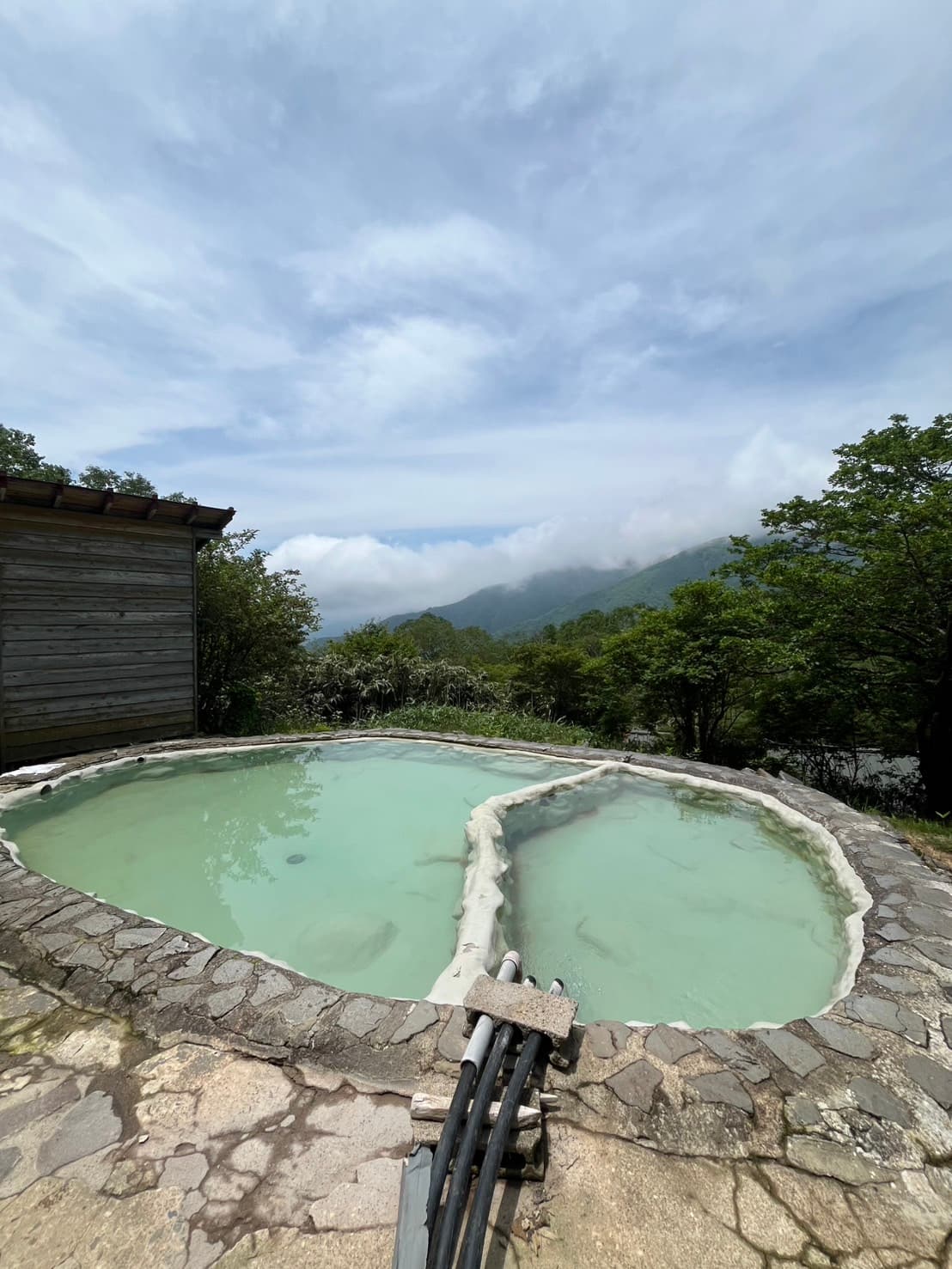
On the Murodo plateau of the Tateyama Kurobe Alpine Route, this is the highest natural hot spring in Japan. Cloudy white sulfur water is piped from the Jigokudani ("hell valley") source and used without heating or dilution. Twelve minutes on foot from the bus terminal means you can experience a genuine mountain onsen without a serious climb.
The best entry point to hike-in onsen — but at over 2,400m, sudden weather changes and altitude sickness are real considerations.
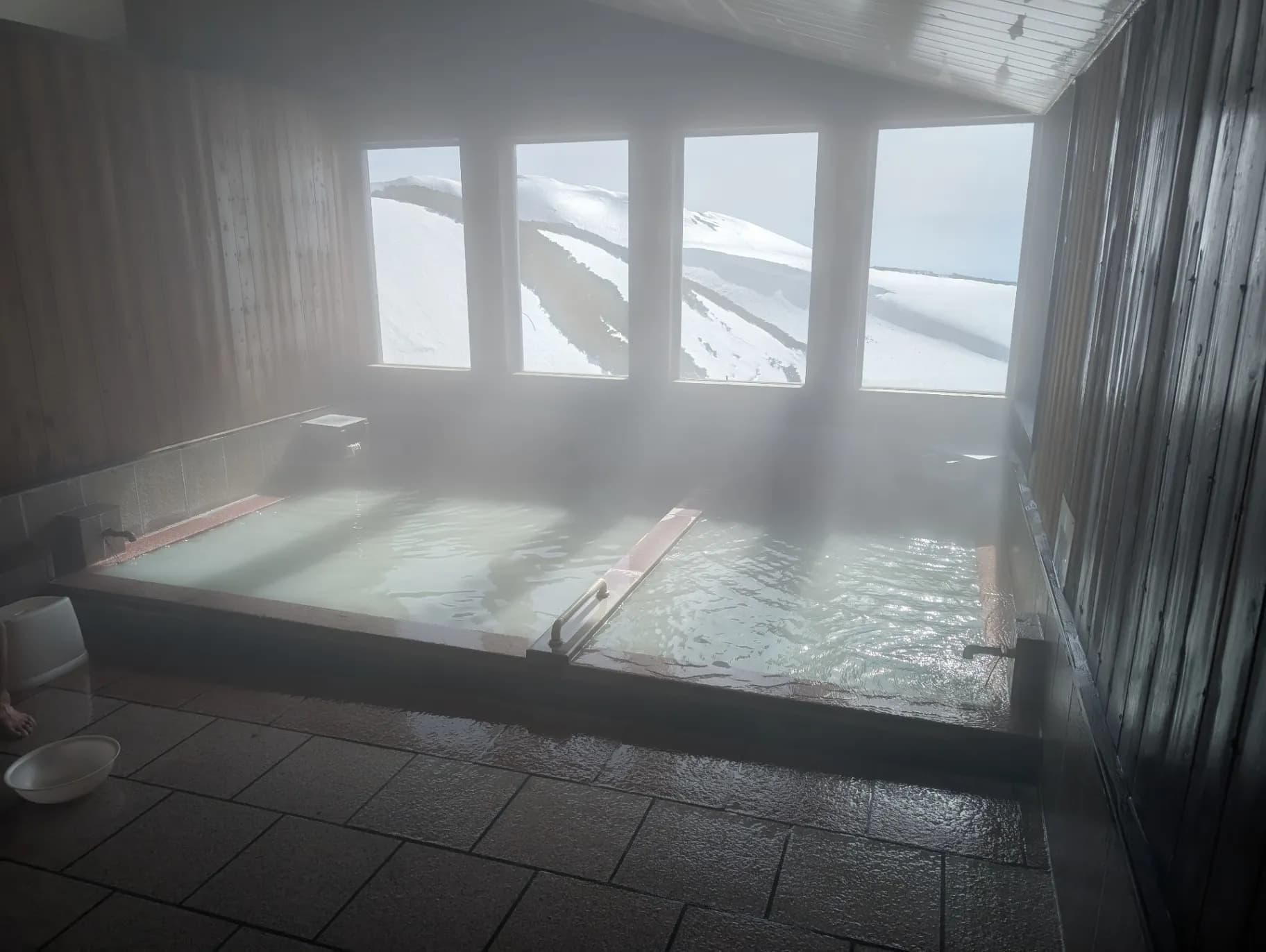
7. Sukawa Kogen Onsen (Iwate) — an 1,100-year-old spring at a trailhead
approx. 1,126m / reachable by road / ★☆☆☆☆
At the Iwate-side trailhead for Mt. Kurikoma. The water emerges clear with a blue cast and turns milky white over time, and the discharge is large enough that every bath here is free-flowing from the source.
You can drive to the onsen itself; its real use is as a bookend to a Kurikoma hike. Few mountains let you step off the trail straight into strongly acidic water.

8. Kajiyama Motoyu (Niigata) — a bath inside a cave
approx. 880m / approx. 1 hr on foot, guided tour only / ★★☆☆☆
A natural cave spring at the foot of Mt. Amakazari. Bathing is currently possible only on a guided tour run by local operators — you cannot visit independently. The water is on the cool side and contains carbon dioxide, with a soft feel on the skin. Bathing inside a cave is something very few places in Japan can offer.
Tours are seasonal and require reservations, and operation varies year to year. Confirm with the organiser in advance.
Beginner to Intermediate: Two Remote Onsen Villages
9. Okukinu Onsen-kyo (Tochigi) — "the last hidden spring of the Kanto region"
approx. 1,100m / 1–2 hrs on foot from Meotobuchi / ★★☆☆☆
Four inns sit in a valley closed to general traffic. From the Meotobuchi car park you walk a forest path for one to two hours; overnight guests can sometimes use an inn shuttle. The water is naturally discharged and free-flowing, surrounded by old-growth forest, and many visitors combine a stay with a hike to the Kinunuma marshland.
Unusually for a hike-in onsen, the inns operate year-round, which makes an overnight stay comparatively easy to arrange. In winter you walk in between walls of snow.
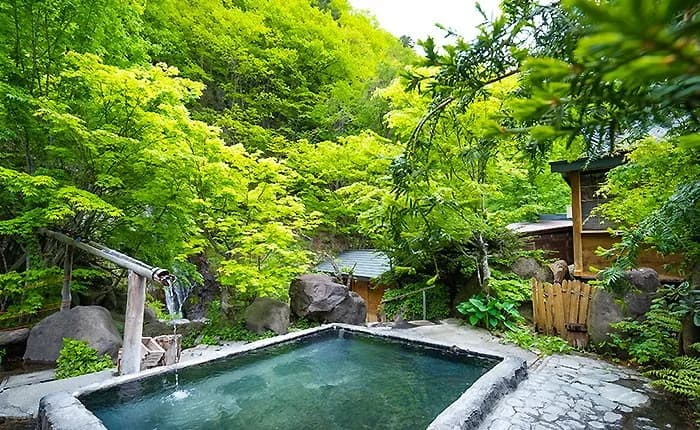
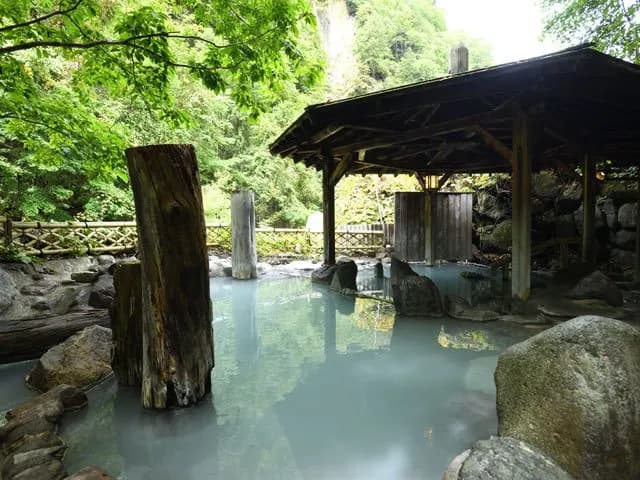
10. Kusa-no-yu (Iwate) — a wild bath in the Hachimantai forest
approx. 1,000m / approx. 30 min from the trail entrance / ★☆☆☆☆
Inside Hachimantai National Park, a natural pool of milky water in a beech forest. A second bath, Shin-Kusa-no-yu, lies nearby, so the visit works as a short onsen hike.
This is not a managed facility. Trail conditions and bear activity can make it inaccessible, so check with the local municipality or visitor centre before setting out.
Also Worth Knowing: Hike-In Inns Where You Can Stay
Not part of the ten, but each requires leaving the car behind and walking. Useful as the overnight half of a hiking trip.
Which Season, Which Bath
Spring (Apr–Jun). Mikurigaike and Renge. Snow and new green together, but snow lingers at altitude and light crampons are sometimes needed. Temperature swings with elevation are large — bring insulation.
Summer (Jul–Sep). Nearly everything is open; this is the season for alpine flowers and seas of cloud. Huts fill early, so book ahead. Short sleeves during the day, warm layers at night.
Autumn (Oct–Nov). Honsawa and Mikurigaike. Mountain foliage plus hot water is the best combination of the year. Mornings and evenings are cold and early snow is possible.
Winter (Dec–Mar). Honsawa and Okukinu operate year-round. Honsawa in winter, however, assumes full winter mountaineering equipment and experience — not a solo objective for beginners.
Gear Checklist
Hiking
- Hiking boots (mid-cut or higher, with ankle support)
- Rain jacket and trousers (waterproof-breathable)
- Pack (30L day / 50L+ overnight)
- Headlamp with spare batteries
- Map and compass (plus a GPS app)
- First aid kit
Clothing
- Base layer in a quick-drying fabric (avoid cotton)
- Mid layer such as fleece
- Insulation (down jacket or similar)
- Hat and gloves
For the bath
- Quick-dry towel — mountain huts often do not sell them
- Change of clothes, including underwear
- Sandals for walking to outdoor baths
- Plastic bag for wet items
- Cash in yen — mountain onsen are usually cash-only
Useful extras: trekking poles, sunscreen and sunglasses, trail snacks, portable oxygen for high altitude.
Safety in the Mountains
File a plan. Submit a climbing plan (tozan-todoke) and share your itinerary with someone at home. Note the phone numbers of the huts you will pass. Mountain insurance is strongly recommended.
Read the weather. Use a mountain-specific forecast that includes ridge wind speeds. Don't push on in bad weather, retreat immediately when thunder approaches, and turn back in poor visibility — these three habits prevent most incidents.
Altitude. Headache, nausea and dizziness mean you stop gaining height. Walk slowly, drink often, and descend if symptoms persist. At 2,410m (Mikurigaike) and 2,100m (Hakuba Yari, Takamagahara) this is a genuine risk.
Bathing. After a long walk you are already dehydrated: drink before and after, and keep soaks short. Rinse off before entering, and never use soap or shampoo in a natural pool.
Tattoos and mixed bathing. Policies differ by facility, so ask the inn directly about tattoos rather than assuming. Several of these baths are konyoku (mixed-gender); many allow a towel or bathing garment, and some provide women-only baths or women-only hours. Follow the notices posted at each bath.
Summary: What to Pick at Your Level
First hike-in onsen: Mikurigaike (12 minutes on foot), Sukawa Kogen (road access), Kusa-no-yu (30 minutes). Short approaches, easy to turn back.
Intermediate: Renge, Okukinu Onsen-kyo, Honsawa. If you can walk for half a day, these are within reach — and Honsawa gives you a clear objective in Japan's highest open-air bath.
Advanced: Hakuba Yari, Yumata and Takamagahara. Takamagahara in particular requires a three-day traverse and demands equipment, fitness and weather judgement all at once.
Springs you can only walk to are open to anyone who prepares properly — and closed to anyone who does not. Put safety first, and the experience is worth every hour on the trail.
Frequently Asked Questions
Q1. Which of these can a beginner manage? Mikurigaike is twelve minutes on foot from Murodo terminal, Sukawa Kogen is reachable by road, and Kusa-no-yu is about thirty minutes from the trail entrance. Start there, then move on to Renge or Okukinu Onsen-kyo.
Q2. Can I visit as a day trip? Mikurigaike, Sukawa Kogen and Kusa-no-yu work well as day trips. Honsawa and Renge are possible in a day depending on your fitness, but allow plenty of margin. Treat Takamagahara as an overnight objective only.
Q3. Do I need reservations, and can I pay by card? Day-use bathing generally needs no reservation, but overnight stays always do — book one to two months ahead for summer. Mountain onsen are usually cash only; do not rely on cards or QR payments.
Q4. How do I get there without a car? Murodo (Mikurigaike) is reached via the Tateyama Kurobe Alpine Route from Toyama or Nagano. Sarukura (Hakuba Yari) is served by bus from Hakuba Station — note that the Sarukura car park is closed for works in 2026–2027, so public transport or taxi is the practical option. Okukinu is reached by bus from Kinugawa-Onsen Station to Meotobuchi, then on foot. Buses in mountain areas are infrequent; check timetables for both directions before you commit.
Q5. Is it safe for a woman travelling alone? With hiking experience, solo travel is possible, though the longer approaches are better done with company. Facilities with mixed-gender baths usually also provide a women-only bath or women-only hours. Staying overnight gives you the quiet early morning and evening slots.
Q6. What about the health effects of the water? Most of these springs meet the standard for therapeutic springs, with conditions such as neuralgia, muscle pain and joint pain listed among their indications. Listed indications are not a guarantee of results, and some conditions make bathing inadvisable — consult a doctor if you are unsure.
Q7. Will my phone work? At high elevations and in valleys, reception is unreliable or absent. File your plan, share your itinerary, and carry a power bank.
Opening status, access and fees change. This article reflects information available at the time of research; always confirm with each facility, hut or local authority before visiting.