8 Best Hidden & Notable Hot Springs in Saitama Prefecture — From the Ancient Chichibu Seven Springs to Japan's Most Alkaline Onsen

Saitama Prefecture may not be the first place that comes to mind for hot springs, yet the Chichibu mountain region and its surroundings harbor a surprisingly rich collection of distinctive mineral springs. The Chichibu Seven Hot Springs have served as therapeutic retreats since the Edo period, with histories stretching back over 400 years — from sulfur cold mineral springs bubbling from wells dug in the Kamakura era to a healer's spring near the birthplace of Japan's oldest currency, the Wado Kaichin. The prefecture also boasts a spring with a pH of 11.3, the most alkaline in all of Japan, and a self-spouting facility that earned perfect 5-star ratings from the Japan Spa Association. Despite lying just one to two hours from central Tokyo, these springs offer an atmosphere of deep mountain seclusion that belies their proximity to the capital. Here, we present 8 carefully selected destinations, each with its own distinctive personality.


1. Shibahara Onsen Kayanoya (Arakawa Kamitano, Chichibu City)

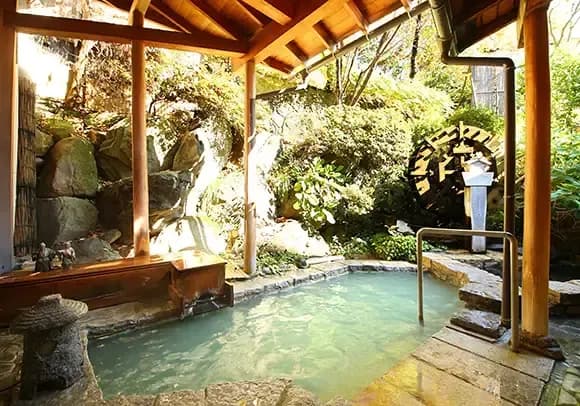
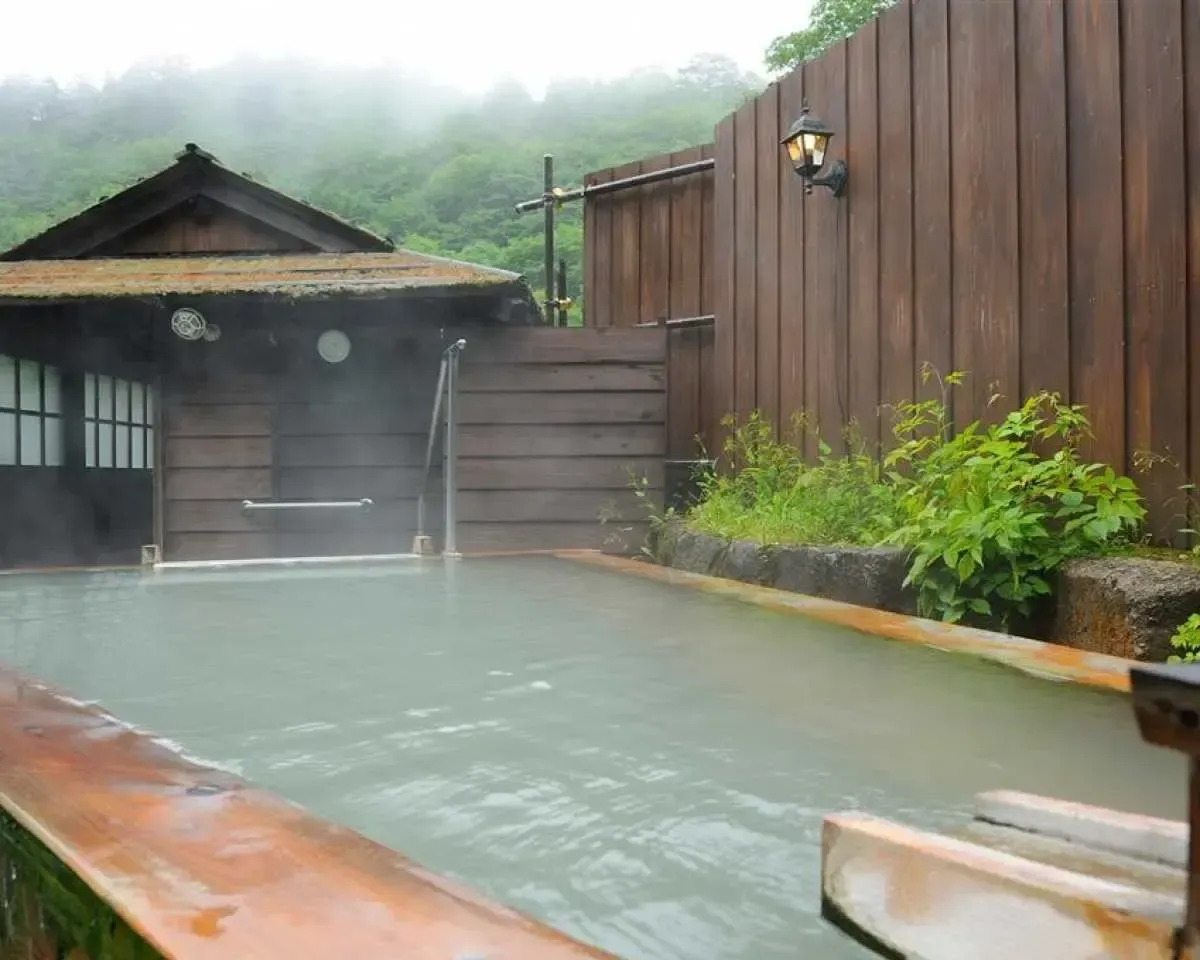
Shibahara Onsen is one of the celebrated Chichibu Seven Hot Springs, boasting approximately 400 years of history in the deep mountain recesses of Chichibu City, Saitama Prefecture. Cherished as a therapeutic bathing retreat since the early Edo period, the spring draws its waters from a well said to have been dug during the Kamakura period — a well that still stands beside a small shrine to this day. Kayanoya was established in 1954 and operates as a member of the Japan Association of Secluded Hot Spring Inns. Despite being only about two hours from central Tokyo, it offers an atmosphere of profound mountain seclusion that belies its accessibility. The spring water is classified as an alkaline simple sulfur cold mineral spring, with a remarkably low source temperature of just 9.6 degrees Celsius. At pH 8.4, the mildly alkaline water contains hydrogen sulfide, filling the bathhouse with a gentle sulfurous aroma reminiscent of boiled eggs. While the cold mineral water must be heated for bathing — a characteristic shared by all of the Chichibu Seven Springs — the distinctively smooth, silky texture of sulfur spring water is fully preserved. For centuries, these waters have been reputed to relieve neuralgia, gastrointestinal ailments, hypertension, and to help prevent stroke, earning Shibahara a lasting reputation as one of Chichibu's finest therapeutic springs. The defining feature of Kayanoya is its extensive use of kaya wood — Japanese nutmeg-yew — throughout the bathing facilities and the inn itself. Kaya wood is prized as the finest material for Go and Shogi boards, but it has also been revered since ancient times as a sacred wood believed to help prevent hypertension and stroke. The inn offers both indoor and open-air baths, one of each for men and women, with the genders swapping at 22:00 so that every guest can experience both distinctly different bathing areas. With just 10 guest rooms, this intimate establishment is also celebrated for its mountain cuisine featuring seasonal Chichibu ingredients, including wild vegetables, river fish, and other delicacies that change with the seasons. From Ikebukuro, the Seibu Limited Express reaches Seibu-Chichibu Station in approximately 80 minutes. A transfer to the Chichibu Railway brings guests to Bushu-Hino Station in about 15 minutes, where the inn's complimentary shuttle completes the journey in 10 minutes. By car, it is roughly 50 minutes from Hanazono IC on the Kanetsu Expressway via Route 140. Kayanoya does not accept day-trip visitors — this is an overnight-only establishment, inviting guests to take their time and fully immerse themselves in the secluded hot spring experience. Winter visitors might consider combining their stay with the famous Chichibu Night Festival in December or the spectacular Misotsuchi Icicles from January through February. It is rare indeed to find such a deeply tranquil hot spring retreat within easy reach of the Tokyo metropolitan area.
Quality
アルカリ性単純硫黄冷鉱泉
Temp
40℃ to 42℃
Supply
Circulation System
pH
pH 8.4
pH
0714
AcidicNeutralAlkaline
Use
Stay OK/Day Trip N/A
Book your stay
View detail page

2. Araki Kosen Ryokan (Yamada, Chichibu City)

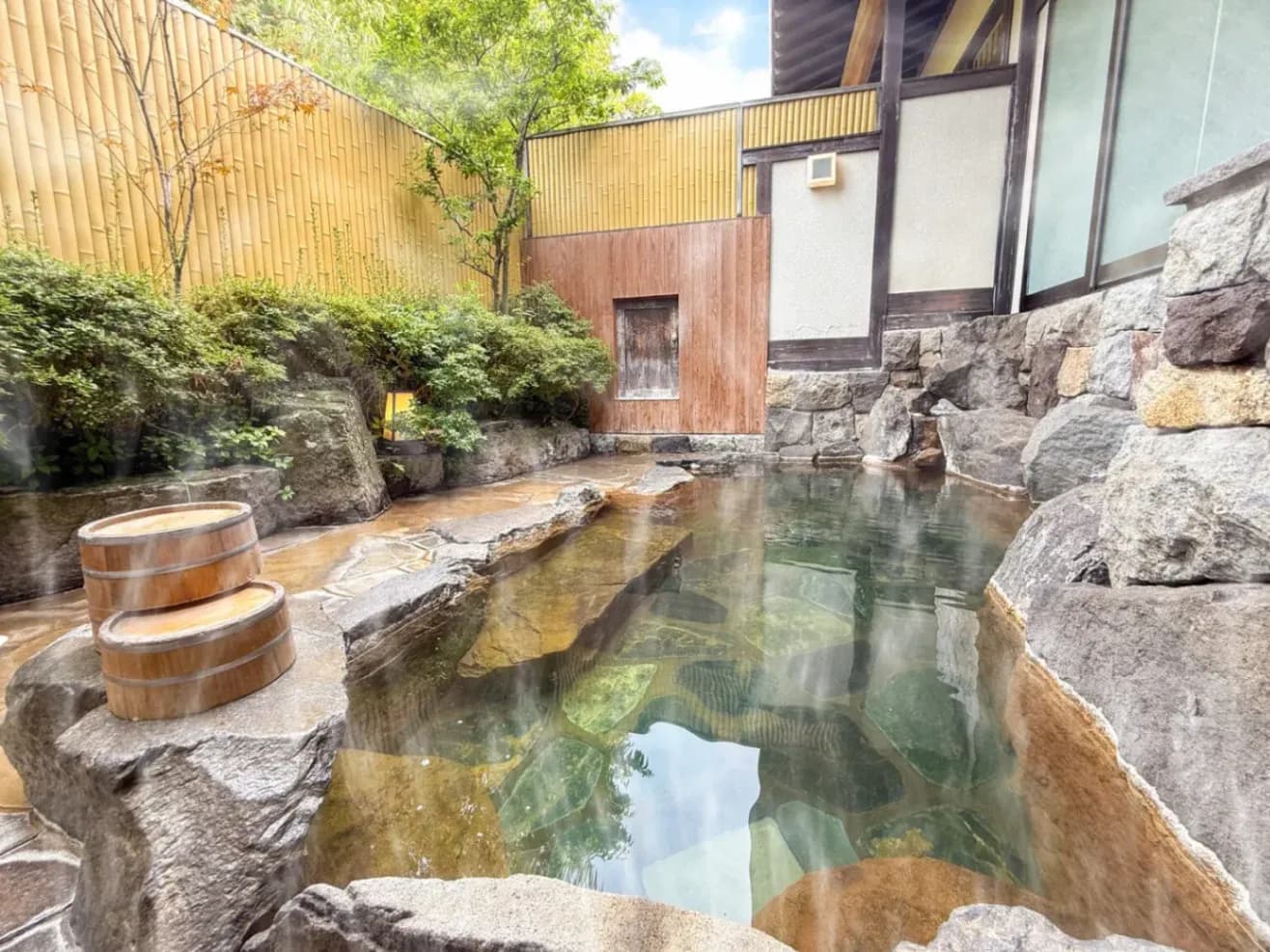
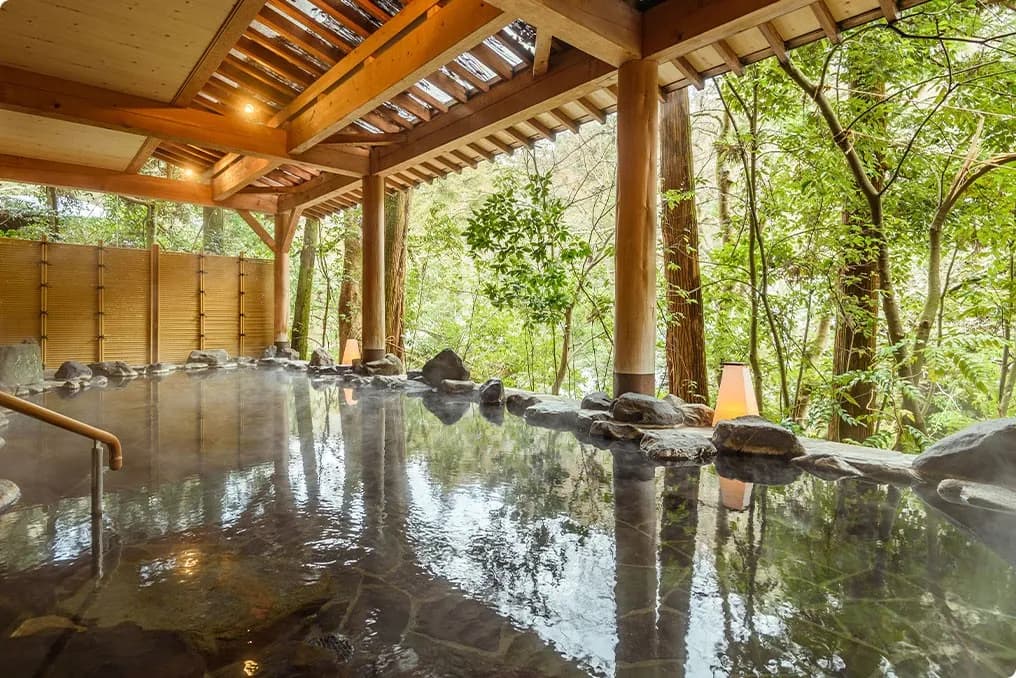
Araki Kosen Ryokan is one of the Chichibu Nanayu (Seven Hot Springs of Chichibu), a historic inn founded in 1827 during the late Edo period with a heritage spanning nearly 200 years. According to legend, the first-generation proprietress Okiku discovered the mineral spring through divine guidance from the deity of Tsunemochi Shrine. The inn flourished as a gateway lodge for pilgrims visiting Kinsho-ji, the fourth temple on the Chichibu pilgrimage circuit. The name Araki derives from the temple's alternate name Araki-dera, itself rooted in a tale of a man named Araki Tange who found spiritual redemption through the temple's principal deity. Having never undergone major reconstruction since its founding, the building retains the atmosphere of Edo-period architecture throughout its corridors and rooms. The spring water is classified as a simple sulfur cold mineral spring with a source temperature of approximately 14.8 degrees Celsius. Its pH of 9.24 places it firmly in the alkaline range, and the water possesses an exceptionally silky texture often compared to egg whites, earning it the affectionate nickname Tamago-mizu (egg water). This distinctive smoothness results from the combination of sulfur content and high alkalinity, leaving the skin remarkably soft after bathing. While the spring water is heated for the main baths, a cold mineral water plunge pool filled with 100 percent source water is positioned beside the sauna, offering the luxurious experience of cooling down in pure mineral spring water after a sauna session. The main bathhouse comprises separate facilities for men and women, each equipped with an outdoor bath and sauna. The outdoor baths provide views of the surrounding Chichibu mountains, creating a tranquil retreat far removed from urban noise. A private bath carved from granite, measuring 150 centimeters in diameter, is available for 3,300 yen per hour. Four guest rooms featuring private outdoor baths — Ichii-no-ma, Momiji-no-ma, Hinoki-no-ma, and Seseragi-no-ma — offer an intimate hot spring experience within the comfort of one's own room. The cuisine highlights local Chichibu ingredients prepared in traditional Japanese style, delivering the simple yet deeply satisfying flavors of mountain village cooking. Day-trip bathing is available from 12:00 to 21:00 (last entry 20:00) at the reasonable rate of 900 yen on weekdays and 1,000 yen on weekends and holidays. Access from Seibu-Chichibu Station takes approximately 20 minutes by Seibu Kanko Bus to the Kinsho-ji stop, followed by a five-minute walk, and a complimentary shuttle bus service is available with advance reservation. The inn serves as an ideal base for exploring the Chichibu pilgrimage route or attending the famous Chichibu Night Festival. The fresh green season of spring and autumn foliage period are particularly rewarding times to visit, when the natural beauty of the Chichibu region enhances the bathing experience. Nearby attractions including Mitsumine Shrine and Nagatoro Gorge make the inn a convenient hub for broader Chichibu sightseeing.
Quality
単純硫黄冷鉱泉
Temp
14.8℃ to 42℃
Heat
Heated
pH
pH 9.2
pH
0714
AcidicNeutralAlkaline
Use
Stay OK/Day Trip OK
Fee
Adult 900JPY/Child 450JPY
Hours
MonTueWedThuFriSatSunHol
12:00 - 21:00◯◯◯×◯◯◯◯
View detail page

3. Shiroku Onsen Yatsugawakan (Arakawa Shiroku, Chichibu City)

Shiroku Onsen Yatsugawakan is a venerable ryokan that has been welcoming travelers for nearly a century in the mountain hamlet of Arakawa Shiroku in Chichibu City, Saitama Prefecture. Founded in 1930, this tranquil inn stands along the banks of the Yatsugawa Stream, a tributary of the Arakawa River, deep in the Oku-Chichibu mountains. A 15-minute walk from Shiroku Station on the Chichibu Railway leads visitors through a narrow valley to this hidden retreat, aptly described as a secluded mountain inn. The Chichibu region has long been associated with mountain asceticism and pilgrimage, home to the Chichibu 34 Kannon Sacred Sites circuit, and the inn has served as a place of rest and rejuvenation within this rich cultural landscape. The hot spring water at Yatsugawakan is a simple alkaline spring containing fluorine ions and metaboric acid, drawn from the Ogano Onsen Dairyuji source. Its most remarkable characteristic is an extraordinarily high pH of 10.02, placing it among the most alkaline hot springs in all of Japan. Although the source temperature is a cool 19.7 degrees Celsius, requiring the water to be heated for bathing, the sensation upon entering the bath is immediately striking: the highly alkaline water creates a distinctive silky smoothness on the skin. This alkalinity gently dissolves dead skin cells and leaves the skin remarkably soft and moisturized after bathing, earning the spring its reputation as a premier beauty bath. The therapeutic benefits extend to neuralgia, muscle pain, joint pain, cold sensitivity, fatigue recovery, gastrointestinal disorders, diabetes, and gynecological conditions. The bathing facilities include a main communal bath with both indoor and open-air sections, complemented by private open-air baths available free of charge to overnight guests on a first-come, first-served basis. From the open-air baths, guests gaze upon the clear waters of the Yatsugawa Stream and the surrounding Oku-Chichibu mountains, enjoying fresh greenery in spring, vibrant foliage in autumn, and snow-dusted peaks in winter. The contrast between crimson and golden autumn leaves against the mountain stream is particularly breathtaking during the foliage season. Bathing is available around the clock except during cleaning periods, ensuring a truly relaxed stay. All 13 guest rooms feature private bath and toilet facilities, and the cuisine, prepared with seasonal ingredients from the Chichibu region, has earned widespread acclaim. Since December 2023, Yatsugawakan has transitioned to an accommodation-only establishment, discontinuing day-trip bathing services. While this means overnight stays are now required to experience this exceptional spring, it also guarantees a quieter and more serene atmosphere for guests. With rates starting from 18,500 yen per person with two meals, and easy access from central Tokyo via the Chichibu Railway, the inn offers excellent value. It pairs well with nearby attractions such as the Chichibu Night Festival, Hitsujiyama Park's moss phlox hillside, and the Nagatoro River boat rides, making it an ideal base for those seeking to fully immerse themselves in the natural beauty and hot spring culture of the Oku-Chichibu region.
Quality
単純アルカリ性温泉(フッ素イオン・メタほう酸含有)
Temp
40℃ to 43℃
Heat
Heated
pH
pH 10
pH
0714
AcidicNeutralAlkaline
Use
Stay OK/Day Trip N/A
View detail page

4. Chichibu Onsen Yuno Yado Wadoh (Kuroya, Chichibu City)

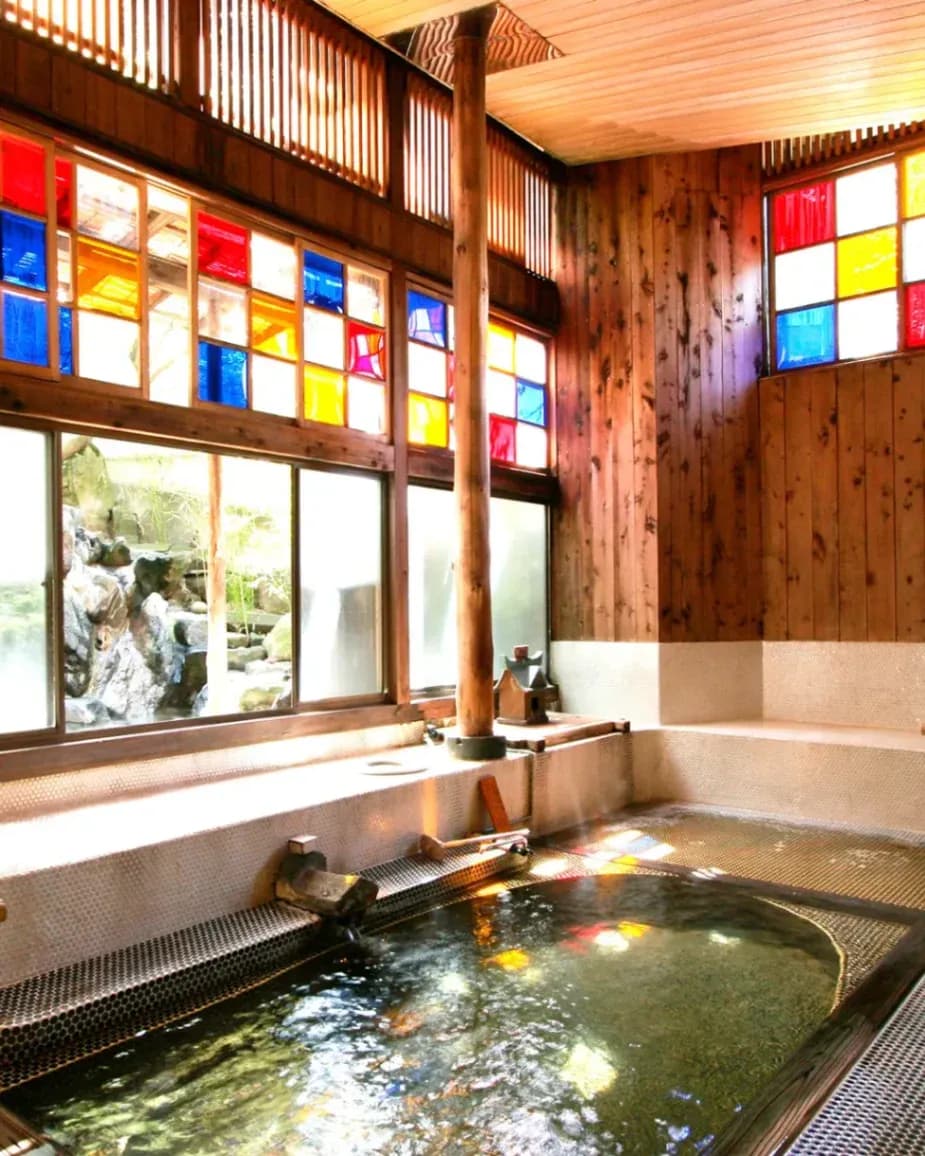
Among the Chichibu Seven Hot Springs, Wado Kosen holds the distinction of being the oldest. Its name derives from a momentous event in Japanese history: in the year 708 AD (Keun 5), native copper was discovered at this very site and presented to the Imperial Court. This copper was used to mint the Wado Kaichin, Japan's oldest official currency, and the discovery was deemed so significant that the era name itself was changed to 'Wado' (literally, 'Japanese Copper'). The mineral spring has served as a therapeutic bathing site since the Sengoku period, when the warlord Takeda Shingen developed the Wado copper mines in this area. Local villagers found the spring water remarkably effective as eye drops and for healing cuts, earning it the name 'Yakushi-no-Yu' (Healer's Spring). Today, Yuno Yado Wadoh is the only inn that draws from the Wado Kosen source — making it a truly one-of-a-kind hot spring destination. The spring water is classified as a mildly alkaline, low-tension cold mineral spring with a source temperature of just 10.5 degrees Celsius and a pH of 7.7. Colorless, transparent, tasteless, and odorless, the water may seem unremarkable at first impression, but this very gentleness is its strength — it is exceptionally mild on the skin, making it suitable for those with sensitive skin and young children alike. The waters are traditionally reputed to be beneficial for neuralgia, rheumatism, sensitivity to cold, skin conditions, stress, and cuts, which explains why 'Yakushi-no-Yu' has been cherished by therapeutic bathers for centuries. Although the cold mineral water requires heating for comfortable bathing, the original mineral composition of the source is carefully preserved. The inn features two distinctive bathing areas that alternate daily between men and women. The rock bath 'Iwakagami' is built with serpentine stone quarried in the Chichibu region, while the cypress bath 'Hiougi' is crafted from ancient hinoki cypress estimated to be 2,000 years old. Both include indoor and open-air sections, and bathing while gazing upon the clear waters of the Yokoze River is a particularly sublime experience. The private bath 'Gumi' offers couples and families an intimate bathing retreat, and a private bedrock spa using healing stones provides an additional dimension of relaxation alongside the hot spring. Guest rooms with private open-air baths are also available, allowing the luxury of enjoying Wado Kosen's waters in complete privacy. Day-trip bathing is available for 1,000 yen per adult between 11:00 and 14:00, though visitors may be turned away during peak periods — calling ahead on the day or the day before is recommended. From Ikebukuro, the Seibu Limited Express reaches Seibu-Chichibu Station in approximately 89 minutes; a transfer to the Chichibu Railway brings guests to Wado-Kuroya Station, from which the inn's complimentary shuttle takes just 5 minutes. By car, it is roughly 45 minutes from Hanazono IC on the Kanetsu Expressway, with free parking for 52 vehicles. Situated midway between Chichibu city center and Nagatoro, the inn is ideally positioned for combining a hot spring stay with visits to Chichibu Shrine, Nagatoro river cruises, and Mitsumine Shrine. From the pink moss phlox hillside in spring to autumn foliage and the legendary Chichibu Night Festival in winter, Wadoh serves as an ideal base for savoring the charms of Chichibu throughout the seasons.
Quality
弱アルカリ性低張性冷鉱泉
Temp
40℃ to 42℃
Heat
Heated
pH
pH 7.7
pH
0714
AcidicNeutralAlkaline
Use
Stay OK/Day Trip OK
Fee
Adult 1000JPY/Child ---JPY
Hours
MonTueWedThuFriSatSunHol
11:00 - 14:00◯◯◯◯◯◯◯◯
View detail page

5. Naguri Onsen Taishoukaku (Shimonaguri, Hanno City)

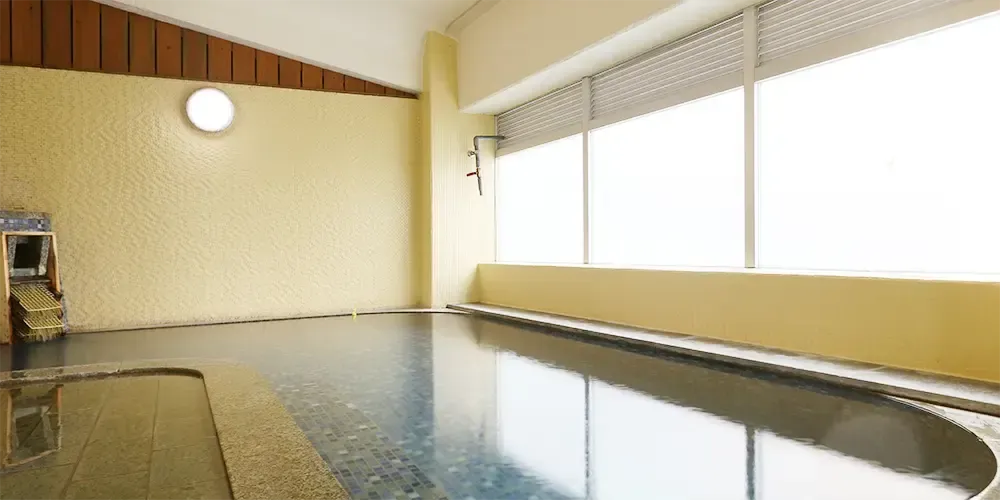
Naguri Onsen Taishoukaku is a historic hot spring ryokan nestled in the Naguri Valley of Hanno City, Saitama Prefecture, founded in 1914 during the Taisho era. The inn traces its origins to Daihachi Kashiwagi, who took over a therapeutic bathing lodge called Naguikan and reopened it under the name Taishoukaku. The name is said to combine the reading of dai from Kashiwagi's given name Daihachi and matsu from the previous owner Matsuzou Asami. For more than a century, Taishoukaku has quietly safeguarded its spring waters in the mountain recesses of Naguri. Despite being only about an hour from central Tokyo, the setting along the Naguri River gorge exudes the atmosphere of a deep mountain village, and the inn has cultivated a devoted following as a hidden retreat on the capital's doorstep. The source spring, known as Naguri Radium Mineral Spring, is classified as a hypotonic alkaline cold mineral spring. The source temperature is a remarkably cold 7 degrees Celsius with a modest total mineral content of 174mg, yet it qualifies as a legally recognized hot spring due to its 1.9mg total sulfur content. With a pH of 8.5, the water is alkaline and notable for its gentle, silky feel against the skin. The bathing facilities include main pools heated to approximately 40 degrees Celsius alongside a cold plunge bath filled with unheated 7-degree source water, allowing guests to enjoy alternating hot and cold immersion. This soft mineral water, handed down through a century of stewardship, may lack the dramatic character of strongly sulfurous or acidic springs, yet it possesses a quiet, penetrating warmth that gradually seeps into the body. The baths are situated on the top fifth floor, and the panoramic main bathhouse offering sweeping views of the Naguri countryside is the inn's crowning feature. The Kengyu-no-Yu men's bath and Orihime-no-Yu women's bath command a panoramic vista of mountains that shift their colors with each passing season. The open-air baths bear celestial names — Amanogawa (Milky Way) for men and Ginga (Galaxy) for women — and allow bathers to feel the Naguri breeze beneath an open sky. A rotating wooden bath called Ki-buro and two private reservation baths, Tsuchi-buro and Iwa-buro, bring the total to seven distinct bathing experiences. The annex building Humming features its own private open-air bath and sauna. Throughout the inn, details such as wooden pillows crafted from locally harvested Nishikawa cedar reflect a thoughtful commitment to the materials of the Hanno region. Day-trip bathing is available from 11:00 to 15:00 at 1,600 yen for adults, with towels included. As priority shifts to overnight guests after 15:00, morning visits are recommended for day-trippers. Access is convenient via a free shuttle bus from Hanno Station South Exit on the Seibu Ikebukuro Line, taking approximately 30 minutes with advance reservation, or about 40 to 50 minutes by car from Sayama-Hidaka IC on the Ken-O Expressway. The surrounding area offers abundant leisure opportunities including nature walks along the Naguri Valley, canoe and kayak experiences, and the family-friendly Moominvalley Park, making it easy to fill an entire day alongside the hot spring visit. The fresh greenery of spring and autumn foliage seasons are particularly spectacular, and the harmony between Naguri's natural beauty and the Taisho-era charm of this venerable inn is a sight to behold.
Quality
低張性アルカリ性冷鉱泉
Temp
7℃ to 42℃
Heat
Heated
pH
pH 8.5
pH
0714
AcidicNeutralAlkaline
Use
Stay OK/Day Trip OK
Fee
Adult 1600JPY/Child 800JPY
Hours
MonTueWedThuFriSatSunHol
undefined - undefined◯◯◯◯◯◯◯◯
View detail page

6. Tokigawa Onsen Ryokan Tokigawa (Tokigawa Town, Hiki District)

Tokigawa Onsen is a hidden hot spring nestled in the mountains of Tokigawa Town, Hiki District, Saitama Prefecture, discovered in 1990 when a construction company executive accidentally struck a hot spring while drilling a well for a vacation home. The spring boasts a pH of 11.3, making it the most alkaline hot spring in Japan — so remarkable that it is featured in high school chemistry textbooks nationwide. After a temporary closure following the bursting of the economic bubble, the current owner Mr. Nakano acquired the property and reopened it as a day-trip-only hot spring in 2014. The water is classified as a strongly alkaline cold mineral spring qualifying as an onsen under the Hot Spring Law due to its metasilicic acid content. The source temperature is 14.9 degrees Celsius, with metasilicic acid exceeding 54.1mg — a natural moisturizing component that helps restore skin ceramides. The water is delivered as 100% pure source water with no dilution, circulation, or disinfection; only heating is applied. Each evening the bath is drained and cleaned, with the naturally flowing spring at 2.4 liters per minute refilling from morning to provide perfectly fresh water.
Quality
強アルカリ性冷鉱泉(メタケイ酸)
Temp
15℃ to 42℃
Supply
Natural Source Flow
Heat
Heated
pH
pH 11.3
pH
0714
AcidicNeutralAlkaline
Use
Stay N/A/Day Trip OK
Fee
Adult ---JPY/Child ---JPY
Hours
MonTueWedThuFriSatSunHol
11:00 - 20:00××◯◯◯◯◯◯
View detail page

7. Hyakkannon Onsen (Nishi-Owa, Kuki City)

The name Hyakkannon Onsen traces back to the Edo period, when the local estate owner undertook pilgrimages to all 100 Kannon temples across Japan — the Bando 33, Saigoku 33, and Chichibu 34 sacred sites. He collected talismans and sand from each temple and built a Kannon hall on his property to enshrine 100 statues of the Goddess of Mercy. This hall became a spiritual landmark for the community, and in February 2002, hot spring water was struck 1,500 meters beneath this hallowed ground. Despite being located in the heart of the Kanto Plain, the spring is fed by ancient fossil seawater that erupts naturally alongside natural gas — a phenomenon exceedingly rare for a flatland location. The water is classified as a sodium chloride strong salt spring with a source temperature of 57 degrees Celsius and an extraordinary flow rate of 1,000 liters per minute. At pH 7.9 (mildly alkaline) with a total mineral content of 18,510 mg/kg, the water is exceptionally concentrated, containing 6,412 mg of sodium ions and 439.3 mg of calcium ions per kilogram, giving it outstanding skin-softening and beautifying properties. The Japan Spa Association awarded perfect 5-star ratings across all six evaluation categories — source quality, water quality, conveyance method, supply and drainage system, dilution, and fresh water injection rate. Fewer than 20 facilities nationwide hold this distinction. The 100% free-flowing source water with absolutely no dilution or artificial heating validates this top-tier rating. The facility features outdoor rock baths, outdoor carbonated spring baths, indoor baths, reclining baths, waterfall showers, cold water baths, a sauna, and five private bath rooms — all generously supplied with direct source water. The on-site restaurant Shochikutei offers post-bath dining, while bodywork, esthetic treatments, and Korean-style body scrub services provide thorough relaxation. Despite operating on the scale of a large-format super sento, the fact that every single bath delivers genuine natural hot spring water in a free-flowing configuration is rare nationwide and earns high praise from onsen enthusiasts. One of Hyakkannon Onsen's greatest assets is its superb accessibility — just a 3-minute walk from JR Higashi-Washinomiya Station on the Utsunomiya Line. From Tokyo Station, the JR Ueno-Tokyo Line reaches the station in approximately 55 minutes with no transfers, making it an ideal day-trip hot spring destination from central Tokyo. Admission is a reasonable 850 yen on weekdays and 900 yen on weekends, with generous operating hours from 8:00 to 23:00 on weekdays and 7:00 to 23:00 on weekends. Nearby stands Washinomiya Shrine, famous as the real-world setting of the anime Lucky Star, making it easy to combine a temple visit with a hot spring outing. With closures limited to just the third Tuesday of each month, Hyakkannon Onsen stands as one of the Kanto region's premier authentic day-trip hot spring facilities.
Quality
Sodium - Chloride Strong Salt Spring
Temp
40℃ to 57℃
Supply
Natural Source Flow
pH
pH 7.9
pH
0714
AcidicNeutralAlkaline
Use
Stay N/A/Day Trip OK
Fee
Adult ---JPY/Child 400JPY
Hours
MonTueWedThuFriSatSunHol
08:00 - 23:00◯◯◯◯◯07:00-23:0007:00-23:0007:00-23:00
View detail page

8. Showa Retro Sento Tamagawa Onsen (Tokigawa Town, Hiki District)

Showa Retro Sento Tamagawa Onsen is a day-trip hot spring facility in Tokigawa Town, Hiki District, Saitama Prefecture, offering a unique time-travel experience to Japan's Showa era, all within just one hour's drive from central Tokyo. Originally opened in 1993 as a spa alongside a golf course, the facility was reborn in 2011 under the management of Onsen Dojo Co., Ltd. with the concept of a retro Showa-era public bathhouse. The interior is adorned with old-fashioned candy shop corners, vintage signage, and nostalgic advertisements that transport visitors back to mid-20th century Japan. In November 2023, the facility celebrated its 30th anniversary and launched new projects to deepen its Showa retro atmosphere. The standout feature is the remarkably high pH of 10.1, making it one of the most alkaline hot springs in Japan. The source water rises from the Chichibu Paleozoic stratum at a depth of 1,700 meters, and bathers notice an immediate silky smoothness on their skin from the moment they enter the water, giving Tamagawa Onsen its well-deserved reputation as a beauty spring. While the source temperature of 26.8 degrees Celsius requires heating, no additional water is added, preserving the natural mineral composition. The alkaline properties gently dissolve dead skin cells, leaving the skin extraordinarily smooth after bathing. Hot springs with a pH exceeding 10 are exceedingly rare nationwide, and many repeat visitors travel considerable distances specifically to experience these exceptional waters. The facility features two bathing areas, Sho-no-Yu and Wa-no-Yu, which alternate weekly between men and women. Sho-no-Yu boasts a rock-built open-air bath surrounded by the satoyama landscape of Tokigawa Town, offering a liberating sense of immersion in nature. Large windows in the indoor bath also frame seasonal views throughout the year. Wa-no-Yu, by contrast, faithfully recreates a downtown public bathhouse from the 1950s and 1960s, with hand-painted wall murals depicting Red Fuji and Showa-era streetscapes, alongside nostalgic advertisements for products like Hechima Cologne. Every detail, from the washing stations to the wooden buckets, has been carefully chosen to evoke the Showa period, creating an experience that feels nostalgic for older visitors and refreshingly novel for younger generations. The facility is open from 10:00 to 22:00 on weekdays and from as early as 5:00 on weekends and holidays, making morning baths a popular draw. The on-site Tamagawa Dining Hall serves Showa-inspired comfort food, perfect for a post-bath meal. Access is convenient at approximately 25 minutes from Higashi-Matsuyama IC on the Kanetsu Expressway, or about 8 minutes by taxi from Myokaku Station on the JR Hachiko Line. The surrounding area offers the clear waters of the Tokigawa River and satoyama hiking trails, making the facility a popular destination for day trips combining nature exploration with a relaxing hot spring experience.
Quality
Alkaline Simple Hot Spring
Temp
26.8℃ to 42℃
Supply
Circulation System
Heat
Heated
pH
pH 10.1
pH
0714
AcidicNeutralAlkaline
Use
Stay N/A/Day Trip OK
Fee
Adult 880JPY/Child 400JPY
Hours
MonTueWedThuFriSatSunHol
undefined - undefined◯◯◯◯◯◯◯◯
View detail page

Summary — What to Know Before Exploring Saitama's Hot Springs

The hot springs of Saitama Prefecture can be efficiently explored by dividing them into three main areas.

Chichibu Area (Chichibu Seven Springs): Shibahara Onsen Kayanoya, Araki Kosen Ryokan, Shiroku Onsen Yatsugawakan, and Chichibu Onsen Yuno Yado Wadoh are all concentrated within Chichibu City. Each belongs to the celebrated Chichibu Seven Hot Springs and is accessible by public transportation along the Chichibu Railway line. From Ikebukuro, the Seibu Limited Express reaches Seibu-Chichibu Station in approximately 80 minutes, from where transfers to the Chichibu Railway connect to each spring's nearest station. A recommended 1-night/2-day itinerary would include an overnight stay at Kayanoya or Yatsugawakan, followed by day-trip bathing at Araki Kosen and a lunch-and-bath visit to Wadoh the next day. Seasonal highlights abound — the Chichibu Night Festival in December, Misotsuchi Icicles from January through February, and the moss phlox hillside from April to May — all pairing beautifully with a hot spring visit. In winter, studded tires are recommended for driving in the mountainous areas due to potential road icing.

Hanno & Naguri Area: Naguri Onsen Taishoukaku is the most accessible hidden hot spring from Tokyo. A free shuttle bus from Hanno Station on the Seibu Ikebukuro Line reaches the inn in approximately 30 minutes, and day-trip bathing is available from 11:00 to 15:00 for 1,600 yen. The inn makes an excellent pairing with outdoor activities in the Naguri Valley such as nature walks and kayaking, or a visit to Moominvalley Park. Founded in 1914, this venerable ryokan features seven distinct bathing experiences, with the panoramic fifth-floor baths offering particularly impressive views of the surrounding countryside.

Tokigawa & Kuki Area: Tokigawa Onsen Ryokan Tokigawa and Tamagawa Onsen are both located in Tokigawa Town, approximately 10 minutes apart by car. Hyakkannon Onsen in Kuki City boasts remarkably convenient access, just a 3-minute walk from JR Higashi-Washinomiya Station. Ryokan Tokigawa offers Japan's most alkaline spring water at pH 11.3 in an exclusive setting — reservation only, limited to 4 groups per day (closed Mondays and Tuesdays, cash only). Tamagawa Onsen provides a more casual experience with its pH 10.1 alkaline waters in a charming Showa-retro atmosphere, opening as early as 5:00 on weekends. Hyakkannon Onsen is a full-scale facility with perfect 5-star ratings from the Japan Spa Association, reachable in about 55 minutes from Tokyo Station with no transfers. A practical approach would be to visit Ryokan Tokigawa and Tamagawa Onsen on one day, and Hyakkannon Onsen on a separate trip.

Overall, the Chichibu area springs can be reached by public transportation using a combination of the Seibu Railway and Chichibu Railway, though a rental car offers greater flexibility. The two facilities in Tokigawa Town have limited public transit options with infrequent bus service, making car access the more practical choice. Hyakkannon Onsen alone stands out as effortlessly reachable by train. Note that Kayanoya and Yatsugawakan are accommodation-only establishments that do not accept day-trip visitors, so be sure to confirm each facility's policies before planning your visit.

The information in this article (admission fees, operating hours, water quality data, etc.) is based on research conducted at the time of writing. Details may have changed or contain errors. Please verify the latest information on each facility's official website or through the local tourism association.
Recommended Hot Springs

Popular hot springs from Hitou Map

HomeMapSearchBlogMy Page