Mt. Tanigawa Hike | Tajiri Ridge to the Autumn Twin Summits, 9 km & Onsen

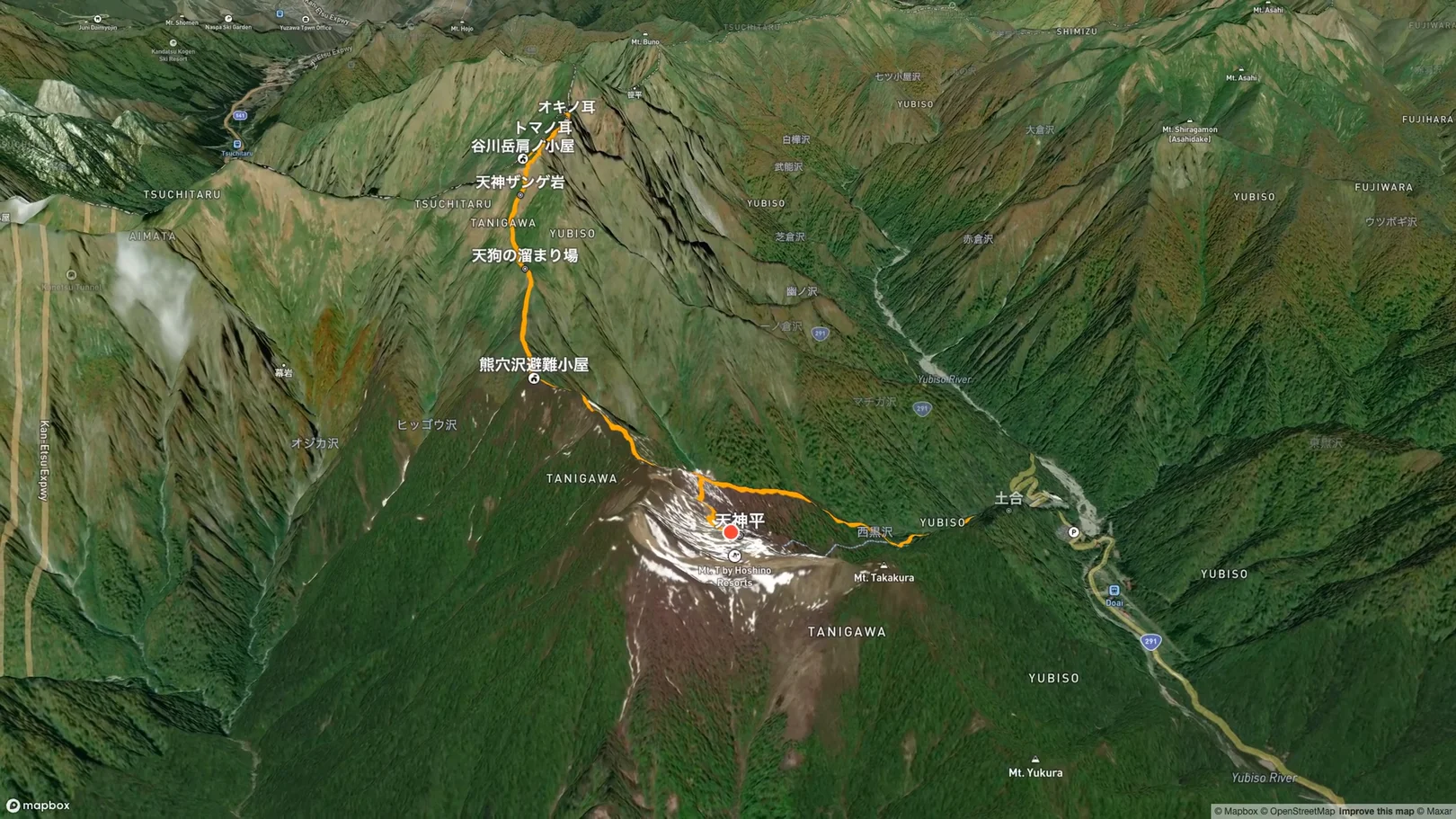
Mt. Tanigawa route map from Doai up the Tajiri Ridge past Kumaanazawa Hut, Tengu-no-Tamariba, Tenjin Zange Rock and Kata-no-Koya Hut to Toma-no-Mimi and Oki-no-Mimi, ending at Tenjindaira

On Sunday, October 12, 2025, we hiked Mt. Tanigawa in Minakami, Gunma, in the middle of the autumn season. We went on foot from Doai without the ropeway, climbed the Tajiri Ridge, joined the trail from Tenjindaira, and followed the Tenjin Ridge up to the twin summits, Toma-no-Mimi (1,963 m) and Oki-no-Mimi (1,977 m). The autumn colors were at their peak near the top, and the ridges turned red were stunning! Fog rolled in while we rested at the top, and we walked back down the Tenjin Ridge and rode the ropeway from Tenjindaira down to Doai. We have also listed onsen and inns nearby for after the hike.

The weather was great that day, and we got to see Mt. Tanigawa in beautiful autumn colors.

Course Data

Item

Details

Route

Doai → Tajiri Ridge → Tenjin Ridge → Kumaanazawa Hut → Tengu-no-Tamariba → Kata-no-Koya Hut → Toma-no-Mimi → Oki-no-Mimi → Kata-no-Koya Hut → Tenjin Ridge → Tenjindaira (ropeway down to Doai)

Distance

Approx. 9.0 km (excluding the ropeway)

Total time

Approx. 8 h 30 min (incl. breaks)

Elevation gain

Approx. +1,370 m

High point

1,977 m (Oki-no-Mimi)

Date

Sunday, October 12, 2025

These figures are from our own YAMAP record. The time includes the lines on the trail and our rest at the summit, so please use it as a rough guide when planning. The ropeway was crowded, so we climbed on foot without it. If you use the ropeway, your times will be different.

Access & Parking

The trailhead at Doai is in Minakami, Gunma, and there is parking near the Doai-guchi station of the Tanigawadake Ropeway.

We came via the Kan-Etsu Expressway, and the roads were not particularly congested. The parking lot is large, but on autumn weekends it was full by 6:30. There are toilets at the parking lot, but they were very crowded.
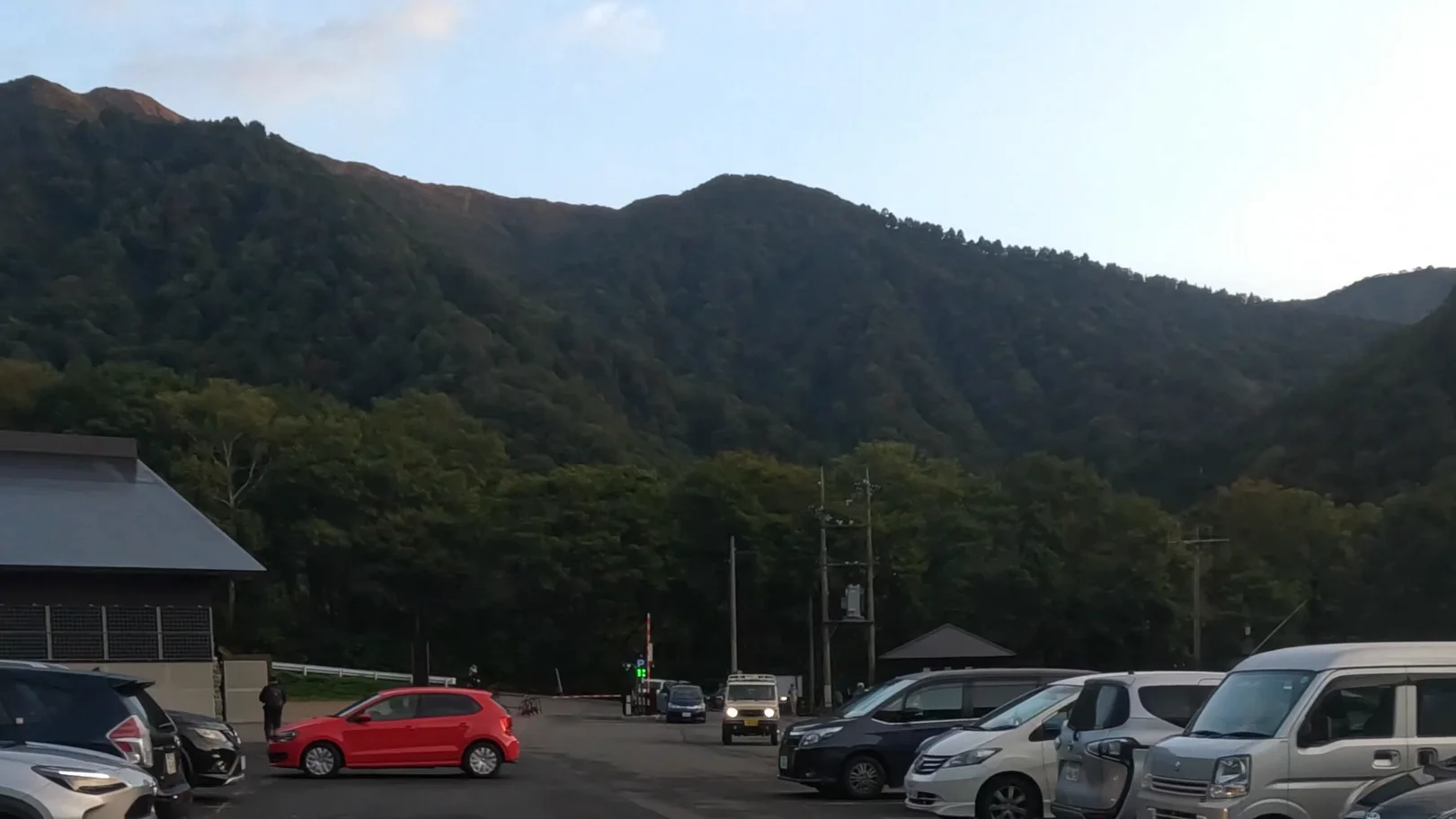
Doai parking lot in the early morning with cars lined up and mountains behind

We arrived around 6 a.m. At that point the town-run lot near the entrance (¥200/day as of our hike on October 12, 2025) still had space, but it was full by 6:30. The ropeway parking further in seems to open a little later. It gets busy in the autumn season, so arrive early!
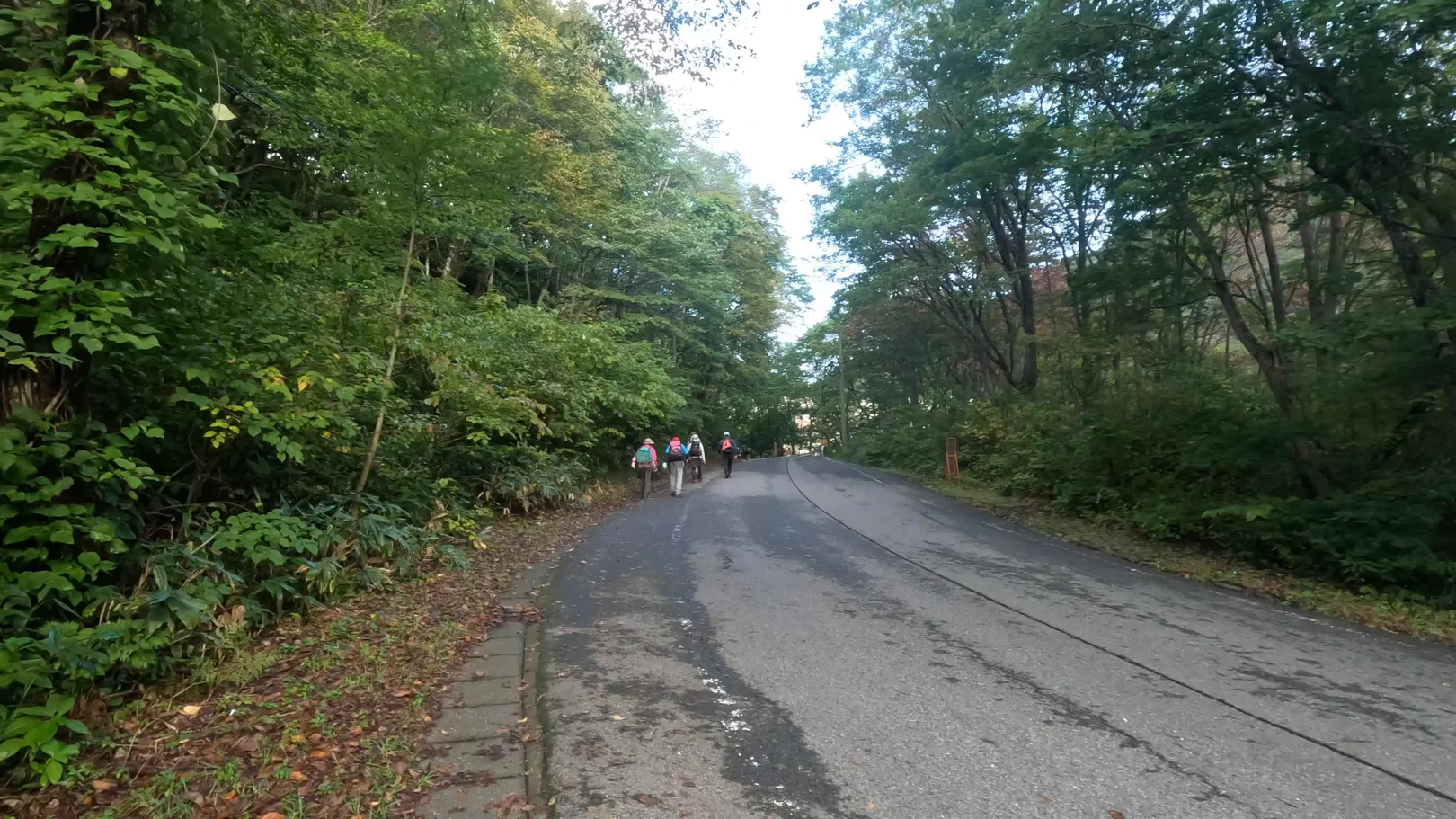
Doai hikers walking along the road from the parking lot toward the trailhead

The Tanigawadake Ropeway, which we rode on the way back, connects Tenjindaira and Doai-guchi in about 15 minutes one way. Fares are ¥1,800 for adults and ¥900 for elementary school children one way, or ¥3,000 and ¥1,500 round trip (fares revised on December 1, 2025). Hours are 8:00 to 17:00 on weekdays and 7:00 to 17:00 on weekends and holidays, with the last ride up at 16:30. The 2026 operating season runs from April 18 to November 15. Please check the official website for the time of the last ride down.

Clothing & Gear

The Tenjin Ridge has chained sections and rocky stretches, and there were spots where we climbed the rocks with the help of chains. It is reassuring to keep both hands free. Fog wrapped the summit while we were resting, so it is best to expect the weather to change quickly up high. Gloves, snacks and an outer layer for changes in the weather are also good to have.

Hike Log

Doai → Tajiri Ridge (2.2 km, approx. 1 h 30 min)

After a short walk from the parking lot, we set off on a rocky path running under the ropeway cables.
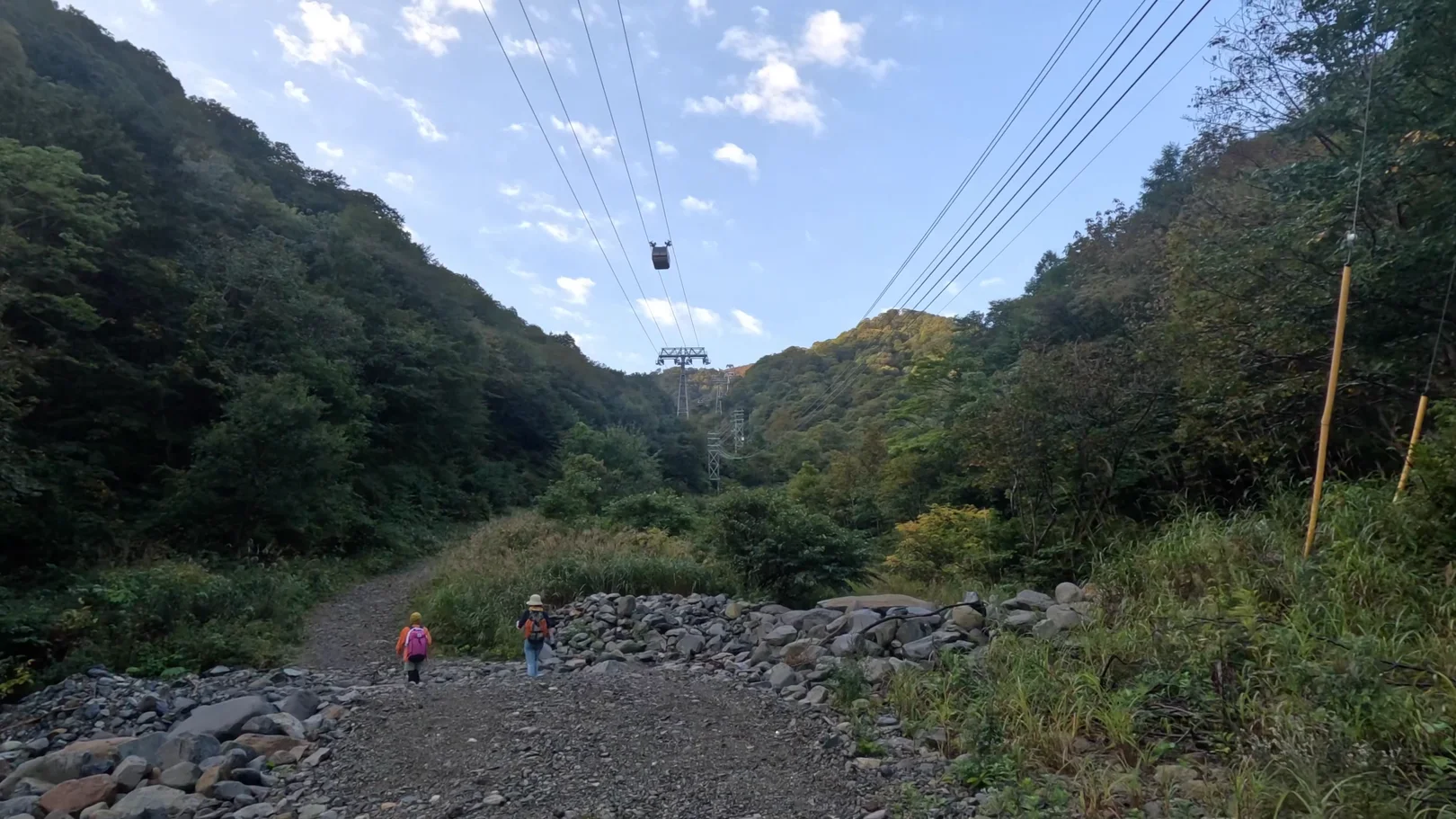
Tajiri Ridge rocky trail running under the ropeway cables

The Tajiri Ridge trail passes under the ropeway and climbs through the forest, with ropeway gondolas gliding overhead.
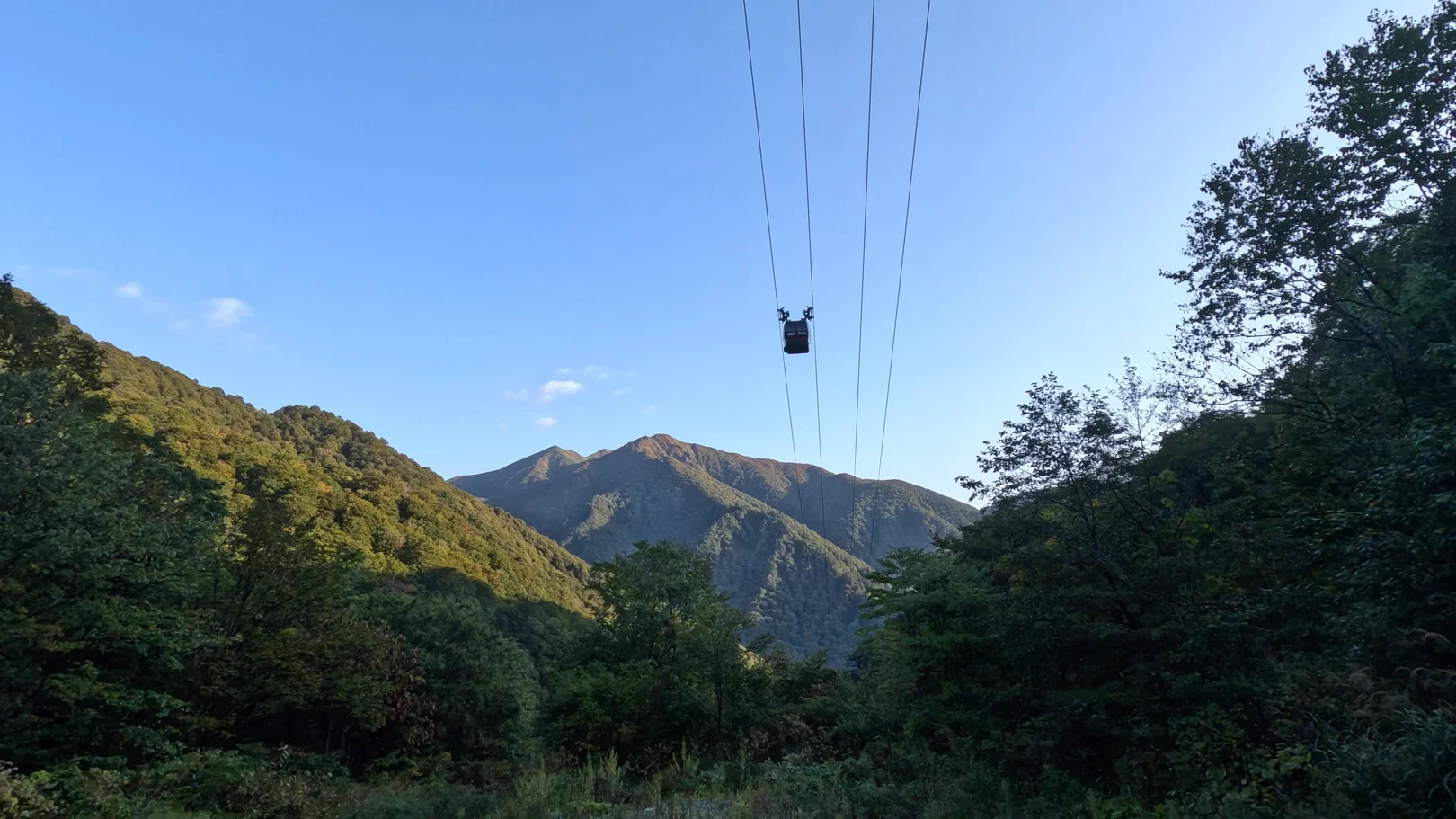
Tajiri Ridge Tanigawadake Ropeway gondolas gliding overhead

Into the forest at the Tajiri Ridge trailhead, the leaves were beginning to turn. After climbing for a while, the ridge appeared through a gap in the trees.
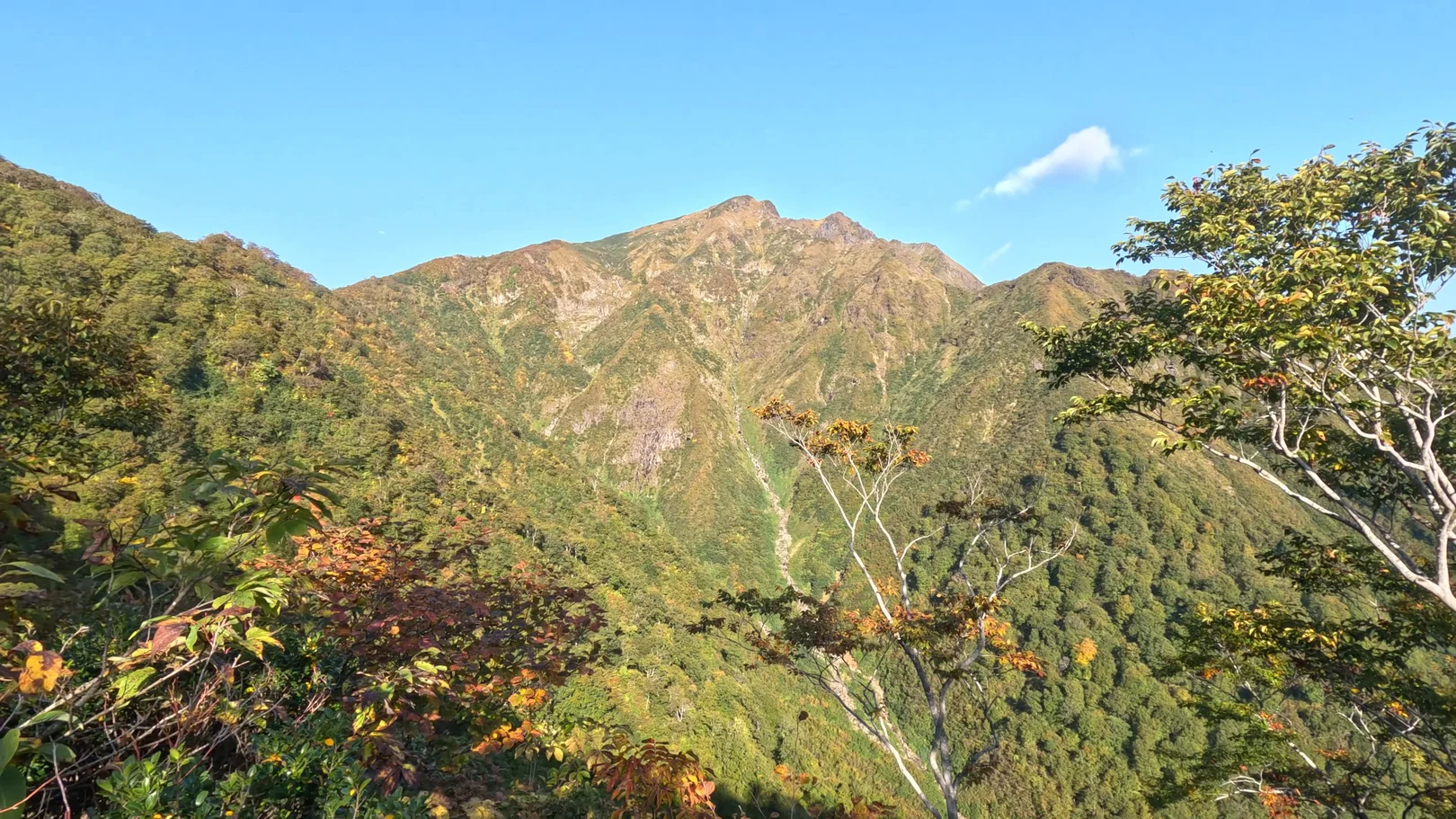
Tajiri Ridge the ridge with autumn colors starting, seen through a gap in the trees

Tenjin Ridge → Kumaanazawa Hut (1.1 km, approx. 45 min)

Once we joined the trail from Tenjindaira, the autumn crowds picked up and there were many more hikers. Only us and one other group had walked up from below.
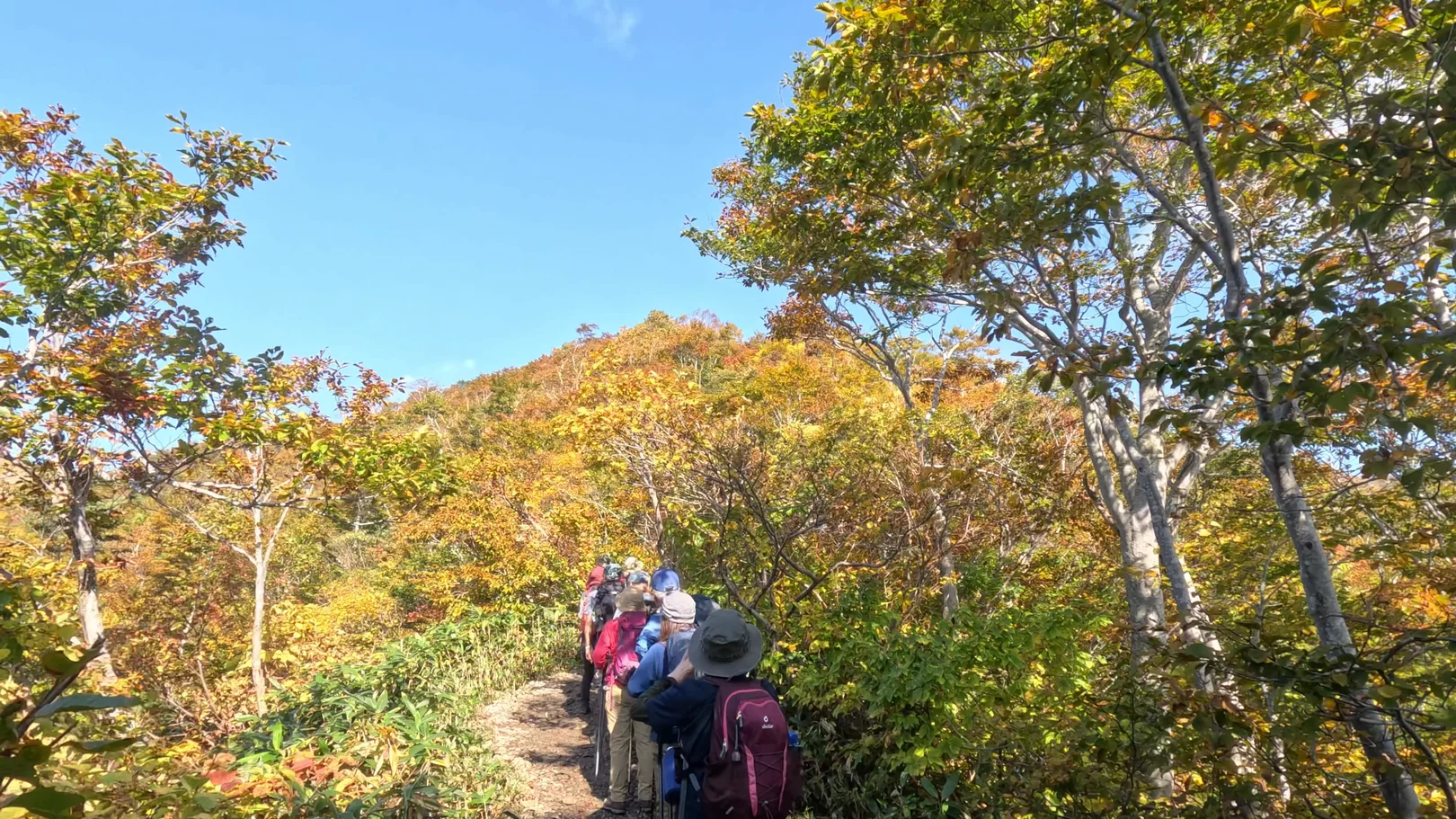
Tenjin Ridge a line of hikers on the trail through the autumn forest

Once we joined the ridge, there was a long line of hikers, and we came to a standstill several times. The first chained section comes up along this stretch.

Kumaanazawa Hut → Tengu-no-Tamariba (0.6 km, approx. 40 min)

Past Kumaanazawa Hut, the view opened up.
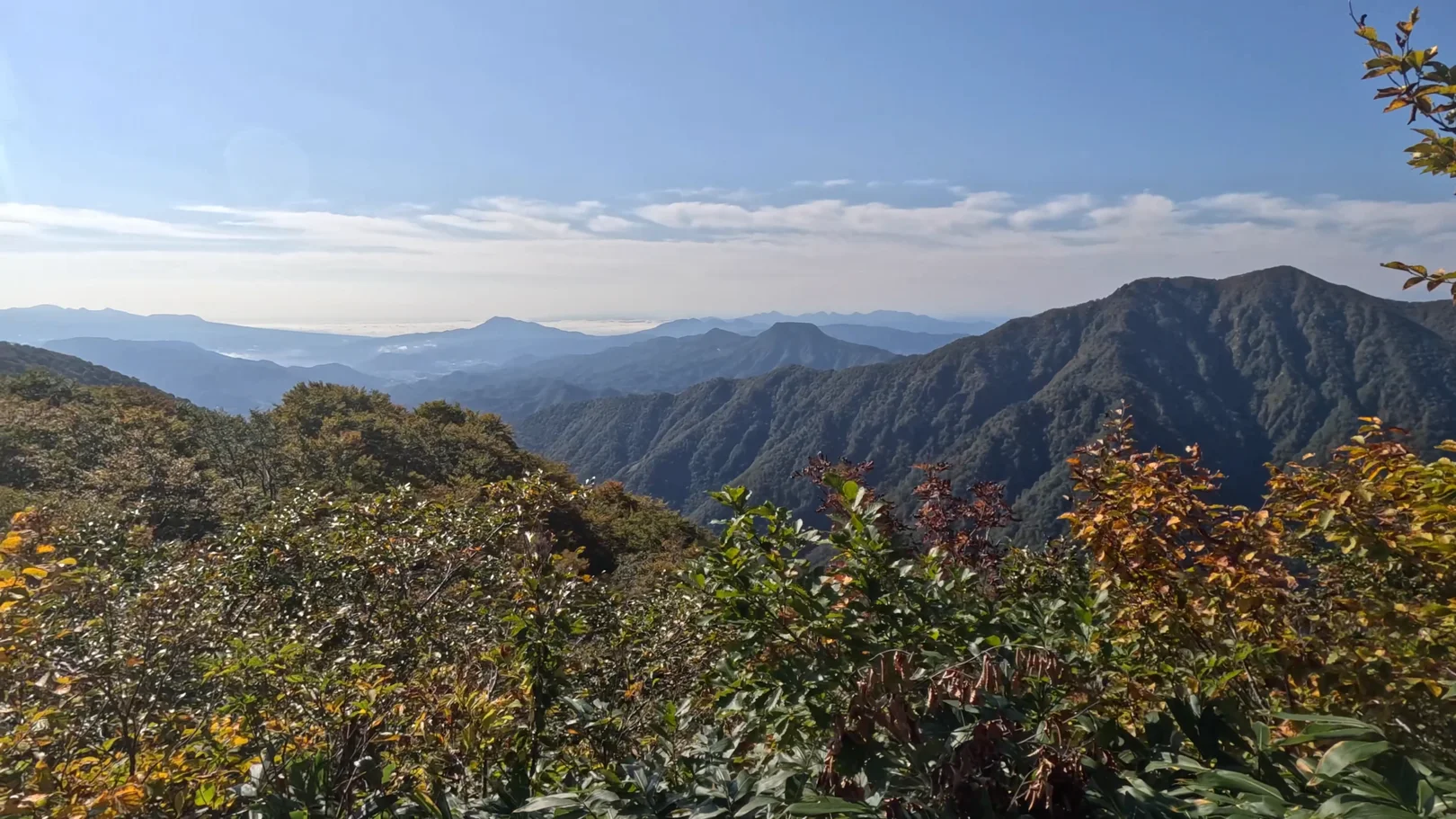
Beyond Kumaanazawa Hut distant mountains where the view opens up

A rocky ridge framed by autumn colors continues from here. There were so many hikers that the line kept backing up at the rocks.
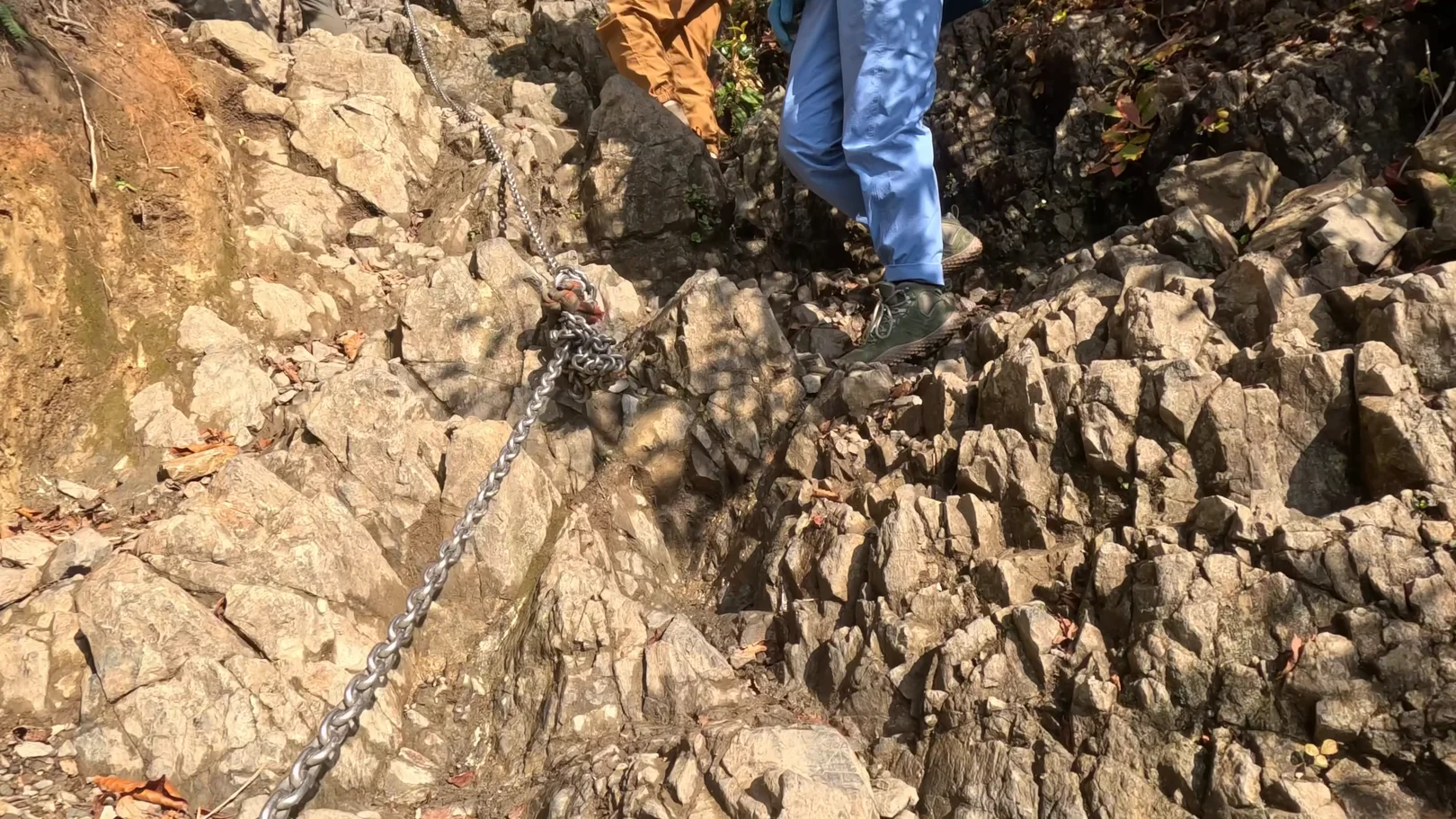
Beyond Kumaanazawa Hut climbing the rocks with the help of chains

At the top of the rocks, a sweeping view opened out. Stunning autumn colors, and we walked on along a ridge turned red!
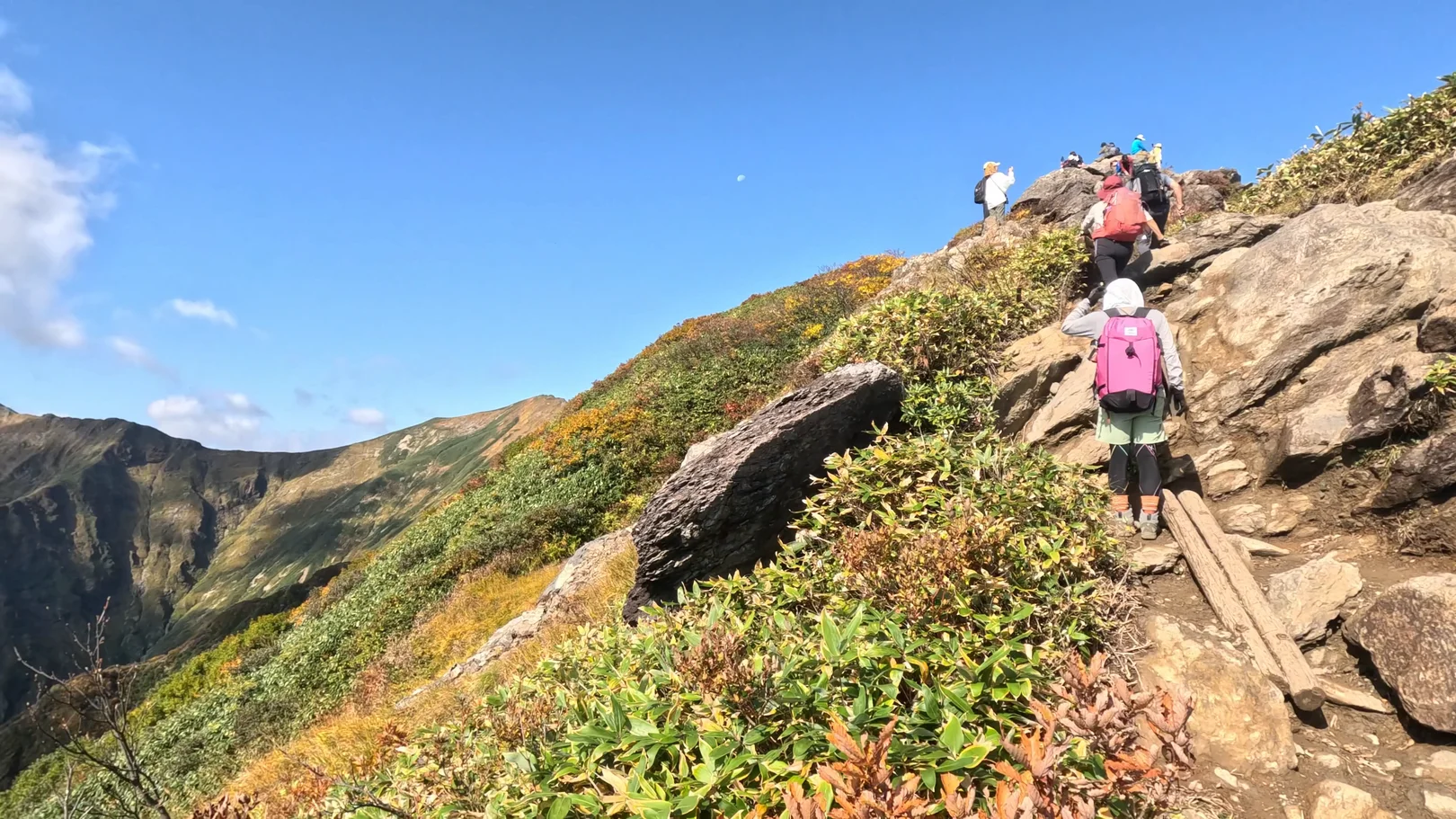
Before Tengu-no-Tamariba hikers climbing the rocks on a ridge turned red

Tengu-no-Tamariba → Kata-no-Koya Hut (0.7 km, approx. 1 h)

Beyond Tengu-no-Tamariba, the grasses had turned gold all around. A line of hikers stretched up the slope toward the summit.
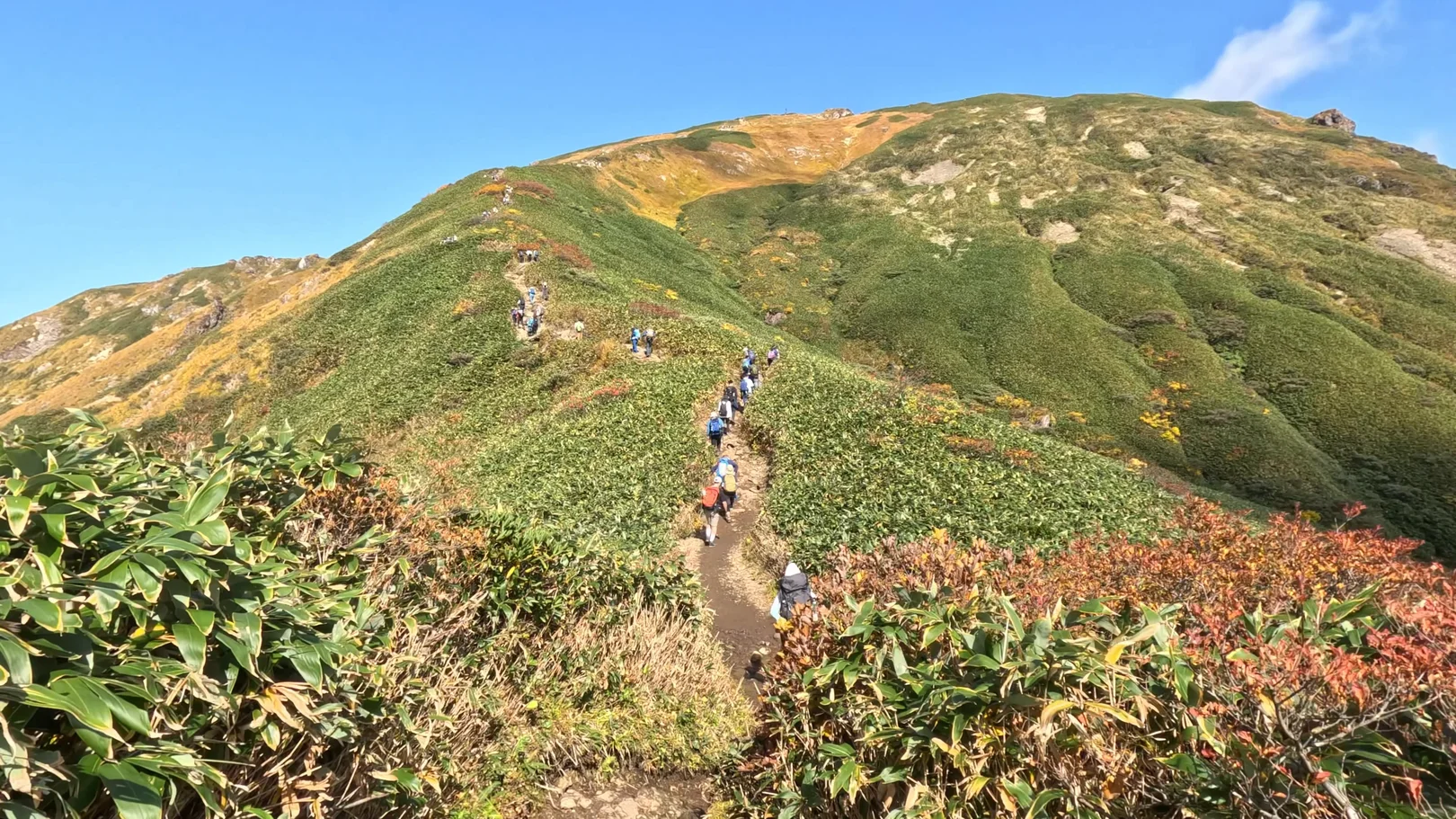
Tengu-no-Tamariba to Kata-no-Koya Hut a line of hikers heading up the golden grass slope toward the summit

There was more waiting in line on the steps.
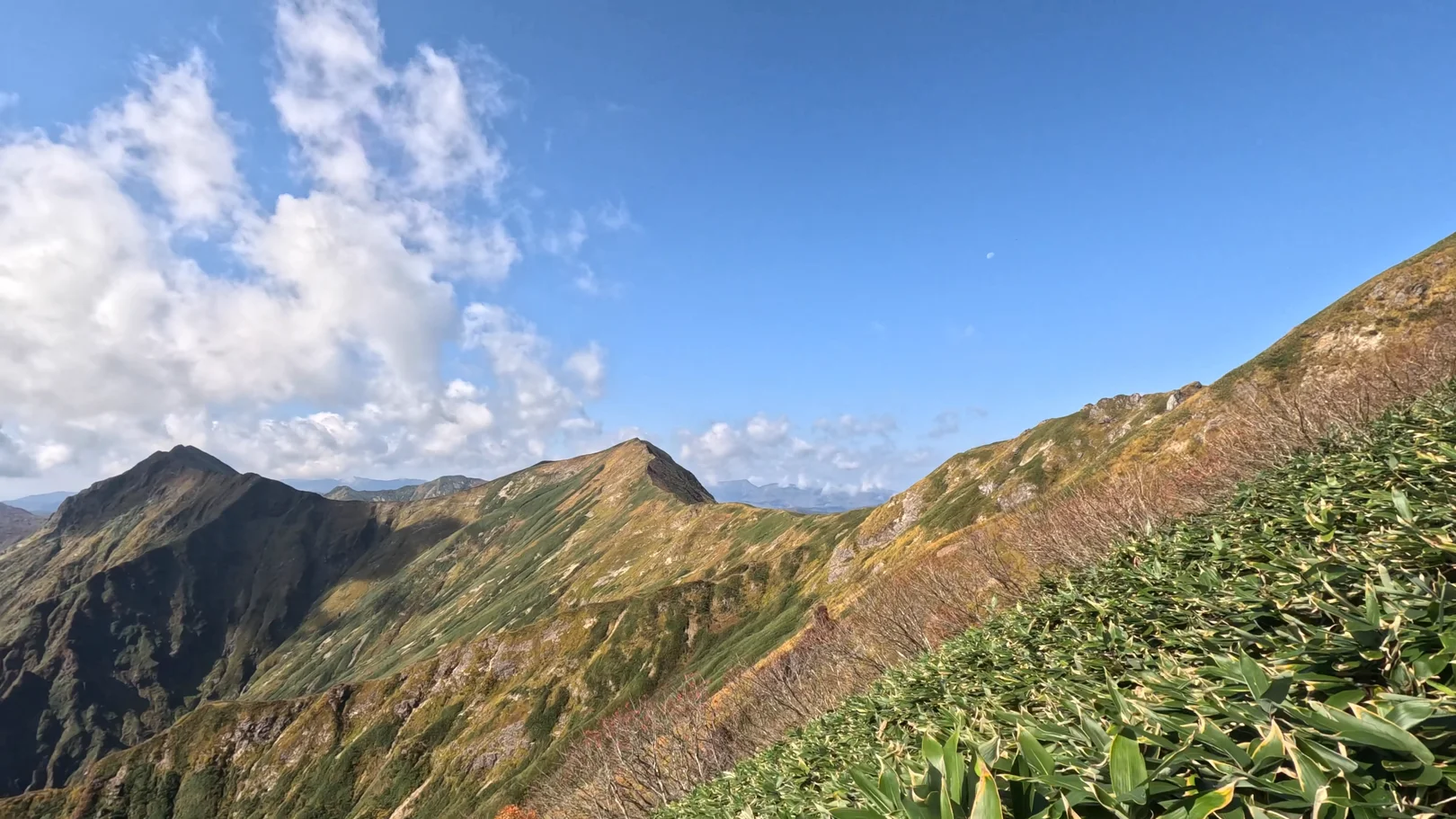
Tengu-no-Tamariba to Kata-no-Koya Hut golden grasses all around and the ridge

We arrived at Tanigawadake Kata-no-Koya Hut. A cola from the hut to refuel, and then on to the summit. Everyone was lining up at the hut. It was delicious!

Kata-no-Koya → Toma-no-Mimi → Oki-no-Mimi (0.5 km, approx. 40 min)

Looking back after leaving the hut, we could see Kata-no-Koya Hut with its red roof and the peaks beyond.
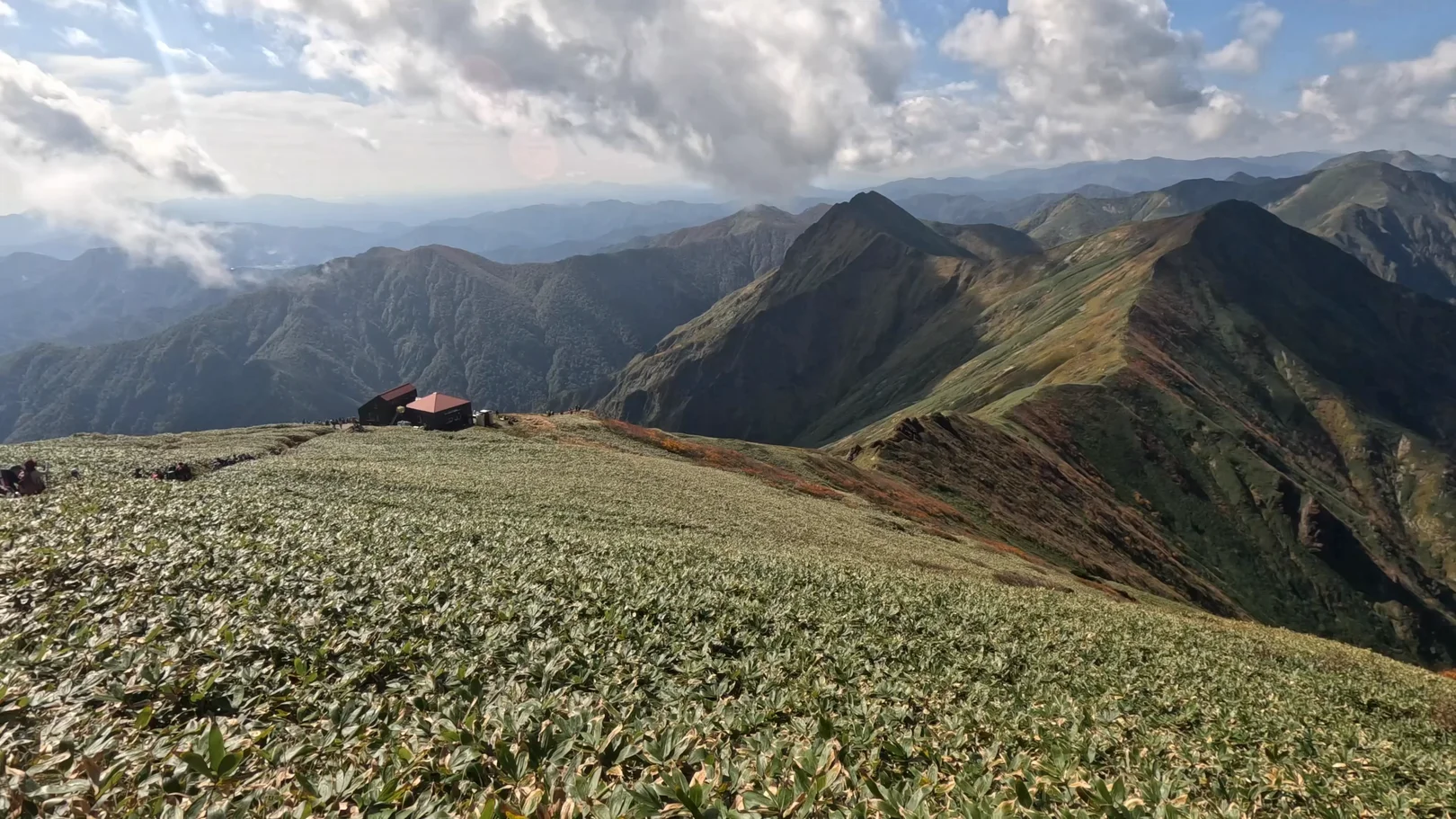
Kata-no-Koya Hut looking back at the red-roofed hut and the peaks beyond

First Toma-no-Mimi (1,963 m), then along the ridge toward Oki-no-Mimi ahead.
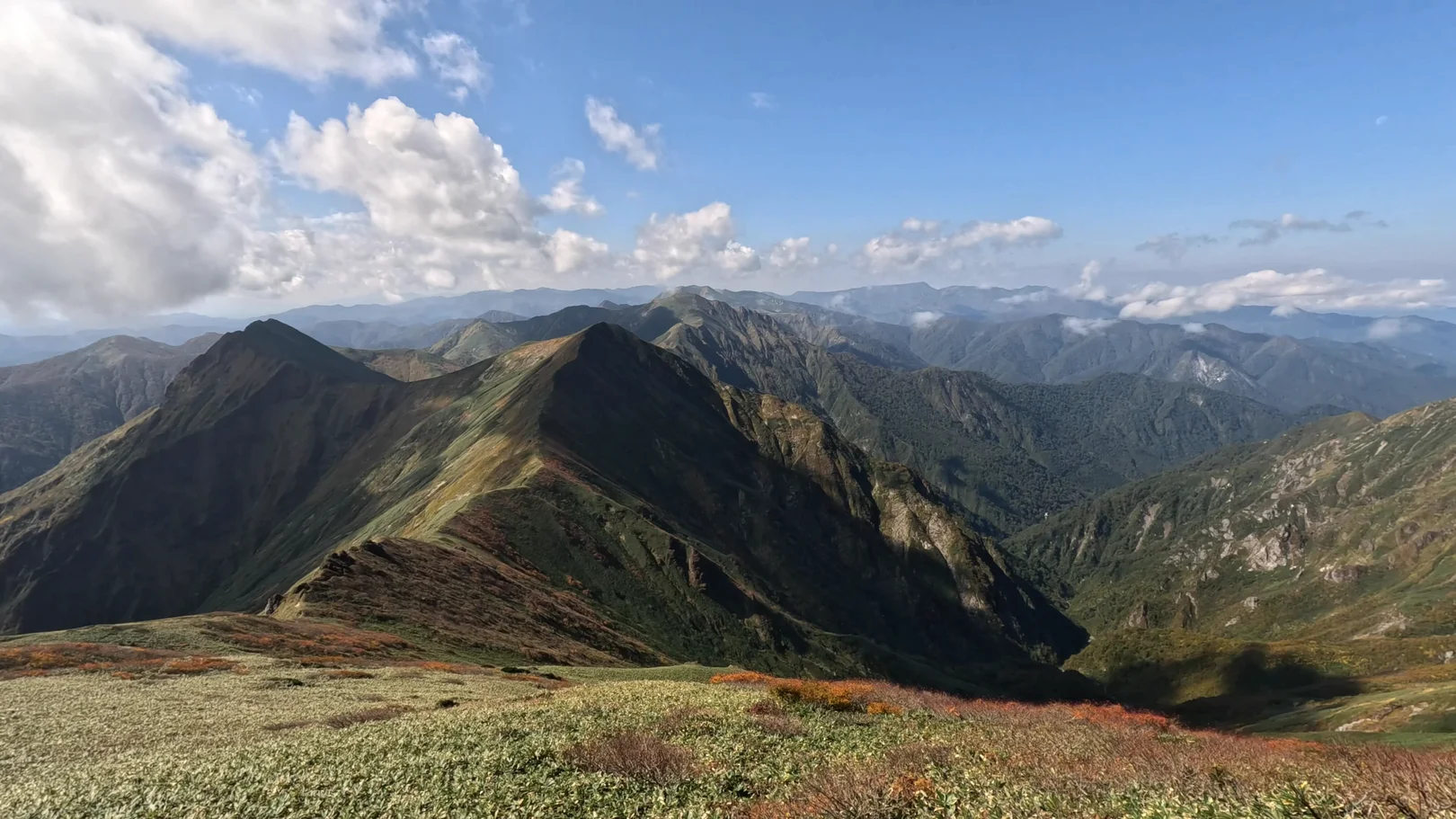
Between Kata-no-Koya Hut and Toma-no-Mimi peaks seen from the ridge

The autumn colors were at their peak near the summit! We reached Oki-no-Mimi (1,977 m), the highest point of Mt. Tanigawa. The summit was packed with hikers.
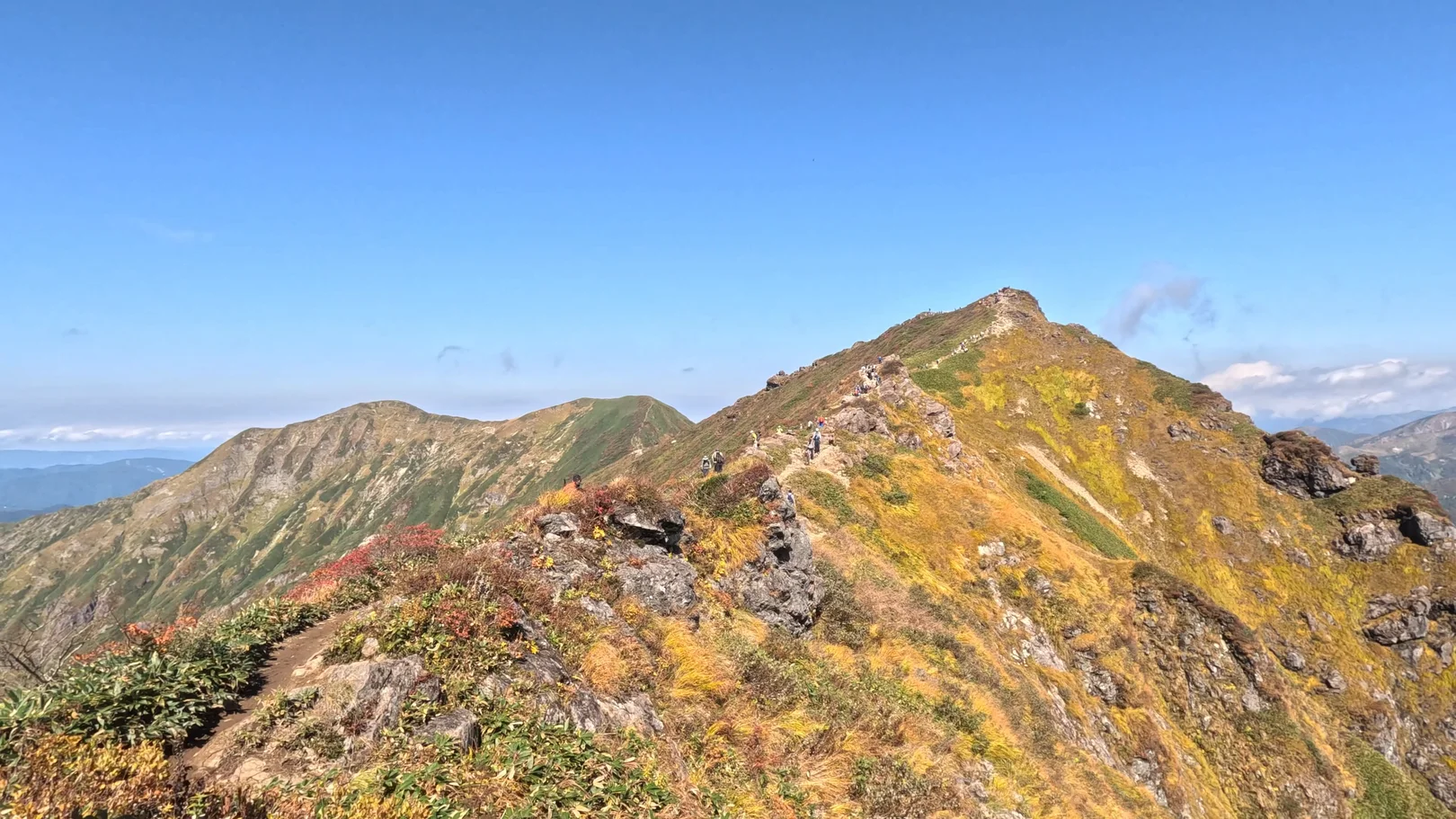
Toma-no-Mimi to Oki-no-Mimi the ridge in autumn colors

Looking around, we could see the autumn colors spread out below. The view was spectacular. Simply wonderful.

Rest at the top → Down to Kata-no-Koya (0.7 km, approx. 1 h 30 min incl. break)

While we rested at the top, clouds began rising up from the valley.
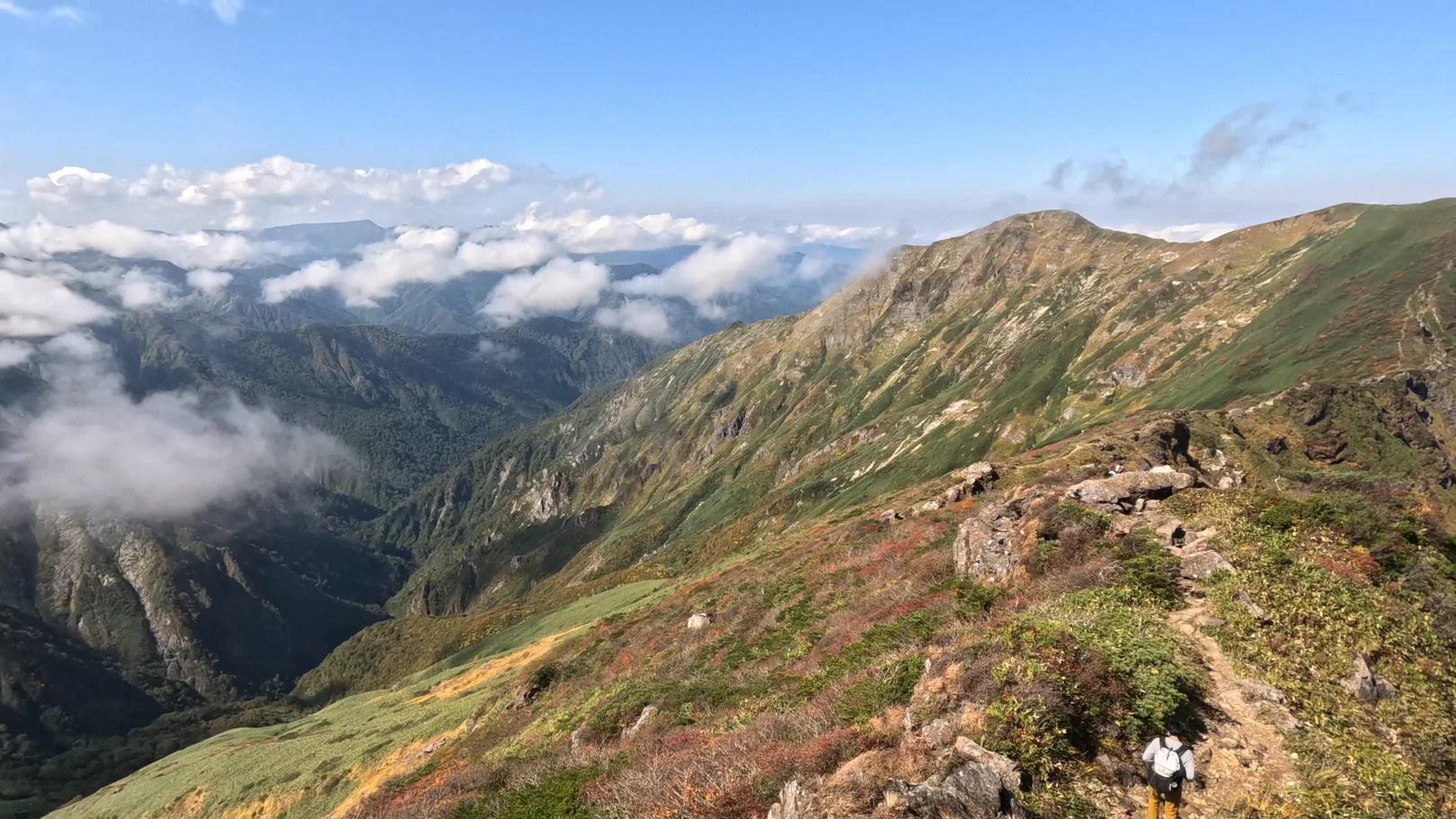
Descending from the summit clouds rising up from the valley along the ridge

During our rest, everything was wrapped in fog. Heading down through the fog past Kata-no-Koya, it began to lift.
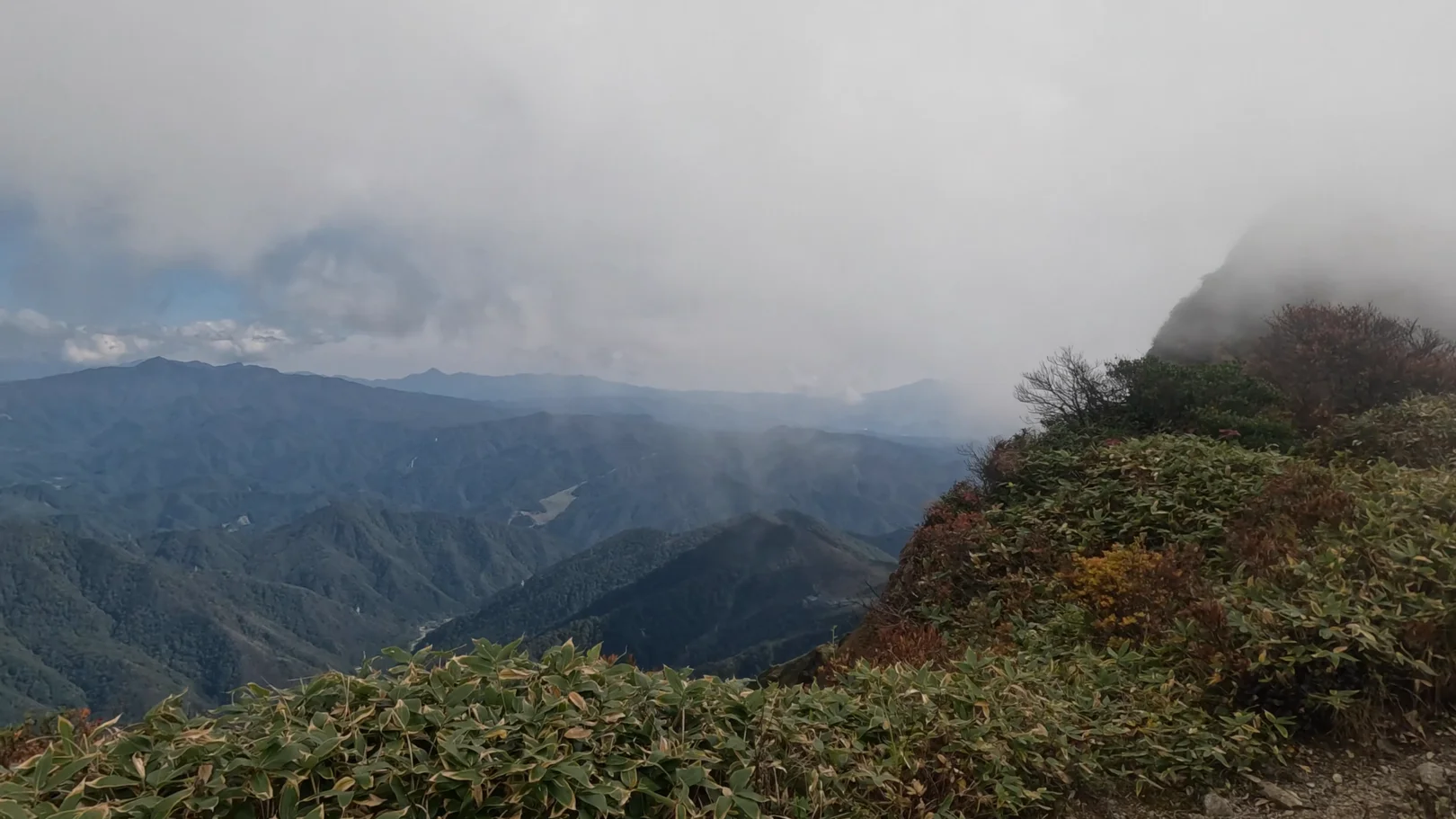
Descending from the summit the view from the ridge as the fog closes in

Down Tenjin Ridge to Tenjindaira (2.9 km, approx. 2 h 15 min)

On the way back we walked down the Tenjin Ridge. The clouds were clearing, and we could look out over the valley from the ridge.
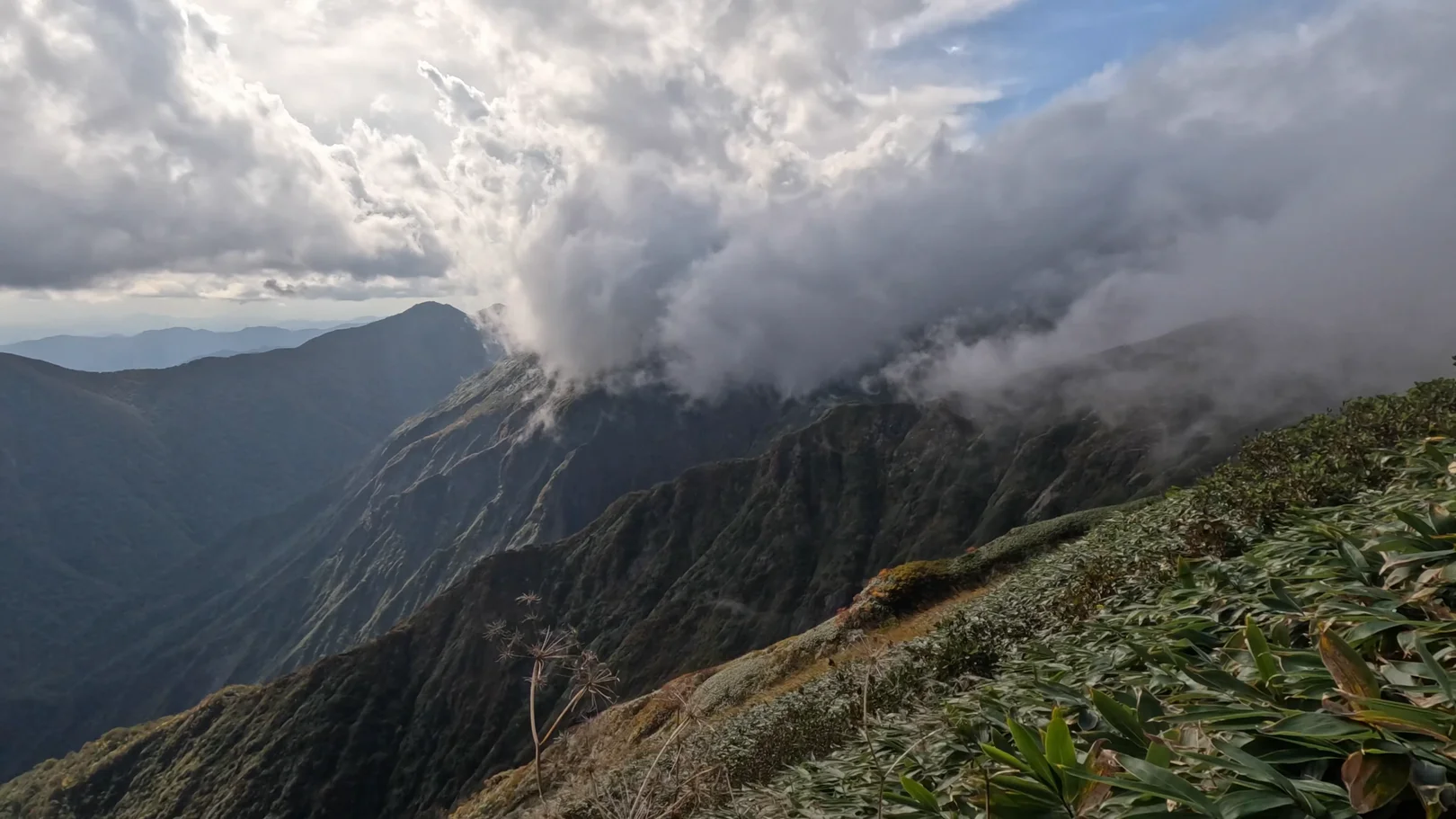
Tenjin Ridge the valley below as the clouds clear

The forest on the way down was full of autumn color too.
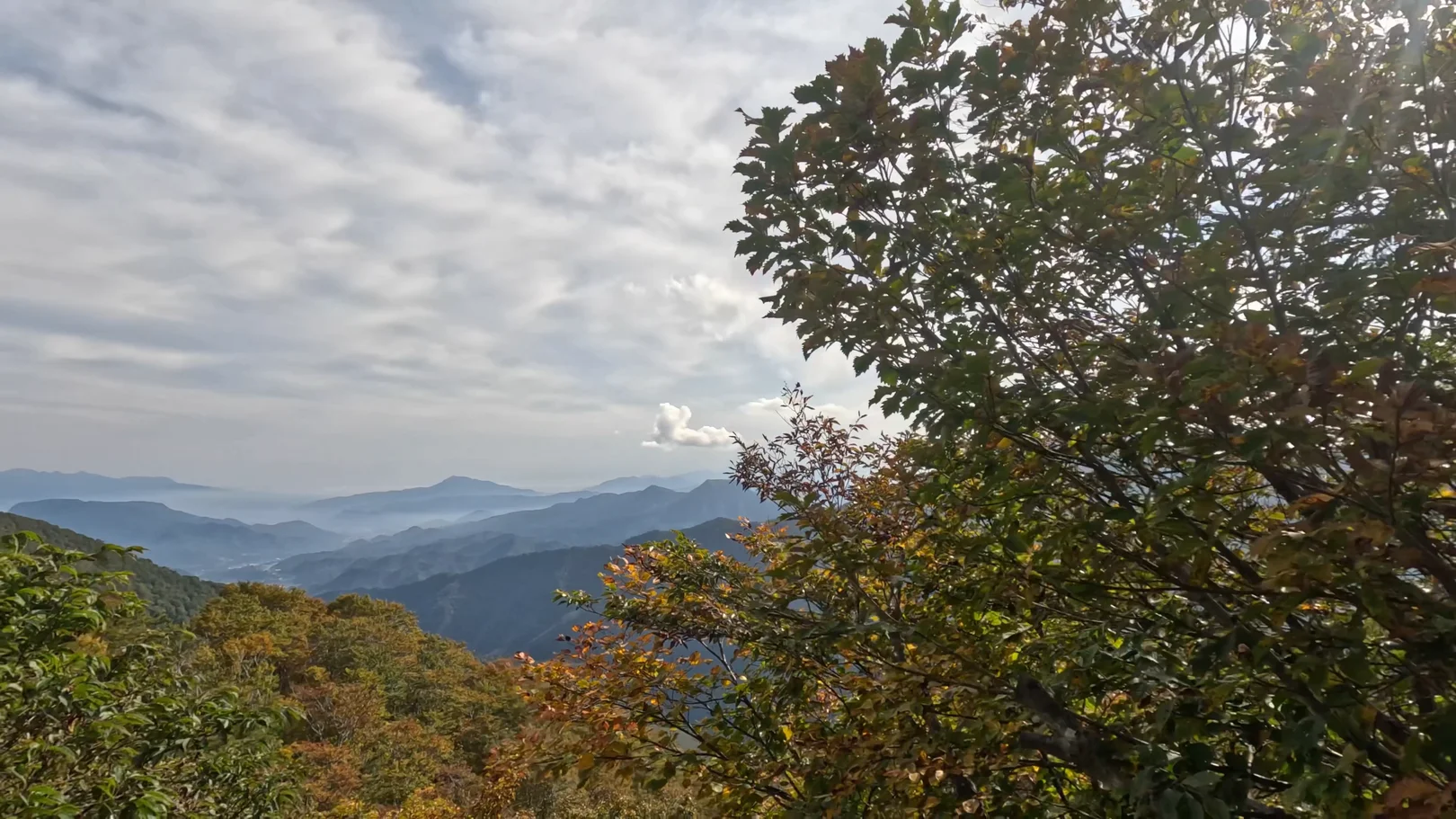
Tenjin Ridge autumn leaves in the forest on the way down

Arriving at Tenjindaira. From here we rode the ropeway down to Doai.
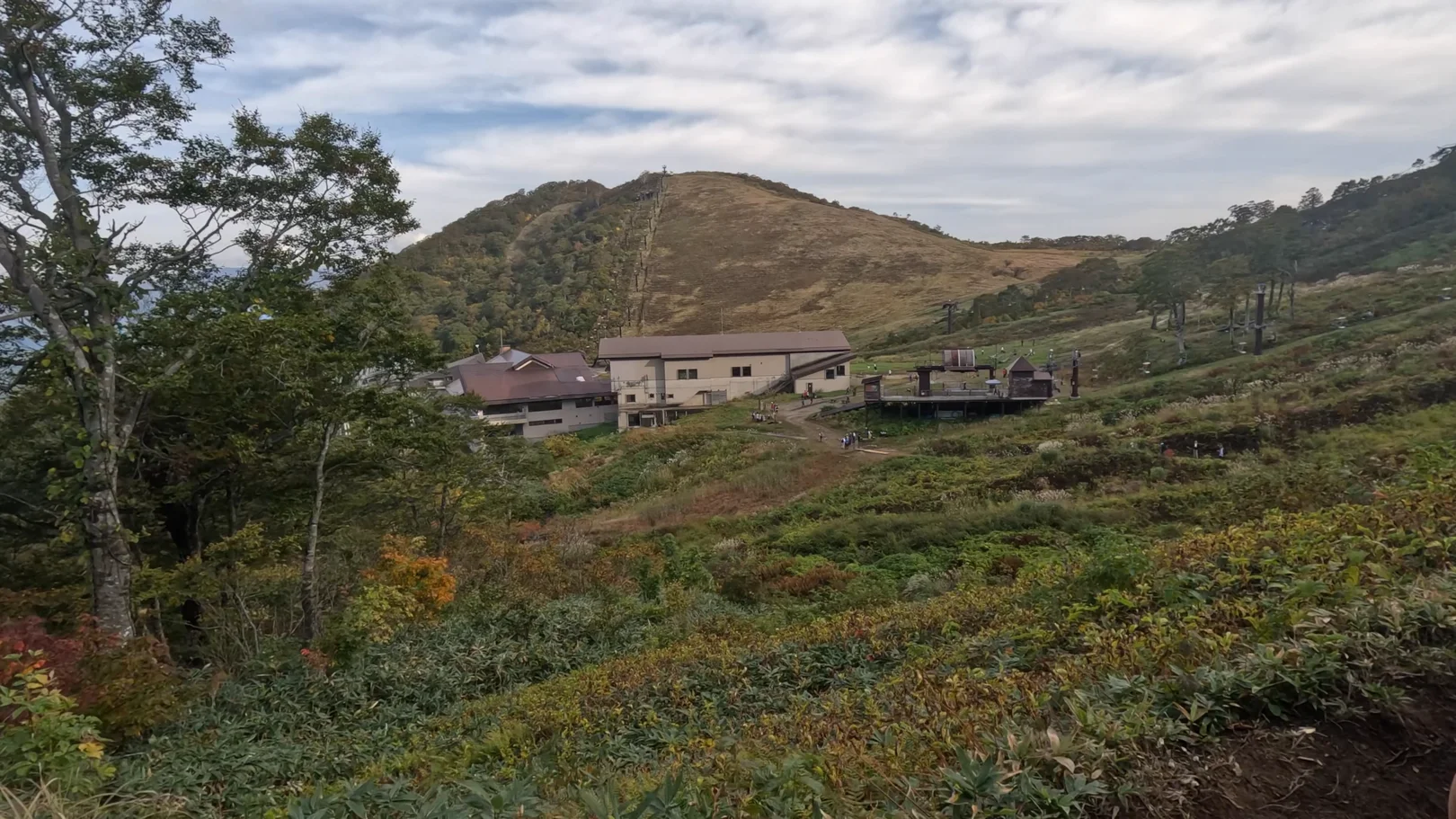
Tenjindaira buildings and the slopes of Tenjindaira Ski Resort

On the way down, we saw a hiker who had slipped being airlifted by helicopter. Many beginners climb this mountain, but please take great care.

Onsen After the Hike

If you want to soak after the hike, here are four onsen within about 40 minutes' drive of Doai that accept day visitors. Driving times are rough estimates.

Suzumori no Yu (鈴森の湯)

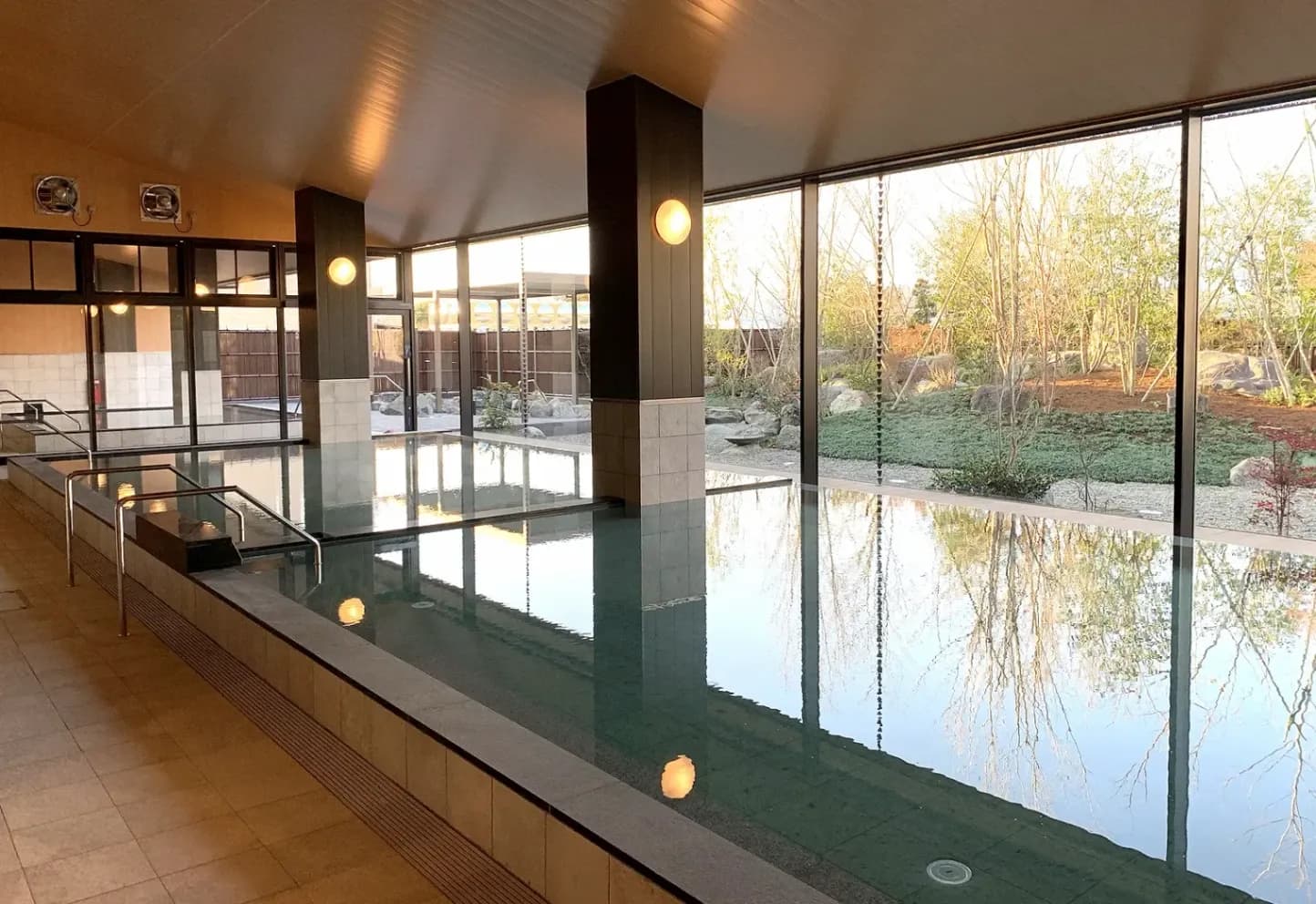
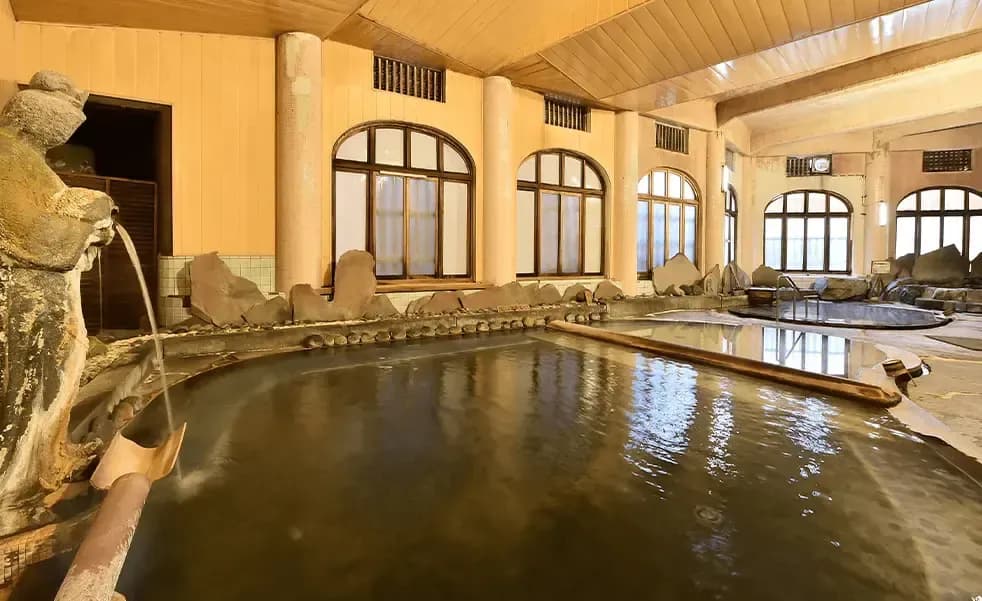
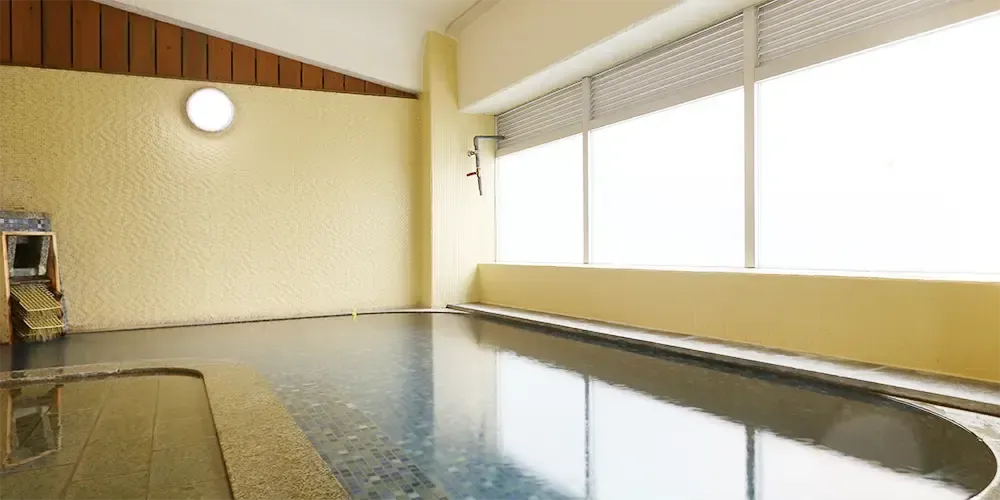
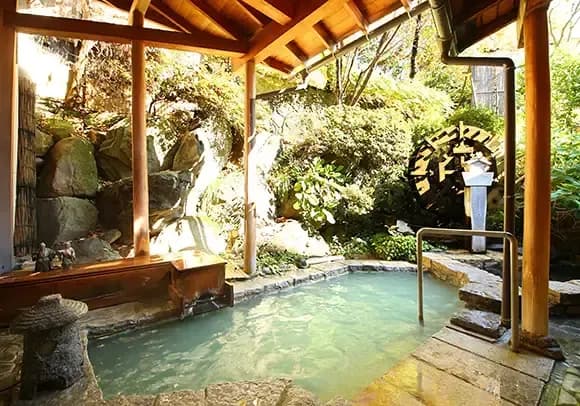
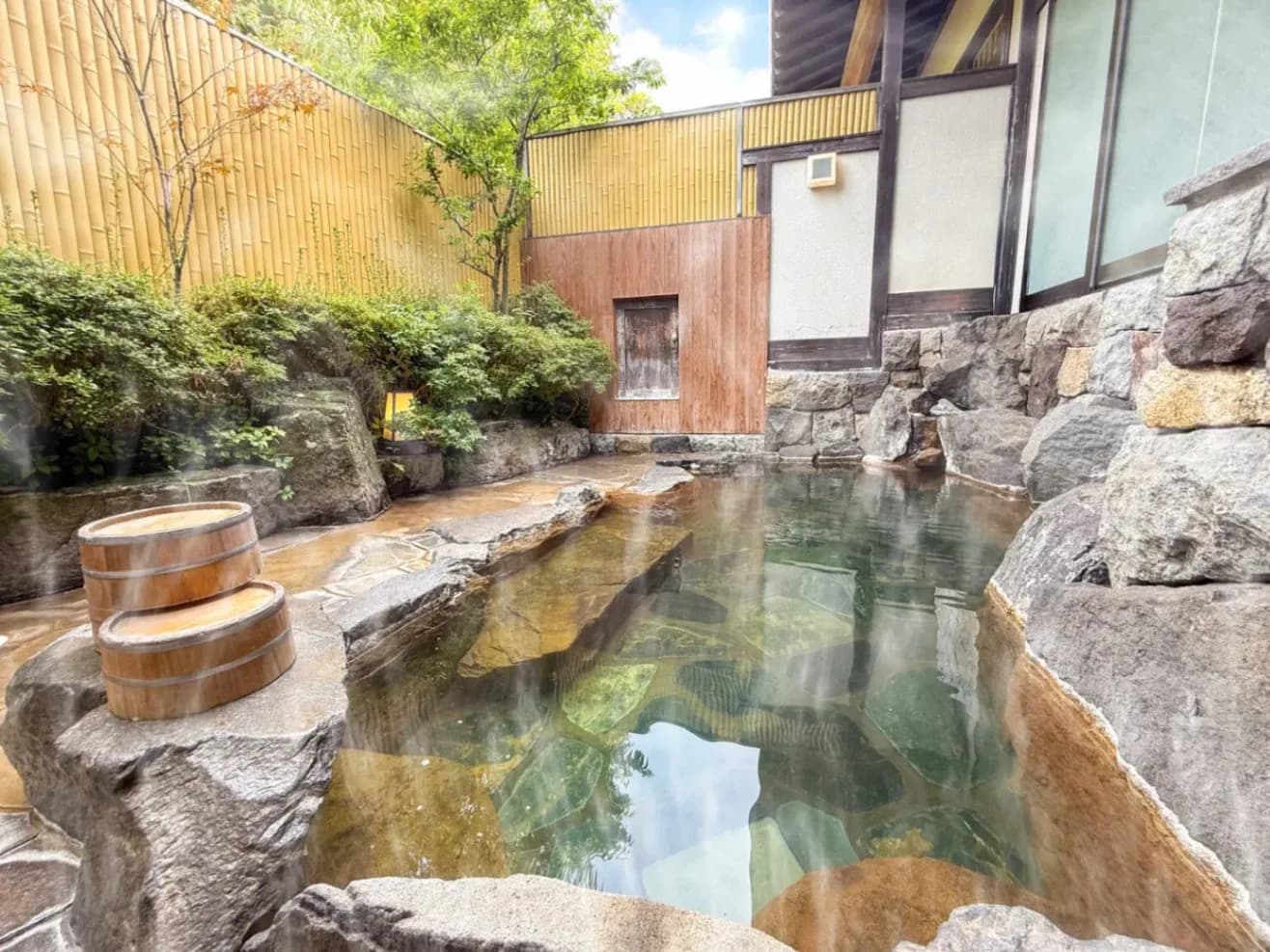
Suzumori no Yu is a day-use bathing facility in Anogawa, Minakami, Gunma. It is about 10 minutes by car from the Minakami Interchange, right after the road passes under the Kan-etsu Expressway. The spring is known as Hotokeiwa Onsen, and on clear days you can see Hotokeiwa, a huge rock shaped like a Buddha, from the facility. The operator, Suzumori Shoji, has run food businesses in Minakami for nearly 50 years and serves meals made with the spring water. The water is a calcium sulfate spring. A 2018 analysis recorded a weakly alkaline pH of 8.2 and about 1.4 g/kg of dissolved solids, and the bath water is colorless and clear. The spring is said to rise from a stratum about 20 million years old and is very hard. The facility says it can also be drunk. Because the water is rich in minerals, it helps to drink some water before and after your bath. The indoor baths are made of hinoki cypress, with one heated tub and one lukewarm tub kept at the natural temperature of the spring. Both are fed by free-flowing source water. Outside, an open-air bath overlooks the Ano River, so you can enjoy the riverside scenery in both green and snowy seasons. There are no private baths or private rooms, so families use the separate men's and women's baths. Admission is 900 yen for adults, 500 yen for elementary school students and 400 yen for children aged 3 and over, for a two-hour stay. Towels are not included, so bring your own or rent a bath towel at the front desk for 200 yen. The facility is closed on Wednesdays and Thursdays, with occasional temporary closures in some months, so it is safest to check the news page on the official site before you go. After bathing, you can rest at the restaurant, which serves dishes such as salt-grilled iwana char and local ingredients.
Quality
Calcium - Sulfate Spring
Supply
Natural Source Flow
Heat
Heated
pH
pH 8.2
pH
0714
AcidicNeutralAlkaline
Use
Stay N/A/Day Trip OK
Fee
Adult 900JPY/Child 500JPY
Hours
MonTueWedThuFriSatSunHol
11:00 - 20:0011:00 - 20:0011:00 - 20:00ClosedClosed11:00 - 20:0011:00 - 20:0011:00 - 20:0011:00 - 20:00
View detail page

Day visits only (no overnight stays). About 20 min by car from Doai (estimate).

Takaragawa Onsen Ousenkaku (宝川温泉 汪泉閣)

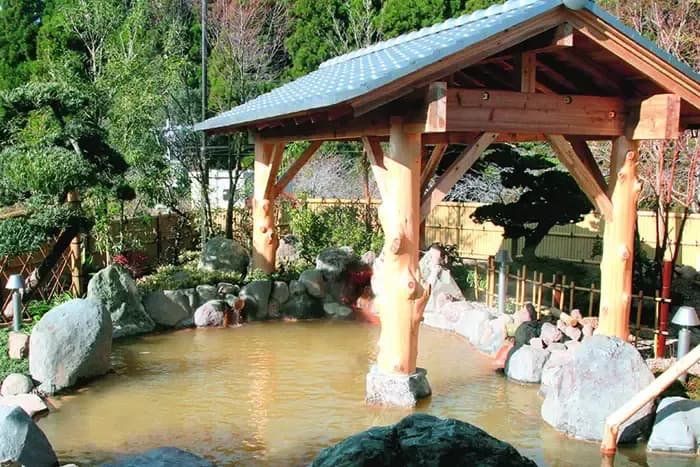
Takaragawa Onsen Osenkaku, established in 1923, is a single inn nestled in the mountains of the Tanigawa mountain range, with its greatest attraction being the large-scale open-air baths scattered along the clear stream of the Takaragawa River. Beginning with "Maka-no-yu," which occupies approximately 120 tatami mats and was created in 1940, four large open-air baths have been constructed, with a combined area totaling 470 tatami mats. The milky-white water, luxuriously free-flowing at 1,800 liters per minute, carries the scent of sulfur, allowing guests to enjoy hot springs in the midst of magnificent nature. Three mixed-gender large open-air baths that can be enjoyed while wearing bathing attire, plus a women-only open-air bath, offer exceptional bathing experiences surrounded by nature's changing seasonal expressions. Dinner features colorful arrays of seasonal mountain vegetables and river fish, showcasing the flavors unique to mountain villages.
Quality
Simple Hot Spring
Temp
40℃ to 42℃
Supply
Natural Source Flow
Use
Stay OK/Day Trip OK
Fee
Adult 1500JPY/Child ---JPY
Hours
MonTueWedThuFriSatSunHol
10:00 - 16:3010:00 - 16:3010:00 - 16:3010:00 - 16:3010:00 - 16:3010:00 - 16:3010:00 - 16:3010:00 - 16:3010:00 - 16:30
View detail page

Day visits and overnight stays. About 30 min by car from Doai (estimate).

Kawafuru Onsen Hamaya Ryokan (川古温泉 浜屋旅館)

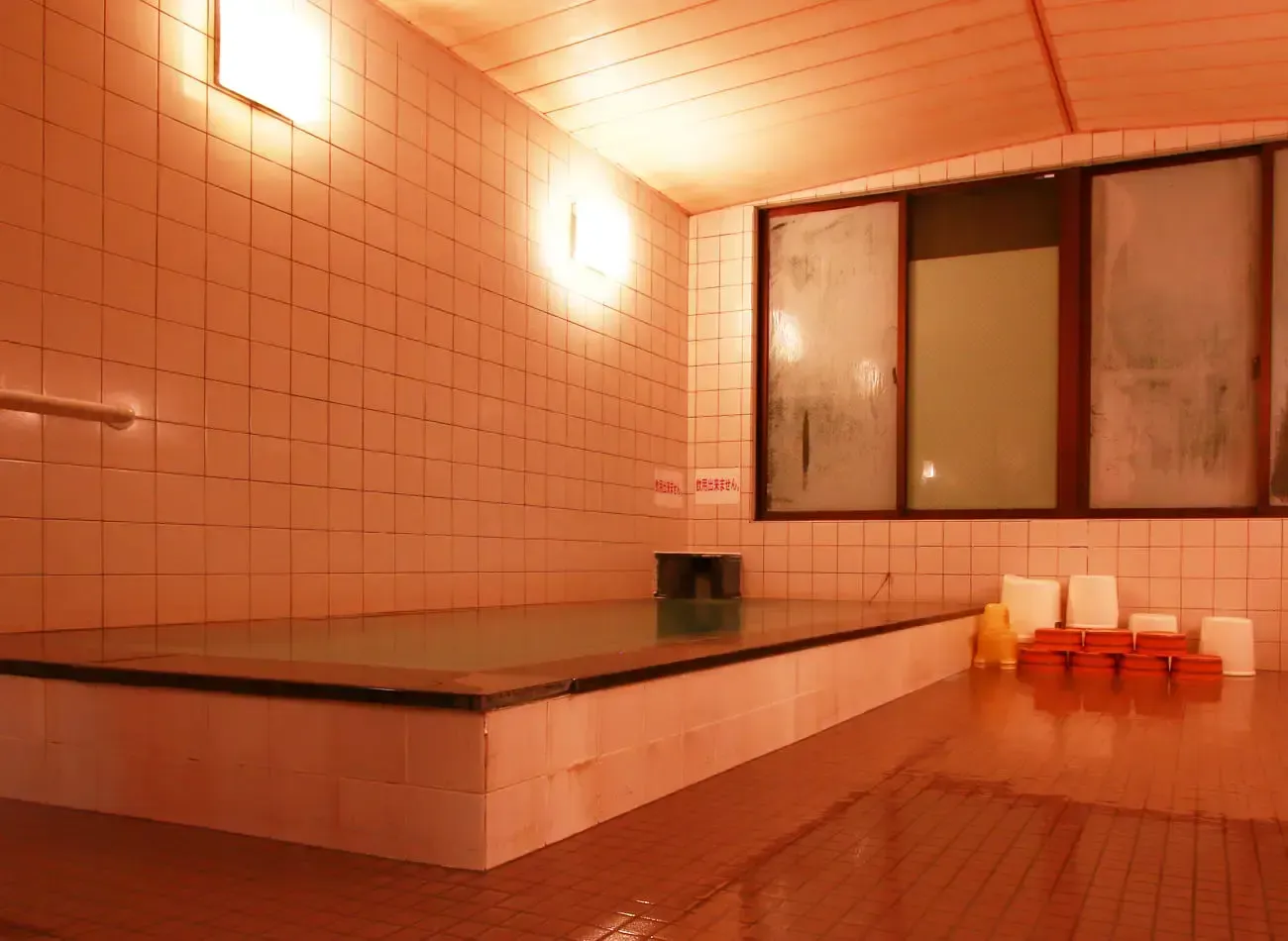
The history of Kawafuru Onsen is captured in an old saying that a visitor to Kawafuru leaves one gift behind: their walking stick. Travelers who arrived leaning on canes are said to have soaked away the aches in their legs and gone home without them, a phrase that speaks to the spring's long reputation as a cure for nerve pain, joint pain, and rheumatism. Standing alone in a gorge on the upper Akaya River within Joshinetsu-kogen National Park, Hamaya Ryokan is the sole inn guarding this celebrated water, a member of the Association to Protect Japan's Secret Hot Springs and a designated National Health Resort Hot Spring. The defining quality of Kawafuru is its temperature. The water is a calcium-sodium sulfate spring of the gypsum-mirabilite type, emerging at about 39.8C with a mildly alkaline pH of 7.9. Being close to skin temperature, it lets bathers linger for 30 minutes or an hour without overheating. Colorless and clear, containing gypsum and mirabilite, it feels gentle on the skin and warms the body slowly from the core while easing away fatigue. Poured straight into each bath with no added water or heating, the free-flowing water reflects the inn's pride in keeping the spring fresh. The bathing areas consist of separate indoor baths for men and women and a large mixed-gender open-air bath spread along the bank of the Akaya River. Source water cascades into the open-air bath like a waterfall, and the setting is open and wrapped in greenery. There is no need to feel hesitant about the mixed bath: bathing wear can be purchased at the front desk for 650 yen, so women can enter with ease. Soaking at length in the lukewarm water while listening to the breeze through the gorge and the murmur of the river is a luxury unique to a curative bathing ground. Day-trip bathing is available from 10:30 to 14:00 for 1,000 yen per adult, while overnight stays with two meals start from around 12,000 yen, featuring river-fish dishes and seasonal mountain fare. Access is a 20-to-25-minute drive from Tsukiyono IC on the Kanetsu Expressway, in the Aimata district just beyond Lake Akaya. Soaking slowly and at length in the lukewarm water is the Kawafuru way, and rather than a rushed day trip, an overnight stay with repeated visits to the bath is how the charm of this spring is savored most deeply.
Quality
Calcium - Sulfate Spring
Sodium - Sulfate Spring
Temp
38℃ to 40℃
Supply
Natural Source Flow
Heat
Not Heated
pH
pH 7.9
pH
0714
AcidicNeutralAlkaline
Use
Stay OK/Day Trip OK
Fee
Adult 1000JPY/Child ---JPY
Hours
MonTueWedThuFriSatSunHol
10:30 - 14:0010:30 - 14:0010:30 - 14:0010:30 - 14:0010:30 - 14:0010:30 - 14:0010:30 - 14:0010:30 - 14:0010:30 - 14:00
View detail page

Day visits and overnight stays. About 35 min by car from Doai (estimate).

Yunokoya Onsen Ryudo (湯ノ小屋温泉 龍洞)

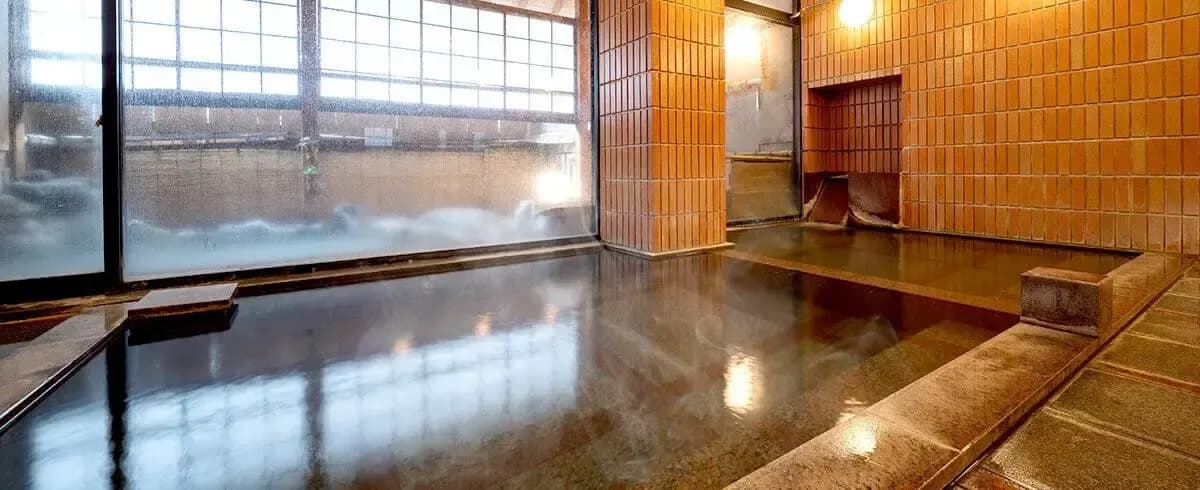
Deep in the Okutone highlands of Minakami, Gunma Prefecture, beyond Lake Fujiwara and roughly 800 meters above sea level, lies the secluded hot spring of Yunokoya. Its sole inn, the Ryudo Hot Spring Theme Park of Free-Flowing Springs, occupies a sprawling site along the Yunokoya River, wrapped in deep forest. Here one can bathe amid nature that shifts with every season: fresh green in spring, fireflies in summer, blazing foliage in autumn, and silent snow in winter. It is, quite literally, a hidden retreat for lovers of hot springs. Ryudo's water is a simple thermal spring, classified as weakly alkaline, hypotonic, and high in temperature, with a pH of around 8.0 to 8.5. Clear and colorless, it is remarkably gentle on the skin, allowing long, unhurried soaks. What sets the inn apart is that every bath on the property is supplied with 100 percent water from its own source, flowing freely without recirculation or added water. This uncompromising devotion to pure, fresh spring water has secured Ryudo's reputation among aficionados of Japan's hidden hot springs. The inn's greatest attraction is its remarkable collection of 18 private open-air baths. Scattered across the grounds are riverside baths within earshot of the rushing stream, a mineral-lined tourmaline bath, a sauna-equipped bath, and more, each with its own character. Every one of them can be reserved for private use around the clock, without any time limit and at no extra charge, a style found almost nowhere else. Guests simply hang a marker on a vacant bath, soak, and return the marker afterward, free to wander from bath to bath as often as they like throughout their stay. Day-use bathing costs 2,500 yen for adults and 1,500 yen for elementary-school children and younger, with a four-hour limit from check-in (note that Saturday reception is shorter, from 10:00 to 13:00). The inn is about 40 minutes by car from Minakami IC on the Kan-etsu Expressway, or reachable by bus toward Yunokoya from Jomo-Kogen or Minakami stations. Because winters are heavy with snow, studless tires or chains are essential in the cold months. The seasons of fresh green and autumn color are especially rewarding, making this a place for those who wish to soak, quietly and endlessly, deep in the mountains.
Quality
Simple Hot Spring
Supply
Natural Source Flow
Heat
Not Heated
pH
pH 8.3
pH
0714
AcidicNeutralAlkaline
Use
Stay OK/Day Trip OK
Fee
Adult 2500JPY/Child 1500JPY
Hours
MonTueWedThuFriSatSunHol
10:00 - 18:0010:00 - 18:0010:00 - 18:0010:00 - 18:0010:00 - 18:0010:00 - 18:0010:00-13:0010:00 - 18:0010:00 - 18:00
View detail page

Day visits and overnight stays. About 40 min by car from Doai (estimate).

Where to Stay Nearby

For a night before or after the hike, Takaragawa Onsen, Kawafuru Onsen and Yunokoya Onsen above also offer overnight stays. Here are two more inns within about an hour's drive.

Hoshi Onsen Chojukan (法師温泉 長寿館)
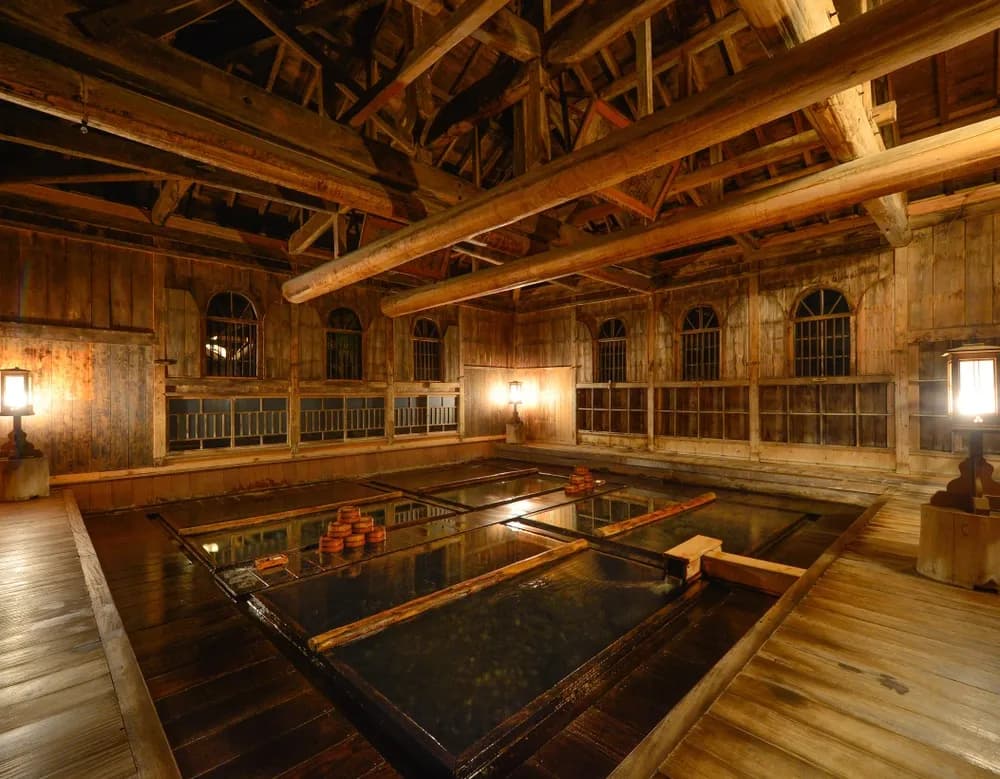
Hoshi Onsen Chojukan
Hoshi no yu(引用:法師温泉 長寿館HP)
Located within Joshinetsu Kogen National Park near the border between Gunma and Niigata prefectures, Hoshi Onsen Chojukan is a historic inn established in 1875. The main building, designated as a National Registered Tangible Cultural Property, evokes the atmosphere of an Edo-period inn with its distinctive black-walled wooden architecture and bark-shingled roof. The inn's signature bath, "Hoshi-no-yu," was built in 1895 in the Rokumeikan style. Its four bathtubs are filled with spring water bubbling up from directly beneath the floor. The crystal-clear water is so transparent that the pebbles on the bottom are clearly visible, offering an authentic "ashimoto funshutsu" (foot-level spring emergence) experience. Many literary figures, including Yosano Akiko and Kawabata Yasunari, visited this location and left their works. Guest rooms include the main building, an annex along the Hoshi River, the spacious Kunzan-so, and Horyuden built in 1989, each offering spaces filled with tradition and dignity. Dinner features local ingredients such as Joshu beef and Joshu pork, and guests can enjoy the inn's original sake.
Quality
Calcium - Sodium - Sulfate Spring
Temp
38℃ to 41℃
Supply
Natural Source Flow
Use
Stay OK/Day Trip OK
Fee
Adult 1500JPY/Child ---JPY
Hours
MonTueWedThuFriSatSunHol
11:00 - 14:0011:00 - 14:0011:00 - 14:00Closed11:00 - 14:0011:00 - 14:0011:00 - 14:0011:00 - 14:0011:00 - 14:00
View detail page

About 50 min by car from Doai (estimate).

Yujuku Onsen Taiyokan (湯宿温泉 太陽館)

In Minakami, Gunma Prefecture, Yujuku Onsen is an old-fashioned healing-spa town where communal bathhouses dot its stone-paved lanes. Taiyokan, one of its inns, draws on the Taiyo-no-yu source, said to have been discovered by the monk Kosu-doshi in the year 852 during the Heian period. For centuries, travelers crossing the Mikuni Pass toward Echigo soothed their fatigue here before and after the climb. The baths are filled with a sodium-calcium sulfate spring. Emerging at a high 59.1C with a pH of 8.0, it is served free-flowing straight from the source, with no heating, no recirculation, and no chlorination, and only a little added water to temper the heat. The colorless water carries the taste of mirabilite and gypsum, a lightly toasted aroma, and a faint saltiness, delivering the clinging, mineral-rich feel characteristic of sulfate springs. Beyond the second-floor indoor bath Taiyo-no-yu, the inn offers three private baths with distinct characters: an open-air bath on the third floor, a large indoor bath, and a smaller indoor bath on the first floor. Each can be reserved for 50-minute private sessions, and overnight guests may use the indoor bath around the clock, bathing as often as they like through the quiet mountain night and morning. Day-trip bathing is affordable at 700 yen for adults and 500 yen for children, available from 11:00 to 15:00; after 15:00 only the private baths remain open. By car it is about 15 minutes from Tsukiyono IC on the Kan-etsu Expressway, making it easy to pair with nearby sights such as Sarugakyo, Hoshi, and the Takumi-no-Sato craft village. In fresh green, autumn foliage, or snow-viewing winter, Taiyokan offers a serene taste of traditional spa life through all four seasons.
Quality
Sodium - Sulfate Spring
Calcium - Sulfate Spring
Emerge
Natural Emergence
Supply
Natural Source Flow
Heat
Not Heated
pH
pH 8
pH
0714
AcidicNeutralAlkaline
Use
Stay OK/Day Trip OK
Fee
Adult 700JPY/Child 500JPY
Hours
MonTueWedThuFriSatSunHol
11:00 - 15:0011:00 - 15:0011:00 - 15:0011:00 - 15:0011:00 - 15:0011:00 - 15:0011:00 - 15:0011:00 - 15:0011:00 - 15:00
View detail page

About 45 min by car from Doai (estimate).

FAQ

Q. Can you climb Mt. Tanigawa without the ropeway? A. Yes. We walked up the Tajiri Ridge from Doai and joined the trail from Tenjindaira. That day, only us and one other group had walked up. We rode the ropeway down from Tenjindaira on the way back.

Q. Does the parking at Doai get crowded? A. It was busy on the autumn Sunday we went. On October 12, 2025, the town-run lot (¥200/day) still had space around 6 a.m., but it was full by 6:30. The ropeway parking further in seems to open a little later.

Q. How long does the hike take? A. Our route (up the Tajiri Ridge, up and back along the Tenjin Ridge to Toma-no-Mimi and Oki-no-Mimi, then the ropeway down from Tenjindaira) took about 8 h 30 min for about 9.0 km. That includes our rest at the summit and the lines at the rocks and steps.

Q. When are the autumn colors at their best? A. On October 12, when we hiked, the colors were at their peak near the summit, and the forest on the way down was colorful too. The timing shifts from year to year, so please check the latest information before you go.

Summary

Walking up from Doai via the Tajiri Ridge, Mt. Tanigawa starts in the forest under the ropeway, then leads over the rocks and golden grasses of the Tenjin Ridge to the twin summits of Toma-no-Mimi and Oki-no-Mimi, a course full of variety. In the autumn season there are a lot of hikers, with lines at the rocks and steps, and the parking was full by 6:30, so an early start is a good idea. Fog wrapped the summit while we rested, so be ready for the weather to change. The ridges turned red were truly stunning, so do go at least once in autumn!

Watch the Video
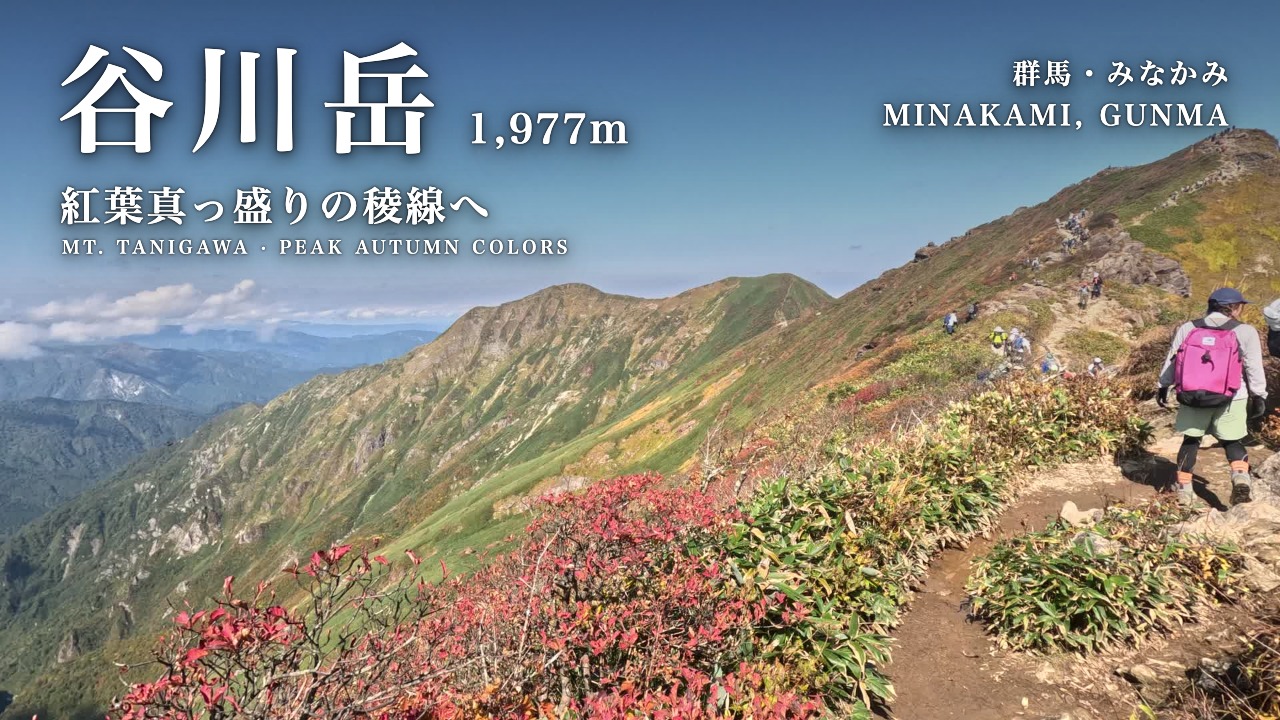
Mt. Tanigawa Autumn Hike: Peak Fall Colors on the Twin Summits | 9 km from Doai, Gunma

Watch the video on YouTube

  • 00:00 Opening
  • 00:28 About Mt. Tanigawa
  • 01:06 Route Overview
  • 01:51 Doai → Tajiri Ridge
  • 02:42 Tenjin Ridge → Kumaanazawa Hut
  • 03:52 Kumaanazawa Hut → Tengu-no-Tamariba
  • 05:24 Tengu-no-Tamariba → Kata-no-Koya Hut
  • 07:00 Kata-no-Koya → Toma-no-Mimi → Oki-no-Mimi
  • 10:29 Rest at the top → Down through the fog
  • 11:30 Down Tenjin Ridge to Tenjindaira
  • 12:25 Ropeway & finish

*Ropeway fares, hours and operating season are as checked on the official website on November 7, 2026, and the parking fee is as of our hike on October 12, 2025. Distances and times are rough figures from our own record. Please check the official websites for the latest information before you go.
Recommended Hot Springs

Popular hot springs from Hitou Map

HomeMapSearchBlogMy Page