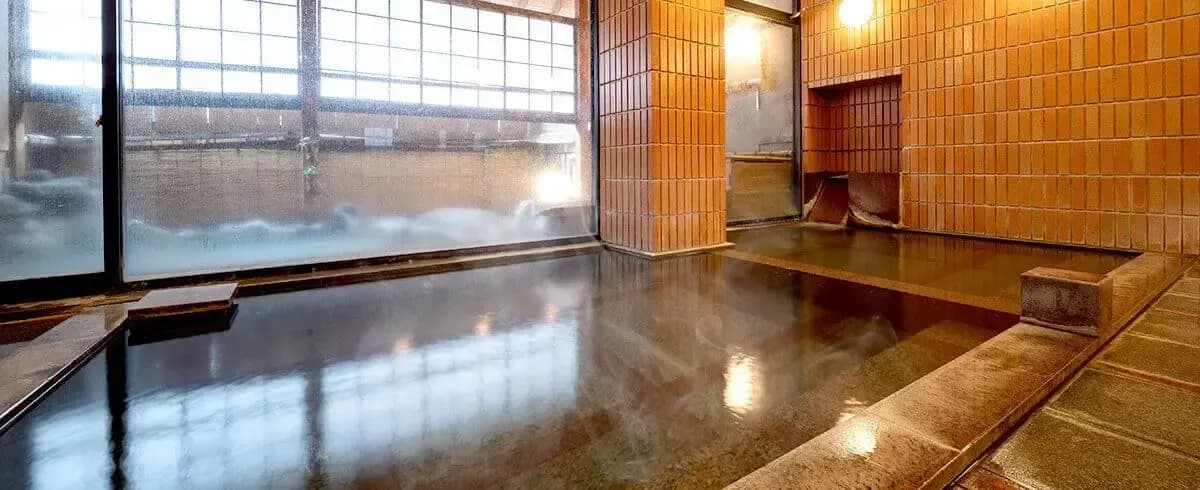
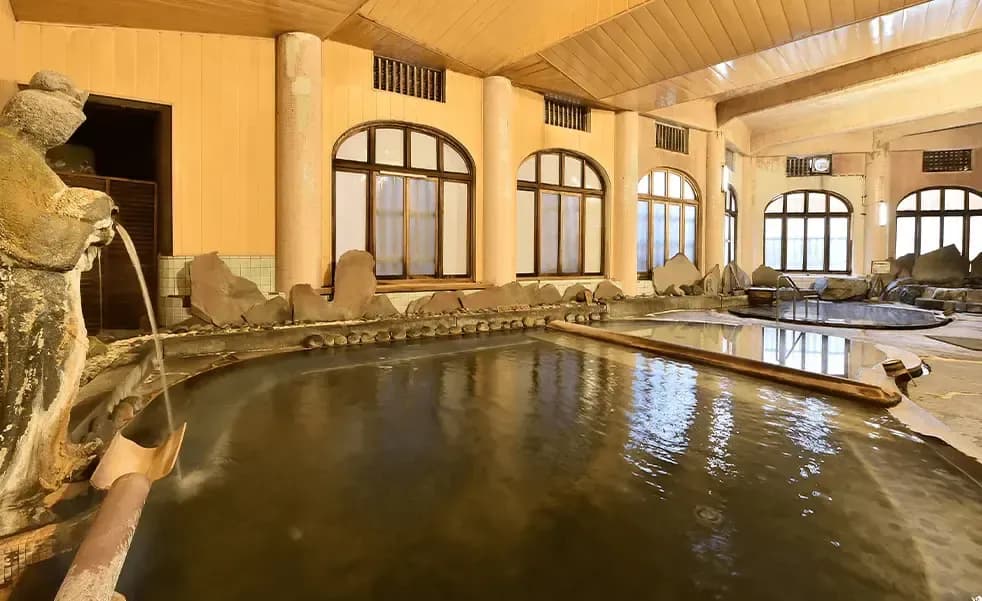
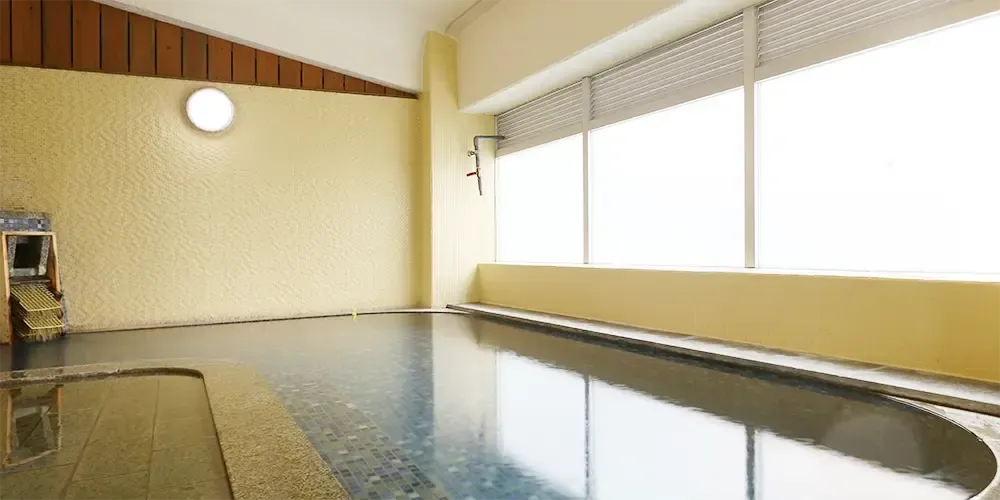
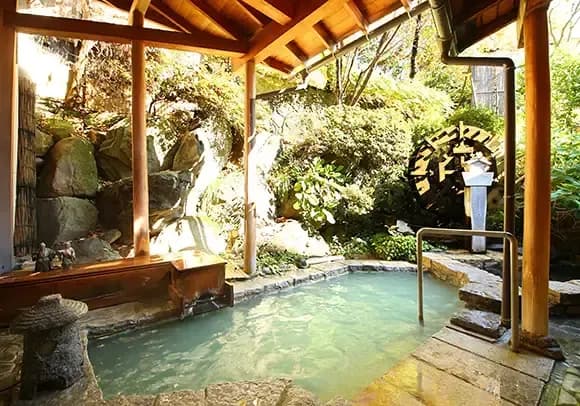
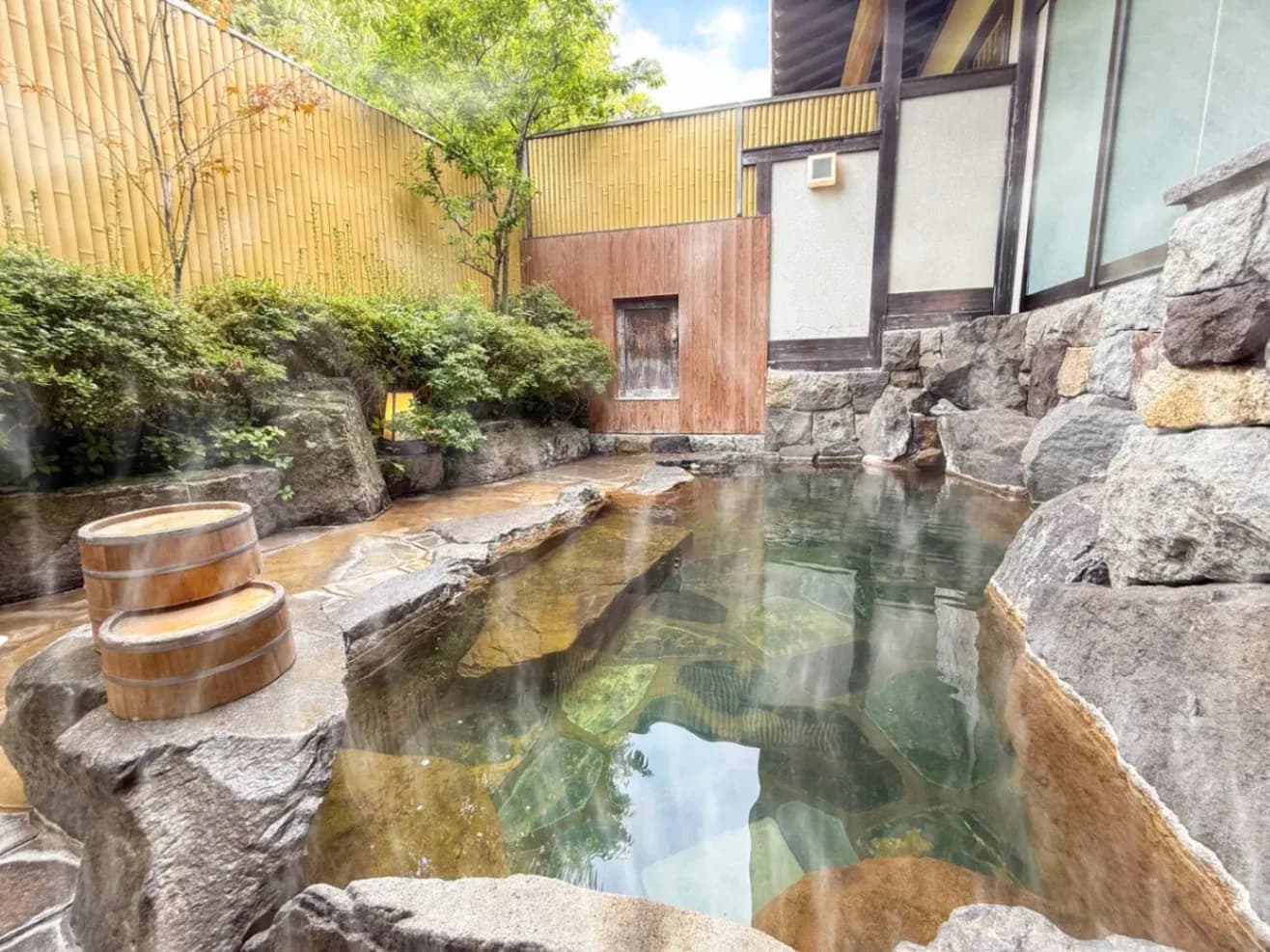
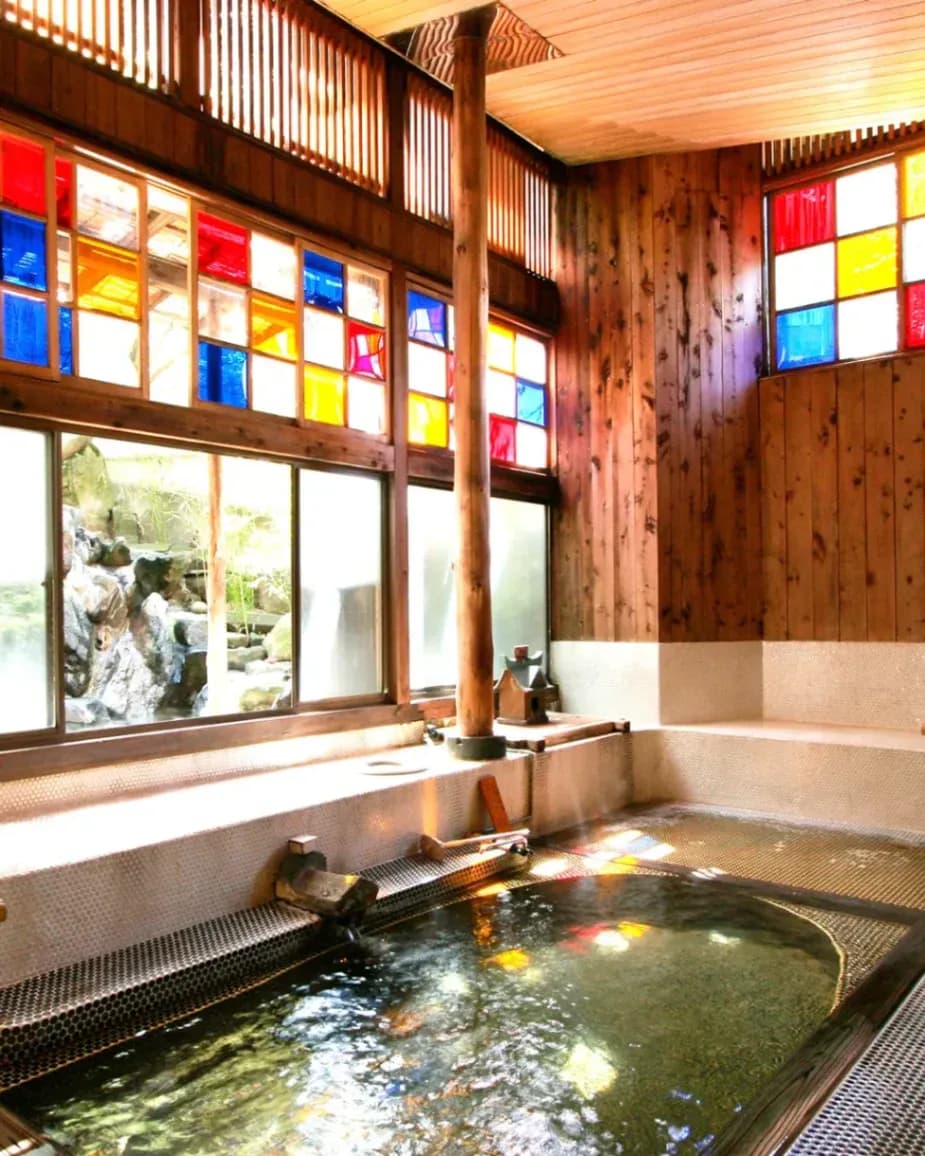
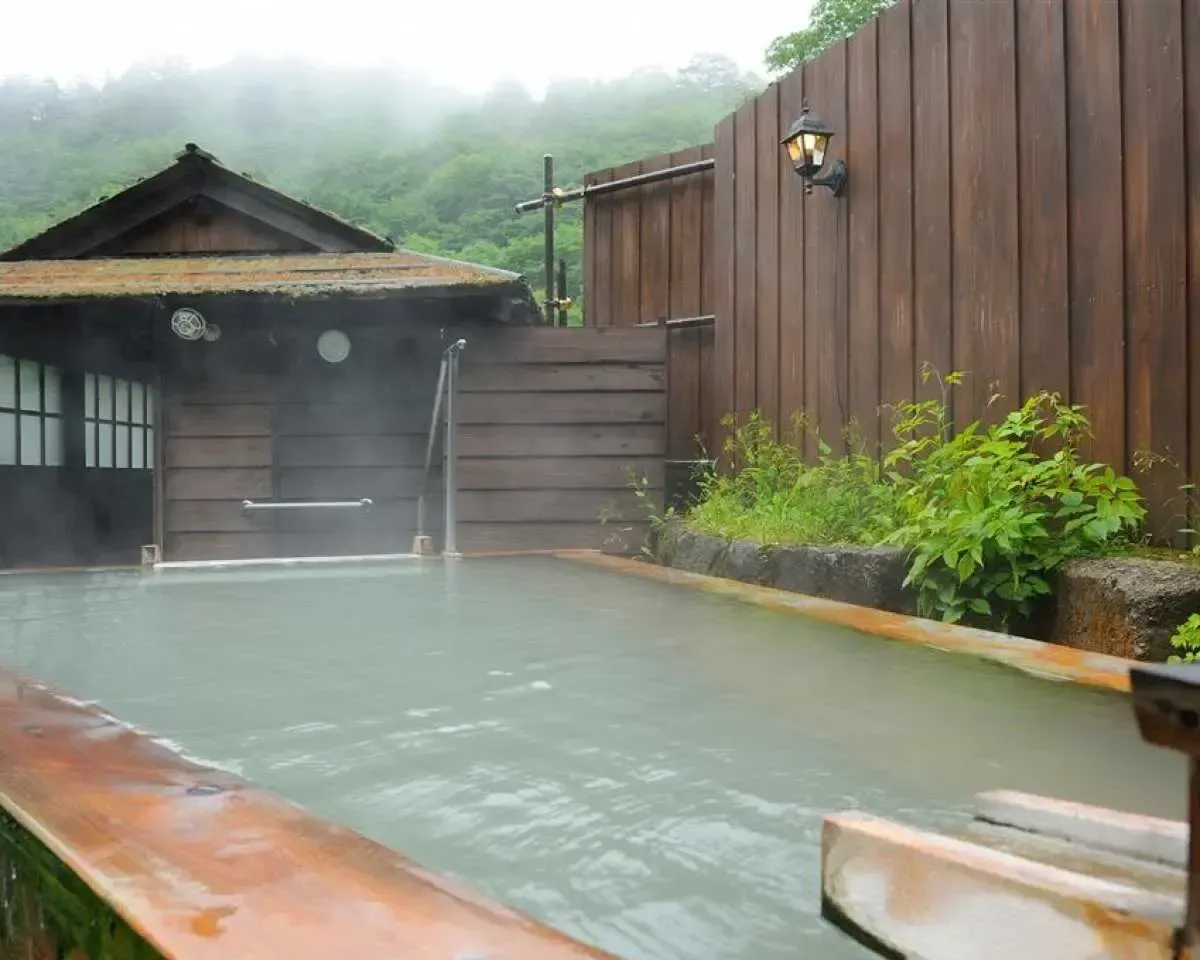
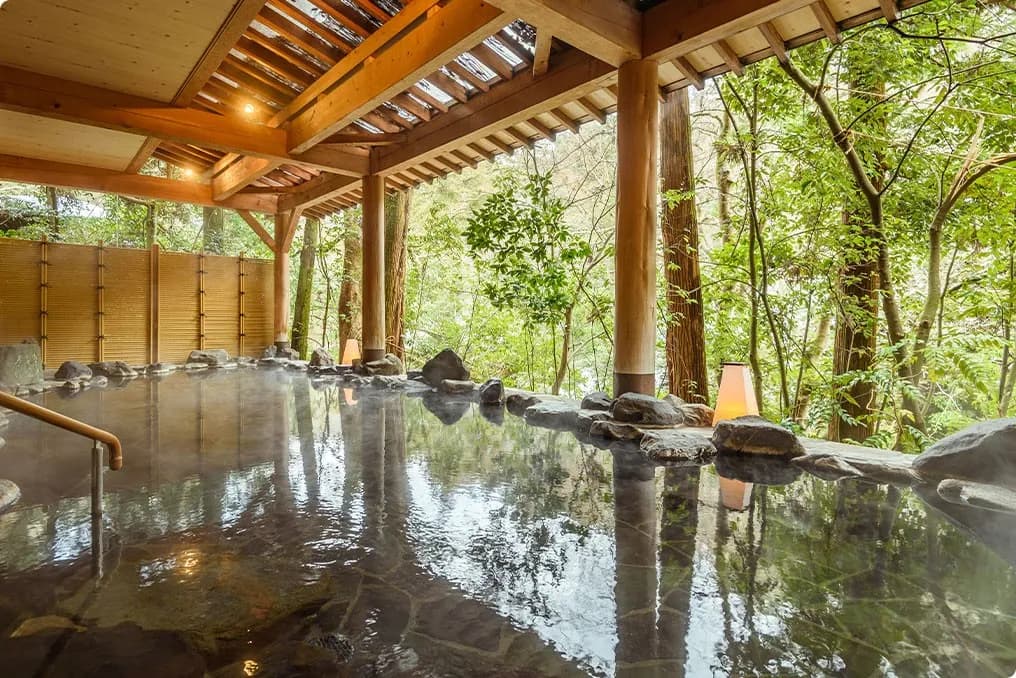
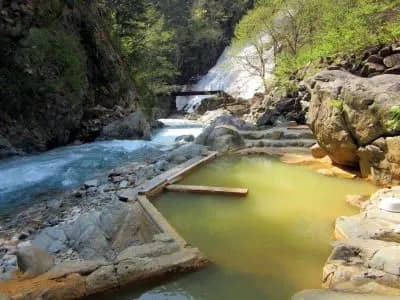
A room with its own rotenburo (露天風呂, open-air bath) solves a problem that stops many visitors from bathing in Japan at all. You do not undress in front of strangers. Tattoos are not an issue. You can bathe at 3am in the middle of a snowstorm if you want to. The Japanese term for this room type is rotenburo-tsuki kyakushitsu (露天風呂付き客室), and it is the single most useful phrase to know when booking.
What the phrase does not tell you is what is in the tub. At many inns the shared baths run on undiluted spring water while the in-room bath is heated and recirculated. At others, every tub in the building — the guest rooms included — is fed straight from the source.
This guide covers 17 inns from our database that have rooms with private open-air baths and can be booked for an overnight stay. Most have between five and twelve rooms in total. These are not the large resorts that fill the top of Japanese booking-site rankings; one of them sits at the end of a mountain road that is closed to private cars in winter.
What this guide covers:
- How to tell whether the bath in your room actually carries hot spring water
- Which inns have a private bath in every room, and which have only two or three
- Tattoos, mixed bathing, reservations, payment and getting there without a car
What to Check Before You Book
Is the water in the room a hot spring?
"Room with open-air bath" describes the shape of the tub, not the water. Each inn below has a data page listing its spring type and, separately, whether the water is diluted, reheated, recirculated or chlorinated, along with source temperature and pH where those figures are published. Those four handling flags matter more than the room photos.
Cold-source inns are where this gets misread. Yuya Onsen Sengakukan (湯屋温泉 泉岳舘) in Gifu draws a simple carbon-dioxide spring that emerges at 12.2°C. It has to be heated to be bathable. It is not diluted and not recirculated, so the mineral content reaching the tub is the source water itself. Heated does not mean watered down.
Every room, or only a few?
"Rooms with open-air baths available" can mean all ten rooms or three rooms out of thirty-one. That difference decides whether you can actually get a booking.
Every room (or close to it)
- Natsuse Onsen Miyakowasure (夏瀬温泉 都わすれ), Akita — all 10 rooms
- Kamai Onsen Ippen-an (蒲井温泉 いっぺん庵), Kyoto — all 7 detached rooms
- Yuya Onsen Sengakukan (湯屋温泉 泉岳舘), Gifu — all 7 rooms
- Aqua Ignis Kataoka Onsen (アクアイグニス 片岡温泉), Mie — all rooms
- Kian-ya (山あいの宿 喜安屋), Oita — all 10 detached rooms
Most rooms
- Takanosu Onsen Takanosukan (鷹の巣温泉 鷹の巣館), Niigata — 8 of 12 rooms
- Neboya Shima Bettei (ねぼーや 志摩別邸), Mie — 7 suites of 9 rooms
- Jubei-no-Yu (十兵衛の宿 十兵衛の湯), Miyazaki — the 3 second-floor rooms of 6 (the 3 ground-floor rooms have indoor-style baths)
A few rooms only
- Daimaru Asunaro-so (大丸あすなろ荘), Fukushima — 6 of 24 rooms
- Kawayu Onsen Fujiya (川湯温泉 冨士屋), Wakayama — 3 of 31 rooms
- Shinmei Onsen Yumoto Sugishima (神明温泉 湯元すぎ嶋), Gifu — the special rooms
- Also in this group: Semi Onsen (瀬美温泉), Yu-no-Yado Wado (ゆの宿 和どう), Kayotei (山中温泉 かよう亭), Oyama Ryokan (栃木温泉 小山旅館), Waitakan (わいた温泉 わいた館) and Nihiki-no-Oni (渓谷の宿 二匹の鬼)
Inns in the first group tend to have only five to ten rooms in total, so autumn foliage season and weekends book out early.
Open-air or semi-open-air?
Han-rotenburo (半露天風呂) means a partly roofed or partly walled tub. Inns that describe their rooms that way are not included here, which is why some well-known properties in Hokkaido, Aomori, Yamagata and Fukui are absent. If you are happy with a semi-open-air tub, the choice widens considerably.
The 17 are listed north to south. Selection criteria and the breakdown of water handling follow the list.
1. Natsuse Onsen Miyakowasure (夏瀬温泉 都わすれ), Senboku, Akita

2. Semi Onsen Kiri-no-Hana / Yamabuki-no-Hana (瀬美温泉 桐の花・山吹の花), Kitakami, Iwate
| Mon | Tue | Wed | Thu | Fri | Sat | Sun | Hol | |
|---|---|---|---|---|---|---|---|---|
| 10:00 - 20:00 | 10:00 - 20:00 | 10:00 - 20:00 | 10:00 - 20:00 | 10:00 - 20:00 | 10:00 - 20:00 | 10:00 - 20:00 | 10:00 - 20:00 | 10:00 - 20:00 |
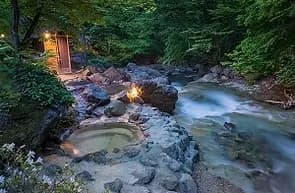
3. Futamata Onsen Daimaru Asunaro-so (二岐温泉 大丸あすなろ荘), Tenei Village, Fukushima
| Mon | Tue | Wed | Thu | Fri | Sat | Sun | Hol | |
|---|---|---|---|---|---|---|---|---|
| 11:00 - 14:30 | 11:00 - 14:30 | 11:00 - 14:30 | 11:00 - 14:30 | 11:00 - 14:30 | 11:00 - 14:30 | 11:00 - 14:30 | 11:00 - 14:30 | 11:00 - 14:30 |
4. Chichibu Onsen Yu-no-Yado Wado (秩父温泉 ゆの宿 和どう), Chichibu, Saitama
| Mon | Tue | Wed | Thu | Fri | Sat | Sun | Hol | |
|---|---|---|---|---|---|---|---|---|
| 11:00 - 14:00 | 11:00 - 14:00 | 11:00 - 14:00 | 11:00 - 14:00 | 11:00 - 14:00 | 11:00 - 14:00 | 11:00 - 14:00 | 11:00 - 14:00 | 11:00 - 14:00 |
5. Takanosu Onsen Takanosukan (鷹の巣温泉 鷹の巣館), Sekikawa Village, Niigata
6. Yamanaka Onsen Kayotei (山中温泉 かよう亭), Kaga, Ishikawa
7. Yuya Onsen Sengakukan (湯屋温泉 泉岳舘), Gero, Gifu
8. Shinmei Onsen Yumoto Sugishima (神明温泉 湯元すぎ嶋), Seki, Gifu
| Mon | Tue | Wed | Thu | Fri | Sat | Sun | Hol | |
|---|---|---|---|---|---|---|---|---|
| 11:00 - 15:00 | 11:00 - 15:00 | 11:00 - 15:00 | 11:00 - 15:00 | 11:00 - 15:00 | 11:00 - 15:00 | 11:00 - 15:00 | 11:00 - 15:00 | 11:00 - 15:00 |
9. Aqua Ignis Kataoka Onsen (アクアイグニス 片岡温泉), Komono Town, Mie
| Mon | Tue | Wed | Thu | Fri | Sat | Sun | Hol | |
|---|---|---|---|---|---|---|---|---|
| 06:00 - 24:00 | 06:00 - 24:00 | 06:00 - 24:00 | 06:00 - 24:00 | 06:00 - 24:00 | 06:00 - 24:00 | 06:00 - 24:00 | 06:00 - 24:00 | 06:00 - 24:00 |
10. Neboya Shima Bettei (ねぼーや 志摩別邸), Shima, Mie
| Mon | Tue | Wed | Thu | Fri | Sat | Sun | Hol | |
|---|---|---|---|---|---|---|---|---|
| 12:00 - 17:00 | 12:00 - 17:00 | 12:00 - 17:00 | 12:00 - 17:00 | 12:00 - 17:00 | 12:00 - 17:00 | 12:00 - 17:00 | 12:00 - 17:00 | 12:00 - 17:00 |
11. Kamai Onsen Ippen-an (蒲井温泉 いっぺん庵), Kyotango, Kyoto
12. Kawayu Onsen Fujiya (川湯温泉 冨士屋), Tanabe, Wakayama
13. Tochinoki Onsen Oyama Ryokan (栃木温泉 小山旅館), Minamiaso Village, Kumamoto
| Mon | Tue | Wed | Thu | Fri | Sat | Sun | Hol | |
|---|---|---|---|---|---|---|---|---|
| 12:00 - 16:00 | Closed | Closed | 12:00 - 16:00 | 12:00 - 16:00 | 12:00 - 16:00 | 12:00 - 16:00 | 12:00 - 16:00 | 12:00 - 16:00 |
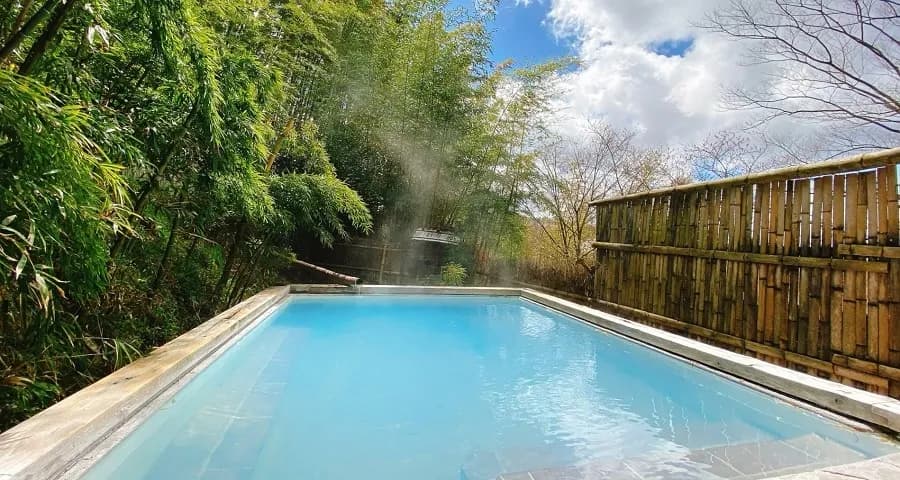
14. Waita Onsen Waitakan (わいた温泉 わいた館), Oguni Town, Kumamoto
| Mon | Tue | Wed | Thu | Fri | Sat | Sun | Hol | |
|---|---|---|---|---|---|---|---|---|
| 09:00 - 21:00 | 09:00 - 21:00 | Closed | Closed | 09:00 - 21:00 | 09:00 - 21:00 | 09:00 - 21:00 | 09:00 - 21:00 | 09:00 - 21:00 |
15. Nihiki-no-Oni (渓谷の宿 二匹の鬼), Kokonoe Town, Oita
| Mon | Tue | Wed | Thu | Fri | Sat | Sun | Hol | |
|---|---|---|---|---|---|---|---|---|
| 11:00 - 16:00 | 11:00 - 16:00 | 11:00 - 16:00 | 11:00 - 16:00 | 11:00 - 16:00 | 11:00 - 16:00 | 11:00 - 16:00 | 11:00 - 16:00 | 11:00 - 16:00 |
16. Kian-ya (山あいの宿 喜安屋), Kokonoe Town, Oita
| Mon | Tue | Wed | Thu | Fri | Sat | Sun | Hol | |
|---|---|---|---|---|---|---|---|---|
| 10:00 - 17:00 | 10:00 - 17:00 | 10:00 - 17:00 | 10:00 - 17:00 | 10:00 - 17:00 | 10:00 - 17:00 | 10:00 - 17:00 | 10:00 - 17:00 | 10:00 - 17:00 |
17. Jubei-no-Yado Jubei-no-Yu (十兵衛の宿 十兵衛の湯), Ebino, Miyazaki
| Mon | Tue | Wed | Thu | Fri | Sat | Sun | Hol | |
|---|---|---|---|---|---|---|---|---|
| 09:00 - 23:00 | 09:00 - 23:00 | 09:00 - 23:00 | 09:00 - 23:00 | 09:00 - 23:00 | 09:00 - 23:00 | 09:00 - 23:00 | 09:00 - 23:00 | 09:00 - 23:00 |
How These 17 Were Chosen
- The inn's own information confirms rooms with private open-air baths, including detached cottages
- The inn takes overnight bookings; day-use-only bathhouses were excluded
- Spring type and water handling are documented on the data page (pH and source temperature where published)
Five of the 17 belong to the Japan Association of Secluded Hot Spring Inns (日本秘湯を守る会). Daimaru Asunaro-so in Fukushima is the inn where that association was founded, and its current owner serves as its honorary chairman. Fourteen of the 17 are classified as kakenagashi — source-fed, not recirculated — on their data pages.
Getting There Without a Car
Four of these inns are realistic on public transport alone.
Wado, Saitama is the easiest. Limited express from Ikebukuro in Tokyo to Seibu-Chichibu Station takes about 89 minutes, then the Chichibu Railway to Wado-Kurotani Station, where the inn collects you by phone request. It is the only inn here you can reach from central Tokyo on rail plus the inn's own pickup.
Aqua Ignis, Mie is an eight-minute walk from Yunoyama-Onsen Station on the Kintetsu line, roughly 50 minutes from Nagoya with one change.
Semi Onsen, Iwate is about 40 minutes by Iwate Kenko bus (¥800) from JR Kitakami Station on the Tohoku Shinkansen. The bus runs only a few times a day, so check the timetable before you set out.
Jubei-no-Yu, Miyazaki is about 20 minutes on foot from Kyomachi-Onsen Station on the JR Kitto line, or three minutes by taxi.
Several others run a free shuttle that must be booked in advance: Miyakowasure from Kakunodate Station (about 30 minutes), Sengakukan from Hida-Osaka Station, Ippen-an from Kumihama Station, Shima Bettei from Ugata Station, Oyama Ryokan from Tateno Station and Nihiki-no-Oni from Bungo-Nakamura Station. Arriving unannounced usually means no onward transport.
Two are car-dependent in practice. Kian-ya in Oita sits about 8km from the nearest bus stop with few taxis nearby, and Waitakan in Kumamoto needs a taxi ride of about 15 minutes from the end of the bus route.
Practical Notes for Overseas Visitors
Tattoos. A private bath in your own room removes the usual obstacle entirely — no one else shares the water. Shared indoor and outdoor baths are a separate matter and rules vary by inn, so ask when you book. This guide does not carry tattoo policies for the listed inns.
Mixed bathing. The bath attached to your room is yours alone, so the men's/women's split does not apply to it. Some of these inns also have mixed shared baths; check the individual data pages.
Reservations. At the inns here where only a few rooms have a private open-air bath, those rooms are the first to sell out. Where an inn has only five to ten rooms in total, book well ahead for autumn foliage and holidays. Some inns set conditions on who may book: Kian-ya in Oita does not accept solo reservations or room-only stays, and Waitakan in Kumamoto does not accept guests of junior-high age or younger and does not allow consecutive nights.
Payment. Card acceptance is not universal at small mountain inns. Sengakukan in Gifu does not take credit cards on site. Where the data page does not state a payment method, assume cash may be required and carry yen.
Prices. Rates in this category run from about ¥14,300 per person with two meals at Sengakukan to ¥62,700–88,500 per person at Kayotei in Ishikawa. Solo occupancy of a double room typically adds a surcharge — ¥10,800 at Kayotei. A bathing tax of ¥150 per person is charged separately at several inns.
Winter. Miyakowasure in Akita is closed to private vehicles from late December to late March under traffic restrictions; the inn's shuttle from Kakunodate is the only way in. The two Gifu inns require winter tyres or chains.
FAQ
Q. Is the water in the room bath always source-fed?
No. Handling differs inn by inn. Four inns here are recorded as using no dilution, no reheating, no recirculation and no chlorine anywhere on the property: Miyakowasure, Semi Onsen, Takanosukan and Nihiki-no-Oni. Kayotei is the reverse case worth knowing: the in-room baths are source-fed 24 hours a day while the shared baths are only partly so. Each data page lists the four handling flags separately.
Q. Can I use these baths on a day trip?
Not the in-room ones — they are for overnight guests. Takanosukan, Kayotei, Sengakukan and Fujiya do not offer day bathing at all, and Ippen-an does not as a rule. Miyakowasure suspended day bathing and lunch service by public notice on 11 April 2026, so its baths are currently for overnight guests only.
Q. What is the difference between rotenburo-tsuki and han-rotenburo-tsuki?
How much roof and wall the tub has. There is no industry standard, and booking sites use the labels loosely. This guide lists only inns that describe their rooms as fully open-air.
Q. Which of these are recognised secluded hot spring inns?
Five belong to the Japan Association of Secluded Hot Spring Inns: Daimaru Asunaro-so (Fukushima), Takanosukan (Niigata), Yumoto Sugishima (Gifu), Fujiya (Wakayama) and Kian-ya (Oita). Asunaro-so is where the association began.
Q. Where can I combine one of these with sightseeing?
Fujiya in Wakayama is about 3km southwest of Kumano Hongu Taisha. Kayotei is in Yamanaka Onsen in Kaga, about 30 minutes by bus from Kaga-Onsen Station. Oyama Ryokan faces the 40-metre Ayugaeri Falls at the southern foot of the Aso caldera.
Related Reading
For the wider picture of Japan's secluded hot springs, see Japan's Three Great Secluded Hot Springs and 20 More.
Five of the inns above also appear in our prefecture guides: Daimaru Asunaro-so in the hidden hot springs of Fukushima, Takanosukan in Niigata, Sengakukan in Gifu, Ippen-an in Kyoto and Wado in Saitama, each alongside the other springs in its region.
The information in this article (room configurations, admission fees, operating hours, water quality data, shuttle services, etc.) is based on research conducted at the time of writing. Details may have changed or contain errors. Please verify the latest information on each facility's official website or through the local tourism association.