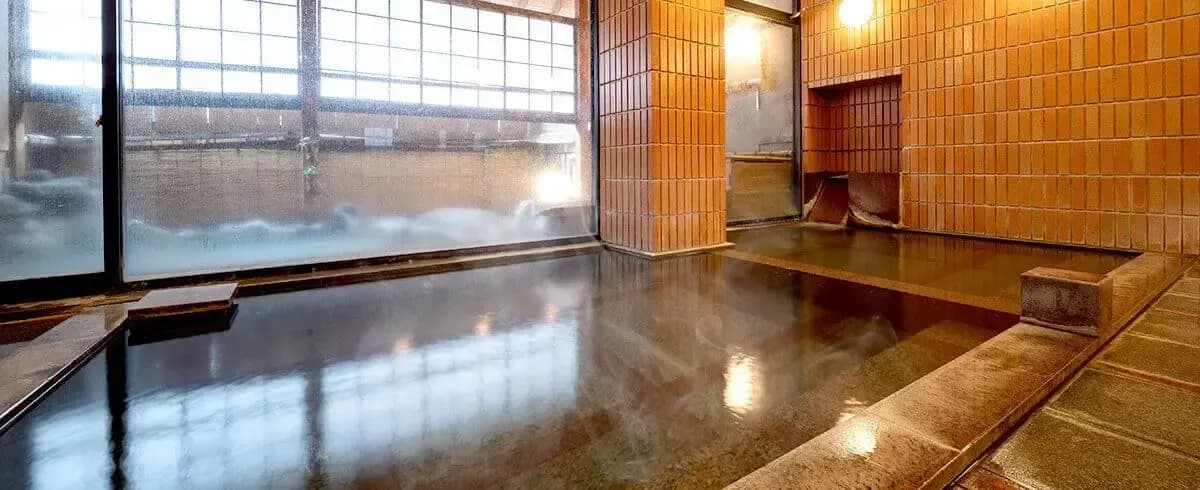
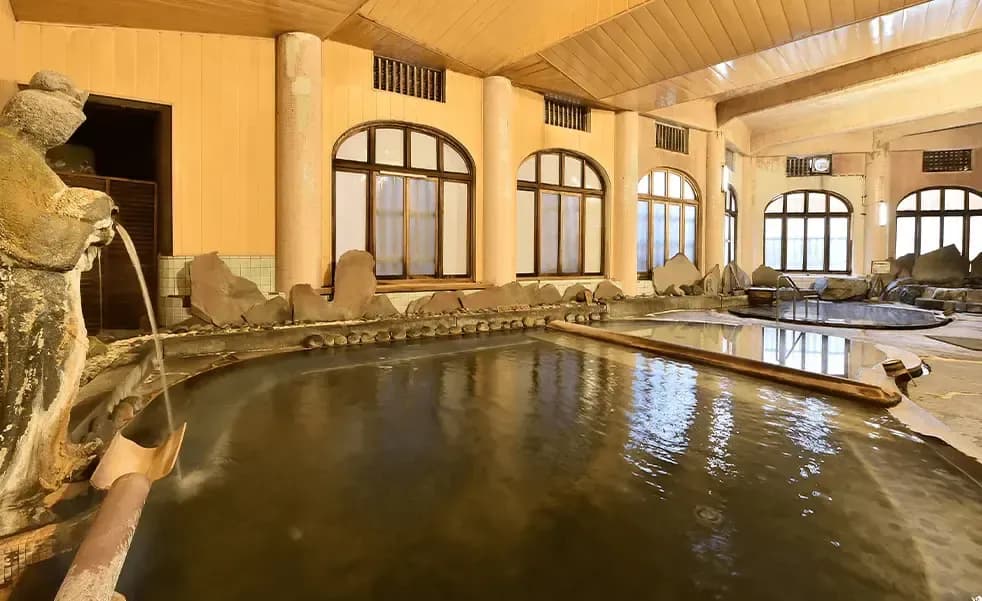
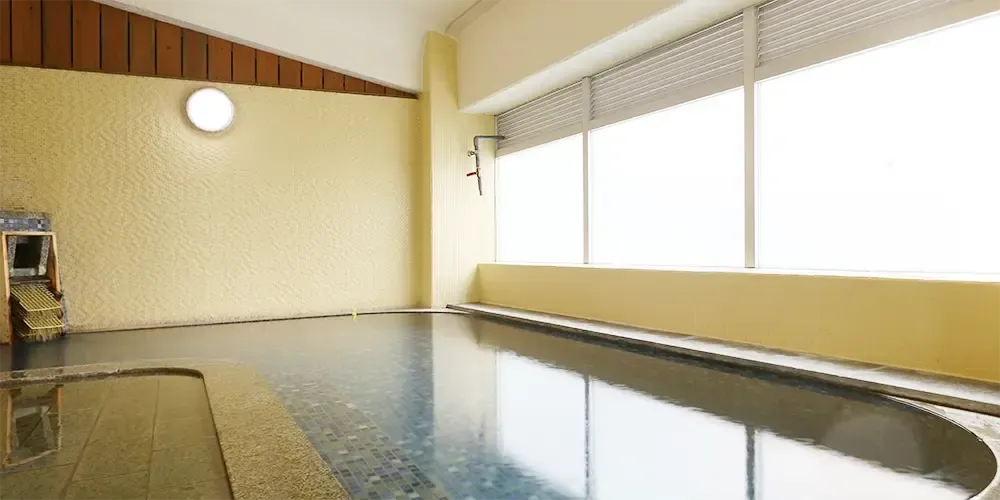
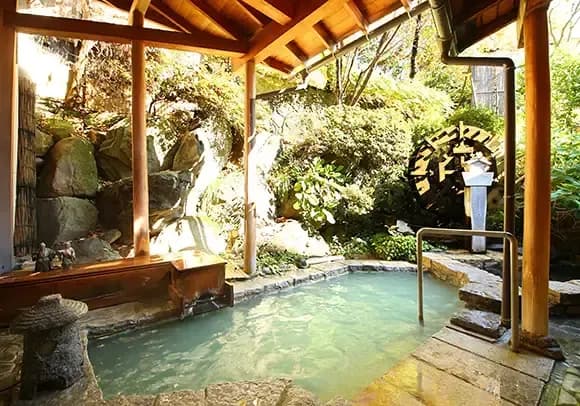
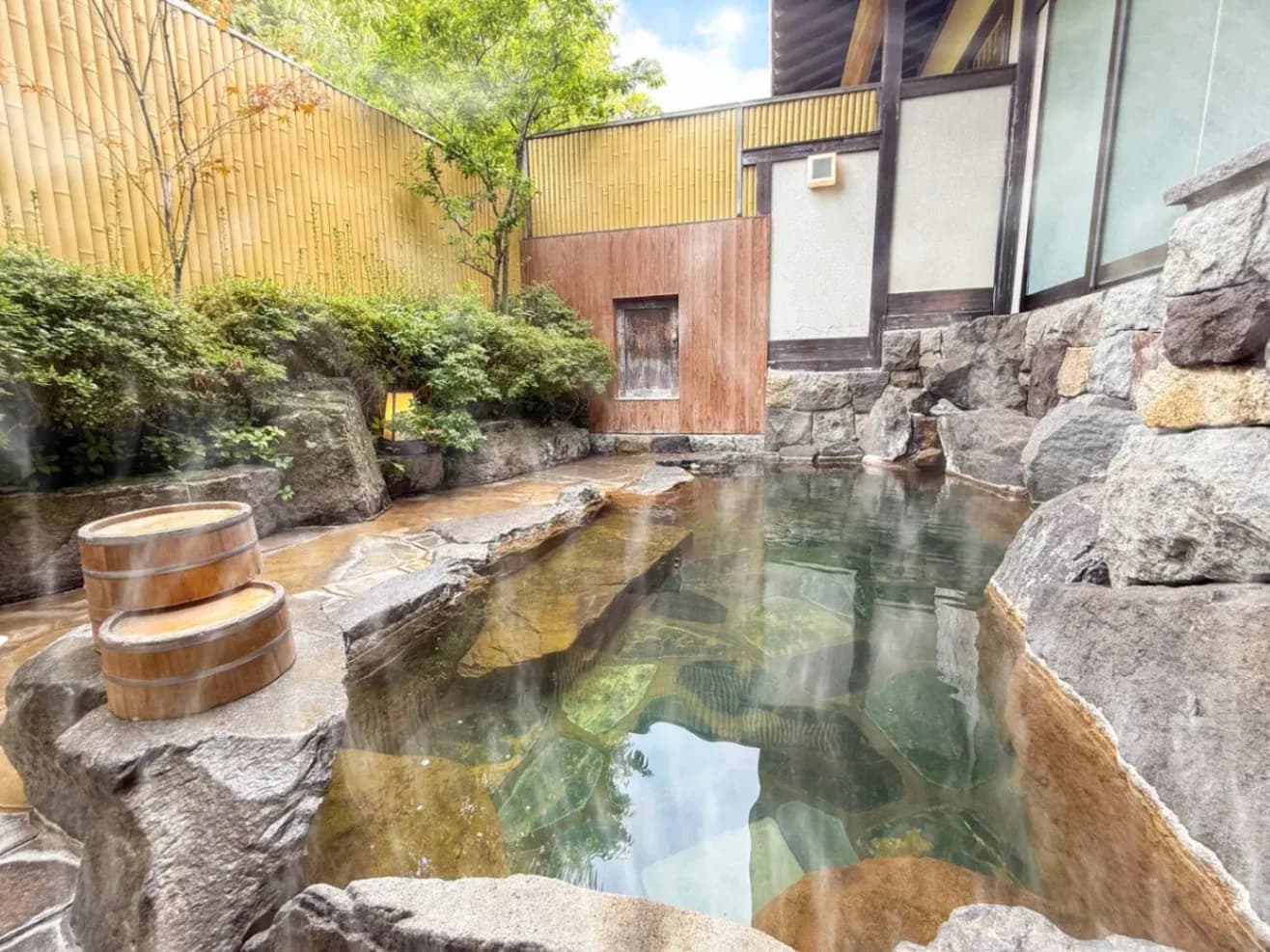
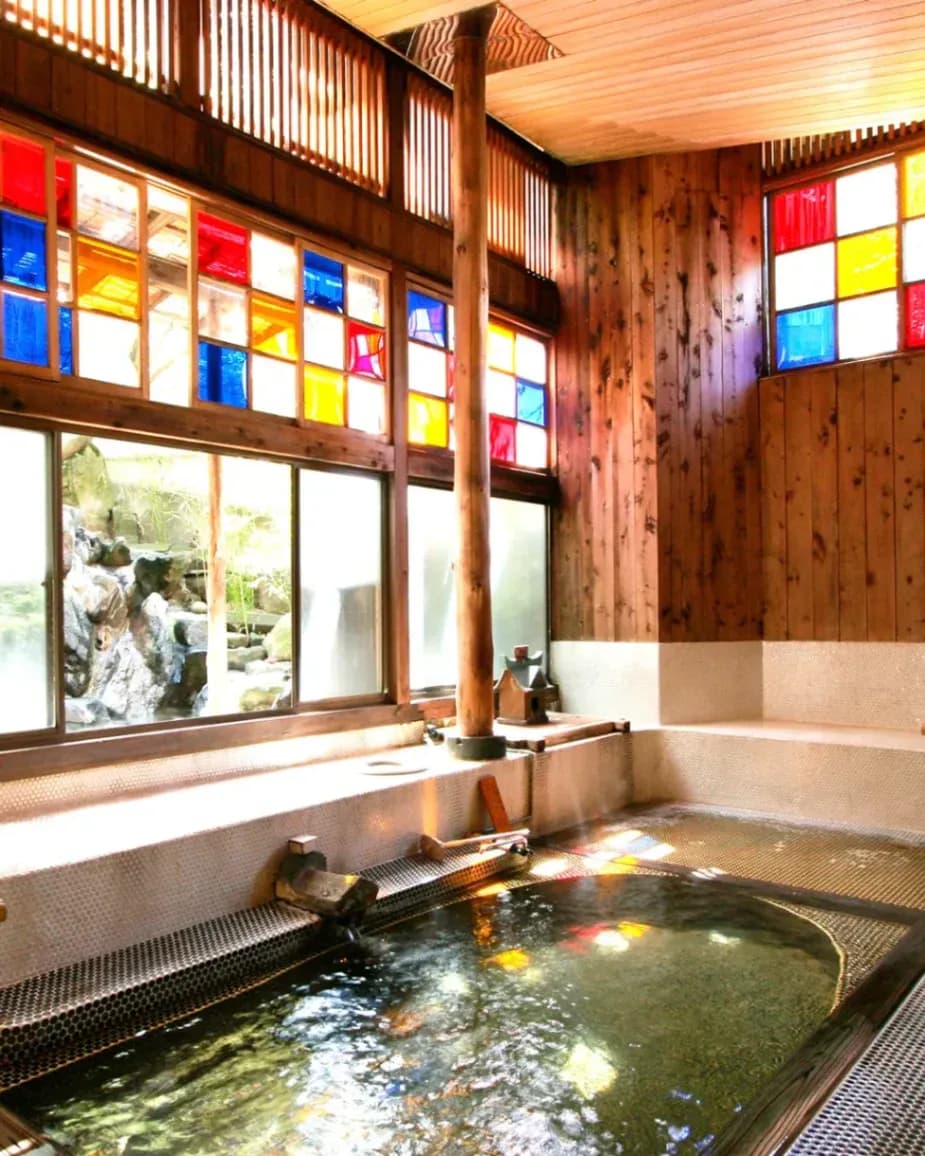
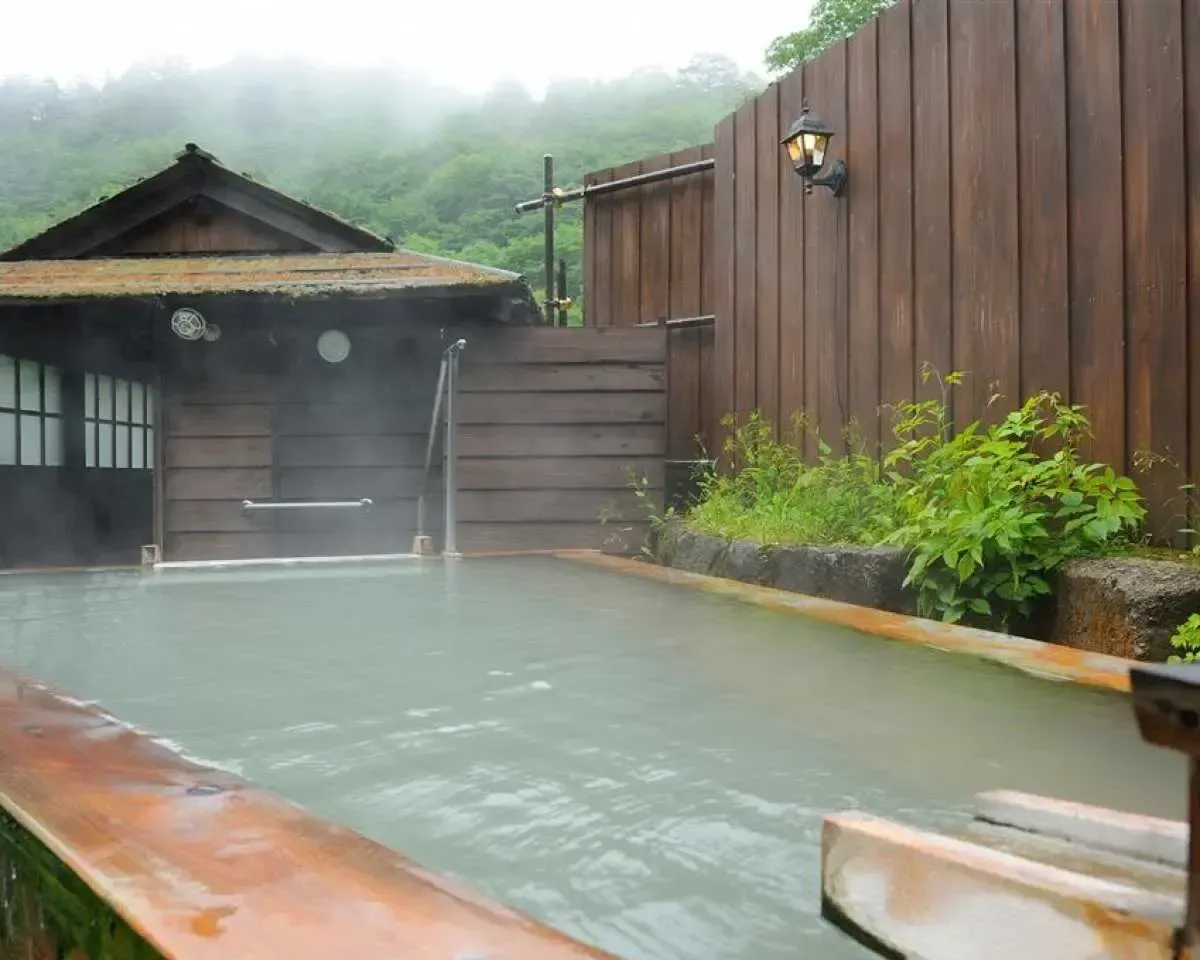
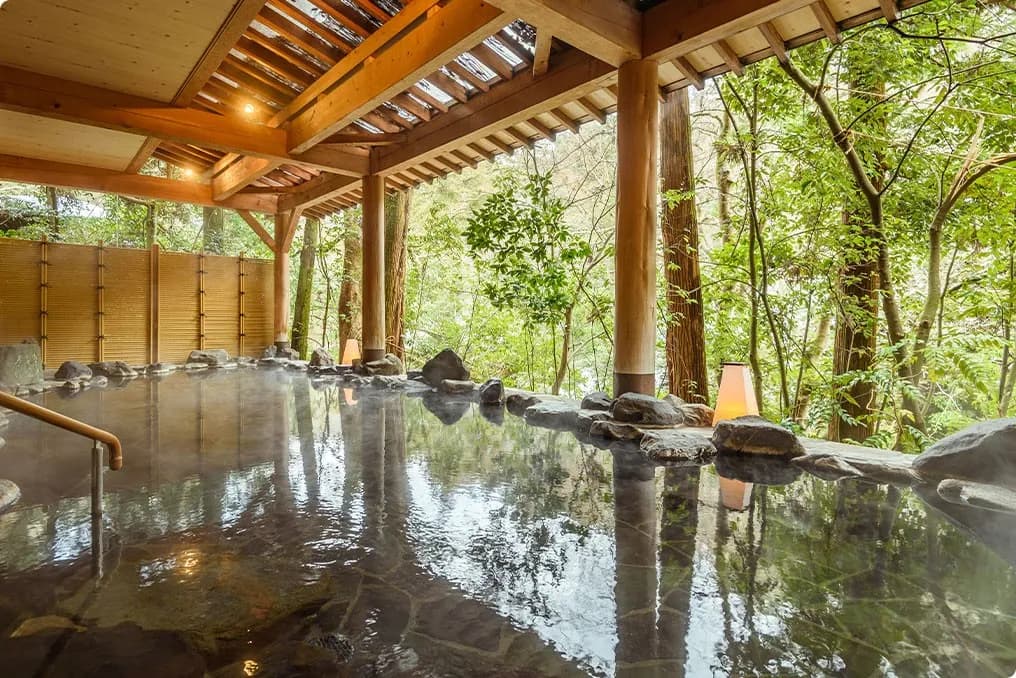
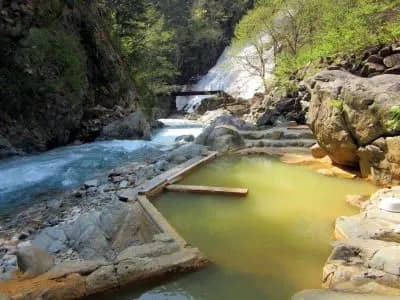
Gunma (群馬) is the closest serious onsen prefecture to Tokyo. The Shinkansen reaches Jomo-Kogen station in about 70 minutes, and from there you are in mountain hot spring country.
The prefecture is easier to understand if you split it into six pockets: the volcanic belt around Kusatsu and Manza, the Shima and Sawatari river valleys, the Minakami basin under Mount Tanigawa, the Oigami and Oze side toward Nikko, the southern foot of Mount Akagi, and the quiet hills of western Gunma. The water in each of these is genuinely different.
This guide lists 14 inns where you can stay overnight. Every one has a data page on this site showing its water type, pH, source temperature, and whether the bath is fed by free-flowing spring water.
What this guide covers:
- Why Gunma has so many hot springs, and why the water varies so much
- What separates Kusatsu, Ikaho, Shima, Minakami and Manza
- 14 inns with overnight stays, each linked to its full data page
- Practical answers on tattoos, mixed bathing, reservations, payment and trains
Two Kinds of Hot Water
Gunma's springs come from two different sources.
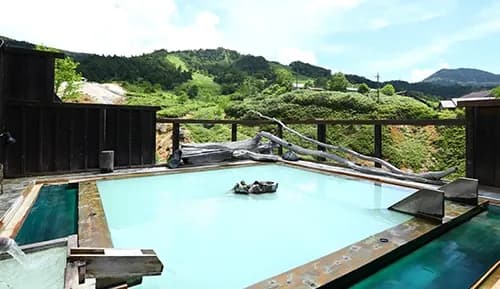
The first is volcanic. Three active volcanoes — Mount Asama (浅間山), Mount Kusatsu-Shirane (草津白根山), and Mount Nikko-Shirane (日光白根山) — form an arc along the western and northern edge of the prefecture. Water near them picks up volcanic gas, turns acidic, and smells of sulphur. Manza Onsen Nisshinkan sits on a source measured at pH 2.5, an acidic sulphur spring that clouds white in the air. Kusatsu belongs to the same family.
The second kind rises far from any volcano. In the valleys of Minakami and Agatsuma, deep groundwater travels up along fault lines and dissolves gypsum from the bedrock, producing calcium-sulphate springs. These are clear, almost odourless, and leave a slightly squeaky feel on the skin. The source at Kawanaka Onsen Kadohan Ryokan is pH 8.6 at 34.6°C — not a strongly mineralised water, yet it has been known for centuries for how skin feels afterwards.
A pH 2.5 white sulphur bath and a pH 8.6 clear one, in the same prefecture. That contrast is the point of travelling here.
The Main Onsen Towns
Kusatsu Onsen (草津温泉), Kusatsu Town
The most famous hot spring town in eastern Japan. A field of wooden channels called the yubatake sits in the middle of town, cooling the water before it is piped to the bath houses. The water is strongly acidic and very hot, and a traditional timed-bathing practice grew up around getting into it. Public bath houses are still central to daily life here.
Ikaho Onsen (伊香保温泉), Shibukawa City
A stone stairway lined with inns, climbing the eastern slope of Mount Haruna. Ikaho has two separate sources: an iron-rich brown water known as the "golden bath" and a clear one called the "silver bath." It is the easiest of the major towns to reach from Takasaki.
Shima Onsen (四万温泉), Nakanojo Town
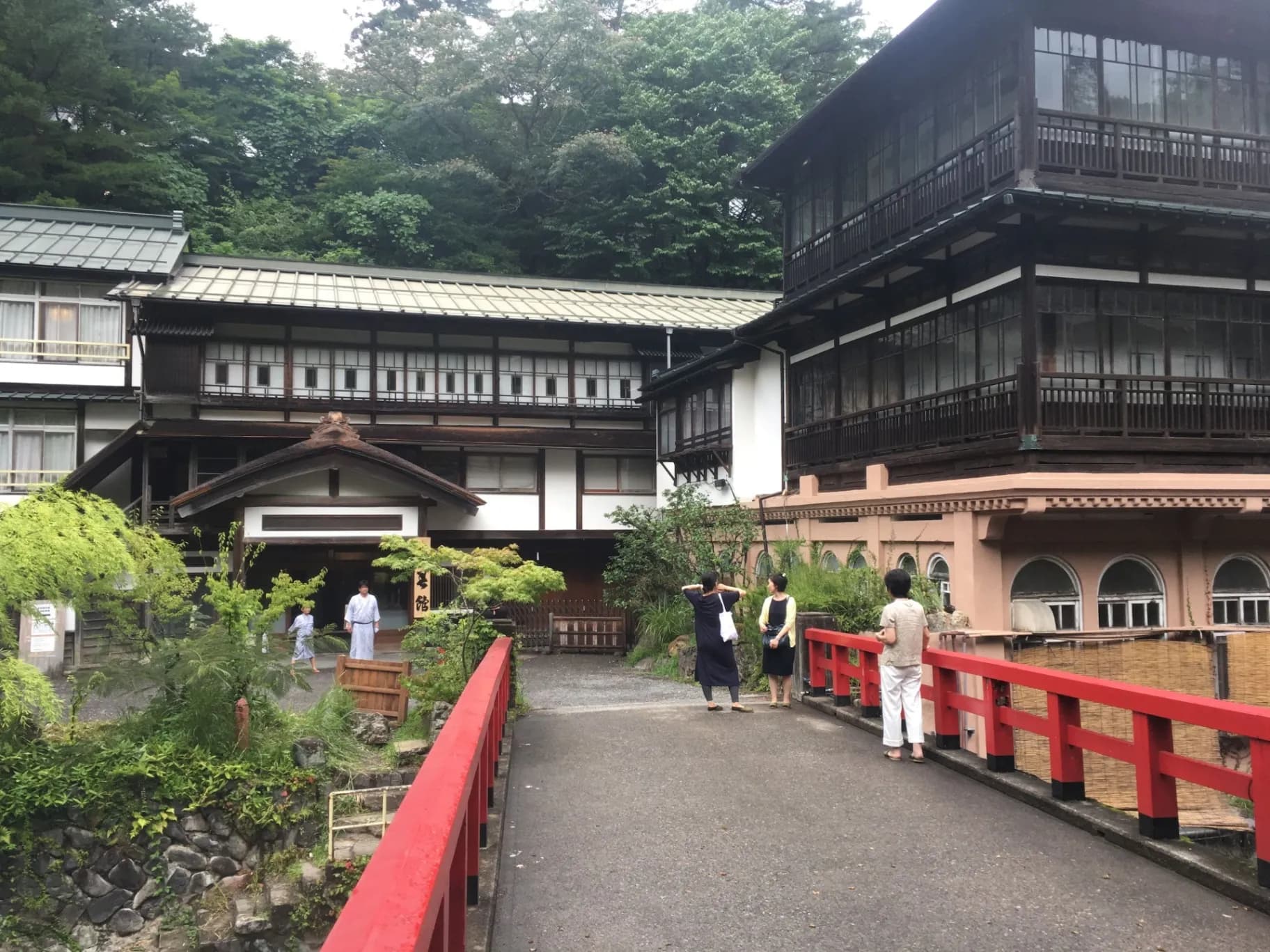
A long, narrow town following the Shima River upstream. The water is a sulphate-chloride type and there are public drinking fountains, a survival of its history as a cure resort. Sekizenkan, listed below, has a wooden main building registered as a National Tangible Cultural Property.
Manza and Kazawa (万座・鹿沢), Tsumagoi Village
Manza sits at roughly 1,800 m, where acidic sulphur water turns milky. Road access varies by season. Kazawa, in the same village, is a bicarbonate spring — completely different water only a short drive away.
Minakami (みなかみ), Minakami Town
The southern foot of Mount Tanigawa holds a scattered group of springs — Takaragawa, Yunokoya, Kawafuru, Yujuku, Hoshi — collectively called the "eighteen waters of Minakami." Jomo-Kogen Shinkansen station and the Minakami expressway exit make this the easiest mountain area in Gunma to reach without a car.
Sawatari, Yakushi and Kawanaka (沢渡・薬師・川中), Agatsuma District
The quiet stretch of road between Shima and Kusatsu. Sawatari is a sulphate spring long described as leaving skin like polished stone, and Kawanaka is counted among Japan's three "beauty waters." Nothing here is built for sightseeing; people come for the water itself.
How These 14 Were Chosen
Selection was based on water data, not on the size of the property. Three conditions:
- Overnight stays are possible (day-use-only bath houses are not included here)
- Water type, free-flowing status, and any dilution or reheating are documented on the site's own data page
- The list is spread across all six areas rather than concentrated in one town
Of the 14, eleven are free-flowing spring water (some with dilution or reheating), two are partly free-flowing, and one is heated and recirculated. The pH range runs from 2.5 at Manza Onsen Nisshinkan to 8.6 at Kawanaka Onsen Kadohan Ryokan.
1. Takaragawa Onsen Osenkaku (宝川温泉 汪泉閣), Minakami Town
| Mon | Tue | Wed | Thu | Fri | Sat | Sun | Hol | |
|---|---|---|---|---|---|---|---|---|
| 10:00 - 16:30 | 10:00 - 16:30 | 10:00 - 16:30 | 10:00 - 16:30 | 10:00 - 16:30 | 10:00 - 16:30 | 10:00 - 16:30 | 10:00 - 16:30 | 10:00 - 16:30 |
2. Kawafuru Onsen Hamaya Ryokan (川古温泉 浜屋旅館), Minakami Town

| Mon | Tue | Wed | Thu | Fri | Sat | Sun | Hol | |
|---|---|---|---|---|---|---|---|---|
| 10:30 - 14:00 | 10:30 - 14:00 | 10:30 - 14:00 | 10:30 - 14:00 | 10:30 - 14:00 | 10:30 - 14:00 | 10:30 - 14:00 | 10:30 - 14:00 | 10:30 - 14:00 |
3. Yunokoya Onsen Ryudo (湯ノ小屋温泉 龍洞), Minakami Town
| Mon | Tue | Wed | Thu | Fri | Sat | Sun | Hol | |
|---|---|---|---|---|---|---|---|---|
| 10:00 - 18:00 | 10:00 - 18:00 | 10:00 - 18:00 | 10:00 - 18:00 | 10:00 - 18:00 | 10:00 - 18:00 | 10:00-13:00 | 10:00 - 18:00 | 10:00 - 18:00 |
4. Yujuku Onsen Taiyokan (湯宿温泉 太陽館), Minakami Town
| Mon | Tue | Wed | Thu | Fri | Sat | Sun | Hol | |
|---|---|---|---|---|---|---|---|---|
| 11:00 - 15:00 | 11:00 - 15:00 | 11:00 - 15:00 | 11:00 - 15:00 | 11:00 - 15:00 | 11:00 - 15:00 | 11:00 - 15:00 | 11:00 - 15:00 | 11:00 - 15:00 |
5. Shima Onsen Sekizenkan (四万温泉 積善館), Nakanojo Town
| Mon | Tue | Wed | Thu | Fri | Sat | Sun | Hol | |
|---|---|---|---|---|---|---|---|---|
| 10:00 - 17:00 | 10:00 - 17:00 | 10:00 - 17:00 | 10:00 - 17:00 | 10:00 - 17:00 | 10:00 - 17:00 | 10:00 - 17:00 | 10:00 - 17:00 | 10:00 - 17:00 |
6. Sawatari Onsen Maruhon Ryokan (沢渡温泉 まるほん旅館), Nakanojo Town
| Mon | Tue | Wed | Thu | Fri | Sat | Sun | Hol | |
|---|---|---|---|---|---|---|---|---|
| 11:00 - 15:00 | 11:00 - 15:00 | 11:00 - 15:00 | 11:00 - 15:00 | 11:00 - 15:00 | 11:00 - 15:00 | 11:00 - 15:00 | 11:00 - 15:00 | 11:00 - 15:00 |
7. Tange Onsen Misatokan (たんげ温泉 美郷館), Nakanojo Town
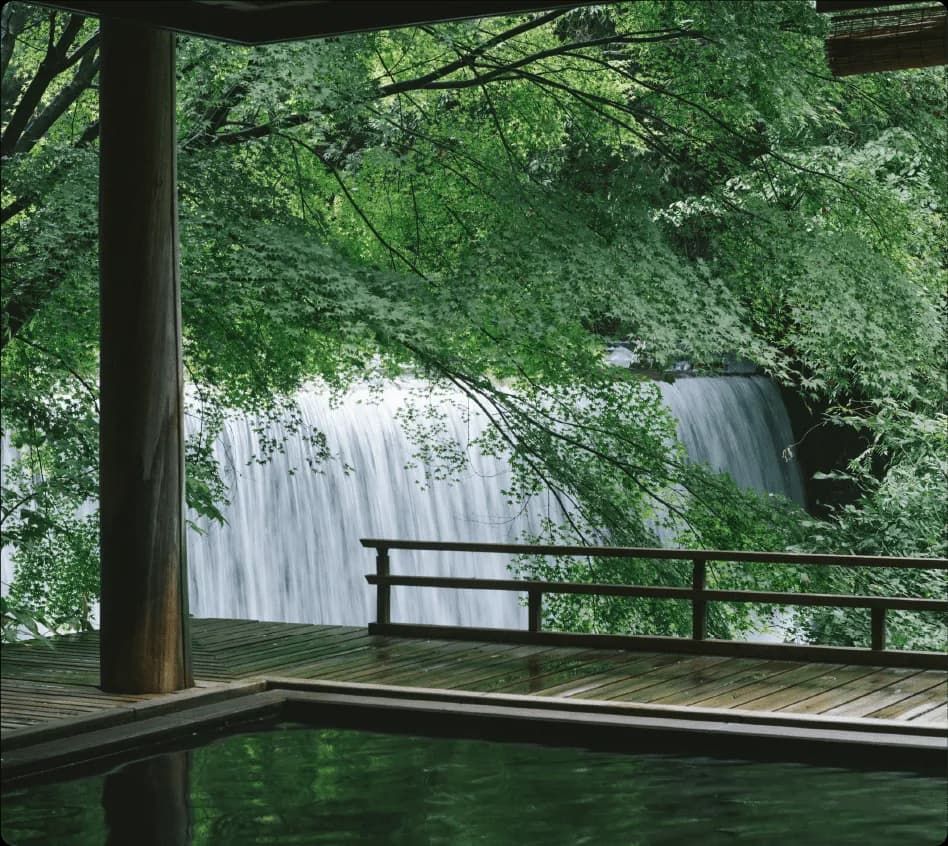
8. Yakushi Onsen Hatago (薬師温泉 旅籠), Higashiagatsuma Town
| Mon | Tue | Wed | Thu | Fri | Sat | Sun | Hol | |
|---|---|---|---|---|---|---|---|---|
| 11:00 - 15:00 | 11:00 - 15:00 | 11:00 - 15:00 | 11:00 - 15:00 | 11:00 - 15:00 | 11:00 - 15:00 | 11:00 - 15:00 | 11:00 - 15:00 | 11:00 - 15:00 |
9. Manza Onsen Nisshinkan (万座温泉 日進館), Tsumagoi Village
| Mon | Tue | Wed | Thu | Fri | Sat | Sun | Hol | |
|---|---|---|---|---|---|---|---|---|
| undefined - undefined | undefined - undefined | undefined - undefined | undefined - undefined | undefined - undefined | undefined - undefined | undefined - undefined | undefined - undefined | undefined - undefined |
10. Oigami Onsen Yumoto Rakuzenso (老神温泉 湯元 楽善荘), Numata City
| Mon | Tue | Wed | Thu | Fri | Sat | Sun | Hol | |
|---|---|---|---|---|---|---|---|---|
| 12:00 - 18:00 | 12:00 - 18:00 | 12:00 - 18:00 | 12:00 - 18:00 | 12:00 - 18:00 | 12:00 - 18:00 | 12:00 - 18:00 | 12:00 - 18:00 | 12:00 - 18:00 |
11. Oze Kamatajuku Onsen Umedaya Ryokan (尾瀬かまた宿温泉 梅田屋旅館), Katashina Village
12. Shimonita Onsen Seiryuso (下仁田温泉 清流荘), Shimonita Town
| Mon | Tue | Wed | Thu | Fri | Sat | Sun | Hol | |
|---|---|---|---|---|---|---|---|---|
| 15:00 - 10:00 | 15:00 - 10:00 | 15:00 - 10:00 | 15:00 - 10:00 | 15:00 - 10:00 | 15:00 - 10:00 | 15:00 - 10:00 | 15:00 - 10:00 | 15:00 - 10:00 |
13. Kawanaka Onsen Kadohan Ryokan (川中温泉 かど半旅館), Higashiagatsuma Town
14. Takizawa Onsen Takizawakan (滝沢温泉 滝沢館), Maebashi City
| Mon | Tue | Wed | Thu | Fri | Sat | Sun | Hol | |
|---|---|---|---|---|---|---|---|---|
| 10:30 - 15:00 | 10:30 - 15:00 | Closed | Closed | 12:00-15:00 | 10:30 - 15:00 | 10:30 - 15:00 | 10:30 - 15:00 | 10:30 - 15:00 |
Practical Notes Before You Book
Tattoos. There is no single national rule, and policies differ from one inn to the next. Small ryokan with private or family baths are usually the easiest option, because you bathe alone or with your own party. Large public bath houses in the well-known towns are more likely to refuse visible tattoos. Ask when you reserve rather than on arrival — many places will answer by email, and some allow covering a small tattoo with a patch.
Mixed bathing and swimwear. Most baths in Gunma are separated by gender, and you bathe without clothing. Swimwear is generally not allowed in indoor baths. A few large open-air baths in the mountains are mixed (konyoku), sometimes with women-only hours; a bathing wrap may be permitted at those. The individual data page for each inn notes the bath layout.
Reservations. Overnight stays at small ryokan should be booked in advance; several of the inns above have fewer than 20 rooms, and mountain properties may close for part of the winter. Day-use bathing normally does not require a reservation, but hours are short and can be suspended without notice.
Payment. Assume cash. Larger inns accept credit cards, but small mountain ryokan, village bath houses and vending machines for bath tickets often do not, and ATMs accepting foreign cards are scarce once you leave the main towns. Carry enough Japanese yen for the trip.
Getting there by train and bus. Minakami and Shima are the two areas that work well without a car. Take the Joetsu Shinkansen to Jomo-Kogen for Minakami, or the JR Agatsuma Line to Nakanojo for Shima, then a local bus. Manza, Kazawa and western Gunma have thin bus service that changes with the season; check whether your inn offers a pickup when you book.
Looking for Something Wilder
This guide required that you can sleep there, which leaves out the riverbed pools and the roadless springs. Our guide to Gunma's hidden hot springs covers those — the cypress bath at Hoshi Onsen Chojukan, the river that becomes a bath at Shiriyaki Onsen, and the abandoned spa site at Garameki.
Gunma's Hidden Hot Springs: 10 Secluded Baths
For a winter trip built around bathing in the snow, our guide to snow onsen in Japan lists 11 inns from Hokkaido to Hida, including Takaragawa Onsen Osenkaku and Manza Onsen Nisshinkan from this guide.
Across the Border: The Nagano Onsen Guide
Nagano lies immediately west of Gunma, linked by the Shiga-Kusatsu Kogen Route (National Route 292, closed in winter) that runs between Kusatsu Onsen and the Shiga Kogen highlands. Nagano holds 75 hot spring entries in our database, more than any other prefecture, and its bathing culture is put together differently: the sotoyu circuits of Nozawa (13 baths) and Shibu (9 baths) have no counterpart in Gunma. For a trip that crosses the prefectural border, the Nagano side is covered in a separate guide.
Nagano Onsen Guide: 20 Hot Springs and the Village Bathhouse Circuit
Planning a Route
Gunma is wide from east to west, and trying to see everything means spending the trip in transit. Pick one or two areas.
Minakami. Start at Jomo-Kogen or Minakami station. Takaragawa Osenkaku and Yunokoya Ryudo are both in the Fujiwara district; Yujuku Taiyokan and Kawafuru Hamaya are down toward Sarugakyo. Allow 20 to 40 minutes by car between inns, and check road conditions in winter.
Shima and Agatsuma. Nakanojo station is the gateway. Sekizenkan and Maruhon Ryokan are both in Nakanojo Town but on different rivers, about 30 minutes apart. Tange Misatokan, Yakushi Hatago and Kawanaka Kadohan are all in the same district and combine easily into one trip.
Manza and Tsumagoi. High altitude, with seasonal road restrictions. Confirm access before you commit to a date. Summer is cool and pairs well with highland walking.
Numata, Oze and Nikko side. Oigami Rakuzenso and Oze Kamatajuku Umedaya sit on Route 120, the road toward Nikko and the Oze trailheads — useful as a night before or after a hike.
Maebashi and western Gunma. Takizawa Takizawakan is on the southern slope of Mount Akagi and Shimonita Seiryuso is in the western hills. Both are about an hour by car from Takasaki or Maebashi.
Late autumn and winter are the best time for open-air baths, when the air is cold enough to see the steam. That is also when mountain roads freeze and some inns close, so check before travelling. In summer, the high-altitude inns at Manza and Kazawa stay comfortable.
Frequently Asked Questions
Can I visit these inns just for a bath, without staying?
It depends on the inn. Takaragawa Osenkaku, Shima Sekizenkan, Sawatari Maruhon and Manza Nisshinkan accept day visitors on some days. Tange Misatokan, Oze Kamatajuku Umedaya and Kawanaka Kadohan have no day-use bathing on record. Hours change, so check the data page and the official site.
Which of these are free-flowing spring water?
Eleven of the 14, including some with dilution or reheating. Oze Kamatajuku Umedaya and Takizawa Takizawakan are partly free-flowing; Tange Misatokan is heated and recirculated. Individual tubs within one inn can differ.
Are Kusatsu and Ikaho inns included?
Not in this list of 14. The list is limited to properties whose water type, pH and free-flowing status are documented on our own data pages. Both towns are described in the section on main onsen areas above.
How much Japanese do I need?
Enough to reserve by email or through a booking site. Staff at small mountain inns often speak little English, but written communication and translation apps work well, and bath etiquette is signposted with pictograms in most places.
When should I come?
Late autumn through winter for the open-air baths, summer for the highland inns at Manza and Kazawa. Avoid the New Year holidays and Golden Week if you dislike crowds, and note that rooms at small ryokan sell out months ahead for autumn foliage weekends.
Notice
The information in this article (admission fees, operating hours, water quality data, etc.) is based on research conducted at the time of writing. Details may have changed or contain errors. Please verify the latest information on each facility's official website or through the local tourism association.