10 Best Hot Springs in Kochi Prefecture — From Tosa Sulfur Springs to a Shimanto Headwater Private Onsen and a Pacific Chloride Bath
10 Best Hot Springs in Kochi Prefecture — From Tosa Sulfur Springs to a Shimanto Headwater Private Onsen and a Pacific Chloride Bath
Kochi Prefecture occupies the southern face of Shikoku, hemmed in by the Shikoku mountain range to the north and washed by the warm Kuroshio current of the Pacific Ocean to the south — the historic land of Tosa, geographically and culturally distinct from its neighbors. Two famous rivers shape its landscape: the Niyodo River, whose translucent waters are known nationwide as Niyodo Blue, and the Shimanto River in the west, often called Japan's last clear stream. Hidden along the headwaters of these rivers are single-inn hot springs cradled by deep mountains, while highland resorts perch above 1,400 meters in the Shikoku Karst and on the Tengu Plateau. Looking back through history, one finds spring sites tied to the 9th-century Buddhist saint Kobo Daishi (Kukai), a hot spring built on the former lower residence of the Yamauchi clan who ruled the Tosa Domain, and a remote seaside cold spring said to have been used by Heike clan refugees and later by the Edo-era cartographer Ino Tadataka — Kochi being, of course, also the birthplace of the famous Bakumatsu reformer Sakamoto Ryoma. Compared with other regions of Japan, Kochi's hot springs are notable for their preponderance of cold mineral springs (reikosen) and for harboring rare alkaline sulfur springs that are exceptional on the island of Shikoku. From this distinctive landscape we have selected 10 facilities, including one highland resort that is technically not a hot spring under Japanese law but is included here as a special introduction for its singular setting.
1. Sennen no Biyu Sondayama Onsen Wa (Susaki City, Kochi)
About 5 kilometers north of central Susaki City, at the foot of Mount Sodayama, sits this single secluded inn. The spring is said to have been opened during the Heian period, giving it roughly 1,200 years of heritage. Local legend holds that Kobo Daishi (Kukai), the founder of Shingon Buddhism, discovered this naturally welling spring during his pilgrimage around Shikoku and introduced it to the villagers as a sacred medicinal water. Formerly called Kuwadayama Onsen, the inn was renovated in 2012 and reopened in 2013 with newly built open-air baths under the current name Sennen no Biyu Sondayama Onsen Wa (YAWARAGI), meaning The Beautiful Spring of a Thousand Years.
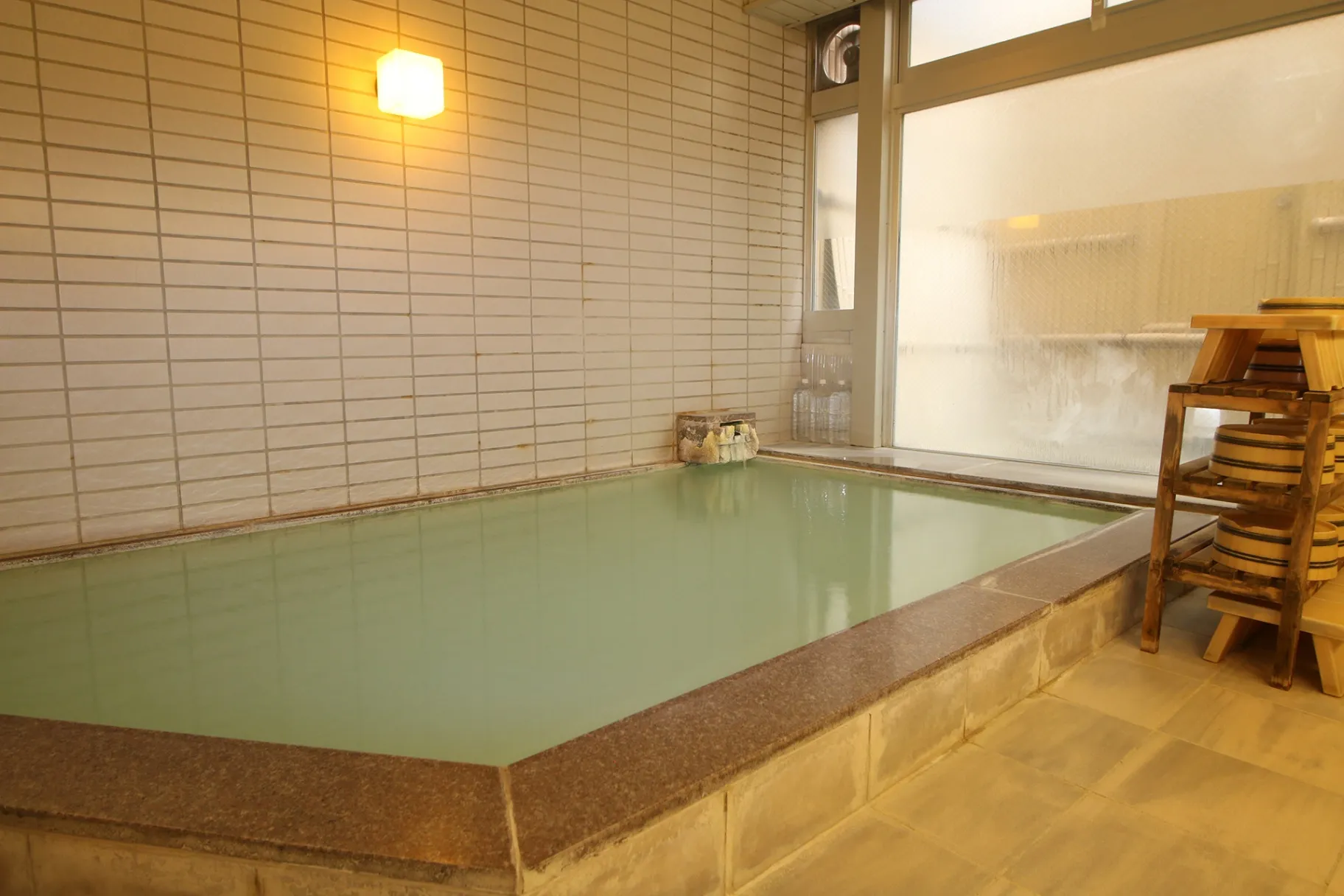
The water is classified as an alkaline simple sulfur cold mineral spring with a remarkable pH of 9.5 and a source temperature of 18.3 degrees Celsius. With a flow rate of 360 liters per minute, this is one of the most abundant springs in Shikoku. The water has a notably silky, slippery texture that has earned it the local nicknames Bijin no Yu (Beauty Spring) and W Bihada no Yu (Double Beauty Spring); after bathing, the skin feels as if a fine lotion has been applied. The men's bath Sonda Yama no Yu and the women's bath Beppin no Yu both feature indoor and open-air baths, all supplied as fresh source flow-through (kakenagashi). Although the inn is small, with only four rooms in the main building and three detached cottages, day-trip bathing is generously open from 9:00 to 21:00 (last admission 20:30), year-round. Admission is 700 yen for adults, 350 yen for elementary-school children, and 250 yen for younger children. Visitors arriving before 11:59 a.m. can enjoy a discounted Morning Bath at just 480 yen. About 5 minutes by car from Susaki-Higashi IC on the Kochi Expressway, with free shuttle service from JR Aso Station available with advance reservation. Pair a soak with Susaki's famed nabeyaki ramen for a quintessential Tosa lunch.
At the foot of the Shikoku Karst plateau, in the pristine headwaters of the Shimanto River, stands a hidden inn of just six rooms: Shimanto Genryu Iyashi-no-Sato Goroku Onsen. Discovered in 1970 (Showa 45), it remains the sole hot spring in all of Tsuno Town. The name Goroku is said to derive from the elevation of 356 meters where the source was first found. As guests drive deeper into the mountains, mobile phone signals fade, and the only sounds that remain are the murmur of the Kitagawa River and the wind brushing through the treetops. This is a truly hidden retreat embraced by the deep wilderness of the inner Shimanto.
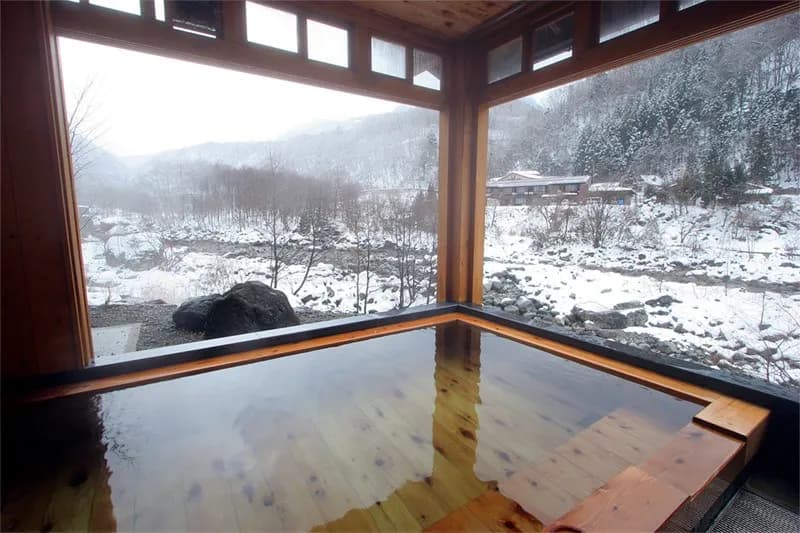
The water is an alkaline simple sulfur spring — exceptionally rare on Shikoku Island — offered at one hundred percent of the source, free-flowing without recirculation. From the spouts, water tinged with a gentle scent of sulfur pours forth in a thick, silky stream, and hot spring enthusiasts often remark that encountering such water on Shikoku is nothing short of miraculous. The inn offers two bathing facilities — Hinoki-no-Yu in the main building and Hanare-no-Yu, a detached bathhouse along the riverbank — and both are reserved exclusively for private use. Day-trip bathing is offered as a private rental at 3,600 yen per group of up to four people for sixty minutes, available Friday through Monday from 11:00 to 15:00 (last entry 14:00). Reservations by phone the day before are required, and the inn is closed Tuesdays and Wednesdays for both lodging and day-use. Overnight stays start from 13,200 yen per person with two meals, featuring kaiseki cuisine that showcases mountain, river, and sea ingredients of the Shimanto headwaters. About 1 hour 20 to 40 minutes by car from Kochi IC or Susaki-Higashi IC. As the inn lies in a mountainous area, snow and ice should be expected in winter.
A modest, ten-room therapeutic inn (toji-yado) tucked deep in the mountains of Kamibun-otsu, Susaki City, surrounded by clear mountain streams and forested slopes near the headwaters of the Shimanto River system. So remote that mobile phone signals do not reach the inn, the location is paradoxically ideal for those seeking refuge from modern distractions. The building retains a strongly Showa-era atmosphere with shared toilets and communal dining in a large tatami hall, offering a glimpse of an older style of Japanese ryokan culture that has nearly disappeared from the country.
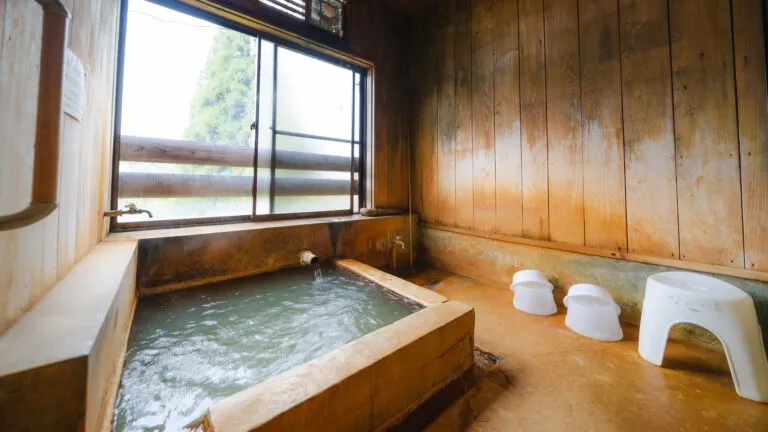
The spring is classified as an alkaline simple sulfur cold mineral spring (hydrogen sulfide type) with a pH of 8.6 and a source temperature of 17.2 degrees Celsius. The inn delivers the water on a 100 percent flow-through basis and indulgently drains and refills the bath every single day, ensuring fresh source water at all times. The bath has the unmistakable scent of sulfur and a soft, slightly slippery feel. Meals — local vegetables, pork shabu-shabu hot pot, and hand-pressed sushi prepared by the proprietress herself — have a quiet but devoted following. Day-trip bathing is open from 11:00 to 17:00 at 700 yen for adults and 350 yen for children, with Wednesdays as the closed day (please confirm in advance). About 9 km from Susaki-Chuo IC on the Kochi Expressway via Route 197 (around 15 minutes by car), or about 20 minutes by taxi from JR Susaki Station on the Dosan Line. Public transport is limited, so arrival by car is recommended.
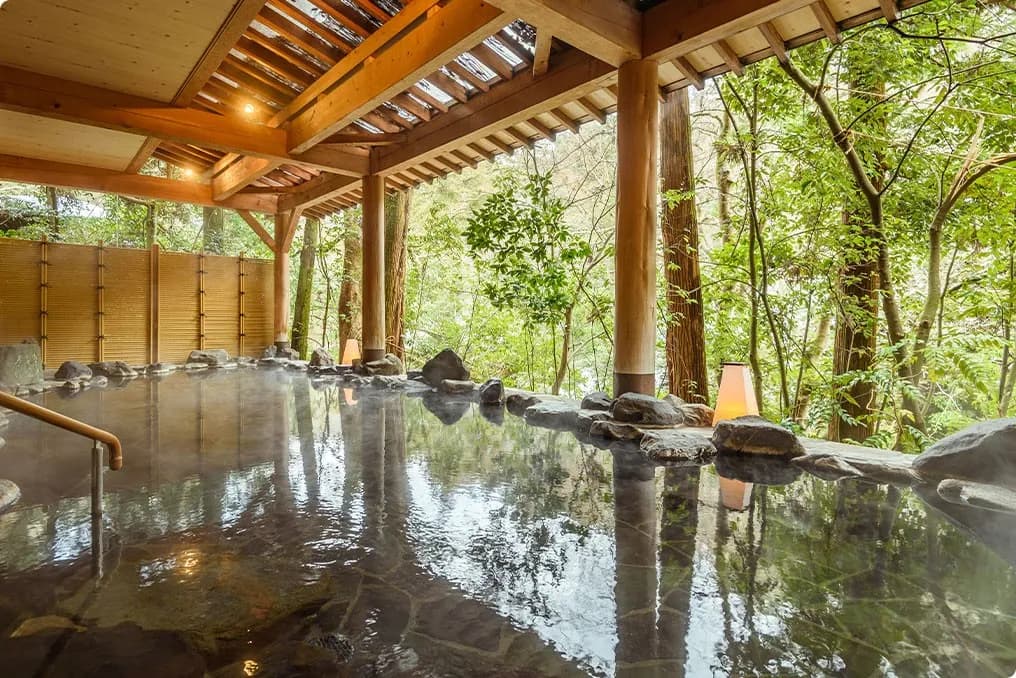
Tosaryu Onsen Sanyoso is a hot spring ryokan perched on a hilltop overlooking the Pacific Ocean in Usa-cho, Tosa City, Kochi Prefecture. Located right at the gate of Seiryuji Temple, the 36th of the 88 sacred temples of the Shikoku Pilgrimage, it has long welcomed henro pilgrims and travelers. Seiryuji is a venerable temple associated with Kobo Daishi Kukai, and also famously gave its name to the legendary sumo grand champion Asashoryu, lending the area a unique atmosphere where Buddhist pilgrimage culture meets onsen tradition.
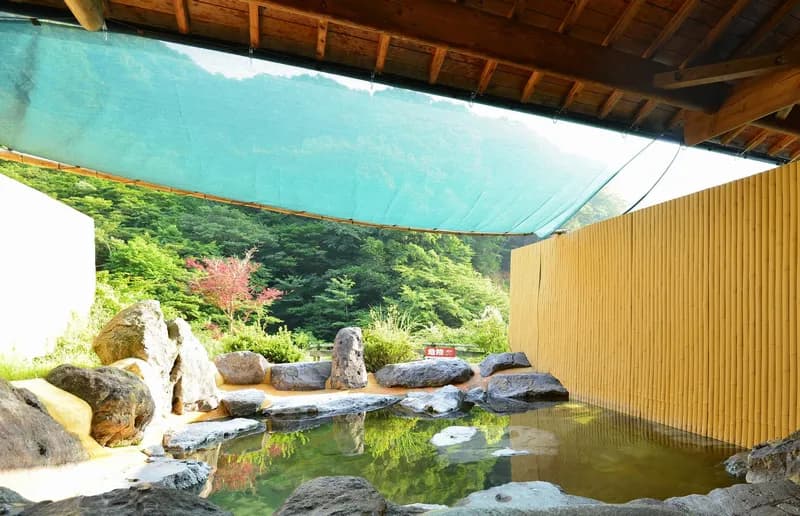
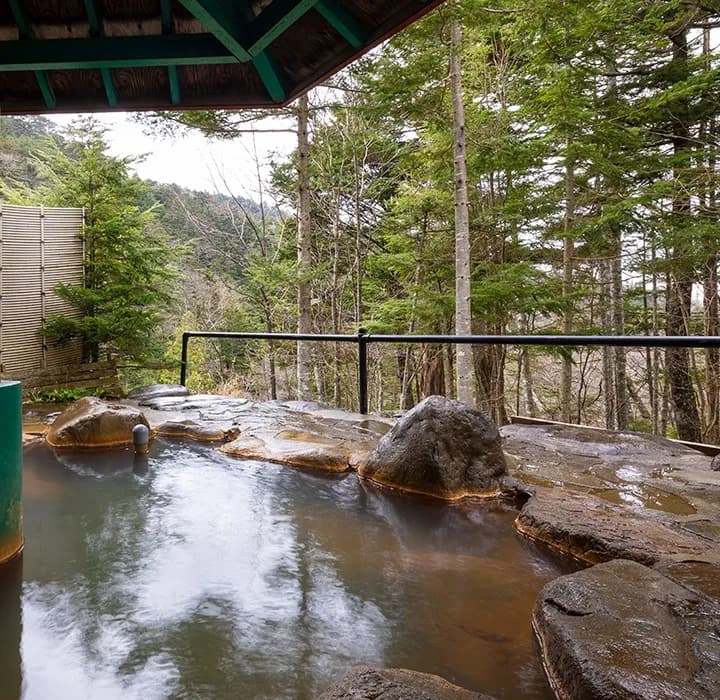
The spring is classified as a sodium-calcium chloride hot spring (hypertonic, neutral, high-temperature) with a remarkable source temperature of 42.5°C, an exceptionally rare high-temperature private source for Kochi Prefecture, allowing the bathtubs to be filled without artificial heating. The water is golden-hued, and thanks to its high salt content typical of chloride springs, it offers superb heat-retention and moisturizing effects, keeping bathers warm long after leaving the tub, earning it the nickname yu of heat. The waters are said to be effective for neuralgia, muscle and joint pain, poor circulation, and fatigue recovery.
Quality
Sodium - Magnesium ( - Calcium ) - Chloride Spring
About 30 minutes by car from central Aki City in Kochi Prefecture, deep among the folded ridges of the Higashikawa district, sits the quiet bathhouse of Komadori Onsen. The name komadori — Japanese robin — refers to a small bird whose clear, rippling song is said to evoke the babbling of mountain streams, and is a fitting symbol for the rich natural setting of this satoyama hamlet. The story of the spring begins in 1984 (Showa 59), when a local resident discovered yu-no-hana, the mineral bloom that signals a hot spring beneath the ground, and dug down to confirm the source. The spring rights were transferred to Aki City in 1994 (Heisei 6), and in 1996 (Heisei 8) the current public facility opened. Since then, Komadori Onsen has been a fixture of local life and a quiet pilgrimage point for travelers seeking out Kochi's hidden waters.
The water is classified as a simple sulfur cold mineral spring, with a source temperature of about 17 degrees Celsius. Bathers describe a soft, silky touch and a gentle whiff of sulfur, leaving the skin smooth and supple after soaking — qualities that have earned the bath a quiet reputation as bihada-no-yu, a beautifying water. Because the source is cold, the water is heated for the bath, but it is delivered in the kakenagashi (free-flowing source-fed) style, with fresh spring water continuously supplied to the tub. Whether or not chlorination is used is not publicly stated, yet the bouquet of mountain stream and faint sulfur — distinctive of true country onsen — is unmistakable. Lean close to the spout and the soft sulfur fragrance rising from the steam offers an immediate, sensory confirmation that you have indeed reached a hidden spring.
6. Sansuien Natural Hot Spring Suisaikaku (Kochi City, Kochi)
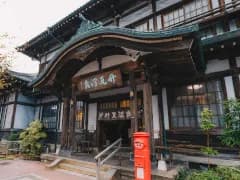
Sansuien, located in Takajomachi in central Kochi City, is a historic hot spring ryokan built on the former lower residence site of the Yamauchi family, lords of the Tosa Domain. The grounds preserve a nagaya (long house) constructed between 1864 and 1866, originally used as lodgings for the foot soldiers guarding the residence of the 15th lord Yamauchi Yodo and the 16th lord Yamauchi Toyonori. Designated as a National Important Cultural Property, this historic spot witnessed the turbulent days of the late Edo period and may have been visited by figures such as Sakamoto Ryoma and Nakaoka Shintaro, allowing visitors to immerse themselves in the romance of Tosa history.
The natural hot spring Suisaikaku was named by the future Emperor Taisho when he was crown prince, and the calligraphy of the name, brushed by Admiral Heihachiro Togo who accompanied him, is still carefully displayed inside the building. Known as the only natural hot spring source within Kochi City, it is a high-temperature spring with a source temperature of approximately 48 degrees Celsius. The water is a sodium chloride spring, and thanks to the excellent heat retention properties of its salt content, bathers stay warm long after leaving the bath. It has long been beloved as the Bath of Heat and the Bath for Wounds, with reputed benefits for neuralgia, muscle pain, joint pain, sensitivity to cold, and chronic gynecological disorders.
The bathing facilities feature a spacious open-air bath as well as a large indoor bath, high-temperature bath, cold water bath, sauna, and cascade bath, allowing visitors to enjoy bathing in a variety of styles. The washroom area is fully equipped with hair dryers, lotions, and skincare amenities, offering thoughtful touches especially appreciated by female guests. Day-use bathing is welcomed, making Sansuien a convenient stop during sightseeing or business trips.
Day-use bathing hours are from 10:00 to 16:00 (last admission 15:30), with fees of 1,200 yen for adults, 600 yen for elementary school children, 400 yen for younger children, and 800 yen for those aged 65 and above. Bringing your own towel is recommended, though rentals and sales are available. The ryokan is about a 5-minute walk from the Kenchomae tram stop on the Tosaden Kotsu tramline, and about 10 minutes by taxi from JR Kochi Station. Kochi Castle is within walking distance, making it ideal to combine your visit with a stroll through the historic castle town. Free parking for approximately 60 vehicles is also available, making it convenient for those traveling by car.
7. Sugaru no Tojiba (Kuroshio Town, Hata District)
On the rugged Pacific coast of Kumanoura in Kuroshio Town, western Kochi Prefecture, lies a bathing site so primitive it feels almost impossible in modern Japan. Sugaru no Tojiba — also known as Sugaru Natural Hot Spring — is an alkaline simple sulfurous cold mineral spring at just 19 degrees Celsius that seeps from the seaside rocks. Bathers must heat the water themselves with firewood in a traditional Goemon-style iron cauldron. According to local tradition, fugitive Heike clan warriors washed their wounds here after their flight from the capital, and the great Edo-period cartographer Ino Tadataka is said to have stopped to bathe during his historic survey expedition along the coasts of Shikoku. The site is officially designated as the 49th sacred station on the Shikoku 88 Hot Spring Pilgrimage.
Visitors must begin by gathering driftwood washed up on the beach. The driftwood is split into kindling, fed beneath the iron cauldron, and ignited; cold spring water from a natural source roughly 200 meters up the mountainside is piped down via a black rubber hose, collected in plastic tanks, and then ladled by the bucket into the cauldron and slowly heated to bathing temperature. Reaching proper warmth takes well over an hour, and the entire process — from gathering wood to actually entering the bath — requires two to three hours of dedicated effort. The bath is a simple cast-iron cauldron set on the seaside rocks, with the boundless expanse of the Pacific Ocean stretching directly before it. The facility is unmanned, sustained entirely by the goodwill of the private landowner and the Kuroshio Town Saga Branch Office. While admission is technically free, an unspoken etiquette dictates that visitors leave a contribution of around one thousand yen in the donation box beside the water tanks. Bathers must bring their own towels, soap, fire starter, matches, newspaper, lighter, and bucket. About 1 hour by car from Shimanto-cho Chuo IC on the Kochi Expressway; the final several hundred meters consist of a single-track lane barely 1.5 meters wide where vehicles cannot pass each other, so a kei-car or compact vehicle is strongly recommended. Visiting after sunset is strictly discouraged. The site has repeatedly faced threat of permanent closure due to visitor misconduct — anyone visiting must extinguish every ember completely, carry out every scrap of garbage, and take great care not to obstruct local roads when parking, as the bare minimum etiquette for preserving this legendary bath.
Konoka Onsen is a roadside-station hot spring and lodging facility tucked into a deep mountain valley in Kuwaze, Ino Town, Agawa District, Kochi Prefecture. The crystal-clear Kuwaze River flowing past the property is a headwater stream of the Yoshino River, and its emerald-green water threading through mossy stones is among the purest in all of Shikoku. Looming behind the facility is Mt. Kanpuzan, Shikoku's second-highest peak at 1,763 meters, and the entrance to the celebrated UFO Line (Kamegamori Forest Road), a sky road that draws drivers from across Japan. The setting offers spectacular mountain scenery in every season.
The spring is classified as an alkaline simple hot spring, also containing iron-bearing sodium chloride components, producing a smooth, gentle bath often praised as a beauty water. The waters are said to be effective for neuralgia, muscle and joint pain, poor circulation, and fatigue recovery, melting away the strain of mountain hiking and long mountain drives. The water carries a faint amber tint and, thanks to the chloride content, retains body heat well, leaving bathers warm from the core long after leaving the tub. Bubbling up at around 600 meters elevation amid crisp mountain air, the bath delivers a particularly refreshing post-soak feeling.
Tucked along the Nakatsu River, a tributary of the Niyodo River celebrated for its miraculous emerald-blue waters known as Niyodo Blue, Nakatsu-keikoku Yunomori is a quiet hot spring inn in central Kochi Prefecture. Just off National Route 33 at the gateway to Nakatsu Gorge, the building is generously crafted from lumber sourced locally in Niyodogawa Town, welcoming guests with the warmth of natural wood. Nakatsu Gorge is a renowned scenic spot in Shikoku, featuring well-maintained walking paths that lead past emerald-green streams, the Uryu Falls, the stone pillar known as Uguisubari, and the picturesque Seven Lucky Gods trail. The chance to enjoy both healing waters and gorge scenery in a single visit is the inn's greatest charm.
The spring is classified as alkaline simple sulfur cold mineral spring, with a source temperature of 21.1 degrees Celsius and a flow rate of 54 liters per minute. Because it is a cold mineral spring, the water is heated, circulated, and chlorinated before reaching the baths, yet the touch on the skin remains gentle and leaves a soft, smooth finish after bathing. Said to be effective for chronic skin conditions, gynecological issues, neuralgia, joint pain, frozen shoulder, diabetes, and cuts, the spring is beloved by locals as a beauty water drawn from the bountiful mountains of the Niyodo River basin.
Kochi's hot springs can be loosely grouped into four areas: Central (Kochi City and surroundings), Eastern (Aki area), Western (Niyodo and Shimanto basins), and Mountain (Shikoku range and Shikoku Karst).
Central area: Sansuien Suisaikaku is the only natural onsen in central Kochi City, perfectly suited as a base for urban sightseeing. Tosaryu Onsen Sanyoso lies 30 to 40 minutes' drive away in Tosa City, with Pacific Ocean views from its open-air bath. A classic plan is to spend Day 1 visiting sites tied to Sakamoto Ryoma and the Yamauchi clan in the city and soak at Sansuien for its historic atmosphere, then on Day 2 combine Sanyoso with a visit to the pilgrimage site Seiryuji Temple.
Eastern area: Komadori Onsen sits quietly in the mountains of Aki City. Take the Tosa Kuroshio Railway's Gomen-Nahari Line to Aki Station to enjoy a leisurely train ride, visit the birthplace of Iwasaki Yataro (founder of Mitsubishi) and the Aki Castle ruins, and finish the day at Komadori Onsen. The trip from Kochi Station to Aki takes about 1 hour 20 minutes by train, with another 30 minutes by taxi up to the bath.
Western area: Sondayama Onsen Wa and Yamazato Onsen Ryokan in Susaki, Goroku Onsen in Tsuno, Sugaru no Tojiba in Kuroshio, and Yunomori at Nakatsu Gorge in Niyodogawa cluster in the west. A two-night, three-day Western Hidden Spring Tour might combine Niyodo River sightseeing with an overnight at Yunomori, then move on to Goroku Onsen for a private rental sulfur bath in the Shimanto headwaters. Sugaru no Tojiba should be regarded as a specialized destination only for the most experienced onsen explorers — its complete self-service nature and demanding access make it inappropriate as a casual stop.
Mountain area: Konoka Onsen in Ino Town and Hoshifuru Village TENGU in Tsuno Town occupy the highland zones. Konoka Onsen sits along Route 194 near the Kochi-Ehime border, ideal for combining with the UFO Line (Kamegamori Forest Road) or climbing Mount Kanpuzan. Hoshifuru Village TENGU at 1,400 meters on the Tengu Plateau is unmatched for summer Milky Way viewing and for cloud-sea encounters. The two facilities lie about an hour and a half apart by car, allowing a one-night, two-day mountain drive itinerary.
Suggested 3-day itinerary from Kochi City:
Day 1 (Kochi City and surroundings): Arrive at Kochi Station → lunch at Hirome Market (try katsuo no tataki, seared bonito) → Kochi Castle and the Sakamoto Ryoma Memorial Museum → Sansuien Suisaikaku for a day-trip bath or overnight stay.
Day 2 (Central to Western): Depart Kochi City → Sondayama Onsen Wa in Susaki (consider the 480-yen Morning Bath) → lunch with Susaki's signature nabeyaki ramen → Yunomori at Nakatsu Gorge in Niyodogawa for an overnight stay (with Niyodo Blue and gorge walking).
Day 3 (Western and Shimanto headwaters): Depart Yunomori → Goroku Onsen in Tsuno for a private rental day-trip bath (advance reservation required the day before) → return to Kochi Ryoma Airport or Kochi Station.
Access and seasonal cautions:
Winter (December to March): High-elevation areas including the Tengu Plateau (Hoshifuru Village TENGU), the road beyond Konoka Onsen toward the UFO Line, and the Shimanto headwater valleys (Goroku Onsen, Yamazato Onsen Ryokan) experience snow and ice, requiring studless tires or chains. Prefectural Route 383 to TENGU may close in winter.
Spring (late March to April): The Kawazu cherry blossoms at Sondayama Onsen and the cherry blossoms along the Niyodo River are at their peak. Fresh greenery in Nakatsu Gorge is also lovely.
Summer (July to August): The ideal season to combine Shimanto and Niyodo River play with onsen visits, and the prime Milky Way viewing season at Hoshifuru Village TENGU. Sugaru no Tojiba is feasible only when the seas are calm.
Autumn (late October to mid-November): The autumn foliage at Nakatsu Gorge, the Shikoku Karst, and the Shimanto headwaters is breathtaking. Note that Yunomori's day-trip rate rises to 900 yen during the foliage season.
Typhoon season (August to September): Coastal sites such as Sugaru no Tojiba and Tosaryu Onsen Sanyoso, as well as mountain roads, may become impassable. Always check weather and road conditions before departure.
Public transport: Kochi's hot springs are scattered across mountains and coast, so a rental car or private vehicle is essential for most trips. Goroku Onsen, Yamazato Onsen Ryokan, Komadori Onsen, Sugaru no Tojiba, and Hoshifuru Village TENGU are all extremely difficult to reach by public transport. Only Sansuien Suisaikaku in central Kochi City offers easy access via the Tosaden Kotsu tramline.
The hot springs of Tosa offer a bathing culture quite unlike that of Honshu, woven from the sea, the mountains, and the rivers of southern Shikoku. Set against the history of Sakamoto Ryoma and the Yamauchi clan, the limpid flows of the Shimanto and Niyodo, and the immensity of the Pacific, a journey through Kochi's rare alkaline sulfur and chloride springs promises a memory bath enthusiasts will carry for a lifetime.
The information in this article is current as of April 2026, and rates, hours, closed days, and access details are subject to change. Please verify the latest information on each facility's official website or with the local tourism association before visiting.