10 Best Hidden & Notable Hot Springs in Kumamoto Prefecture — From the Aso Caldera and Kurokawa Onsen to Yamaga's Beauty Waters and a Cultural-Property Inn on the Yatsushiro Sea
10 Best Hidden & Notable Hot Springs in Kumamoto Prefecture — From the Aso Caldera and Kurokawa Onsen to Yamaga's Beauty Waters and a Cultural-Property Inn on the Yatsushiro Sea
Kumamoto Prefecture sits near the geographic center of Kyushu, anchored by the world-class caldera of Mount Aso to the east and the former castle town of the 570,000-koku Higo Hosokawa domain to the west. The diversity of the landscape is mirrored in the diversity of its hot spring culture. The slopes and outer rim of the Aso caldera shelter Kurokawa Onsen, Tsuetate, Tarutama, and Ubuyama; the rolling hills of Yamaga in the north preserve a Heian-era source and one of Kyushu's silkiest beauty waters; the Yatsushiro coast holds the 600-year-old Hinagu Onsen; the Amakusa islands hide a hand-carved cave bath fed by a rare carbonated spring; the deep mountains of Minamata cradle a healing valley dating back to the Heike refugees; and the southern foot of Aso still shelters the literary spring once celebrated by Meiji-era poets. The Edo-period bathing culture nurtured by the Hosokawa domain, founding legends reaching back to Kato Kiyomasa, and the broader heritage of Kyushu's great hot springs all converge here. The ten destinations selected below trace this distinctive Kumamoto character from end to end.
1. Tarutama Onsen Takihiyori (Kawayo, Minamiaso Village, Aso District)
引用:垂玉温泉 瀧日和HP
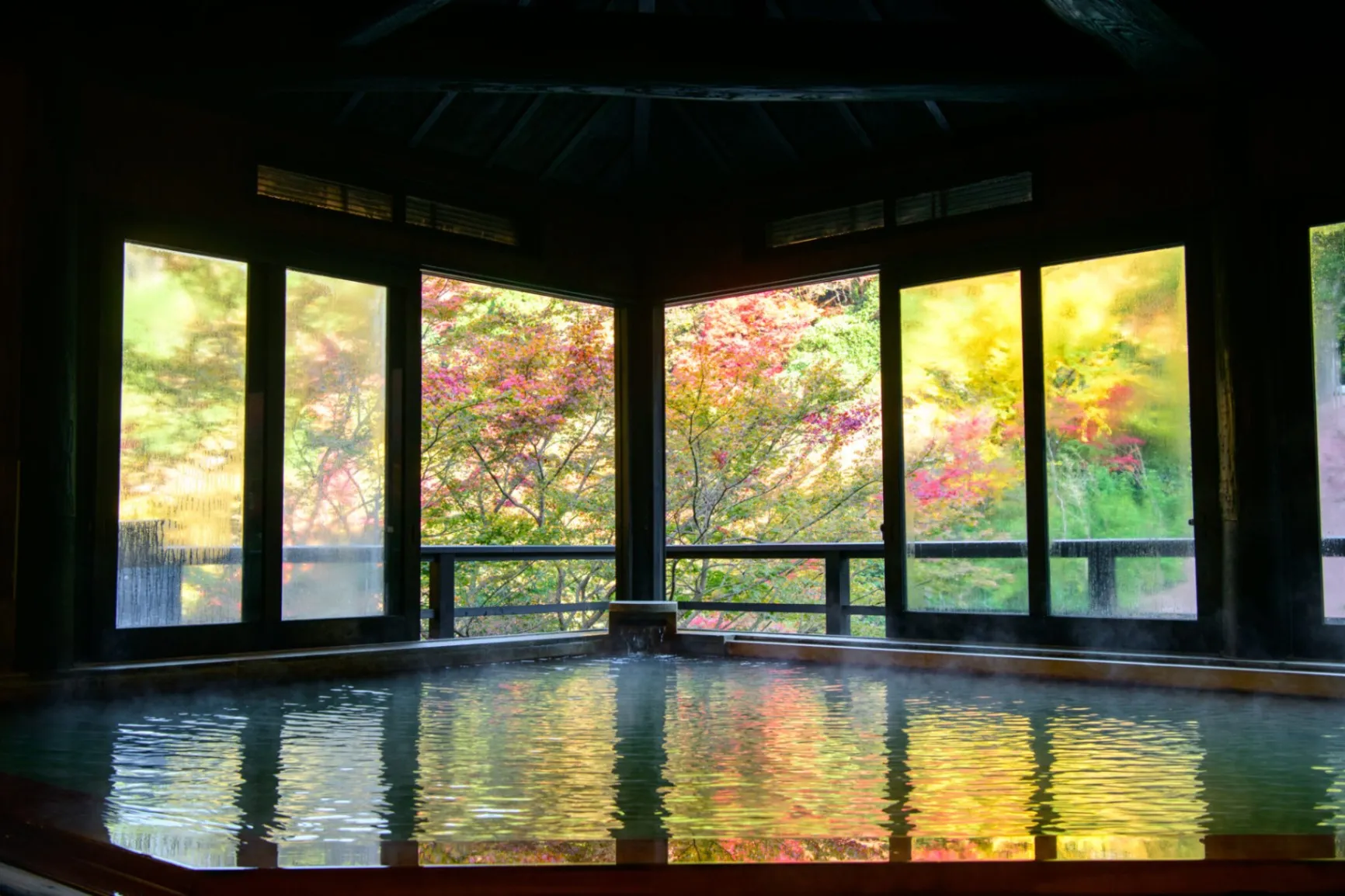
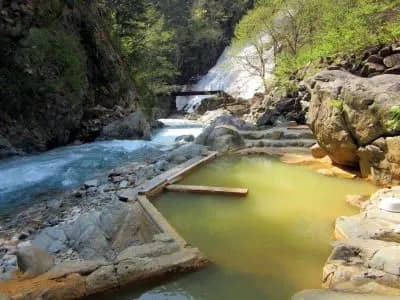
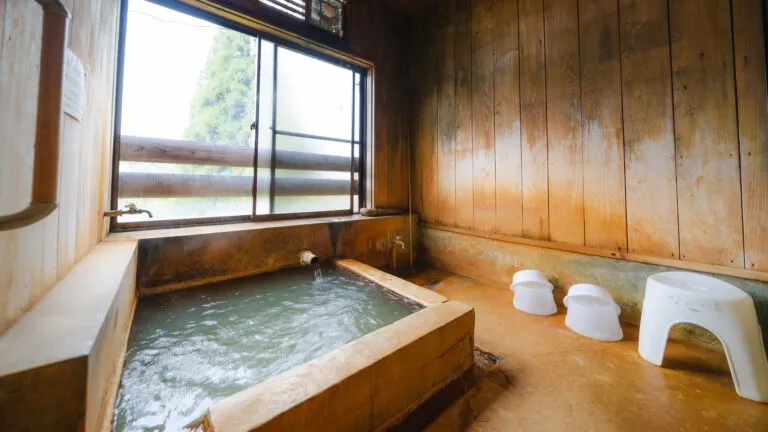
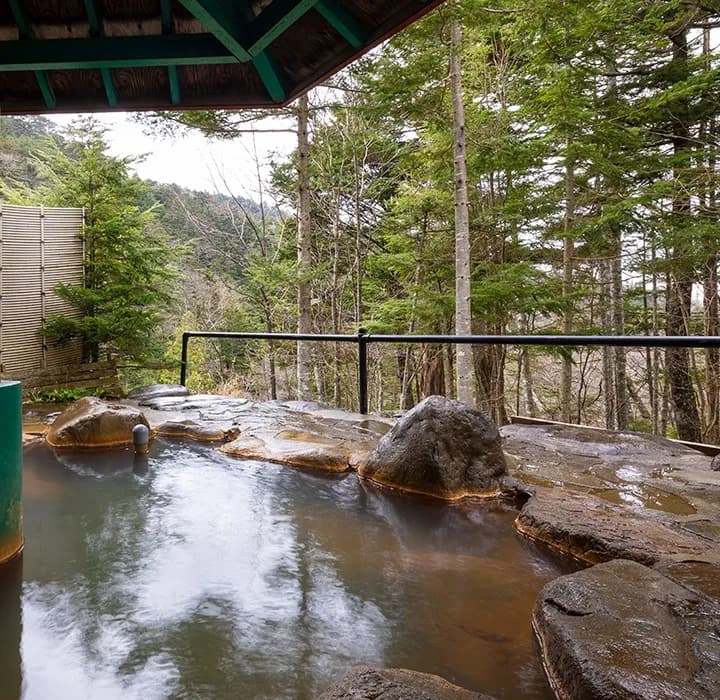
At the northern foot of Mount Eboshi on the southern outer rim of Mount Aso, deep in a narrow gorge carved by the Tarutama River, the day-use bathhouse Tarutama Onsen Takihiyori sits in quiet seclusion. The very name of the facility echoes Kinryu no Taki, the waterfall that crashes down some ten meters of lava rock directly in front of the building -- one of the most striking cascades on the Aso massif. The history of these waters reaches further back than many visitors realize: bathing here is said to have begun as early as the Tensho era (1573-1592), when a temple known as Kinryuzan Tarutama-ji stood on the site. The source was once buried by a landslide in the Edo Kyoho era, restored during the Bunka era (1804-1818), and in 1886 (Meiji 19) formally opened as Yamaguchi Ryokan. In the summer of 1907 (Meiji 40), five young poets -- Yosano Tekkan, Kitahara Hakushu, Kinoshita Mokutaro, Hirano Banri, and Yoshii Isamu -- stayed here during their famous Kyushu walking tour and later introduced the bath to the nation through their travelogue Gosoku no Kutsu (Five Pairs of Shoes). The poet Noguchi Ujo also signed the guest book in 1934. With more than two centuries of recorded history and a deep place in Japan's modern literary canon, Tarutama is, in every sense, a literary onsen tucked into the folds of the Aso mountains.
The waters are classified as a simple hot spring, gentle on the skin and neutral in pH, with a source temperature of roughly 52 degrees Celsius. Several wellheads are blended at the source, and the bath is filled with completely free-flowing water -- no added cold water, no reheating, no recirculation. The touch is silky and soft as one would expect from a neutral simple spring, with a faint hint of sulfur and a soft mineral note. For decades the inn operated as Tarutama Onsen Yamaguchi Ryokan, a member of the Japan Secret Hot Spring Preservation Society, until the 2016 Kumamoto Earthquake devastated both the main building and the access roads above the gorge. After five years of patient restoration, the site reopened on April 16, 2021 -- precisely five years after the main shock -- as the day-trip bathhouse Takihiyori. Remarkably, the spring source itself was protected through the disaster, and the same water once praised by literati now welcomes a new generation of bathers.
2. Daidokutsu no Yado Yurakutei (Oyano-machi, Kamiamakusa City)
引用:大洞窟の宿 湯楽亭
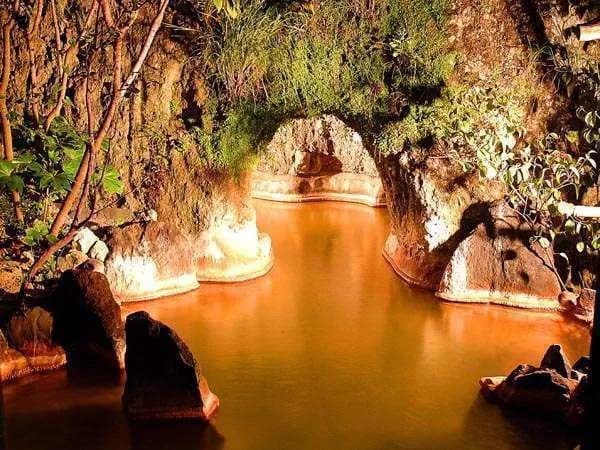
Crossing the Amakusa Five Bridges and reaching Oyano Island near the shore of Yumigahama Beach, a quiet inn of white-walled, two-story traditional kura architecture comes into view. Daidokutsu no Yado Yurakutei has been a family-run inn since its founding in 1968 and is a proud member of the Japan Secret Hot Spring Preservation Association. What stuns every visitor is the inn's signature feature: a 33-meter-long hand-carved cave bath, painstakingly excavated by the previous owner and his family of three over approximately seven years, one chisel-stroke at a time. The vision for the cave bath emerged after the 1996 discovery of the Akayu (Red Spring), and the entire passage was dug by family hands alone. Far from being theatrical commercial decor, this cave is the pure crystallization of devotion and labor, welcoming bathers to this day.
The greatest charm of Yurakutei is its possession of two distinct private spring sources — Shiroyu (White Spring) and Akayu (Red Spring) — each with markedly different characteristics. Shiroyu, drilled in 1977 at 33 degrees Celsius, is an alkaline simple spring with a pH of 8.0. Its softly textured, moderately warm water invites guests to linger and soak at length. Akayu, originally tapped in 1996, was damaged by the 2016 Kumamoto Earthquake but was magnificently revived as Shin-Akayu (New Red Spring) after a 1,000-meter borehole and two full years of major construction. The new spring emerges at about 50 degrees Celsius with a pH of 6.6 and is classified as a carbon-dioxide-rich sodium chloride and bicarbonate spring. Most remarkable is its bicarbonate content of 4,006 mg/kg — among the highest concentrations found anywhere in Japan — making the water cling to the skin in fine, fizzing bubbles. This rare natural carbonated water has earned Yurakutei a near-sacred reputation among hot spring enthusiasts.
In Manganji, Minami-Oguni, Aso, Kumamoto Prefecture — at the very heart of the Kurokawa Onsen village where the Tanohara River sings its quiet song — stands a single inn that holds an unusually deep wellspring of history. Founded in 1908 (Meiji 41), Yamanoyado Shinmeikan has watched over the spring waters of Kurokawa for well over a century, ranking among the most venerable houses of this fabled hot spring town. The inn was nurtured by the late third-generation proprietor Tetsuya Goto (who passed away in 2018), the visionary widely regarded as the architect of Kurokawa's renaissance. In 1986 he conceived the famous Nyuto Tegata bath pass system and pioneered the radical idea of treating the entire onsen village as a single inn — a philosophy that catapulted Kurokawa to nationwide fame. His legacy lives on in this house and continues to be cherished by hot spring devotees across Japan.
The true essence of Shinmeikan lies in its hand-carved cave bath, Ana-yu, a tunnel roughly 30 meters in length chiseled out of solid rock. Beginning at the age of 24, the third-generation proprietor took up a chisel and mallet and, stroke by patient stroke, hollowed out the cave over the course of about three and a half years — some accounts speak of an effort spanning ten years. Steam rises from the rock face and curls around lantern light deep within the cave, where the path branches and two stone tubs emerge softly from the gloom. Sliding into the water, one feels the cool breath of the stone meet the gentle embrace of the spring, opening onto a primal bathing experience known only to those who have ventured here. The inn's motto — "do not strain, do not add, do not slight; let nature's beauty remain itself" — is etched into every stroke of that cave wall.
4. Okuaso no Yado Yamanami (Tajiri, Ubuyama Village, Aso District / Ubuyama Onsen)
Tucked away in a quiet grove on the eastern outer rim of the Aso caldera in Ubuyama Village, Kumamoto Prefecture, Okuaso no Yado Yamanami is a small folk-style inn that feels like a visit to a rural grandparent''s home. The main building is a renovated traditional house more than 100 years old, blending rustic warmth with carefully chosen folk-craft furnishings. As a member of the prestigious Japan Secret Hot Springs Association (Nihon Hito wo Mamoru Kai), the inn offers just ten guest rooms and is known for cuisine featuring locally raised Aso akaushi beef and seasonal mountain ingredients, paired with a gentle, free-flowing private hot spring.
The hot spring at Yamanami is a private source called Ubuyama Onsen, drilled to a depth of about 1,000 meters in 2006 as part of a village revitalization initiative. The water is an alkaline simple hot spring with a pH of 9.1, emerging at 45.1 degrees Celsius at a rate of 53 liters per minute. The inn proudly serves the water completely untreated: no added water, no reheating, no recirculation, and no chlorination - a rare adherence to all four pristine standards under Japan''s Hot Spring Law Article 18. Although the water is colorless and nearly odorless, it has a noticeably silky texture and is widely praised for leaving the skin remarkably smooth, making it especially popular with female guests.
Hidden in the rolling hills of Yamaga City, Kumamoto, Hirayama Onsen has long been celebrated as one of Kyushu's finest beauty waters, a quiet rural hot spring village far from the crowds of better-known resorts. At the heart of this village stands Ryokan Yunokura, an intimate inn of just nineteen detached rooms, every one of them equipped with a private open-air bath fed by water that is neither diluted, heated, nor recirculated. Local tradition links the discovery of the spring to the era of the warrior lord Kato Kiyomasa, lending the inn an atmosphere where centuries of bathing culture meet contemporary comfort.
The water itself is a strongly alkaline simple sulfur spring of around pH 9.7, with a faint whiff of sulfur near the source and a remarkably silky, almost soapy feel against the skin. That signature slipperiness comes from the high alkalinity, which gently emulsifies surface oils and softens the cuticle, so bathers emerge with skin that feels noticeably smoother and more supple than before. It is no surprise that Yunokura draws regulars from across Kyushu who come specifically to soak in this so-called bihada no yu, the bath of beautiful skin.
Yunotsuru Onsen, located in the mountainous Yude district of Minamata City in Kumamoto Prefecture, is a venerable therapeutic bathing site with a legend dating back nearly 700 years to the late Kamakura period. According to local lore, refugees of the defeated Heike clan discovered the spring after observing a wounded crane heal itself in its waters. Asahisou, situated at the heart of this onsen village, is a traditional Japanese ryokan founded over 70 years ago and offers the famed waters of Yunotsuru, selected as one of Japan''s New 100 Famous Hot Springs, in 100% free-flowing form. Just 15 minutes by car from central Minamata yet feeling worlds away, this hidden valley along the Yude River preserves the gentle rhythms of Showa-era toji culture.
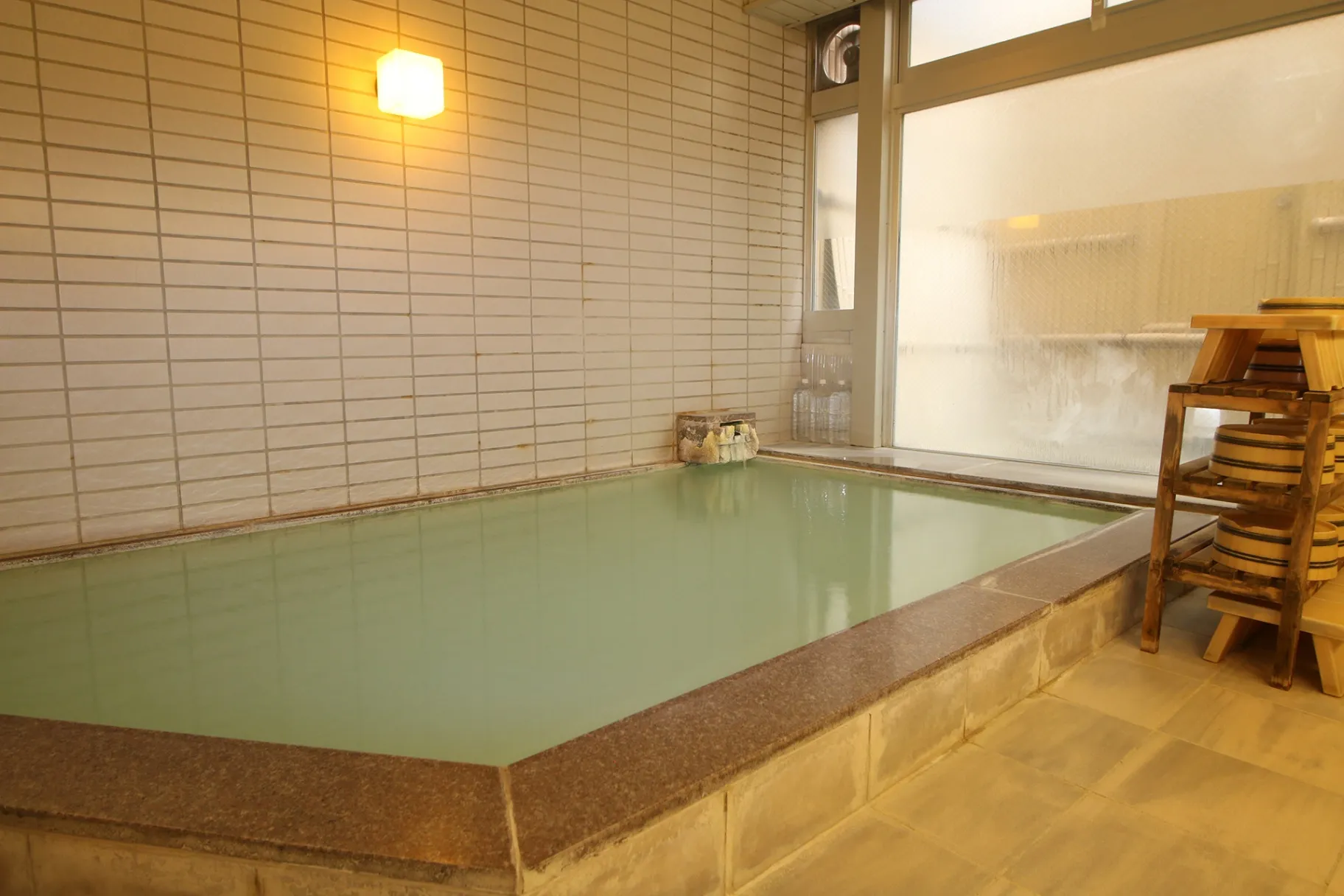
The waters here are an alkaline simple sulfur spring, colorless and clear with a faint sulfurous aroma. The mineral composition gives the water a remarkably soft, silky feel that envelops the skin, leaving it smooth and supple after bathing. Locals affectionately call it the beauty bath. All baths at Asahisou flow continuously with fresh water drawn directly from a private on-site source, requiring no recirculation, no chlorination, and no dilution. Long-stay guests still come for traditional toji therapy, seeking relief from neuralgia, muscle and joint pain, and chronic skin conditions in this pure, untreated spring water.
The inn features three distinct bathing experiences: a panoramic open-air bath overlooking the Yude River gorge, a simple yet evocative indoor stone bath, and a private rental bath available for 2,000 yen per hour.
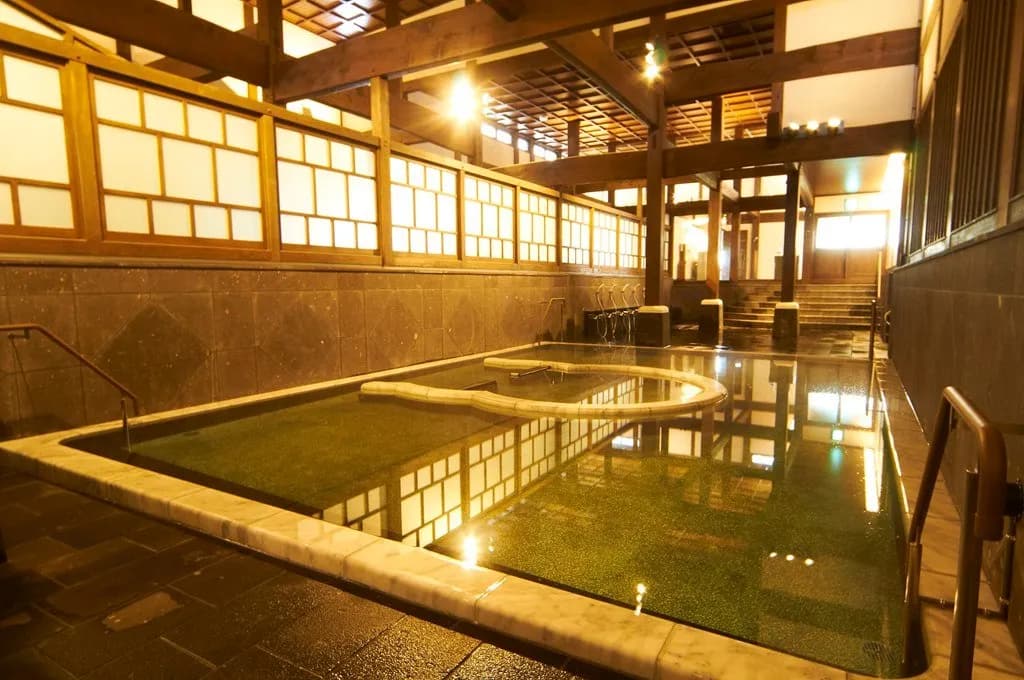
Standing in the heart of downtown Yamaga City, just a short walk from the historic Yachiyoza Theater, Yamaga Onsen Motoyu Sakurayu is the original source bath of Yamaga Onsen, a hot spring town whose origins are recorded as far back as the Heian period. In 1640, Hosokawa Tadatoshi, the first lord of the Higo Hosokawa domain, was so enamored with the waters of Yamaga that he established the site as a clan tea house, marking the founding of Sakurayu. Records in the Hosokawa domain archives even note that the legendary swordsman Miyamoto Musashi was invited to the completion ceremony, making this a historic stage where samurai culture and bathing tradition intertwined.
Though the original building was demolished in 1973, popular demand led to its faithful reconstruction in 2012 as the largest wooden hot spring structure in Kyushu, built entirely with traditional Japanese carpentry techniques. The dignified karahafu gabled entrance, white plastered walls, and beautifully exposed beams of cypress and cedar evoke the elegance of an Edo-era tea house, making the architecture itself a cultural treasure worth experiencing.
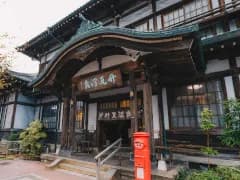
In Yatsushiro, Kumamoto Prefecture, at the very heart of the Hinagu Onsen village overlooking the Yatsushiro Sea (also known as the Shiranui Sea), stands a strikingly grand wooden three-story inn. Founded in 1910 (Meiji 43), Hinagu Onsen Kinparou has watched over one of Kyushu's most ancient hot springs — Hinagu Onsen itself, said to have been discovered in 1409 (Oei 16). During the Edo period the spring flourished as a domain-run bathhouse of the Hosokawa clan of Yatsushiro, and from the Meiji era onward it became famous as the inner sanctuary of Kyushu, a beloved healing retreat. The elegant name Kinparou, meaning Tower of Golden Waves, is drawn from the breathtaking sight seen from the inn's top floor: the surface of the Yatsushiro Sea catching the setting sun and shimmering into endless waves of gold.
The building, registered as a National Tangible Cultural Property in April 2009, is a refined embodiment of Meiji-era master carpentry in the sukiya style. Step inside and the polished sheen of the corridors, the delicate carvings of the ranma transoms, and the soft creak of timber underfoot quietly imprint nearly 120 years of history upon the visitor. Guest rooms encircle an inner garden, and seasonal light filters through their shoji screens with gentle grace, making it easy to understand why the wandering haiku poet Taneda Santoka so loved this place. Santoka described Hinagu in verse as a place of fine waters and fine people, and he is said to have returned again and again to soak in its baths. The scent of poetry and the scent of the hot spring drift together throughout the inn, slowly unraveling the tensions of every traveler.
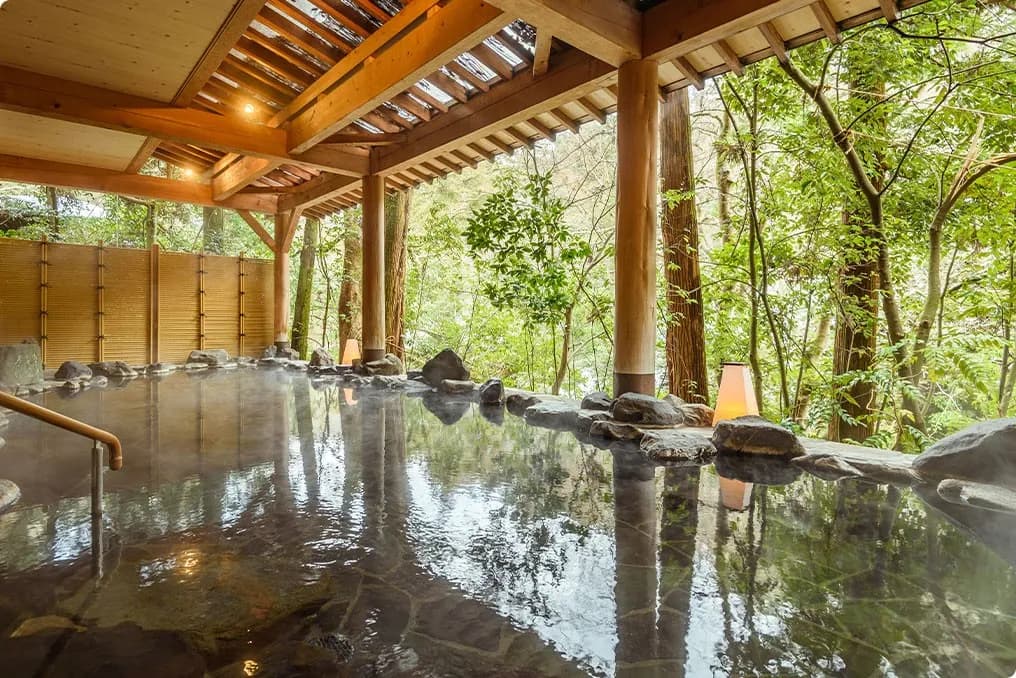
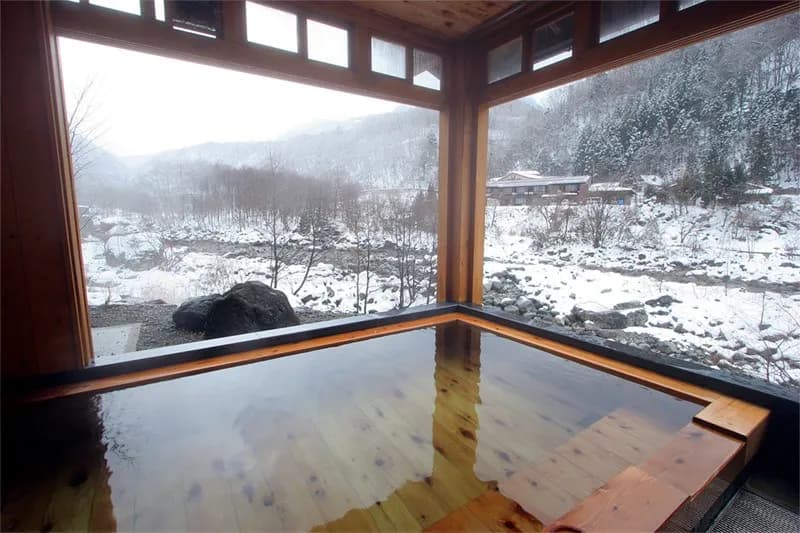
A small wooden inn at the heart of Tsuetate Onsen, one of Kyushu's most venerable hot springs, with a history said to span roughly 1,800 years. Legend tells that Empress Jingu bathed the infant Emperor Ojin in these waters, and that the Buddhist master Kobo Daishi (Kukai), while taking the waters, planted his walking staff in the ground — giving the village its name. The spring is a mildly alkaline sodium chloride water that gushes naturally at around 98 degrees Celsius. Rich in metasilicic acid, it carries a silky, almost slippery feel celebrated across Kyushu as a bihada no yu. Every bath at Fukumi is run as pure free-flowing source water with absolutely no added cold water and no reheating.
Of the inn's 14 rooms, 5 Higo Suite Rooms come with private open-air baths. The hot spring town itself is laced with steep stone steps and narrow lanes called sedoya, and the still-living tradition of mushi-yu steam baths makes the streetscape unlike any other. Overnight rates from about 14,325 yen per person with two meals (Higo Suite, two-person occupancy). Day bathing on inquiry. About 40 minutes from Hita IC by car. The Carp Streamer Festival from late March through early May, said to have originated in Tsuetate, is unmissable.
Rekishi-no-Yado Okyakuya stands in the heart of Kurokawa Onsen along the Tanoharu River in Minamioguni, Aso District, Kumamoto Prefecture, with a founding date of 1722 (Kyoho 7). With approximately 300 years of history, it is the oldest surviving inn in Kurokawa Onsen. During the Edo period, it served as an Okyakuya, an official guesthouse for the Higo Hosokawa clan tasked with protecting the domain border, hosting feudal lords, government officials, and samurai for lodging and therapeutic bathing. While the building has been renovated over the centuries, traces of its origins remain in the entrance, furnishings, and corridor design, conveying a tangible sense of historical weight.
The water is a sodium-chloride and sulfate spring, known for its smooth, gentle texture that soothes the skin. Drawn directly from the inn''s private source, it is served as true free-flowing onsen with no added water, no reheating, no recirculation, and no chlorination. The source temperature is about 78 degrees Celsius, so daily attentive temperature management by the inn''s bath keepers is essential.
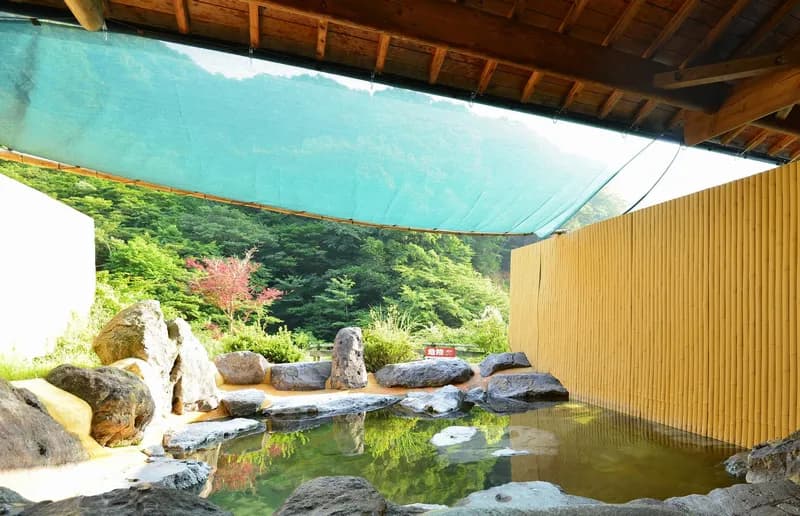
The bathing facilities include an indoor bath called Gozen-no-Yu, an open-air bath called Tenshi-no-Yu, and two private baths that overnight guests may use free of charge. The open-air bath is built in a rustic stone style, offering a luxurious moment to soak surrounded by Aso''s clear mountain air and the stillness of the valley. Day-trip bathing is also welcomed from 8:30 to 21:00 at an affordable 500 yen for adults, allowing visitors to experience an Edo-era hot spring inn without an overnight stay. Travelers can also use Kurokawa''s famous Nyuto Tegata wooden pass (1,500 yen) to bath-hop among three different inns including Okyakuya.
Summary — What to Know Before Soaking Across Kumamoto
Kumamoto's hot springs are best approached as five distinct clusters.
Kurokawa Onsen Area (Minamioguni): Two of the village's founding inns stand within easy walking distance of each other. Shinmeikan (founded 1908) preserves its hand-carved cave bath, and Okyakuya (founded 1722) preserves the dignity of the Edo period. Both charge 500 yen for day use, and combining them with the Nyuto Tegata wooden pass (1,500 yen for entry to three different baths over six months) yields a deep half-day immersion in Kurokawa's history and waters.
Aso Area (Minamiaso, Ubuyama, Oguni): Tarutama Onsen Takihiyori (Minamiaso), Okuaso no Yado Yamanami (Ubuyama Onsen), and Tsuetate Onsen Ryokan Fukumi (Oguni) are spread widely around the Aso caldera. Tarutama is the natural starting point from Kumamoto IC or Kumamoto Airport; Yamanami works as a midpoint approached from Yufuin IC; and Tsuetate is the gateway from Hita IC and Fukuoka. Linking all three by car, with the Yamanami Highway and the Milk Road as connecting routes, is the classic Aso onsen drive.
Yamaga Area: Hirayama Onsen Ryokan Yunokura (a strongly alkaline sulfur bath in a detached-room inn) and Yamaga Onsen Motoyu Sakurayu (a municipal public bathhouse housed in a wooden cultural treasure) are both reached within twenty minutes of Kikusui IC or Nankan IC. Yunokura offers the indulgence of a private rotenburo in every room; Sakurayu lets visitors soak in a Heian-era source for just 350 yen. Pair them with a stroll along the Buzen Kaido old highway, the historic Yachiyoza Theater, or the August Yamaga Lantern Festival.
Yatsushiro and Minamata Area: Hinagu Onsen Kinparou (Yatsushiro) and Yunotsuru Onsen Asahisou (Minamata) form the southern axis of the prefecture, well aligned with the Kyushu Shinkansen stops at Shin-Yatsushiro and Shin-Minamata. Kinparou rewards visitors with cultural-property architecture and the lingering footsteps of Santoka; Asahisou rewards them with a Heike legend and undiluted Showa-era toji atmosphere. The two-minute drive from Hinagu IC to Kinparou is among the easiest interchange-to-onsen connections anywhere in Kyushu.
Amakusa Area: Daidokutsu no Yado Yurakutei (Kamiamakusa) sits apart from every other cluster, and the drive across the Amakusa Five Bridges is a destination in itself. The combination of a 33-meter hand-carved cave bath and one of the highest natural bicarbonate concentrations in Japan is a once-in-a-lifetime pairing for serious onsen enthusiasts. About 40 minutes from Matsubase IC.
Practical advice: Kumamoto's finest baths are scattered through mountain valleys and across coastal islands, so a rental car offers by far the most flexibility. The Kurokawa, Tsuetate, Ubuyama and southern Aso routes are subject to snow and ice from December through March; snow tires or chains are essential. Several inns including Yurakutei, Asahisou and Kinparou suspend day-use bathing on busy days; always call ahead before visiting. Kurokawa's Nyuto Tegata wooden pass (1,500 yen, valid for six months) is exceptionally versatile and well worth picking up before bath-hopping between Shinmeikan, Okyakuya and a third inn of choice.
Seasonal notes: The high country around Kurokawa, Ubuyama and Oguni receives snow and ice in winter; allow extra travel time on the Yamanami Highway from December through March. Gorge-side facilities such as Tarutama and Tsuetate occasionally see road closures after summer downpours. Yunotsuru is at its most magical from late May to June (fireflies) and in November (peak autumn foliage); Aso is best in May for new greenery and October–November for color; and the silky touch of Hirayama's alkaline sulfur bath is most rewarding in the cool months from autumn into winter.
Suggested itineraries: (1) Day trip through Kurokawa's classics: Kumamoto IC → Shinmeikan → Okyakuya → a third bath via the Nyuto Tegata pass. (2) Two-day Aso traverse: Kumamoto Airport → Tarutama Onsen Takihiyori → Yamanami Highway → overnight at Okuaso no Yado Yamanami → next morning Tsuetate Onsen → Hita IC. (3) Two-day Higo beauty-water tour: Kikusui IC → Sakurayu → overnight at Ryokan Yunokura → Yamaga sightseeing → return. (4) Southern-Kyushu Shinkansen onsen run: Shin-Yatsushiro → day visit to Kinparou → Shin-Minamata → overnight at Asahisou. (5) Amakusa drive: Matsubase IC → Amakusa Five Bridges → day visit or overnight at Yurakutei → seafood lunch.
The information in this article is current as of the writing date. Prices, operating hours, and other details are subject to change. Please verify the latest information on the official websites of each facility or with local tourism associations.