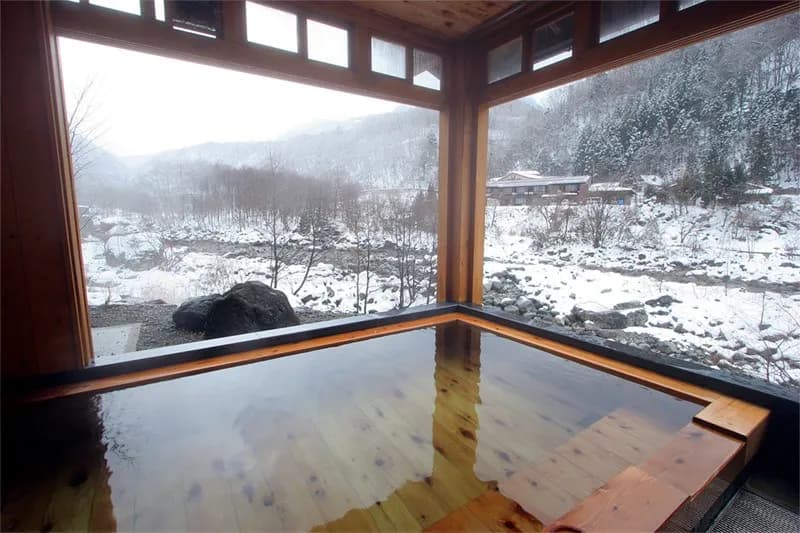
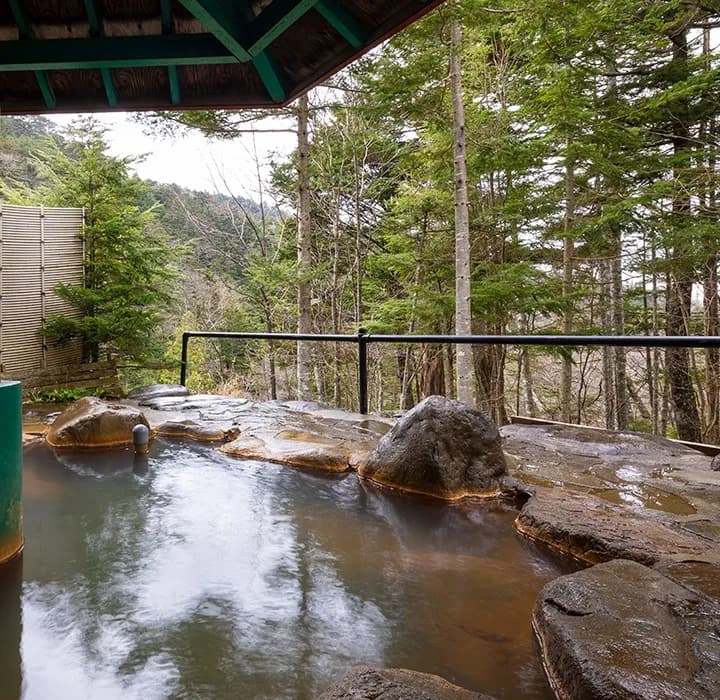
12 Hidden Hot Springs in Toyama: Into the Mountain Springs of the Tateyama Range and Kurobe
Most of Toyama's hot springs are cradled by two features: the Tateyama Range, whose peaks rise above 3,000 meters, and the Kurobe Gorge that cuts deep along its eastern flank. Land that climbs abruptly from sea level at Toyama Bay has left springs perched higher, and harder to reach, than almost anywhere else in Japan. You transfer to a cable car or a trolley train, sway across a reservoir by boat, or walk mountain trails for hours to arrive. When you talk about Toyama's secluded springs, the journey there is as much the point as the water itself.
The Kurobe Gorge holds inns scattered along the trolley line, and — beyond its terminus at Keyakidaira — mountain baths that only hikers can reach. From Unazuki you climb through Kuronagi and Kanetsuri; past Keyakidaira lie the sulfur-scented Babadani Onsen and, along the raging Kurobe River on the notorious "Shimo-no-Roka" trail, Asobara Onsen. None of them can be approached except by train or on your own two feet.
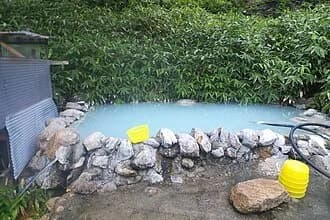
Turn to the Tateyama side and "clouds-top" baths gather around Murodo. There is Mikurigaike Onsen, known as the highest hot spring in Japan; Raichoso, with its clouded water above the Jigokudani valley; and a public lodge up on the Midagahara plateau. Deeper still, in the innermost folds of the Northern Alps near Kumonotaira, lies Takamagahara Onsen — often called "Japan's most remote hot spring," reachable only after several days in the mountains.
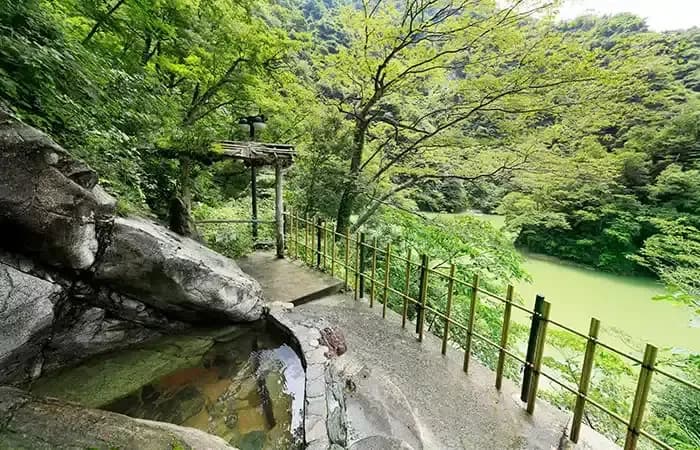
To the west, the Shokawa Gorge and the hills of Nanto hold springs of a different character: Omaki Onsen, which you can reach only by transferring to a boat, and a quiet inn tucked into the Toga valley. Toyama has few seaside springs, but for the sheer variety of its mountain baths it ranks among the best in the country.
Here we have selected 12 places, centered on inns where you can stay the night. The route runs from the depths of the Kurobe Gorge up to the clouds-top of Tateyama and Murodo, then west into the mountain gorges of Shokawa and Nanto. We begin with the secluded springs where you can stay over and soak.
1. Takamagahara Onsen (高天原温泉) — Toyama City

| Mon | Tue | Wed | Thu | Fri | Sat | Sun | Hol | |
|---|---|---|---|---|---|---|---|---|
| 00:00 - 24:00 | ◯ | ◯ | ◯ | ◯ | ◯ | ◯ | ◯ | ◯ |
2. Omaki Onsen (大牧温泉) — Nanto City
| Mon | Tue | Wed | Thu | Fri | Sat | Sun | Hol | |
|---|---|---|---|---|---|---|---|---|
| 15:00 - 11:00 | ◯ | ◯ | ◯ | ◯ | ◯ | ◯ | ◯ | ◯ |
3. Asobara Onsen (阿曽原温泉) — Kurobe City
| Mon | Tue | Wed | Thu | Fri | Sat | Sun | Hol | |
|---|---|---|---|---|---|---|---|---|
| 00:00 - 24:00 | ◯ | ◯ | ◯ | ◯ | ◯ | ◯ | ◯ | ◯ |
4. Babadani Onsen (祖母谷温泉) — Kurobe City
| Mon | Tue | Wed | Thu | Fri | Sat | Sun | Hol | |
|---|---|---|---|---|---|---|---|---|
| 10:00 - 16:00 | ◯ | ◯ | ◯ | ◯ | ◯ | ◯ | ◯ | ◯ |
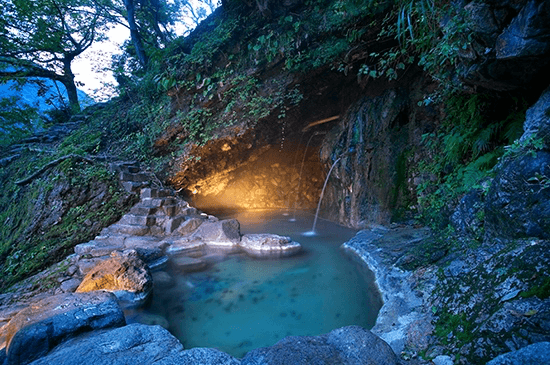
5. Ogawa Onsen (小川温泉) — Asahi Town, Shimoniikawa District
| Mon | Tue | Wed | Thu | Fri | Sat | Sun | Hol | |
|---|---|---|---|---|---|---|---|---|
| 10:00 - 14:00 | ◯ | ◯ | ◯ | ◯ | ◯ | ◯ | ◯ | ◯ |
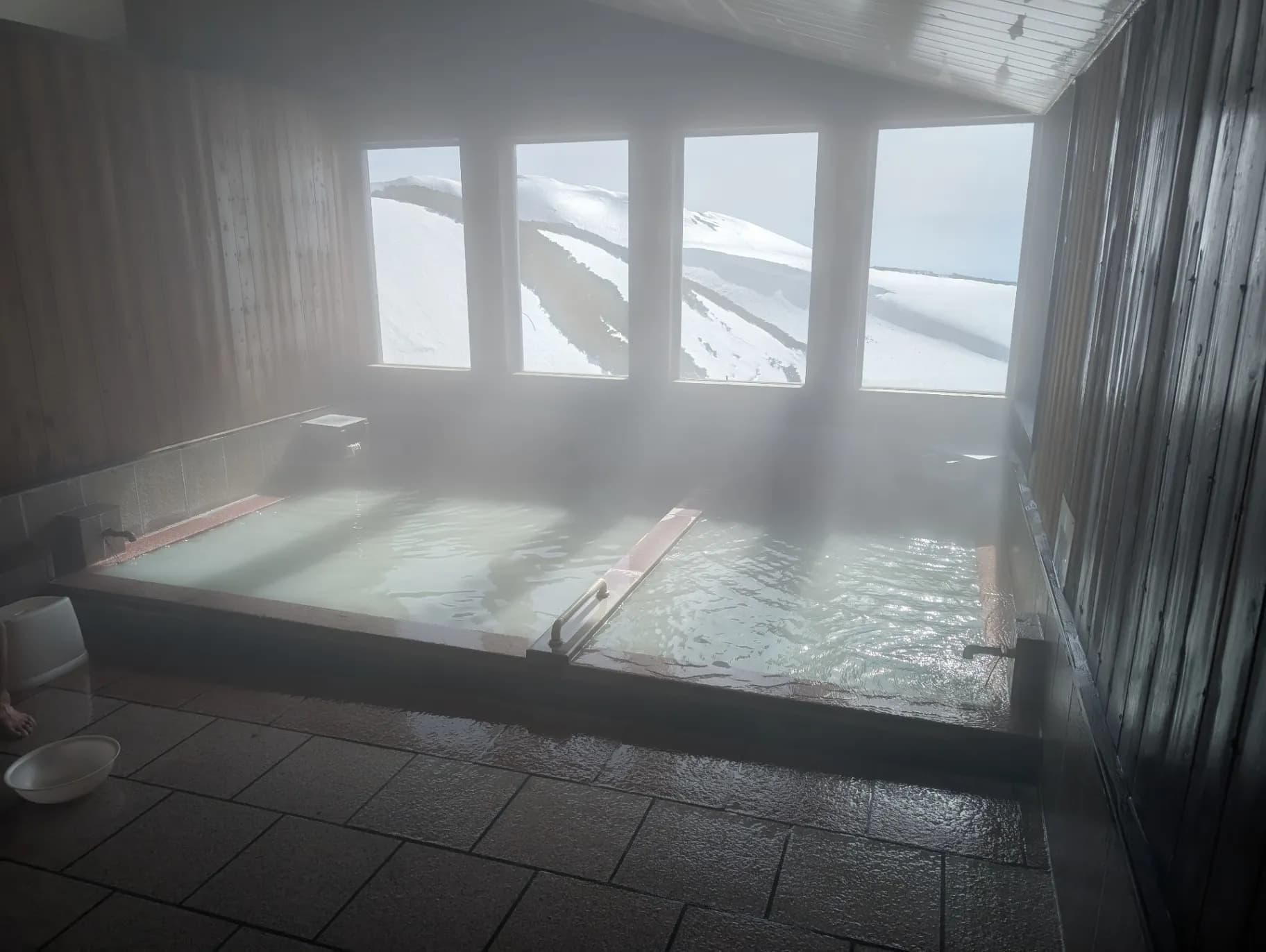
6. Mikurigaike Onsen (みくりが池温泉) — Tateyama Town, Nakaniikawa District
| Mon | Tue | Wed | Thu | Fri | Sat | Sun | Hol | |
|---|---|---|---|---|---|---|---|---|
| 09:00 - 16:00 | ◯ | ◯ | ◯ | ◯ | ◯ | ◯ | ◯ | ◯ |
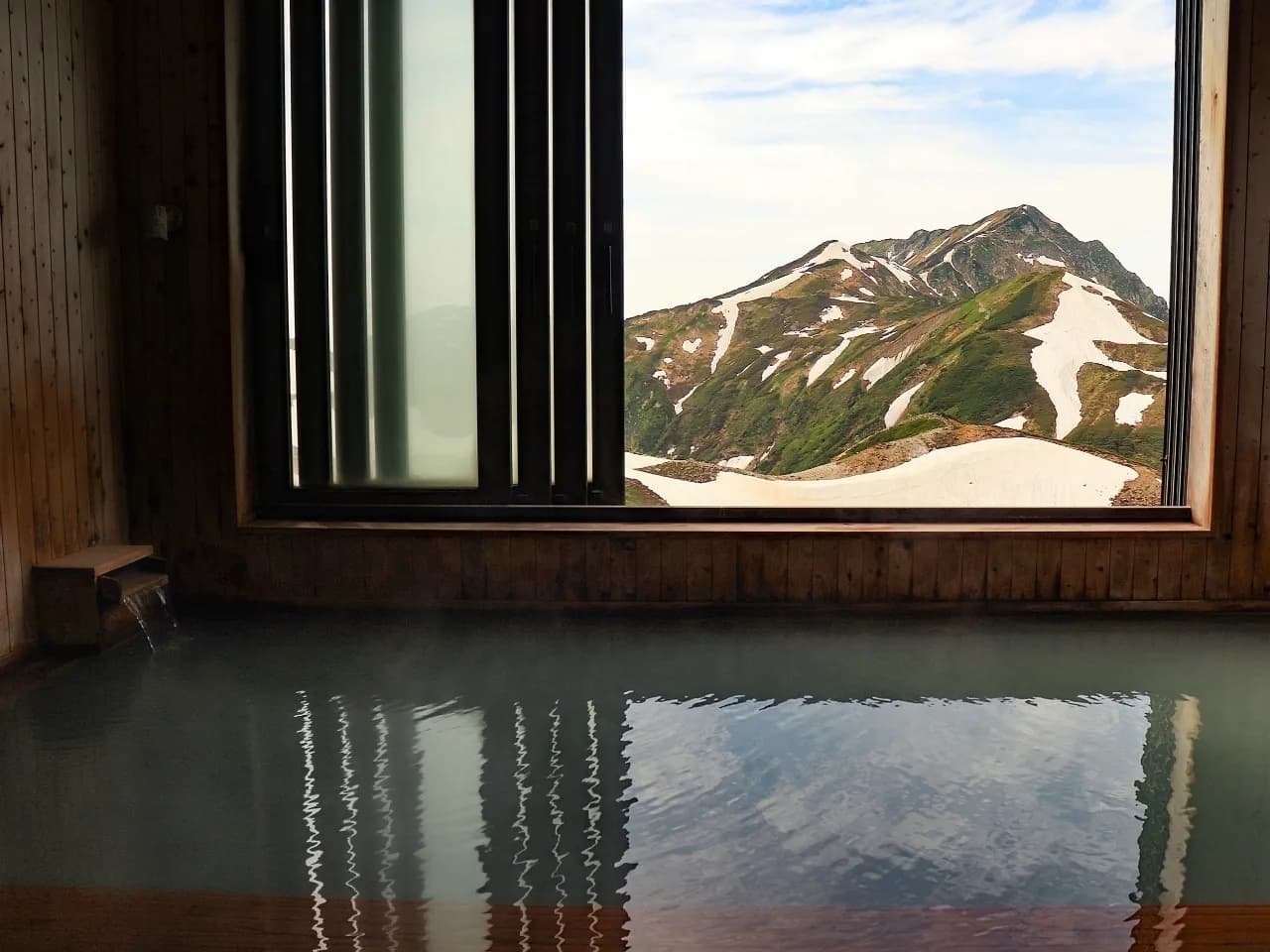
7. Raichoso (雷鳥荘) — Tateyama Town, Nakaniikawa District
| Mon | Tue | Wed | Thu | Fri | Sat | Sun | Hol | |
|---|---|---|---|---|---|---|---|---|
| 11:00 - 20:00 | ◯ | ◯ | ◯ | ◯ | ◯ | ◯ | ◯ | ◯ |
8. Kokumin-shukusha Tembo Tateyamaso (国民宿舎 天望立山荘) — Tateyama Town, Nakaniikawa District
| Mon | Tue | Wed | Thu | Fri | Sat | Sun | Hol | |
|---|---|---|---|---|---|---|---|---|
| 15:00 - 22:00 | ◯ | ◯ | ◯ | ◯ | ◯ | ◯ | ◯ | ◯ |
9. Kitaharaso (北原荘) — Toga, Nanto City
| Mon | Tue | Wed | Thu | Fri | Sat | Sun | Hol | |
|---|---|---|---|---|---|---|---|---|
| 10:00 - 16:00 | ◯ | × | ◯ | 13:00-16:00 | ◯ | ◯ | ◯ | ◯ |
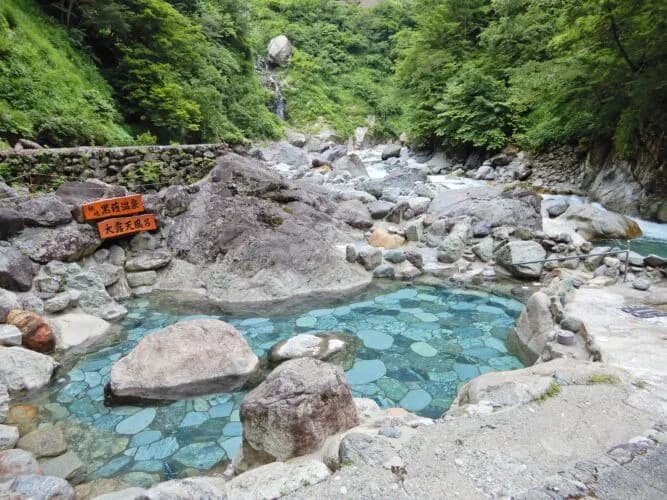
10. Kuronagi Onsen (黒薙温泉) — Kurobe City
| Mon | Tue | Wed | Thu | Fri | Sat | Sun | Hol | |
|---|---|---|---|---|---|---|---|---|
| 09:00 - 16:00 | ◯ | ◯ | ◯ | ◯ | ◯ | ◯ | ◯ | ◯ |
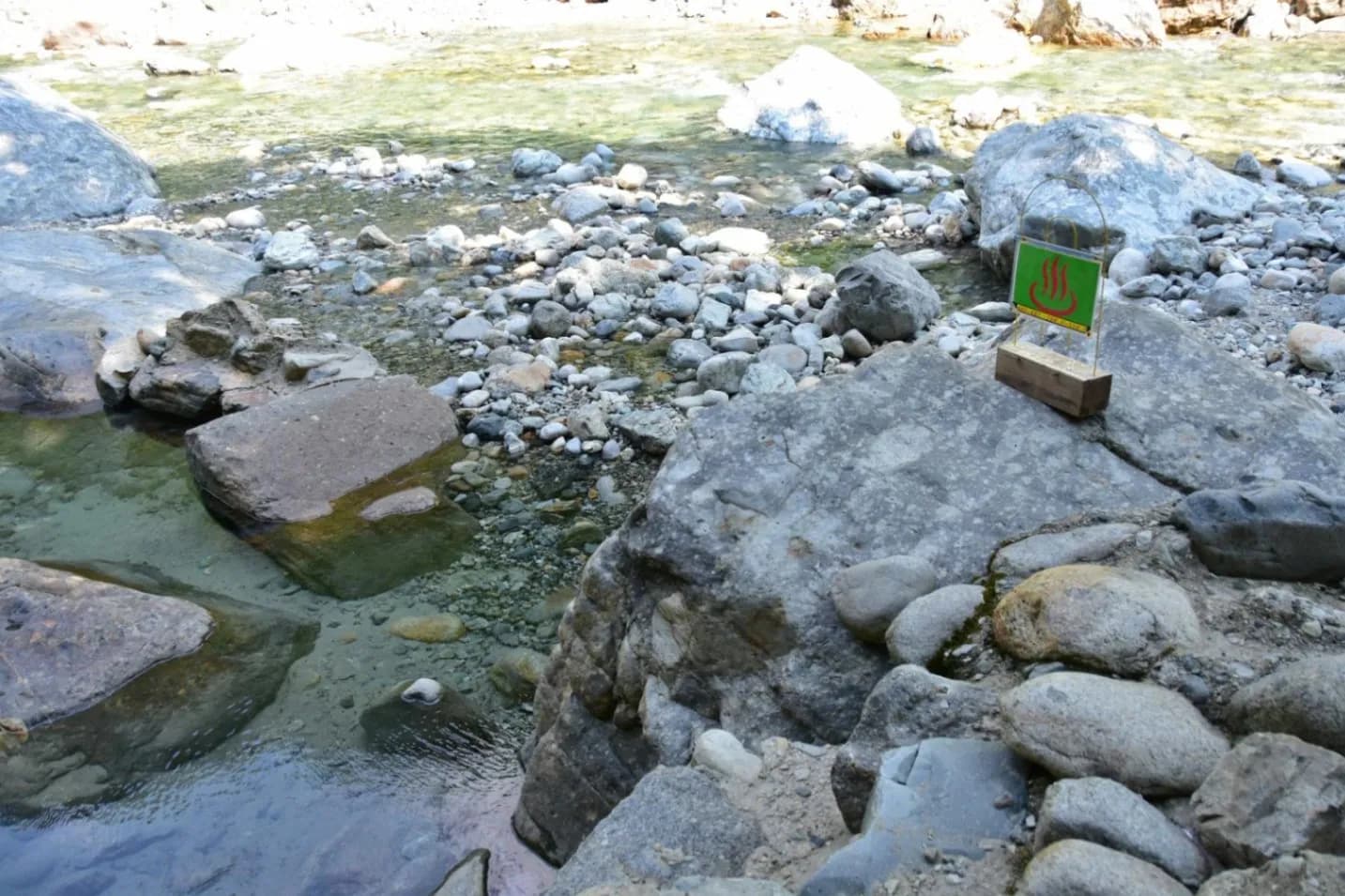
11. Kanetsuri Onsen (鐘釣温泉) — Kurobe City
| Mon | Tue | Wed | Thu | Fri | Sat | Sun | Hol | |
|---|---|---|---|---|---|---|---|---|
| 08:30 - 16:00 | ◯ | ◯ | ◯ | ◯ | ◯ | ◯ | ◯ | ◯ |
12. Unazuki Onsen (宇奈月温泉) — Kurobe City
| Mon | Tue | Wed | Thu | Fri | Sat | Sun | Hol | |
|---|---|---|---|---|---|---|---|---|
| 09:00 - 22:00 | ◯ | ◯ | ◯ | ◯ | ◯ | ◯ | ◯ | ◯ |
Before You Go: Planning a Trip Through Toyama's Hidden Springs
Toyama's secluded springs fall into four groupings — the Kurobe Gorge, the clouds-top of Tateyama and Murodo, the village springs of the eastern prefecture, and the mountain gorges of Shokawa and Nanto. Sorting them this way makes planning far easier, because each area has an entirely different character of access.
[Kurobe Gorge] Unazuki Onsen is the gateway, and from it the Kurobe Gorge Railway's trolley train climbs the valley. Unazuki is a hot-spring town of simple-thermal (tanjun) inns, convenient as a base for touring the gorge. Along the line are two single inns: Kuronagi Onsen, reached by a mountain path down from the station, and Kanetsuri Onsen, known for its riverside open-air bath. Both offer lodging, but their season is limited. From Keyakidaira, the line's terminus, a further walk leads to Babadani Onsen, where sulfur and simple-thermal waters rise. And along the Kurobe River, midway on the advanced "Shimo-no-Roka" mountain trail, stands Asobara Onsen. Its open-air bath is famous for the gorge views, but reaching it demands real climbing gear and experience. For both Babadani and Asobara, always confirm the opening period and trail conditions in advance.
[Tateyama and Murodo, the clouds-top] Around Murodo on the Tateyama Kurobe Alpine Route, springs gather near 2,400 meters. Mikurigaike Onsen is known as the highest-altitude hot-spring inn in Japan, with acidic and simple-thermal waters. Raichoso, overlooking the Jigokudani valley, is prized for clouded water mingling iron-bearing, sulfate, and chloride springs. The Kokumin-shukusha Tembo Tateyamaso, a public lodge on the Midagahara plateau, is a simple-thermal inn and a base for those walking the mountains. These Murodo and Midagahara inns are reached by transferring between the Alpine Route's transport, so the operating season (roughly spring to late autumn) and the day's service status come first. Deeper still, in the innermost part of the Northern Alps, lies Takamagahara Onsen. This sulfur spring is called "Japan's most remote hot spring," reached only on foot from the nearest mountain hut, with a round trip of several days. Understand that it is a bath for fit, experienced hikers.
[Village springs of eastern Toyama] Ogawa Onsen in Asahi Town is a single-inn spring with sodium-bicarbonate/chloride water. Though set among the hills, it is easier to reach by car than the trekking springs of the Kurobe Gorge, and welcomes both overnight guests and day bathers — a good choice for tasting Toyama's mountain water more casually.
[Mountain gorges of Shokawa and Nanto] In the Shokawa Gorge to the west lies Omaki Onsen, reachable only by boat. It is a single inn standing across a dammed lake that you cross by sightseeing vessel, with sodium/calcium-chloride/sulfate water; here the means of arrival is itself the highlight, and it ranks among Toyama's signature secluded springs. Kitaharaso in Toga, Nanto City, is a quiet inn of alkaline simple-thermal water. Set in a mountain village close to the Gokayama World Heritage site, it offers a soak far from the crowds, in touch with the life of the hills.
Take care when moving between areas. The Kurobe Gorge, Tateyama–Murodo, and the Shokawa Gorge all lie within the same Toyama Prefecture, yet are separated by mountains and set far apart. The high-mountain baths in particular — Murodo, Takamagahara, Asobara, Babadani — depend on the operating periods of the Alpine Route and the trolley line and on trail openings, and are inaccessible in winter. Before visiting, confirm not only each facility's official information but also the latest transport-service and trail conditions. For springs at altitude or requiring a hike, plan with ample margin for weather and for your own fitness and equipment.
The information in this article (admission fees, business hours, water-quality data, access, etc.) is based on details available at the time of research. Errors or changes may have occurred; please confirm the latest information with each facility's official website or the local tourism association.