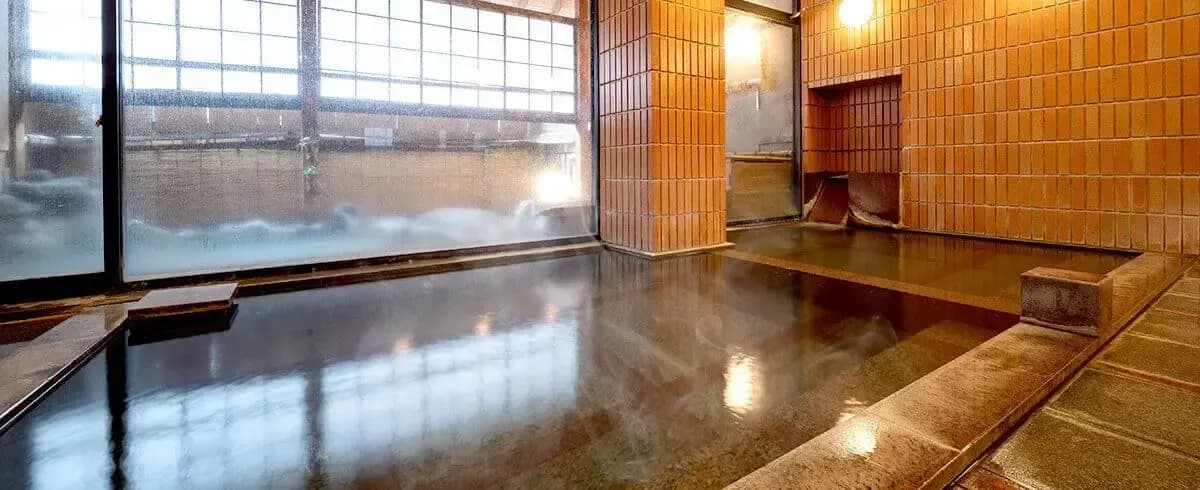
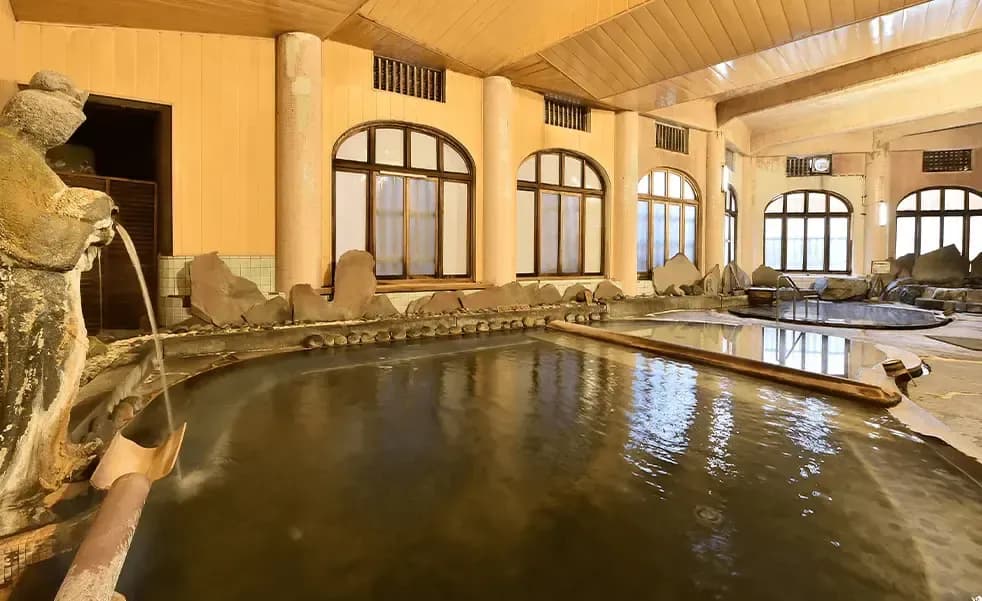
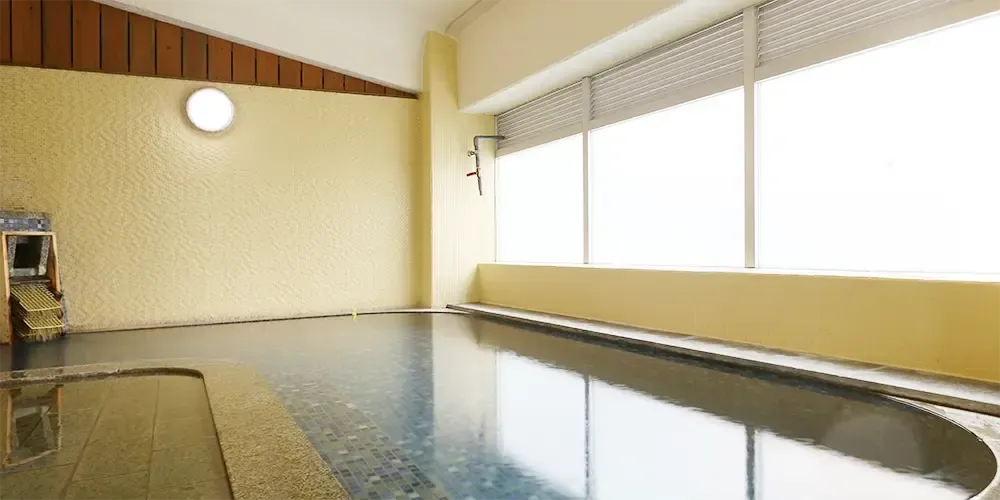
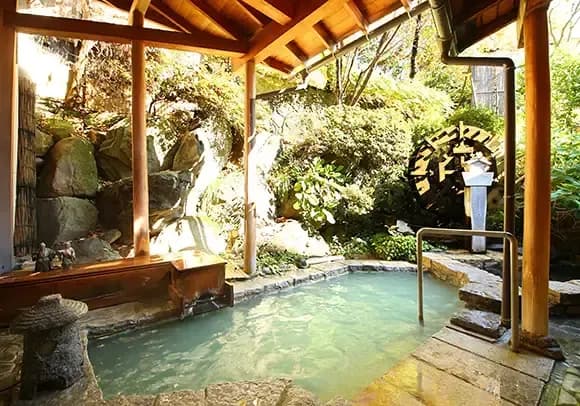
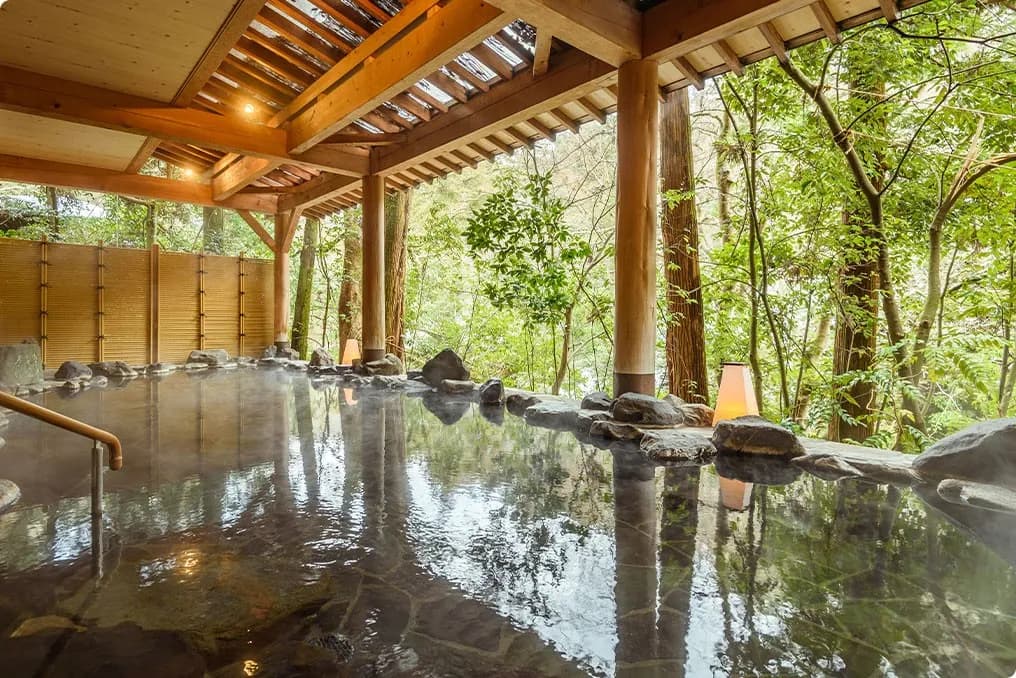
Mie Prefecture is best known for the Grand Shrine of Ise and the ria coastline of Ago Bay, but stretching from the Suzuka Mountains in the north to the deep Kumano wilderness in the south, the prefecture harbors a remarkably diverse collection of hot springs. Among them is Sakakibara Onsen, one of Japan's Three Famous Springs immortalized by Sei Shonagon in her Heian-period masterpiece The Pillow Book; the 1,300-year-old Yunoyama Onsen at the foot of Mount Gozaisho; a secluded spring in the Oku-Kumano mountains reached by riding a trolley through an abandoned mine tunnel; and a 9-room hideaway inn nestled in an Ise-Shima fishing village. Water types range from alkaline simple springs to sodium bicarbonate and chloride varieties, and the prevalence of skin-beautifying waters is a defining trait of Mie's hot spring landscape. We present 10 carefully selected destinations, each with its own distinctive character.
1. Sakakibara Onsen Yumoto Sakakibarakan (Sakakibara-cho, Tsu City)
Sakakibara Onsen holds the distinction of being one of Japan's Three Famous Springs, praised by the Heian-period literary figure Sei Shonagon in The Pillow Book alongside Arima and Tamatsukuri under the name Nanakuri no Yu. The spring's history stretches back over a millennium. By the Nara period it had already become a sacred site for yugori — the purification ritual performed before making pilgrimage to the Grand Shrine of Ise. The construction of Iyama Shrine in 927 CE further elevated its spiritual status, earning it the names Kami no Yu (Divine Spring) and Miya no Yu (Shrine Spring). Yumoto Sakakibarakan has safeguarded its private source springs for approximately a century within this storied village.
The water is classified as an alkaline simple hot spring with a pH of 9.5, placing it among the most alkaline springs in all of Japan. The source temperature is a gentle 31.2 degrees Celsius, producing colorless, transparent water in which sodium bicarbonate softly dissolves dead skin cells while sodium ions form a soap-like film across the skin. This dual action produces the silky smooth sensation that has earned Sakakibara its nationwide reputation as a premier beauty spring. Yumoto Sakakibarakan is the only facility in Sakakibara Onsen to use 100 percent in-house source water, extending even to the faucets and showers in the washing areas. Two sources deliver a combined output of 410 liters per minute.
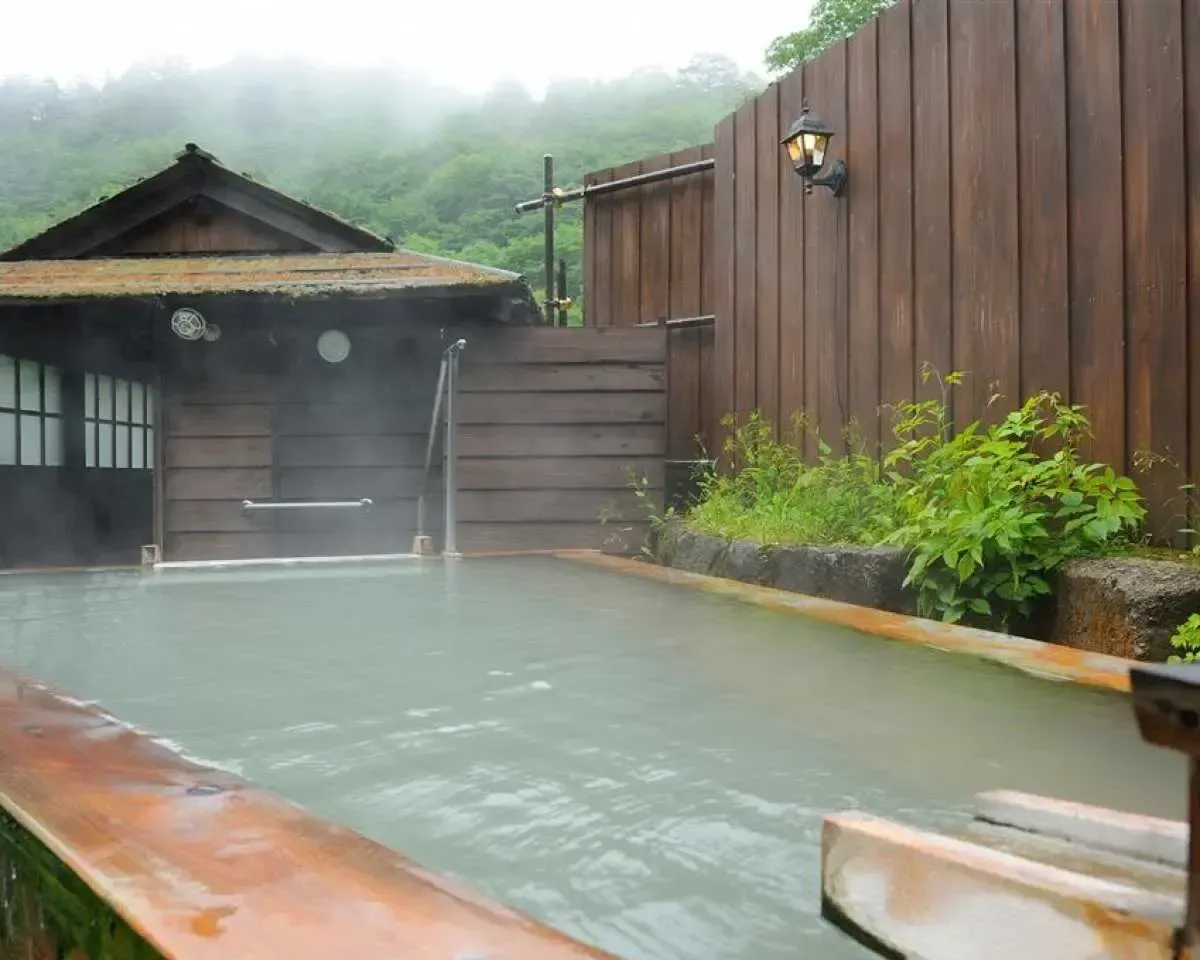
The inn houses seven distinct bathing facilities. The main bath Maromi no Yu alternates daily between men and women in two designs, and the open-air baths Osome and Tamenosuke likewise alternate daily. A dedicated free-flowing bath delivers the 31.2-degree source water completely unheated. Private panoramic open-air baths called Amatsuki no Yu are also available. The day-trip bathing facility Yu no Sho welcomes visitors for 1,000 yen per adult (hand towel included) from 9:00 to 20:00. About 15 to 20 minutes by car from Hisai IC on the Ise Expressway via National Route 165.
2. Yunoyama Onsen Kotobukitei (Komono-cho, Mie District)
Yunoyama Onsen is an ancient hot spring with over 1,300 years of history, said to have been discovered in 718 by the monk Jokun following a divine revelation from the Healing Buddha. The legend of wounded deer healing themselves in its waters gave rise to the charming nickname Shika no Yu (Deer Spring). Kotobukitei stands within this storied district as a distinguished ryokan founded in 1911, having welcomed numerous literary figures over more than a century of operation. Most notably, the great novelist Naoya Shiga stayed at the inn and penned his short story Komono during his visit.
The water is drawn from the Yunoyama Onsen Omoteyu source, classified as a simple hot spring of the hypotonic mildly alkaline low-temperature variety. This alkaline radium spring is rich in emanation, and its colorless, transparent water contains sodium ions, bicarbonate ions, and fluoride ions. Therapeutic benefits include relief from fatigue, neuralgia, skin ailments, and arteriosclerosis. Widely regarded as a beautifying spring, its soft, gentle quality sits comfortably on the skin and is suitable for extended soaking without risk of bathing fatigue.
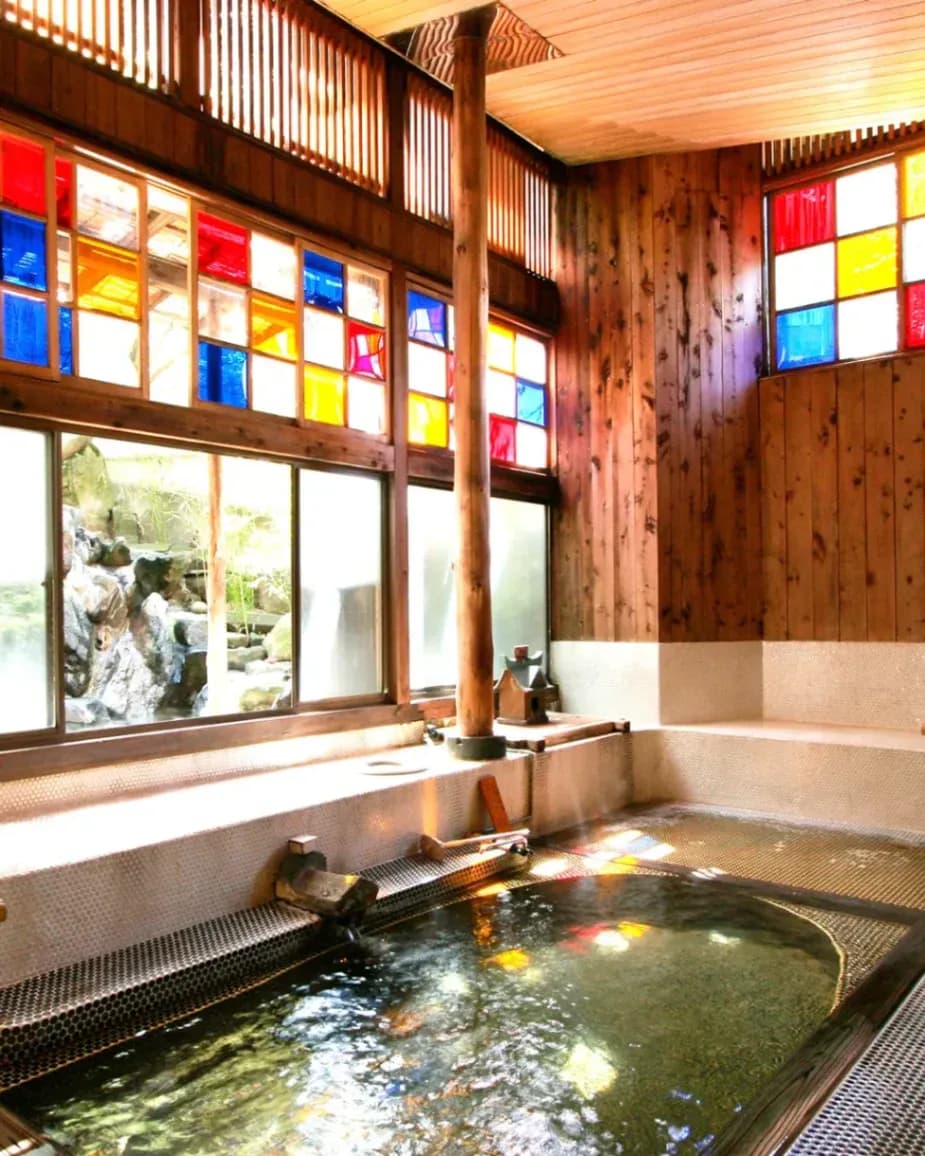
The open-air bath commands sweeping views of Mount Gozaisho and its aerial ropeway. Six private baths are distributed between two pavilions: Rinsenkan houses three stone baths, while Keiseikaku features cypress wood and Shigaraki-ware ceramic tubs. The annex Suiunkaku, constructed in 1929, holds designation as a Nationally Registered Tangible Cultural Property, preserving beams hewn from century-old trees and rare Colburn process glass panes. Day-trip bathing costs 1,000 yen for adults and 500 yen for children, from 11:30 to 15:00. About 10 minutes by car from Komono IC on the Shin-Meishin Expressway.
3. Yunoyama Onsen Green Hotel (Komono-cho, Mie District)
Green Hotel stands out among Yunoyama Onsen's establishments as the district's premier free-flowing source spring inn, possessing two private hot spring sources on its grounds with the greatest water output in all of Yunoyama. Drawn from 1,300 meters underground, the source produces an abundant flow of 550 liters per minute. The hotel maintains a luxurious free-flowing system where undiluted 100 percent source water continuously overflows from the baths.
The water is classified as an alkaline simple hot spring with the main No. 3 source registering 45.2 degrees Celsius and a pH of 8.6. The radon-containing alkaline water has earned a stellar reputation as a beauty spring, and bathers can feel their skin becoming noticeably smoother after immersion. Therapeutic indications include rheumatoid arthritis, lower back pain, neuralgia, frozen shoulder, cold sensitivity, and fatigue recovery.
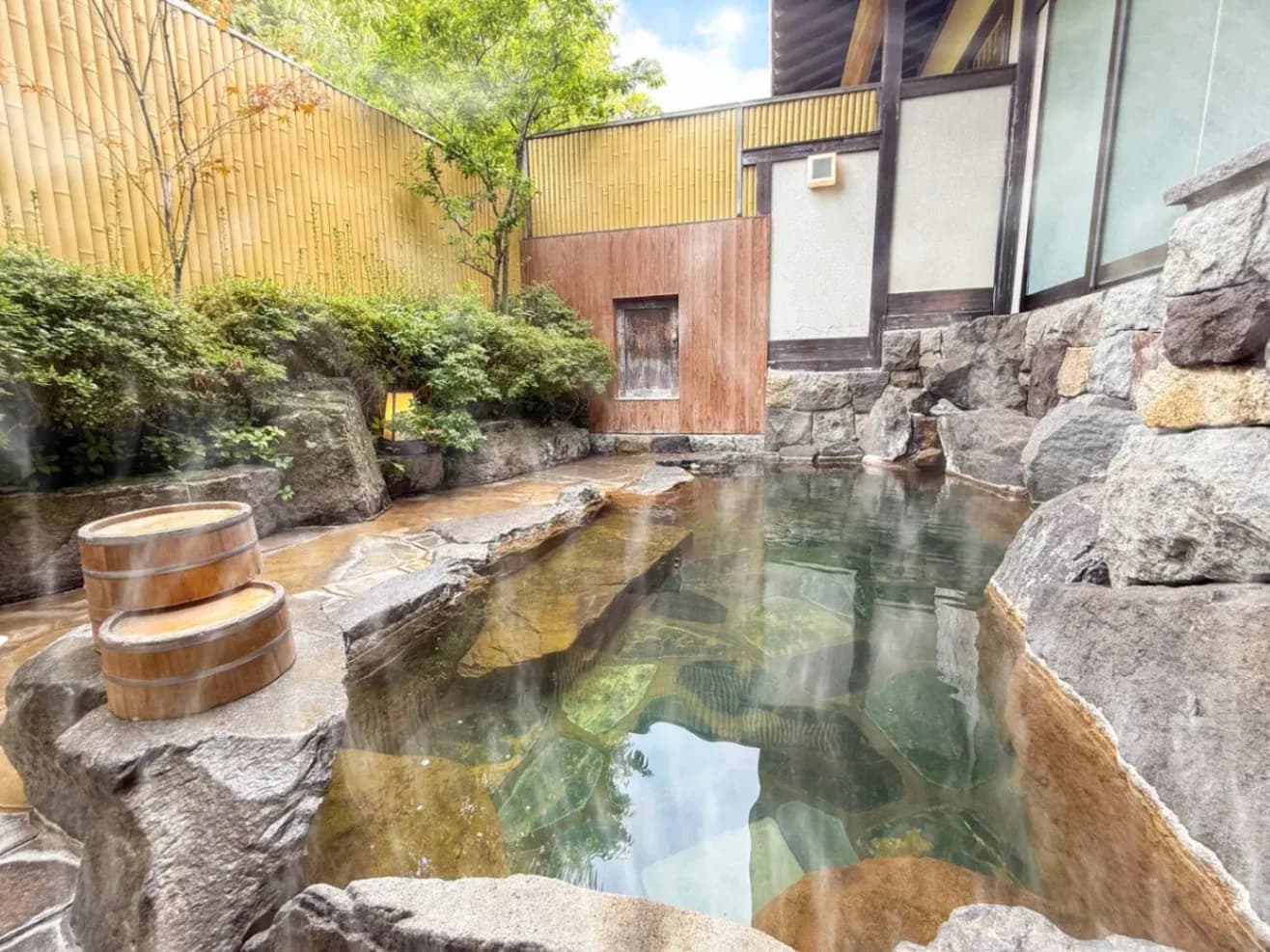
The bathing facilities include large open-air baths, indoor large baths, garden open-air baths, and dedicated source spring baths for both men and women. The open-air bath Nagomi no Yu allows guests to soak in jade-colored source water while gazing at Mount Gozaisho. Drinkable spring water is also available. The grounds additionally feature tennis courts and barbecue facilities. Day-trip bathing costs 800 yen on weekdays and 900 yen on weekends for adults, from 10:00 to 19:30. Closed on Fridays for day-trip bathing. Just 5 minutes by car from Komono IC on the Shin-Meishin Expressway.
4. AQUA x IGNIS Kataoka Onsen (Komono-cho, Mie District)
AQUA x IGNIS Kataoka Onsen is a unique hot spring resort that opened in 2012, transforming a former local bathhouse on the verge of closure into an entirely new concept blending healing and gastronomy. The sprawling 49,000-square-meter grounds house establishments by some of Japan's most celebrated culinary masters: patissier Hironobu Tsujiguchi, Italian master chef Masayuki Okuda, and Japanese cuisine virtuoso Masahiro Kasahara.
The crown jewel is the natural hot spring water from 1,200 meters underground, delivered as 100 percent free-flowing source water with absolutely no dilution, heating, or circulation. The water is classified as alkaline simple hot spring with a pH of 8.5, a source temperature of 45.2 degrees Celsius, and a remarkably generous flow rate of 780 liters per minute. The silky-smooth water carries a delicate sulfur fragrance and is celebrated as a beauty bath for its pore-cleansing and skin-refreshing properties.
The indoor bath features a striking mono-pitched Japanese cypress ceiling, while the outdoor bamboo grove bath is surrounded by a verdant bamboo forest that sways gently in the breeze. Day-trip bathing is remarkably affordable at 600 yen on weekdays and 800 yen on weekends, with generous hours from 6:00 AM to midnight, open every day of the year. Just 5 minutes from Komono IC on the Shin-Meishin Expressway.
5. Akame Onsen Kakure no Yu Taisenkaku (Nabari City)
Taisenkaku is a venerable hot spring inn at the entrance of the Akame Valley, originally established in the early Meiji era as a teahouse serving pilgrims visiting the Akame 48 Waterfalls. During the Showa era, the proprietors drilled 1,000 meters underground to tap a hot spring, and the inn has since been cherished under the name Kakure no Yu — Hidden Hot Spring. The valley is widely known as a training ground for Iga ninja, and the Akame 48 Waterfalls, designated among Japan's Top 100 Waterfalls and Top 100 Forest Bathing Sites, lie just a 5-minute walk away. The inn has been featured in the Michelin Guide.
The water is classified as an alkaline simple hot spring with a pH of 8.3. Although the source temperature of 18.0 degrees Celsius requires heating, the water is rich in metaboric acid and fluoride ions, earning official certification under Japan's Therapeutic Hot Spring Standards as a skin-beautifying spring. The distinctly smooth and moisturizing texture provides therapeutic benefits for neuralgia, muscle pain, joint pain, chronic digestive disorders, cold sensitivity, and fatigue recovery.
The bathing facilities are designed with creative touches befitting the land of ninja. Two main bathhouses alternate between men and women daily. Outdoor baths include Hanzo no Yu for men and Kagero no Yu for women. Private open-air baths accommodate intimate and family-sized groups. Cuisine highlights Iga beef and other local ingredients in kaiseki course meals. Day-trip bathing costs 1,200 yen for adults (face towel included), reception from 10:30 to 14:00. About 40 minutes by car from Meihan National Route Ueno IC.
6. Hinotani Onsen Misugi Resort (Misugi-cho, Tsu City)
Hinotani Onsen is a hot spring nestled within Misugi Resort, a comprehensive leisure facility set deep in the mountains of Misugi-cho, Tsu City. The area occupies a corner of Muro-Akame-Aoyama Quasi-National Park, and the evocative name Hinotani — meaning Fire Valley — derives from the local topography. As one of the springs constituting the Naka-Ise Onsen District, it has long been cherished by hot spring enthusiasts in Mie Prefecture.
The water is classified as a sodium bicarbonate spring with a pH of 8.6. The source temperature is 17.5 degrees Celsius, making it a cold mineral spring heated before use. Despite this, the characteristic skin-beautifying properties of sodium bicarbonate water are fully preserved, gently dissolving dead skin cells and drawing impurities from the pores. Therapeutic benefits include relief from muscle pain, neuralgia, joint pain, poor circulation, digestive disorders, and chronic skin conditions.
Four indoor baths showcase different materials and aesthetics: a fragrant cypress bath, a volcanic rock bath, and an Iga-yaki pottery tub crafted in the traditional ceramic style of neighboring Iga. The large open-air bath offers mountain scenery immersion. Perhaps the most distinctive offering is the beer bath, created in collaboration with the on-site Hinotani Beer brewery. Day-trip bathing is 1,200 yen for adults, from 11:00 to 21:00. About 40 minutes by car from Hisai IC on the Ise Expressway.
7. Kahadakyo Onsen Iitaka no Yu (Iitaka-cho, Matsusaka City)
Iitaka no Yu is a day-trip natural hot spring housed within Michi-no-Eki (roadside station) Iitaka-eki, registered in 1993 as the very first Michi-no-Eki in Mie Prefecture. The hot spring facility was added in 2004, taking full advantage of its superb location overlooking the clear waters of the Kushida River and the magnificent scenery of Kahadakyo Gorge.
The spring water is classified as a carbon dioxide-containing sodium chloride and bicarbonate cold mineral spring with a source temperature of 20.3 degrees Celsius and a pH of 6.5. As a cold mineral spring, the water is heated for bathing, but its carbon dioxide content ensures a lasting warming sensation deep in the body long after leaving the bath. Therapeutic benefits include relief from high blood pressure, arteriosclerosis, neuralgia, joint pain, cold sensitivity, and skin ailments.
The facility's greatest attraction is its remarkable collection of 18 tubs spanning 11 different bathing styles. Indoor options include a main bath, kettle baths, a steam box, and an herbal bath. Outdoors, guests find a rock bath, a wooden barrel bath, and a waterfall shower. The Akayuwa no Yu and Tsubone no Yu wings alternate between men and women on odd and even days. Admission is a reasonable 870 yen for adults. The roadside station also houses a restaurant and local specialty shop. About 40 minutes by car from Matsusaka IC. Closed every Wednesday.
8. Yunokuchi Onsen (Kiwa-cho, Kumano City)
Yunokuchi Onsen is a secluded hot spring nestled deep in a mountain valley along the Kitayama River in Kiwa-cho, Kumano City. Its origins date back approximately 700 years to the Nanbokucho period, when the spring was discovered during gold mining operations ordered by Emperor Go-Daigo. Designated as a National Health Resort Hot Spring by Japan's Ministry of the Environment, the source dried up in the early Showa era but was spectacularly revived in 1979 after a boring survey following the mine's closure rediscovered it at a depth of 1,300 meters.
The water is classified as sodium-calcium chloride spring with a source temperature of 44.7 degrees Celsius and an extraordinary flow rate of 1,120 liters per minute. The facility maintains a completely free-flowing source water system with absolutely no dilution or artificial heating, and every bath is drained and thoroughly cleaned daily. As a chloride spring, it offers excellent heat retention, keeping the body warm long after bathing.
Renovated in 2015, the bathing facility makes generous use of local Kumano cedar and features indoor baths, outdoor baths, standing baths, lying baths, half-body baths, and private rental baths. One of the most distinctive attractions is the trolley train connecting this hot spring to Iruka Onsen Hotel Seiryuso. This narrow-gauge train runs through actual tunnels of a former copper mine, delivering passengers to the hidden spring after a memorable 10-minute ride. Day-trip bathing costs 600 yen for adults and 300 yen for children, from 9:00 to 21:00. About 40 minutes by car from Kumano City via National Routes 42 and 311.
9. Iruka Onsen Hotel Seiryuso (Kiwa-cho, Kumano City)
Iruka Onsen Hotel Seiryuso is a hot spring lodge perched on an elevated bank along the Kitayama River, overlooking the scenic Dorokyo Gorge downstream. Kiwa Town boasts a mining history spanning over 1,200 years, and the region's hot spring culture is deeply intertwined with this heritage. Iruka Onsen emerged in 1997 as the town's second hot spring source, and in June 2024 the facility switched to a newly drilled source well.
The water is classified as an alkaline simple hot spring with a source temperature of 43.2 degrees Celsius and an abundant flow rate of 300 to 320 liters per minute. Colorless and transparent with a faint hydrogen sulfide scent, the water is celebrated as a beautifying spring. Therapeutic indications include neuralgia, muscle pain, joint pain, poor circulation, fatigue recovery, autonomic nervous system instability, and insomnia.
The crowning attraction is the open-air bath Yasuragi no Yu, which commands panoramic views over the Kitayama River. All 27 guest rooms were renovated in 2016 with barrier-free accessibility. The restaurant Toran serves kaiseki cuisine featuring Kumano free-range chicken and local citrus. A joint bathing pass with Yunokuchi Onsen (1,100 yen) allows visitors to enjoy two distinct hot spring experiences. Day-trip bathing is available from 700 yen on weekdays and 1,000 yen on weekends, 12:00 to 21:00. About 30 minutes by car from JR Kumano Station.
10. Neboya Shima Bettei (Ago-cho, Shima City)
Neboya Shima Bettei is a tranquil 9-room hot spring inn tucked away in a fishing village in Shima City, whose name translates to "sleeping in" — a fitting concept for a place dedicated to unhurried relaxation. The property's own natural source, Shimanokuni Onsen Asanebo no Yu (Morning Sleeper Spring), produces an impressive 100 tons of mineral water daily. Following a grand reopening in September 2024, seven of the nine rooms now feature private open-air hot spring baths.
The water is classified as a sodium chloride and bicarbonate cold mineral spring with a neutral pH of 7.4. While the source temperature of 18.6 degrees Celsius necessitates heating, the water is remarkably rich in bicarbonate ions, producing a soft bathing experience that leaves the skin silky smooth and deeply moisturized. The spring is widely praised as a beautifying water with therapeutic benefits including relief from neuralgia, muscle pain, joint pain, and general fatigue.
Five distinctive private baths offer varied experiences: a natural rock open-air setting, an intimate round ceramic tub, a fragrant cypress bath overlooking a tsuboniwa garden, and two larger family baths. The expansive lawn garden provides ideal stargazing under the clear Ise-Shima skies. Dining centers on kaiseki cuisine featuring the freshest local seafood. Day-trip bathing is available on a 50-minute private bath basis at 2,200 yen for two guests between 12:00 and 17:00, subject to advance inquiry. About 15 minutes by taxi from Kintetsu Ugata Station, with complimentary shuttle service by prior arrangement.
Practical Guide — What to Know Before Exploring Mie's Hot Springs
Mie Prefecture's hot springs can be efficiently explored across four distinct areas.
Yunoyama Onsen Area (Northern Mie): Kotobukitei, Green Hotel, and AQUA x IGNIS Kataoka Onsen are all clustered in the Yunoyama Onsen district of Komono Town, within 5 to 10 minutes of Komono IC on the Shin-Meishin Expressway. An ideal day trip from Nagoya might begin with an early morning soak and artisan pastries at AQUA x IGNIS, continue with Green Hotel's free-flowing source spring at midday, and conclude with an afternoon visit to Kotobukitei's culturally significant Suiunkaku annex. Pairing any of these with a ride on the Mount Gozaisho Ropeway is highly recommended, particularly during the autumn foliage season from late October through mid-November.
Central Mie and Iga Area: Sakakibara Onsen, Misugi Resort, and Taisenkaku are spread across the mountainous interior from Tsu to Nabari. Sakakibara Onsen is conveniently reached in about 20 minutes from Hisai IC, and the experience of performing the ancient yugori purification ritual before visiting the Grand Shrine of Ise is highly recommended. Misugi Resort is accessible on foot from JR Meisho Line Ise-Yachi Station (15 minutes), though the train runs only about once every two hours — checking the timetable in advance is essential. Taisenkaku pairs beautifully with a visit to the Akame 48 Waterfalls, especially during spring and autumn.
Oku-Kumano Area (Southern Mie): Yunokuchi Onsen and Hotel Seiryuso sit along the Kitayama River in Kiwa Town and are connected by the mine trolley. Using the joint bathing pass (1,100 yen) to enjoy both springs is a must. Iitaka no Yu makes for a rewarding stop along National Route 166 from Matsusaka. The Oku-Kumano area is rich with attractions including the UNESCO World Heritage Kumano Kodo, Maruyama Senmaida terraced rice paddies, and Dorokyo Gorge, warranting at least a two- to three-day itinerary. JR Kumano Station serves as the base, but bus service is limited, making a rental car strongly advisable.
Ise-Shima Area: Neboya Shima Bettei is a hidden gem about 15 minutes by taxi from Kintetsu Ugata Station, ideal for combining with a visit to the Grand Shrine of Ise and the ria coastline of Ago Bay. With only 9 rooms, early booking during peak seasons is essential.
Seasonal considerations: the Yunoyama Onsen area receives snow in winter, requiring snow tires. The Oku-Kumano area's National Route 311 may be closed during typhoon season (August through October), so checking road conditions beforehand is prudent. Several facilities have limited day-trip bathing hours — Taisenkaku accepts visitors only until 14:00 and Kotobukitei until 15:00 — so confirming schedules before visiting is always wise.
The information in this article (admission fees, operating hours, water quality data, etc.) is based on research conducted at the time of writing. Details may have changed or contain errors. Please verify the latest information on each facility's official website or through the local tourism association.