17 Best Hidden & Notable Hot Springs in Shimane Prefecture — Ancient Waters and Volcanic Springs in the Land of Myths
Shimane Prefecture, best known as the mythological heartland of Japan and home to the grand Izumo Taisha shrine, harbors beneath its surface a remarkably diverse collection of hot springs. The Izumo no Kuni Fudoki, compiled in 733 AD, records several thermal waters in the region, confirming that people have been bathing in these springs for over 1,300 years. The volcanic activity of Mount Sanbe has produced iron-rich and carbonated springs boasting the largest total flow rate in the Chugoku region. Chihara Onsen, where carbon dioxide bubbles rise directly through the wooden floorboards beneath bathers' feet, has been voted Japan's number one rustic hot spring. Springs with pH 9.9 beauty water, a UNESCO World Heritage hot spring town, a mineral spring with the world's highest recorded radon content, a solitary inn fed by a geyser — no two springs in Shimane are alike. Here, we present 17 carefully selected destinations, each with its own distinctive character.
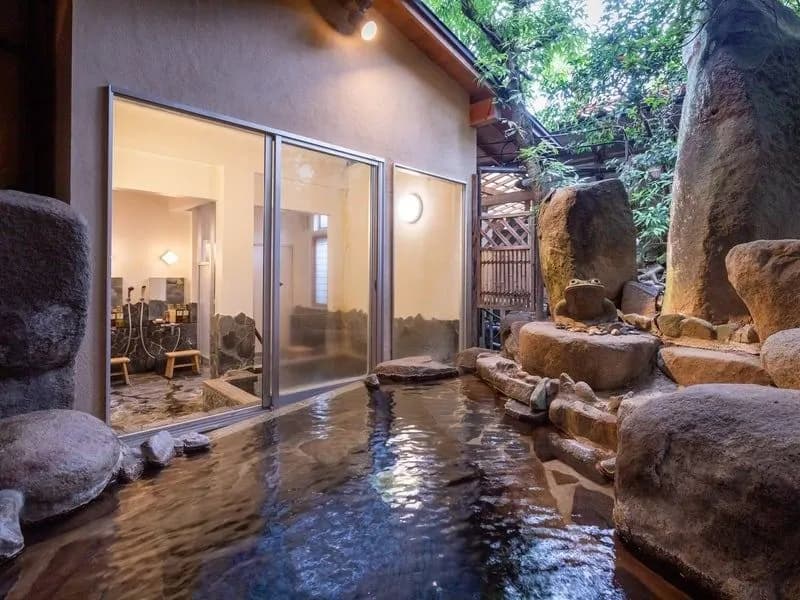
1. Ushio Onsen Ushioso (Unnan City)
Nestled quietly in the mountains of Daito Town, Unnan City, Shimane Prefecture, Ushio Onsen is an ancient hot spring whose history stretches back approximately 1,300 years to its earliest mention in the Izumo no Kuni Fudoki, compiled in 733 AD. The chronicle records a hot spring existing in the river of Suga village, and the waters have been cherished by local people since antiquity. During the Edo period, Matsudaira Fumai, the seventh lord of the Matsue Domain and a renowned patron of the arts, visited for therapeutic bathing — cementing the spring's reputation as the inner retreat of Matsue. Ushioso is one of the few member inns of the Association to Preserve Japan's Hidden Hot Springs in the entire Chugoku region, recognized by hot spring connoisseurs nationwide as a genuine hidden gem of Oku-Izumo.
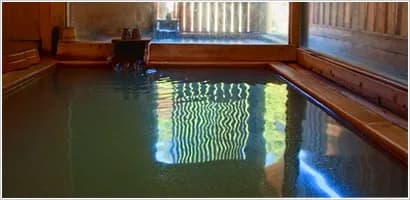
The spring water is classified as sodium sulfate-chloride hot spring with a source temperature of 45.9 degrees Celsius. The original source, which once flowed from a riverbed, eventually dried up, but a new source was drilled in 2005 and put into service from 2006. The water is strikingly transparent — so clear that the bottom of the bath is fully visible. Despite its light, refreshing feel on the skin, the minerals leave the skin notably moisturized after bathing. The spring is credited with therapeutic benefits for neuralgia, rheumatism, gout, skin conditions, and cold sensitivity. The private bath offers the special luxury of pure free-flowing source water untouched by circulation systems.
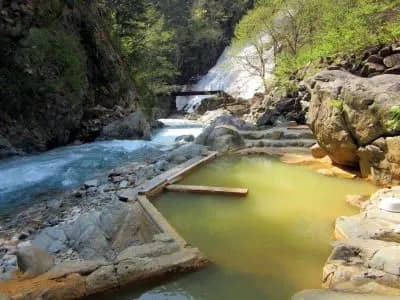
Chihara Onsen is a historic therapeutic bathing facility quietly tucked away in a deep mountain valley in Misato Town, Ochi District, Shimane Prefecture. Records dating back to 1885 (Meiji 18) document the establishment of this hot spring lodge at the southern foot of Mount Sanbe, along a narrow gorge carved by a tributary of the Gonokawa River. Until the early 1980s, the facility was exclusively reserved for therapeutic bathing and closed to general visitors. Locally revered for its special efficacy in treating cuts, burns, and skin ailments, the spring has been passed down through generations, with villagers maintaining the custom of bathing at seasonal turning points such as Setsubun and Doyo no Ushi no Hi. It has even been voted number one in Japan's ranking of rustic hot springs, earning passionate devotion from secret hot spring enthusiasts across the country.
The greatest allure of Chihara Onsen lies in its extraordinarily rare ashimoto yushutsu gensen — a source that bubbles up directly from beneath bathers' feet. Spring water rises through gaps in the wooden floorboards laid at the bottom of the bathing pool, with dissolved carbon dioxide creating a constant effervescence of bubbles that gently envelop the skin in the yellowish-brown water. The spring is classified as a carbon dioxide-containing sodium chloride and bicarbonate spring with a neutral pH of 6.6. At approximately 34.5 degrees Celsius, the source temperature is tepid, yet no dilution or heating is applied whatsoever — it is served as a completely pure, free-flowing source. With a total dissolved mineral content of 10.17 g/kg, the longer one soaks, the more palpably the mineral components permeate through the skin.
Tucked away in the mountain folds at the northwestern foot of Mount Sanbe in Oda City, Shimane Prefecture, Koyahara Onsen Kumagai Ryokan is a hidden hot spring with a history stretching back to the Genbun era (1736-1740), roughly 280 years ago. Mount Sanbe has long been known for its volcanic activity, and the carbon dioxide stored deep beneath its surface dissolves into the spring water to create one of Japan's most remarkable carbonated springs. With only five guest rooms and the disarmingly honest motto 'We have nothing but the hot spring,' the star of this inn is unequivocally the water itself. Embraced by Mount Sanbe's dense greenery and profound silence, this solitary inn has been passed down among hot spring connoisseurs as a legendary hidden gem.
The spring water is classified as a carbon dioxide-sodium/magnesium-chloride/bicarbonate spring, with a source temperature of 37.8 degrees Celsius and a neutral pH of 6.0. The source wells up directly beneath the building and is delivered completely unheated in free-flowing kakenagashi style, with absolutely no water addition, heating, circulation, or disinfection. The defining characteristic of this hot spring is the extraordinary effervescence — the moment you enter the water, your entire body becomes blanketed in fine carbonated bubbles. Said to rival the famous Shichirida Onsen in Oita Prefecture for its carbonation levels, the experience is more than enough to impress even the most seasoned hot spring enthusiast. The water carries a faint brownish tint with a metallic aroma, and when tasted, it reveals a sweet flavor with a deep umami-like richness. Despite being a lukewarm bath in the 37-degree range, close to body temperature, the carbon dioxide's blood circulation-boosting properties warm the body thoroughly from the core.
Sanbe Onsen Shigaku Yakushi Tsuru-no-Yu is a traditional public bathhouse nestled at the southern foot of Mount Sanbe in Oda City, Shimane Prefecture. Its history stretches back to the Hakuho period (late 7th century), when it was known as Shigaku Onsen. During the Edo period, miners from the nearby Iwami Ginzan Silver Mine — now a UNESCO World Heritage Site — would visit to soothe their weary bodies after long days underground. In the Meiji era, a military training ground was established in the area, and at its peak some 3,000 soldiers stationed nearby made regular use of the baths. In 1959, the hot spring was designated a National Health Resort and renamed Sanbe Onsen, and during the mid-Showa era, approximately 30 inns and health facilities formed a thriving hot spring town.
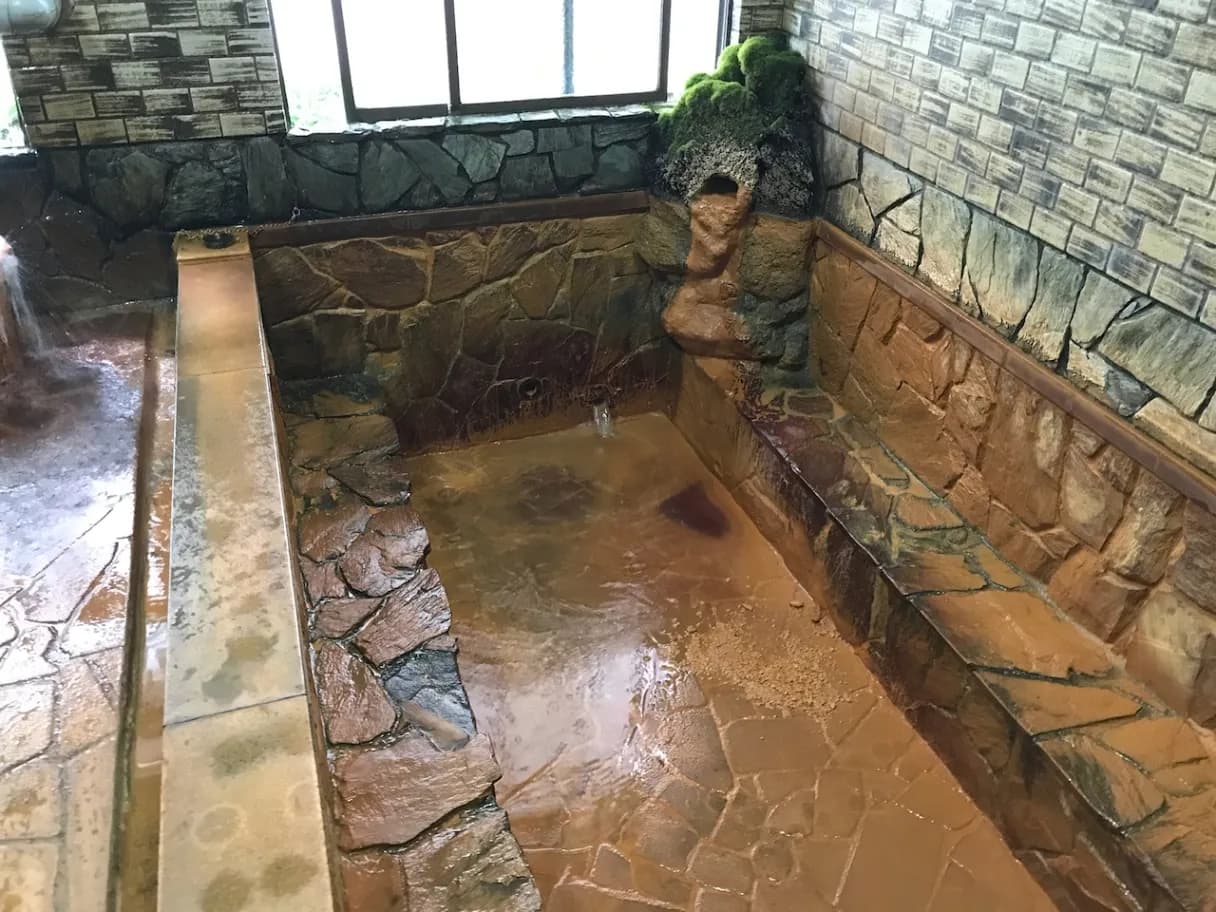
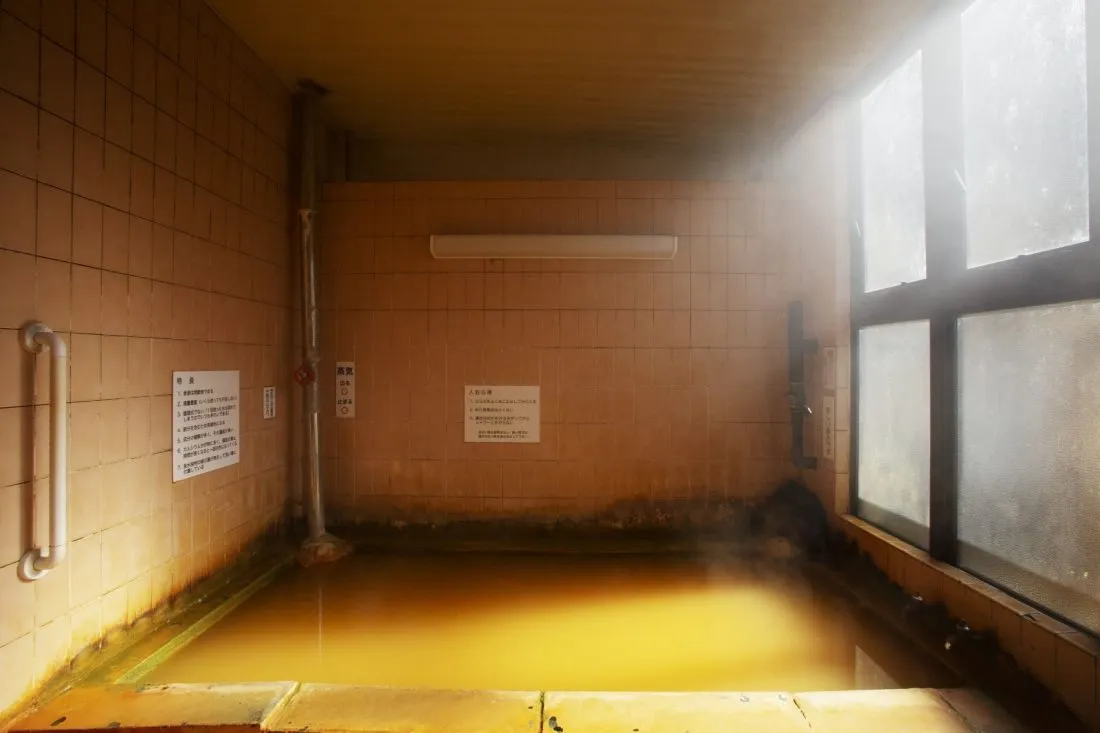
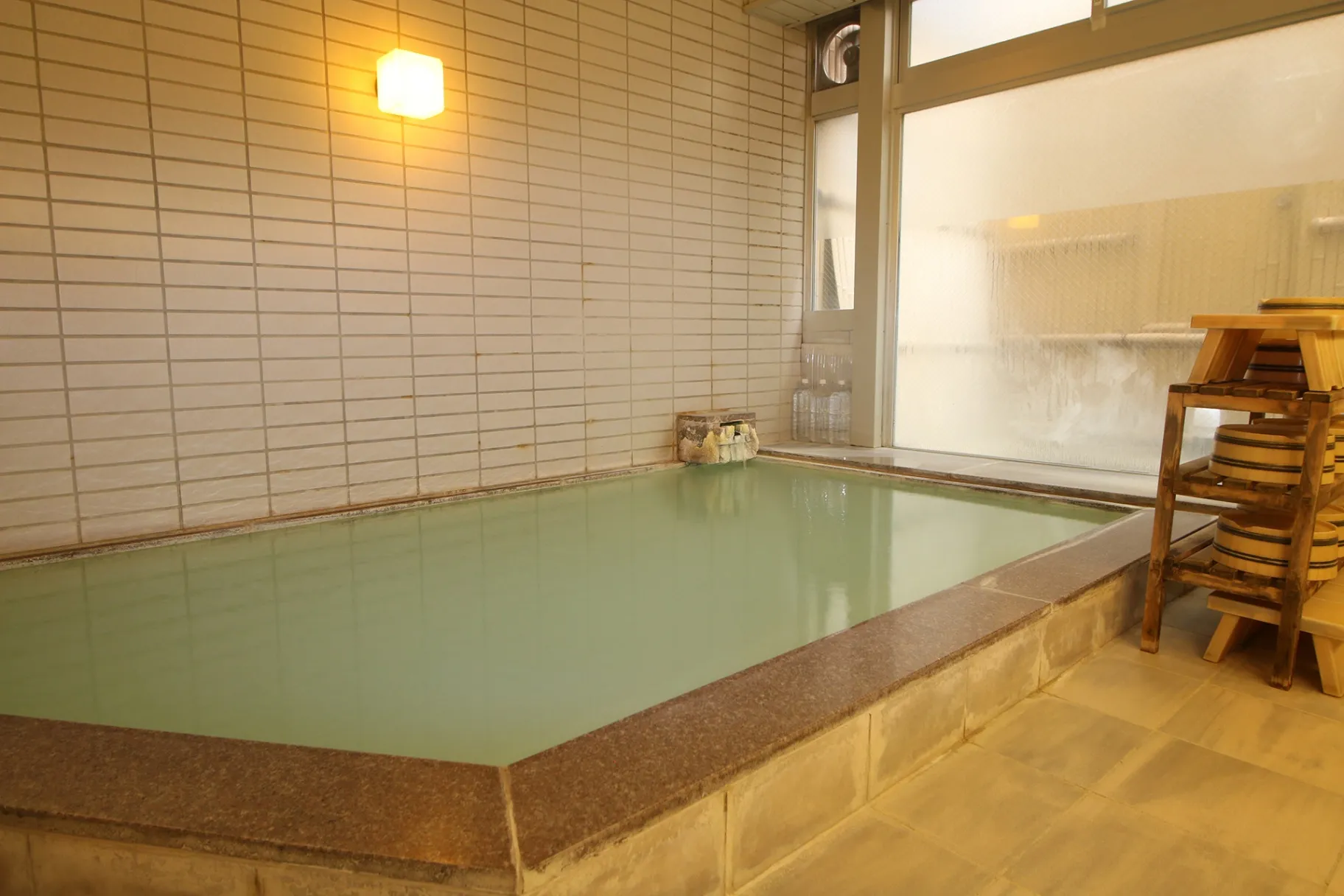
The water is classified as an iron (II, III)-containing sodium chloride spring with a source temperature of approximately 37.6 degrees Celsius. The total flow rate across all Sanbe Onsen sources reaches roughly 3,000 liters per minute, the largest in the entire Chugoku region. The most striking feature is the iron-rich cloudy water: transparent when it first emerges from the earth, it oxidizes upon contact with air and transforms into a distinctive tea-brown color. Inside the bathhouse, source water gushes through thick pipes over 5 centimeters in diameter, constantly overflowing from the bath in a spectacular display of natural abundance. The water is naturally flowing from the source and heated to a comfortable 39-40 degrees Celsius.Tsuru-no-Yu is a no-frills, sento-style communal bathhouse with no showers, shampoo, or modern amenities.
Sanbe Onsen Kame-no-Yu is a communal bathhouse with over 120 years of history, nestled at the southern foot of Mount Sanbe National Park in Oda City, Shimane Prefecture. Formerly known as Shigaku Onsen, this area served as a therapeutic bathing destination for miners of the Iwami Ginzan Silver Mine — a UNESCO World Heritage Site — during the Edo period, providing respite from their grueling labor. During the Meiji era, the Mount Sanbe area became an Imperial Army training ground, with records indicating that as many as 3,000 soldiers were stationed there at its peak. They too sought relief in these mineral-rich waters. In 1865, the financially strained Shigaku Village sold its hot spring rights to the Iwatani family in Kawai Village, but in 1877, through the efforts of Kajitani, the rights were restored to the village as communal property. In 1959, the area was designated as a National Health Resort Hot Spring by the Ministry of Health and Welfare and renamed Sanbe Onsen.
The spring water at Kame-no-Yu is classified as an iron-containing (II, III) sodium chloride spring, distinguished by its brownish color rich in iron content. The source temperature hovers around 37.6 degrees Celsius — close to body temperature — making it a lukewarm bath ideal for extended soaking. The total discharge of Sanbe Onsen reaches approximately 3,000 liters per minute, one of the largest volumes in the entire Chugoku region. This abundant flow ensures that fresh source water is poured generously into the small bathtub at all times, creating the spectacular sight of water constantly overflowing from the bath.
Quality
Iron (II、III)-containing - Sodium - Chloride Spring
Yunotsu Onsen is one of the San'in region's most venerable hot springs, with a history believed to stretch back some 1,300 years. According to the founding legend, a traveling monk witnessed a wounded badger soaking in naturally heated water to heal its injuries, thereby revealing the spring's existence. The name Yunotsu literally means "hot spring port," and from the Sengoku through Edo periods, the town prospered as the primary shipping harbor for silver produced at the nearby Iwami Ginzan silver mine. Miners who toiled in the underground tunnels are said to have restored their weary bodies in these very waters, forging an inseparable historical bond between the hot spring and the mine. In 2007, Yunotsu was inscribed as a component of the UNESCO World Heritage Site "Iwami Ginzan Silver Mine and its Cultural Landscape," becoming the first hot spring town in Japan to earn World Heritage recognition.
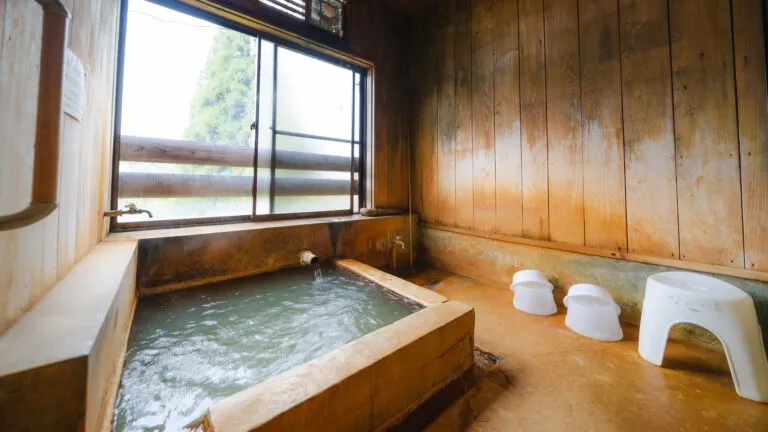
The source of Yakushiyu emerged following the Hamada Earthquake of 1872, giving rise to its alternate name Shinyu, meaning "earthquake spring." The water is classified as a sodium chloride spring (hypotonic, neutral, high-temperature) with a pH of 6.3 and a source temperature of 44.4 degrees Celsius. With 1,950mg of sodium ions, 450mg of calcium ions, 976mg of bicarbonate ions, and 537mg of free carbon dioxide per kilogram, the mineral concentration is remarkably high. The evaporation residue reaches 7.10g/kg, and the abundance of carbonic acid and metasilicic acid has earned the spring the nickname "Double Beauty Water." In the Japan Hot Spring Association's rigorous evaluation, Yakushiyu achieved the maximum score of 5 in all six categories — a distinction held by no other facility in the San'in region. The 100-percent free-flowing source water appears colorless and transparent when it first emerges, but upon exposure to air in the bathtub, it transforms into a light brownish hue, offering visible proof of its rich mineral content.
The architecture of Yakushiyu is itself a compelling attraction. The former bathhouse building, constructed in 1919 by a local carpenter who had studied Western-style architecture in Kobe, features a steam ventilation tower protruding from the roof, ornamental eaves, and stained glass windows that evoke the romantic aesthetic of the Taisho era. This historic structure now serves as the Shinyu Gallery and Shinyu Cafe Naikuranosuke, where visitors can enjoy coffee in a retro atmosphere after bathing. The actual bathing facility is housed in the adjacent newer building, where source water flows freely into a compact, intimate tub. Around the water inlet, mineral deposits have accumulated over the years, bearing testament to the spring's enduring potency.
Hinokamionsen is one of Japan's Three Great Beauty Hot Springs, nestled at the foot of Mount Funatsuyama, the legendary setting where the deity Susanoo slew the eight-headed serpent Yamata no Orochi in Japan's ancient Izumo mythology as recorded in the Kojiki. Quality spring water is said to have flowed from the base of this mythical mountain since antiquity. In the late 1980s, the former town of Yokota developed three source springs, formally establishing the area as a hot spring destination. The spring earned national recognition when researcher Satoshi Fujita of the Central Hot Spring Research Institute designated it one of Japan's Three Great Beauty Hot Springs, alongside Ureshino Onsen in Saga Prefecture and Kitsuregawa Onsen in Tochigi Prefecture.
The defining characteristic of Hinokamionsen is its exceptionally high alkalinity, with a pH of 9.9. Classified as an alkaline simple hot spring (hypotonic, alkaline, low-temperature spring), the source temperature is approximately 26.4 degrees Celsius. The water contains 45.6mg of metasilicic acid and, despite being colorless, transparent, tasteless, and odorless, possesses a remarkably silky, lotion-like texture that is its greatest allure. Upon immersion, the skin becomes astonishingly smooth and supple — an experience in beautifying effects that lingers long after departure. Although the water is heated from its cool source temperature, the quality remains undiminished, delivering a luxurious skin-beautifying bathing experience.
Mimata Onsen was discovered in 1864 in the mountainous Kanagi district of Hamada City, Shimane Prefecture, making it a hot spring with approximately 160 years of history. In the early days, the area was called "Yunotani" (Valley of Hot Water), where thermal water naturally seeped through cracks in the rocks along the roadside. The small hot spring village, situated near the confluence of the Kakoya and Oibara rivers, rests quietly in a deep mountain valley. Its healing powers were recognized early on — during the Russo-Japanese War, a convalescent facility for the Hamada 21st Infantry Regiment was established here. Kameya Ryokan stands at the heart of the village along the river, a three-story reinforced concrete Japanese-style inn with just eight rooms that delivers warm, attentive hospitality.
Arifuku Onsen is a celebrated San'in hot spring with over 1,350 years of history, said to have been discovered during the Asuka period by the Buddhist sage Hodo Sennin as he journeyed across Japan from India via China and Korea. Bearing the auspicious name meaning "place of fortune," this hot spring town — with its retro atmosphere of inns and public bathhouses lining stone-stepped slopes — has long been called the "Ikaho of San'in." Ryokan Nushiya has served as guardian of these waters for over 270 years, occupying a sprawling 3,000-tsubo (roughly 10,000 square meter) property where relocated traditional farmhouses have been transformed into just 9 private guest rooms. A bold 2021 renovation introduced natural wood, ironwork, and indigo-dyed textiles, creating spaces where Edo-era heritage and contemporary aesthetics exist in striking harmony.
The waters at Nushiya flow from the inn's own private source, classified as an alkaline simple hot spring (hypotonic alkaline high-temperature spring). The source temperature ranges from 46.6 to 47.2 degrees Celsius with a pH of 9.2, producing colorless, odorless, transparent water with a silky softness that seems to cling gently to the skin. Long celebrated as a bijin-no-yu — a "beauty spring" — the waters leave skin remarkably smooth and supple after bathing. Recognized therapeutic benefits include relief from neuralgia, muscle pain, joint pain, and frozen shoulder. For more than 1,350 years, these springs have flowed without ceasing, a testament to the enduring geological gifts of this land.
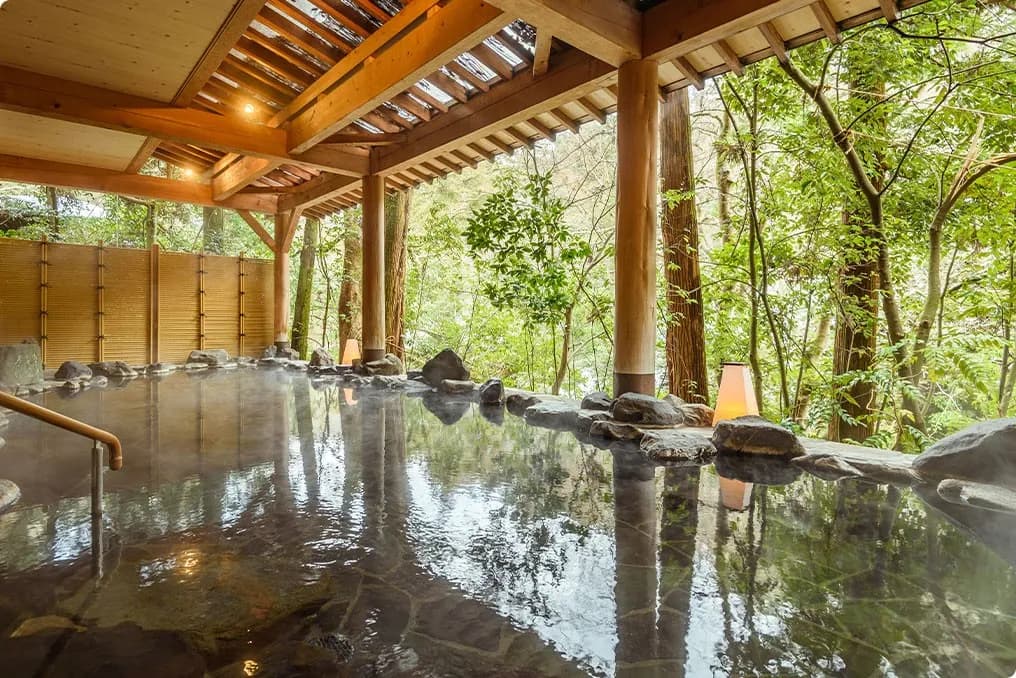
The bathing facilities include a main indoor bath, an open-air bath, and two private open-air baths named Sakura (Cherry Blossom) and Ishi (Stone), all available to guests at no additional charge.
Tamatsukuri Onsen boasts a history spanning over 1,300 years, first documented in the Izumo no Kuni Fudoki compiled in 733 during the Nara period, which records that bathing once restores youthful beauty and bathing twice cures all ailments. In the Heian period, the celebrated author Sei Shonagon praised it in her Pillow Book as one of Japan's three finest hot springs alongside Nanakuri and Arima. Standing in the heart of this storied hot spring district, Yumoto Tamaikan was originally established in the late Meiji era under the name Hamaya and was renamed Tamaikan in the early Showa period. The three-story wooden building, now over 100 years old, preserves the nostalgic atmosphere of traditional Tamatsukuri. With only six guest rooms and an adults-only policy, the inn offers an intimate retreat of silence and relaxation.
The greatest treasure of Tamaikan is its private hot spring source, welling up from 31 meters beneath the inn's garden. The water is classified as a sodium-calcium sulfate-chloride spring with a source temperature of 55 degrees Celsius and a mildly alkaline pH of 8.1. Sulfate ions provide firmness and hydration to the skin, metasilicic acid acts as a natural moisturizer, and the alkaline water gently removes dead skin cells. A pharmaceutical company's analysis found that the water increases baseline skin moisture by 165 percent, rivaling high-end cosmetic lotions and fully justifying its reputation as a beautifying spring. All baths use the inn's own free-flowing source water, and guests can bathe throughout the night.
The inn features two bathing areas — Yume-no-Yu and Tama-no-Yu — which alternate between male and female use around 22:00, allowing overnight guests to experience both. Yume-no-Yu offers an indoor bath and an open-air bath, while Tama-no-Yu is a semi-underground rock bath with a distinctly different character.
Izumo Yumura Onsen is an ancient hot spring with approximately 1,300 years of history, recorded in the Izumo no Kuni Fudoki compiled in 733 as the medicinal waters of the Shitsuni riverbank. During the Warring States period, wounded soldiers came to bathe and heal, and in the Meiji-era hot spring rankings, the spring earned the highest rank in the Izumo region. Yunouekan is the sole surviving inn, quietly preserving the history and tradition of this storied hot spring village.
The waters are classified as an alkaline simple hot spring with a pH of 8.7, delivered at a natural source temperature of 43 degrees Celsius in a completely free-flowing system without any dilution, heating, or recirculation.
The wooden building, approximately 145 years old, retains the charming atmosphere of traditional Japan.
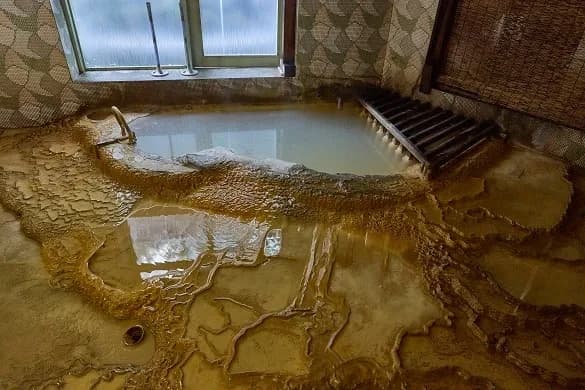
Yugakai Onsen is a hidden hot spring quietly bubbling forth in the mountainous interior of Misato Town. The spring is said to have been flowing since the Warring States period, and this settlement along the Yugakai River sits at a strategic point along the historic Iwami Ginzan Kaido road. The area is renowned as the final resting place of Kakinomoto no Hitomaro, one of the greatest poets of the Man'yoshu anthology. Nakamura Ryokan was established in 1916 and stands as the sole remaining lodging at Yugakai Onsen.
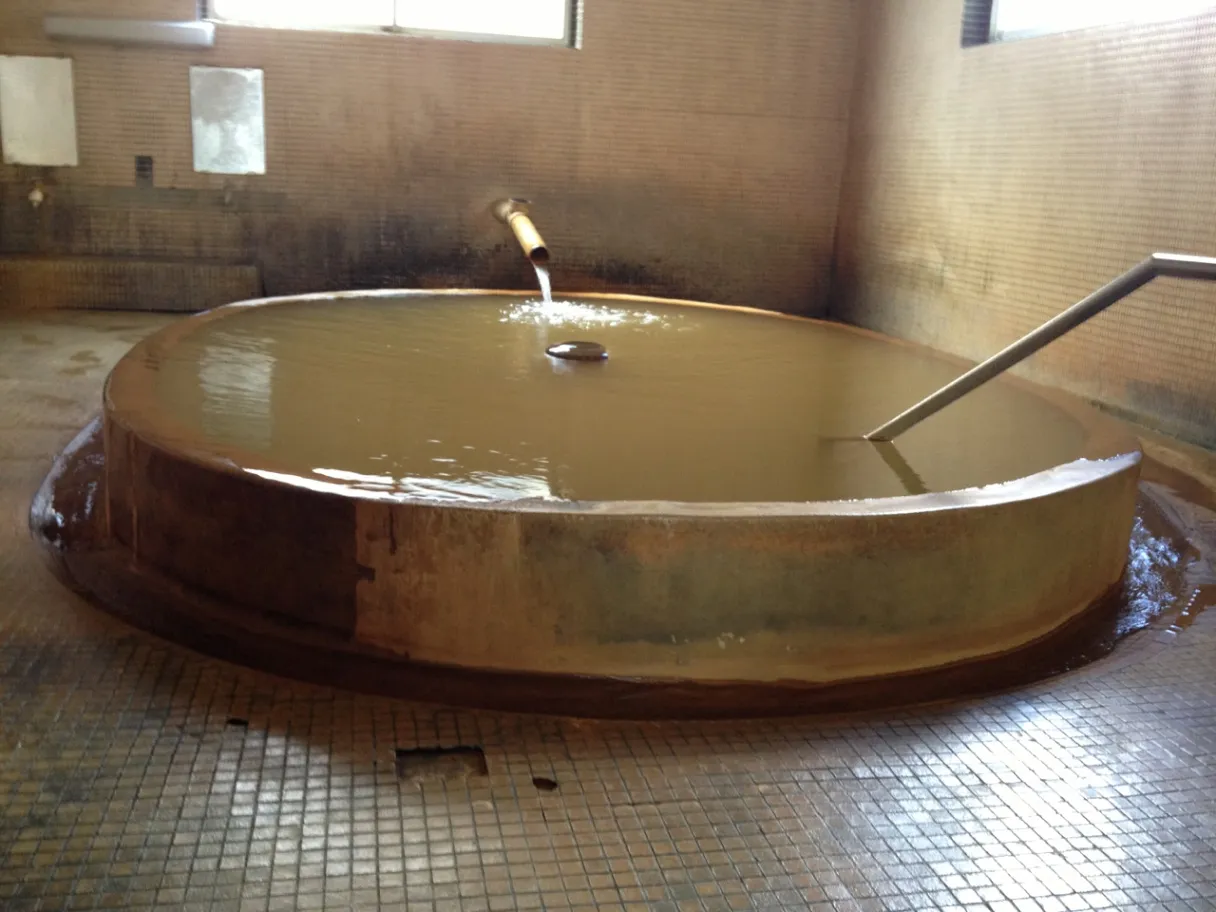
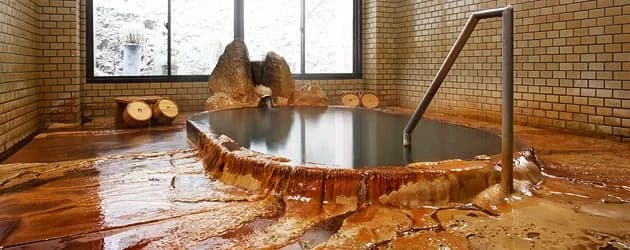
The water is classified as a weakly radioactive sodium chloride-bicarbonate spring, with a source temperature of just 30.6 degrees Celsius and a neutral pH of 6.8. The most remarkable feature is the spectacular mineral deposits that have accumulated around the bathtub over many years, forming terraced layers that resemble Japanese rice paddies — senmaida. The thorium content is reportedly the highest in Japan. Although heated using firewood, it is served as genuinely free-flowing natural spring water.
Quality
Weakly Radioactive-containing - Sodium - Chloride - Bicarbonate Hot Spring
Sanbeso is a public lodge nestled at the southern foot of Mount Sanbe within the national park. The history of Sanbe Onsen stretches back over 1,300 years to the Hakuho period. In 1959, it was designated a National Health Resort. In 2023, the facility gained national recognition when it was selected as the venue for the prestigious Osho shogi championship match.
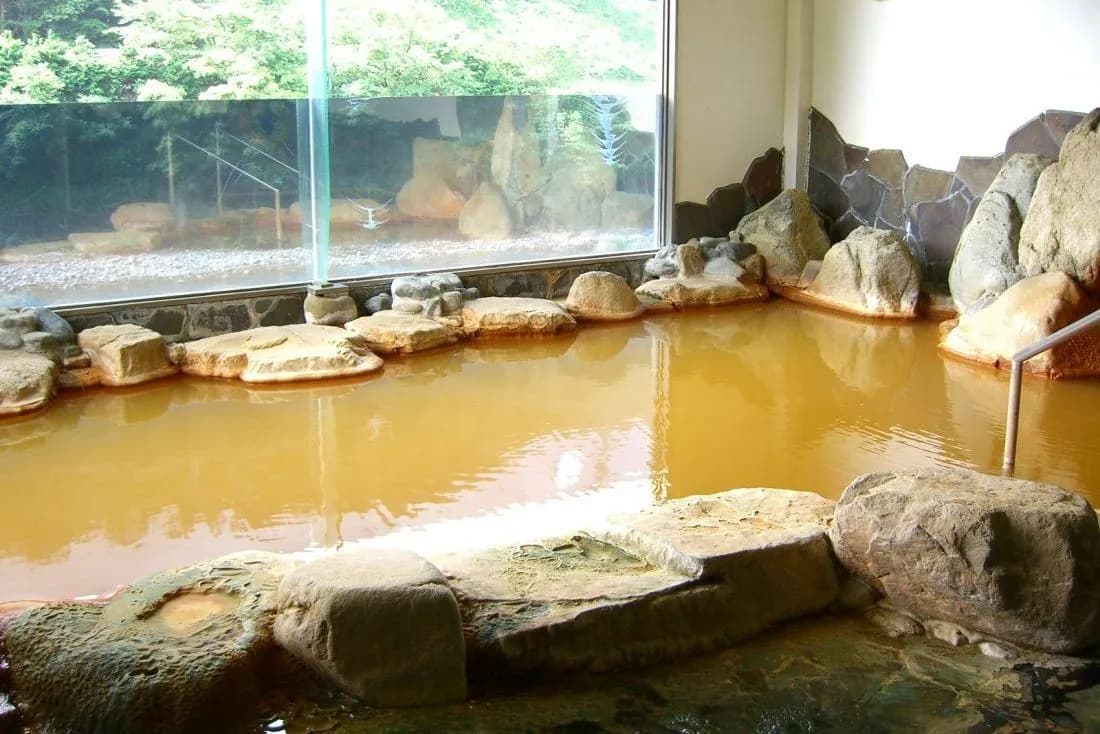
The water is classified as an iron (II, III)-containing sodium chloride spring with a mildly acidic pH of 5.9. The source temperature is a tepid 34.8 degrees Celsius, with a generous flow rate of 1,174 liters per minute. What makes Sanbeso truly exceptional is that every single bath operates as a genuine free-flowing source spring, with absolutely no dilution, recirculation, filtration, or chemical treatment. The iron-rich water turns a distinctive tea-brown color upon contact with air.
The crown jewel is its collection of 16 uniquely designed outdoor baths — rock baths, sake barrel baths, iron cauldron baths, and bamboo boat baths arranged throughout a garden-like space. Indoor baths and a sauna complete the bathing options.
Ikeda Radium Kosen Hosenkaku is a solitary therapeutic inn at the foot of Mount Sanbe, operating since 1915. Its mineral spring emerges from within a former mine tunnel called a mabu. Radon was first confirmed in 1924, and a 1939 study recorded an extraordinary 6,460 Mache units of radon content — officially declared the highest in the world. This concentration is approximately nine times greater than that of Masutomi Radium Onsen in Yamanashi Prefecture, Japan's second-ranked radium spring.
The water is classified as a radioactive sodium chloride spring with a total dissolved mineral content of 11.22 g/kg. The source temperature ranges from 17 to 19 degrees Celsius. The water exhibits a distinctive bamboo-grass turbidity. In the early morning hours, the bath surface becomes covered with crystalline calcium films. Tunnel bathing, in which visitors inhale gaseous radon directly inside the former mine shaft, is believed to promote immune function through the hormesis effect.
15. Tonbara Natural Carbonated Hot Spring Ramune Ginsen (Iinan Town, Iishi District)
引用:頓原天然炭酸温泉 ラムネ銀泉 HP
Ramune Ginsen, nestled in the mountainous interior of Iinan Town, is one of Japan's most remarkable natural carbonated hot springs. Its history stretches back to the Meiji era. In 1881, the mineral water earned an award at the World Exposition in Germany, and during that period, it was bottled and exported worldwide as a natural sparkling beverage — a remarkable chapter in the history of Japanese hot springs.
The spring is classified as a carbon dioxide-sodium-bicarbonate and chloride cold mineral spring, with a source temperature of approximately 15 degrees Celsius. The carbon dioxide content exceeds 1,040 ppm and the bicarbonate ion concentration surpasses 1,260 ppm, making it an exceptionally rare spring that simultaneously possesses the contrasting properties of both a carbon dioxide spring and a bicarbonate spring.
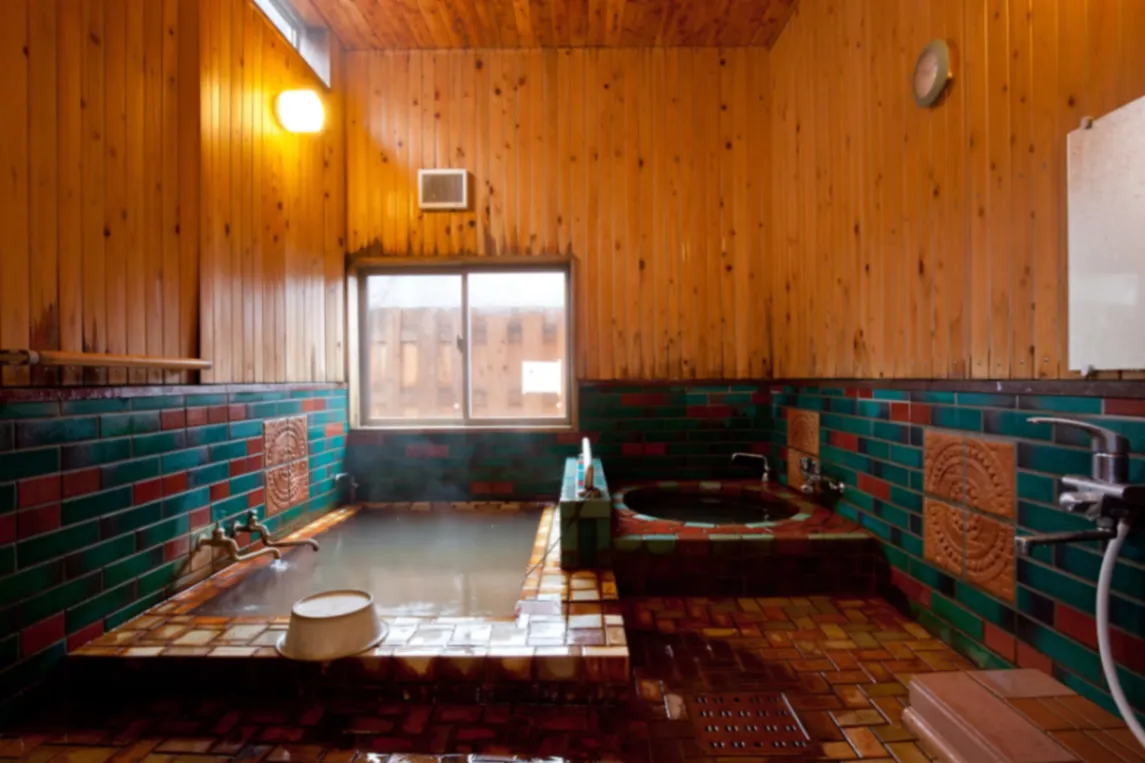
Kibedani Onsen Matsunoyu is a solitary hot spring facility hidden deep within the Chugoku Mountain Range in Yoshika Town. Local villagers originally built a small hut to draw water from a natural spring on the mountainside. The current Matsunoyu opened in 1988. After a three-year closure, the facility has resumed operations on an irregular schedule, primarily on weekends.
The most extraordinary feature is its geyser source — an exceptionally rare phenomenon in Japan. Underground carbon dioxide gas pressure causes the hot spring water to erupt to a height of approximately 2 meters at intervals of about 25 minutes, with each eruption lasting around 5 minutes. The water is classified as a carbon dioxide-containing sodium-calcium chloride-bicarbonate spring with a mildly acidic pH of 6.3. The facility employs a unique heating method: steam from a boiler is channeled into the tub, and bathers can personally adjust the temperature by operating a valve. The iron-rich water transforms into a murky tea-brown color with a transparency of merely 3 centimeters.
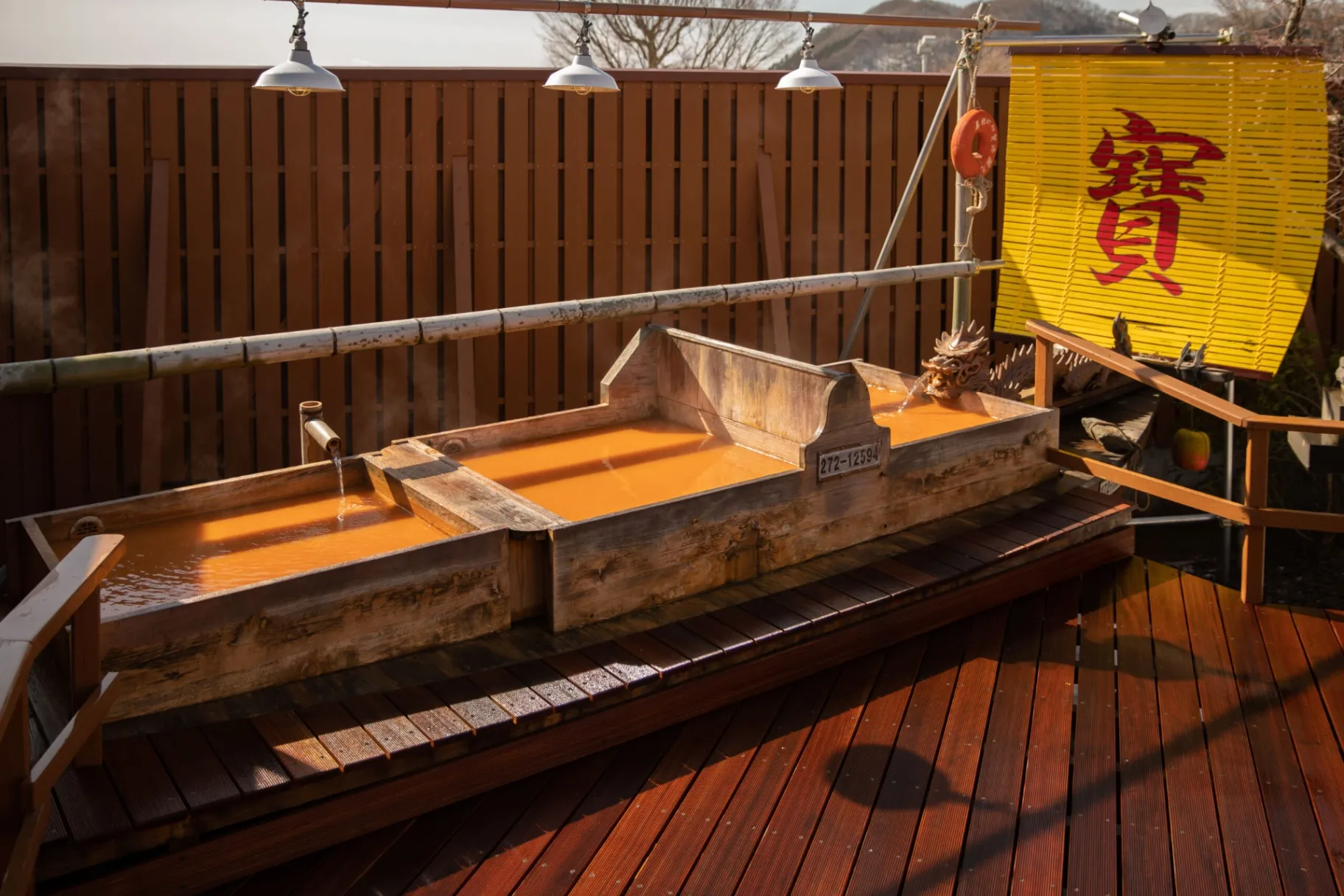
Kakinoki Onsen Hatonoyu is a hidden gem at the southernmost tip of Shimane Prefecture. The spring was discovered when a priest at a temple dedicated to Kobo Daishi struck a thermal water source, earning it the alternate name Kobo-no-Yu. The former village of Kakinoki is recognized as one of the birthplaces of organic farming in Japan.
The water is classified as a carbon dioxide-containing sodium-calcium chloride-bicarbonate spring, containing 1,020mg of free carbon dioxide with a total mineral content of 3,182.7mg/kg. The water emerges transparent but oxidizes into a vivid orange-brown hue reminiscent of ripe persimmon fruit — the very fruit from which the village takes its name. Mineral deposits have built up in thick layers on the bathing pools, creating stalactite-like formations. The water is delivered in a genuine free-flowing system with no dilution or recirculation, heated by injecting steam directly into the pools.
Practical Guide — What to Know Before Visiting Shimane's Hidden Hot Springs
Shimane Prefecture's hot springs can be efficiently explored by dividing them into five geographical areas.
Mount Sanbe Area: Six hot springs cluster around Mount Sanbe — Tsuru-no-Yu, Kame-no-Yu, and Sanbeso (all in the Shigaku district within walking distance), Koyahara Onsen (about 15 minutes by car), Ikeda Radium Kosen (about 10 minutes by car), and Chihara Onsen (about 30 minutes by car). Each owes its character to the mountain's volcanic activity, offering iron springs, carbonated springs, and radioactive springs in remarkable variety. Two to three days allows a thorough exploration, ideally combined with Mount Sanbe hiking.
Iwami Coastal Area (Yunotsu, Arifuku, Mimata): Three hot springs dot the Japan Sea coast in western Shimane. Yunotsu is the most accessible by public transport — just 8 minutes by bus from JR Yunotsu Station — and pairs naturally with the Iwami Ginzan World Heritage Site. Mimata Onsen is only 10 minutes from Asahi IC, and Arifuku Onsen is 20 minutes from Hamada-Higashi IC. A suggested 2-day itinerary: Day 1 covers Yunotsu and Iwami Ginzan with an overnight at Arifuku Onsen Nushiya, and Day 2 stops at Mimata Onsen en route.
Izumo-Matsue Area: Tamatsukuri Onsen Tamaikan, Izumo Yumura Onsen Yunouekan, and Ushio Onsen Ushioso surround the Matsue and Unnan area. Tamatsukuri offers the best public transport access and combines seamlessly with Izumo Taisha and Matsue Castle. A rewarding 2-night itinerary follows the sunset at Lake Shinji to Tamatsukuri, continues to Izumo Yumura Onsen, and finishes at Ushio Onsen.
Oku-Izumo Area: Hinokamionsen Hinokamiso, one of Japan's Three Great Beauty Hot Springs, lies at the foot of Mount Funatsuyama. Though about 50 minutes from Yoshida-Kakeai IC, combining the visit with tatara iron-smelting heritage sites and the Adachi Museum of Art (40 minutes by car) makes for a rich experience. Ramune Ginsen in Iinan Town (35 minutes from Yoshida-Kakeai IC) pairs well with this area.
Western Iwami Area (Yoshika Town vicinity): Kibedani Onsen Matsunoyu, Kakinoki Onsen Hatonoyu, and Yugakai Onsen Nakamura Ryokan occupy Shimane's southwestern corner. The first two are both about 20 minutes from Muika-ichi IC and pair naturally with the historic castle town of Tsuwano (approximately 18 km). Yugakai Onsen requires about an hour by car from Hamada IC or Miyoshi IC and operates by reservation only.
A rental car is essential for exploring Shimane's hot springs — particularly the Mount Sanbe, Oku-Izumo, and Western Iwami areas, where public transportation is sparse. Renting from Izumo Airport or JR Matsue/Izumo-shi Station is recommended. During winter (December to February), mountain roads may be snow-covered or icy, requiring snow tires. Some facilities operate irregularly (Kibedani Onsen), require reservations (Yugakai Onsen), or have suspended overnight stays (Hinokamionsen), so always confirm current operating status before visiting.
The information in this article (admission fees, operating hours, water quality data, etc.) is based on research conducted at the time of writing. Details may have changed or contain inaccuracies. Please verify the latest information through each facility's official website or local tourism association.