7 Best Hidden & Notable Hot Springs in Hiroshima Prefecture — From Island Baths on the Seto Inland Sea to Cold Mineral Springs in the Chugoku Mountains
8 Best Hidden & Notable Hot Springs in Hiroshima Prefecture — From Island Baths on the Seto Inland Sea to Cold Mineral Springs in the Chugoku Mountains
Hiroshima Prefecture is best known for its World Heritage sites — Itsukushima Shrine and the Atomic Bomb Dome — but beyond these iconic landmarks lies an unexpectedly diverse collection of hot springs scattered from the Seto Inland Sea coast to the peaks of the Chugoku Mountains. Here you will find an infinity bath perched on a remote island hilltop overlooking the archipelago, a 1,200-year-old waterfall bath once reserved for feudal lords, the prefecture's sole sodium bicarbonate spring celebrated for its skin-beautifying properties, and a nationally unique theme village where traditional kagura performance meets therapeutic bathing. Radon-containing cold mineral springs are a recurring theme, and many facilities heat their source water before serving it to bathers. We present 8 carefully selected destinations, each with its own distinctive personality.
1. Etajima-so (Edajima City)
引用:江田島荘HP
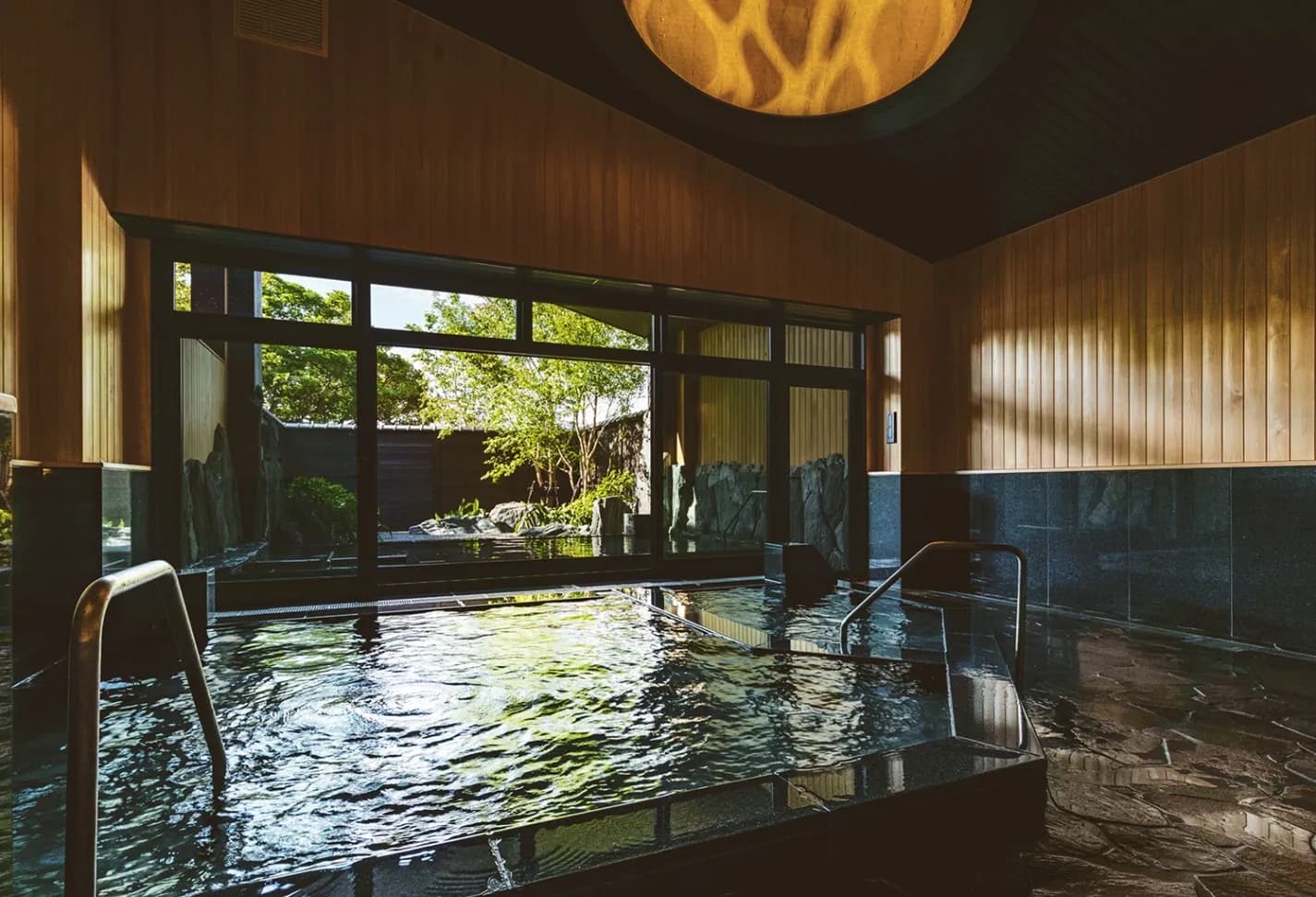
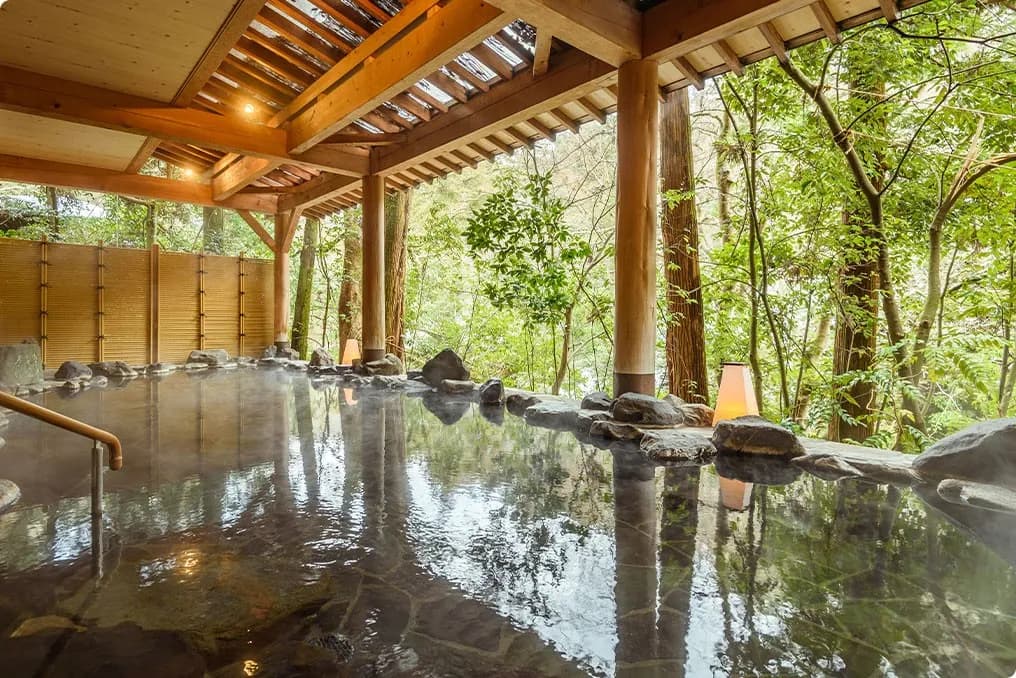
Etajima-so, located in Nakamachi, Nomicho, on Etajima Island floating in the Seto Inland Sea, is a relatively new hot spring resort that opened on July 1, 2021. With the concept of being a hot spring inn that revitalizes mind and body through encounters with the eternal time and nature of the Seto Inland Sea, it quickly gained popularity for its tranquil island setting, abundant nature, and high-quality hot springs. In 2025, it was selected for the Michelin Guide Hotel Selection, earning high praise for its quality and the completeness of its spatial design.
The greatest appeal of Etajima-so is the Etajima Onsen, an extremely rare hypertonic weakly alkaline low-temperature spring. Classified as a weak radioactive sodium-calcium chloride strong salt spring, the water combines characteristics of chloride, sulfate, and radioactive springs in a richly concentrated form. It contains over 14,600 mg of chloride ions per kg, approximately 26 times the standard set by Japan's Hot Spring Law. Notably, while it is a high-concentration radioactive spring containing 11.8 Mache units of radon, its source temperature of about 30 degrees Celsius is unusually low, allowing it to be enjoyed as nuru-yu (lukewarm bath) flowing directly from the source without heating or dilution, a truly rare experience.
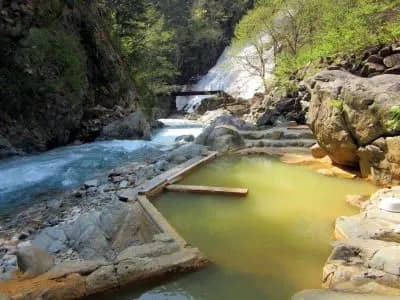
Yunoyama Onsen is an ancient hot spring said to have first erupted from crevices in the mountainside of Yuki-cho, Saeki Ward, Hiroshima City, approximately 1,200 years ago. In 1750, during the Edo period, the feudal lord Asano Yoshinaga of the Hiroshima Domain developed the site into a fully equipped therapeutic bathing retreat that served the domain's ruling family for some 250 years. The original bathhouse, carved spring basins, and Yunoyama Myojin Shrine from that era still stand today and have been collectively designated as a National Important Tangible Folk Cultural Property under the name Yunoyama Myojin Former Therapeutic Bathing Site. This place where the history of the Hiroshima Domain intersects with hot spring culture holds value as a cultural heritage site that transcends its function as a mere bathing facility.
The spring water is classified as a simple weak radioactive hot spring containing trace amounts of radon. It is colorless, transparent, tasteless, and odorless. With a source temperature of approximately 23.5 degrees Celsius, it falls under the cold mineral spring category, so the indoor bath is heated to around 41 degrees Celsius. Radioactive springs are sometimes called the spring of ten thousand remedies in Japan, with therapeutic indications for rheumatoid arthritis, poor circulation, gout, mild hypertension, and chronic conditions. The practice of alternating between the cold source water and the heated indoor bath is believed to promote blood circulation and regulate the autonomic nervous system — a bathing method cherished by local regulars for generations.
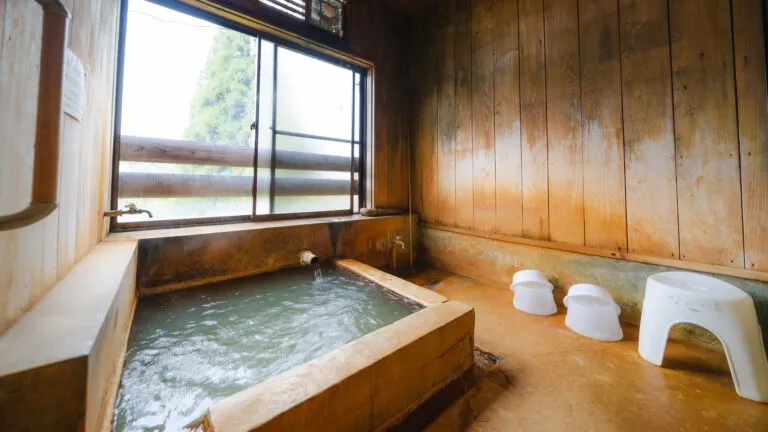
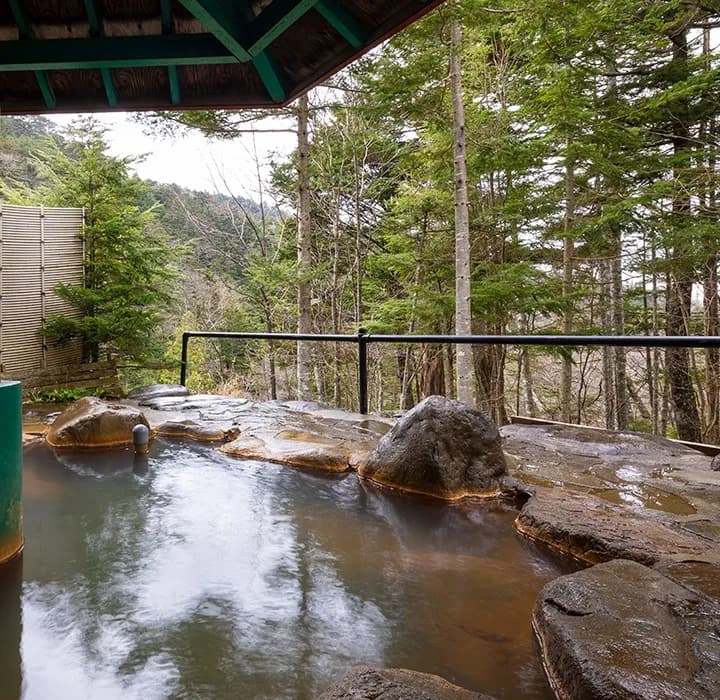
The crowning feature of Yunoyama Onsenkan is its waterfall bath, where source water cascades from a rock face approximately four meters above ground.
3. Kinoe Onsen Hotel Seifukan (Osakikamijima Town, Toyota District)
Hotel Seifukan stands on a hilltop of Osakikamijima Island, a remote island floating in the Seto Inland Sea with no bridge connection to the mainland — the only way to reach it is by ferry from Takehara Port. This very isolation is what makes the hot spring so special, as the sea voyage adds an extraordinary dimension to the experience. Opened in 1988, the source spring named Ryusen (Dragon Spring) wells up from 221 meters beneath sacred granite rock.
The water is classified as a weakly radioactive calcium-sodium chloride cold mineral spring with a neutral pH of 7.0, heated for bathing. Rich in salt, the water provides excellent heat retention and has earned a reputation as a beauty spring for its gentle texture. The open-air bath, renovated in April 2023, features an infinity design where the water surface merges seamlessly with the sea, creating the sensation of dissolving into the Seto Inland Sea. Below stretches a panorama of Omishima Island, the Kurushima-Kaikyo Bridge of the Shimanami Kaido, and on clear days, Mount Ishizuchi in Shikoku. This breathtaking view earned first place in the Scenic View category of the Hot Spring General Election for two consecutive years in 2024 and 2025. The hotel has also been selected for five consecutive years in the Cuisine category of the Top 100 Hotels and Ryokan Chosen by Professionals, with kaiseki cuisine centered on fresh Seto Inland Sea seafood. Day-trip bathing is 800 yen for adults, discounted to 500 yen on the 5th, 15th, and 25th of each month. About 25 minutes by ferry from Takehara Port, then 15 minutes by taxi from the island port.
Kagura Monzen Tojimura is a nationally unique hot spring theme village perched on a hilltop in Akitakata City, where the ancient art of kagura performance meets the healing power of natural hot springs. In 1998, hot spring water was unexpectedly discovered during a drilling survey intended to secure drinking water, leading to the creation of this extraordinary complex celebrating Geihoku Kagura — a traditional performing art passed down for over 600 years in northern Hiroshima. The faithfully recreated temple gate town streetscape, with tile-roofed lattice-front inns and traditional teahouses, evokes the atmosphere of Edo-period Japan.
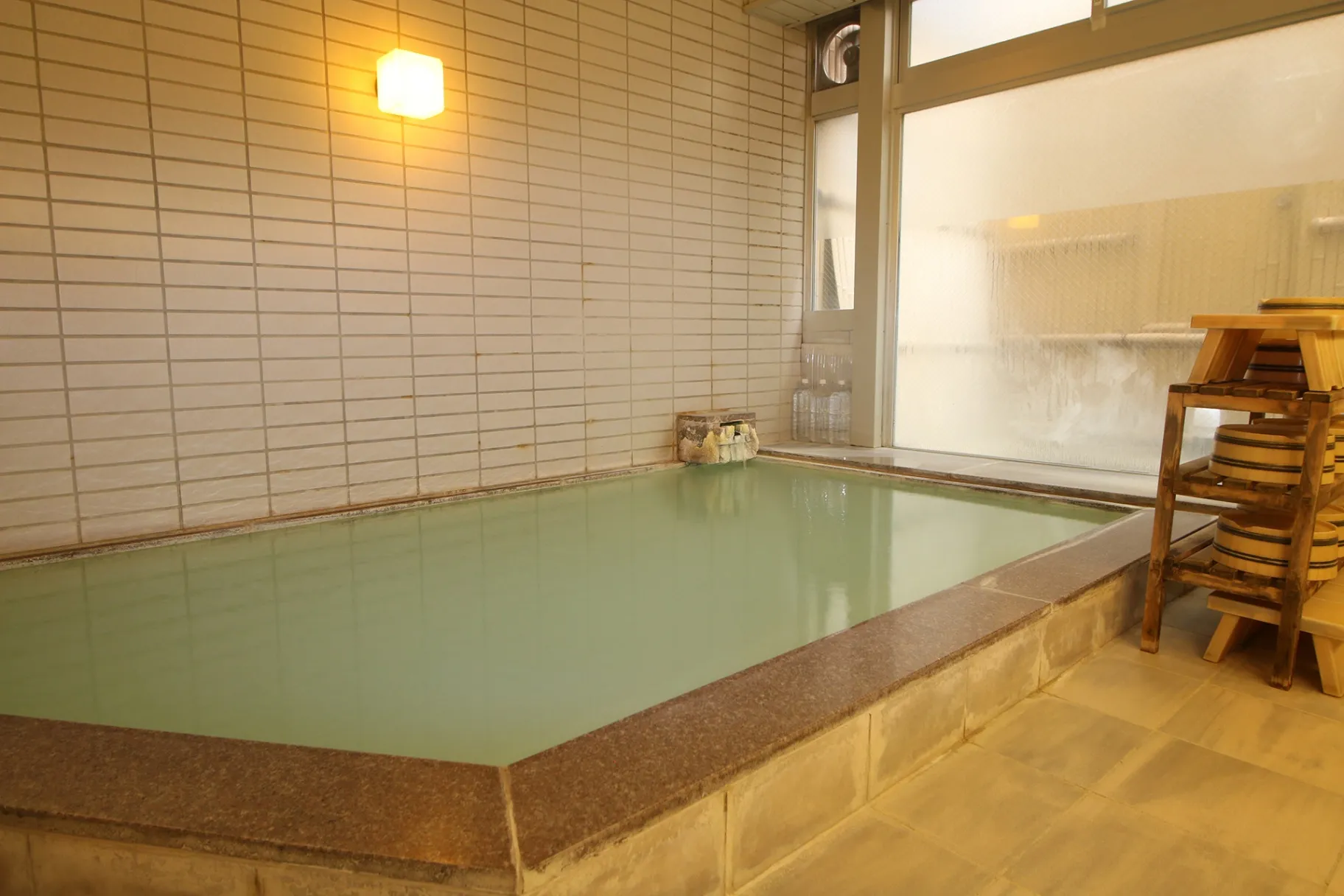
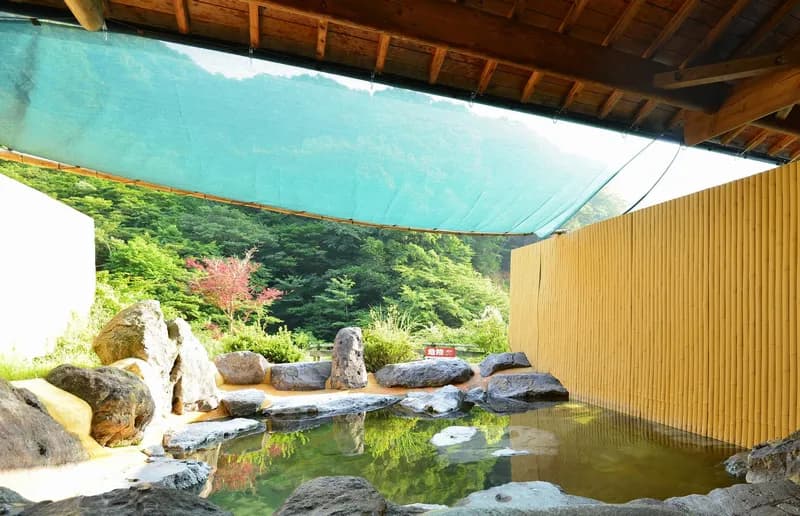
The spring at Iwatoya bathhouse is classified as a simple weak radioactive cold mineral spring — a natural radon onsen. Drawn from a source approximately one kilometer away at 17.4 degrees Celsius, the water is heated for bathing and prized for its gentle, moisturizing quality. The bathhouse features a rare two-story structure with a glass-walled main bath, a rock-built outdoor bath, waterfall shower, herbal bubble bath, steam sauna, cold plunge, lying bath, and jet bath. The village houses the Kamukura-za, a purpose-built kagura performance dome where authentic performances are held regularly — the unique luxury of traditional performing arts and hot springs in a single visit. The dining options include natural gibier cuisine prepared from locally hunted wild boar and deer. Overnight stays start at 6,750 yen. Day-trip bathing is 800 yen for adults and 450 yen for children. Open 11:00 to 20:30. About 10 minutes by car from Takada IC on the Chugoku Expressway.
Yoro Onsen Honkan is a quietly charming single-inn ryokan nestled in the mountains of Onomichi City, steeped in Showa-era nostalgia. Its origin story is remarkably unique: in 1960, a local sake brewer drilling a well in search of quality water for rice wine production unexpectedly struck a mineral spring rich in radon. This serendipitous discovery — sake brewing leading to a hot spring — perfectly encapsulates the distinctive character of this establishment.
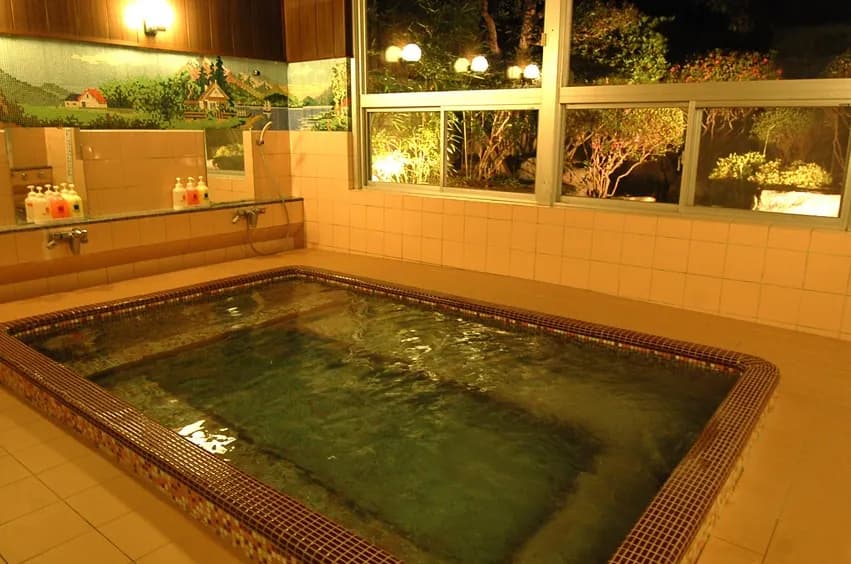
The spring is classified as a simple weak radioactive cold mineral spring, a natural radon onsen known as a silver spring. The colorless, transparent water possesses a gentle character enriched with metasilicic acid exceeding standard levels, providing immediate softness against the skin and lasting hydration. Perhaps most remarkably, the entire facility operates without any municipal water connection — every tap delivers pure mineral spring water suitable for drinking. The original 1960 building has been thoughtfully maintained, with mosaic tiles from opening day still adorning the bathroom walls. The owner personally visits the fish market each morning to select the freshest Seto Inland Sea seafood, complemented by mountain delicacies of the Onomichi region. Day-trip bathing is 650 yen for adults. Open 10:00 to 21:00. Overnight stays with two meals from 8,800 yen. Just 5 minutes by car from Onomichi IC on the Sanyo Expressway.
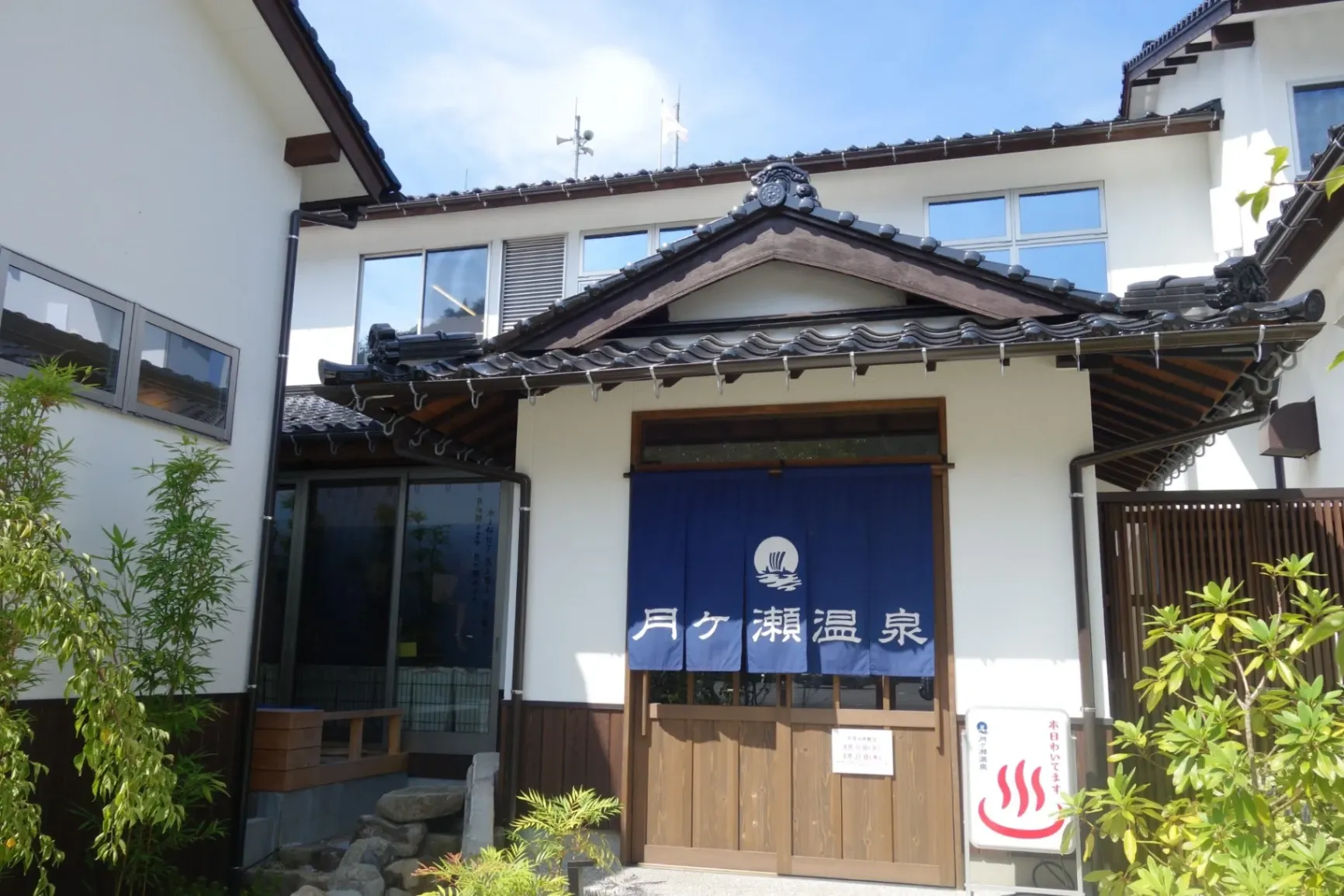
Tsukigase Onsen opened in August 2020 in the town of Kake, nestled along the Ota River in the heart of the Chugoku Mountains. Built near the former JR Kabe Line Kake Station site, the facility was created as a community hub to bring vitality to a mountainous town facing depopulation. It serves as both a gathering place for elderly residents and a supported employment facility for people with disabilities, embodying a new model of community welfare through hot springs.
The greatest appeal lies in the remarkably high alkaline water with a pH of 9.7. Classified as an alkaline simple hot spring, the water contains 57.3 mg/kg of metasilicic acid ions, producing an exceptionally silky, slippery texture rarely found in Hiroshima Prefecture. From the moment you lower yourself into the water, a luxurious smoothness envelops the skin, and after bathing, skin becomes remarkably soft and supple. Its skin-beautifying effects are said to rival those of the celebrated Mimata Onsen in Shimane Prefecture. Though compact, the facility features indoor and outdoor baths, a sauna, and cold water bath. Just steps away stands Yoshio, a taiyaki shop famous throughout Japan, and stopping for freshly baked fish-shaped cakes after a soak has become the quintessential local routine. The facility is ideally positioned as a base for visiting Sandankyo Gorge, a nationally designated Place of Scenic Beauty stretching approximately 16 kilometers. Day-trip bathing is 500 yen for adults. Open 11:00 to 21:00 (last admission 20:30). Closed Thursdays. About 15 minutes by car from Togauchi IC on the Chugoku Expressway.
7. Taishakukyo Kanko Hotel Kinsaikan (Shobara City)
Kinsaikan is a long-established inn on the shores of Lake Shinryu in Taishakukyo Gorge, one of the principal scenic areas of the Hiba-Dogo-Taishaku Quasi-National Park. The hotel enjoys a prime location just a 5-minute walk from the sightseeing boat pier, near the nationally designated Natural Monument Onbashi — a massive limestone natural bridge counted among the world's three greatest, measuring approximately 90 meters in length and 40 meters in height. Designated a National Place of Scenic Beauty in 1923, Taishakukyo's dramatic canyon scenery has captivated poets and artists for centuries.
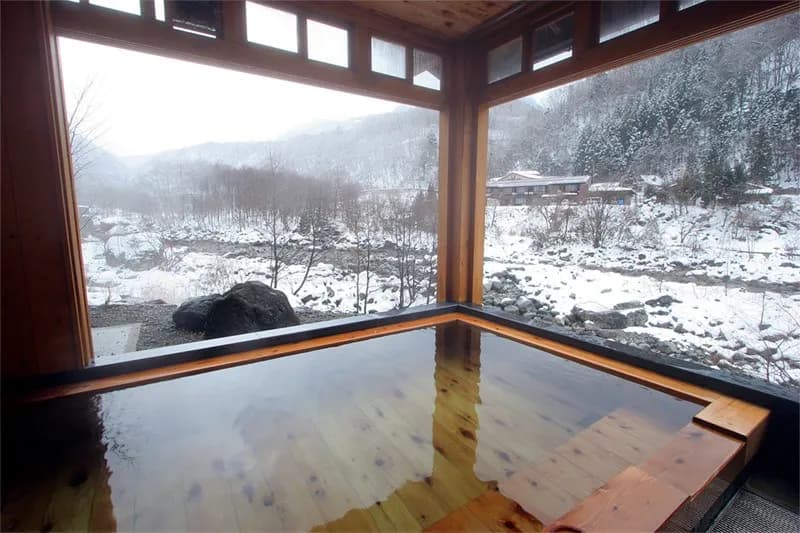
The hot spring features a distinctive bakuhanseki onsen (activated stone hot spring) quality: cold spring water from 500 meters underground is utilized through a filtration system incorporating bakuhanseki (maifan stone), a mineral-rich natural ore valued as a medicinal stone since ancient times. Therapeutic benefits include fatigue recovery, stiff shoulders, neuralgia, and rheumatism. The large communal bath and open-air bath offer panoramic views of the gorge as it transforms through the seasons — fresh green in spring, blazing autumn colors, and snow-draped winter landscapes. The hotel's 16 guest rooms feature refined Japanese decor, and the kaiseki cuisine using local seasonal ingredients is highly regarded. The approximately 40-minute Lake Shinryu cruise offers a waterborne perspective of sheer cliffs and fantastical rock formations. Day-trip bathing is 660 yen for adults. Open 11:00 to 16:00. About 7 minutes by car from Tojo IC on the Chugoku Expressway.
Summary — What to Know Before Exploring Hiroshima's Hot Springs
The hot springs of Hiroshima Prefecture can be efficiently explored by dividing them into four main areas.
Western Hiroshima & Hatsukaichi Area: Yunoyama Onsenkan and Quelle Yoshiwa are both located west of Hiroshima City. Yunoyama is about 40 minutes from Itsukaichi IC, while Quelle Yoshiwa is 10 minutes from Yoshiwa IC, with roughly one hour's drive between them via the Chugoku Expressway. A rewarding day trip could begin with the 1,200-year-old waterfall bath at Yunoyama in the morning and continue to the 45,000-year-old tree bath at Quelle Yoshiwa in the afternoon, with a stop at the Woodone Art Museum. In winter, combining the Megahira Ski Resort with a hot spring soak is an excellent option.
Akiota & North Hiroshima Area: Tsukigase Onsen and Kagura Monzen Tojimura are situated in the mountainous interior along the Ota River valley. Tsukigase is 15 minutes from Togauchi IC, and Tojimura is 10 minutes from Takada IC, with about 40 minutes' drive between them. A recommended 1-night/2-day itinerary would include soaking in Tsukigase's pH 9.7 silky waters, hiking Sandankyo Gorge — particularly spectacular during autumn foliage season in early to mid-November — and then enjoying kagura performances and hot springs at Tojimura.
Miyoshi & Shobara Area: Kimita Onsen and Kinsaikan are located in the northern interior of the prefecture. Kimita is 5 minutes from Kuchiwa IC, while Kinsaikan is 7 minutes from Tojo IC, with about one hour between them via the Chugoku Expressway. A 1-night/2-day trip combining Hiroshima's only sodium bicarbonate spring at Kimita with a Lake Shinryu cruise and the magnificent Onbashi natural bridge at Taishakukyo makes for an ideal itinerary. Peak autumn colors at Taishakukyo typically appear from early to mid-November.
Onomichi & Island Area: Yoro Onsen Honkan and Kinoe Onsen Hotel Seifukan are positioned along the Seto Inland Sea coast. Yoro Onsen is conveniently just 5 minutes from Onomichi IC, making it easy to combine with Onomichi sightseeing — the Shimanami Kaido cycling route and Senkoji Temple are nearby. Kinoe Onsen requires a ferry crossing from Takehara Port, so checking the ferry timetable in advance is essential. A 2-night/3-day plan with one night in Onomichi and one on Osakikamijima Island allows you to savor two contrasting experiences: Showa-era nostalgia at a single-inn ryokan and a sweeping Seto Inland Sea panorama from an infinity bath.
Overall, a rental car is indispensable for exploring Hiroshima's hot springs. While some facilities are accessible by public transport, bus services are limited and driving is far more efficient. During winter months (December to February), snow and ice are common on mountain roads in the Chugoku range, making snow tires essential. Some facilities, such as Kinoe Onsen on its ferry-only island, and others with seasonally varying schedules, require advance planning — always verify current operating hours before setting out.
The information in this article (admission fees, operating hours, water quality data, etc.) is based on research conducted at the time of writing. Details may have changed or contain errors. Please verify the latest information on each facility's official website or through the local tourism association.