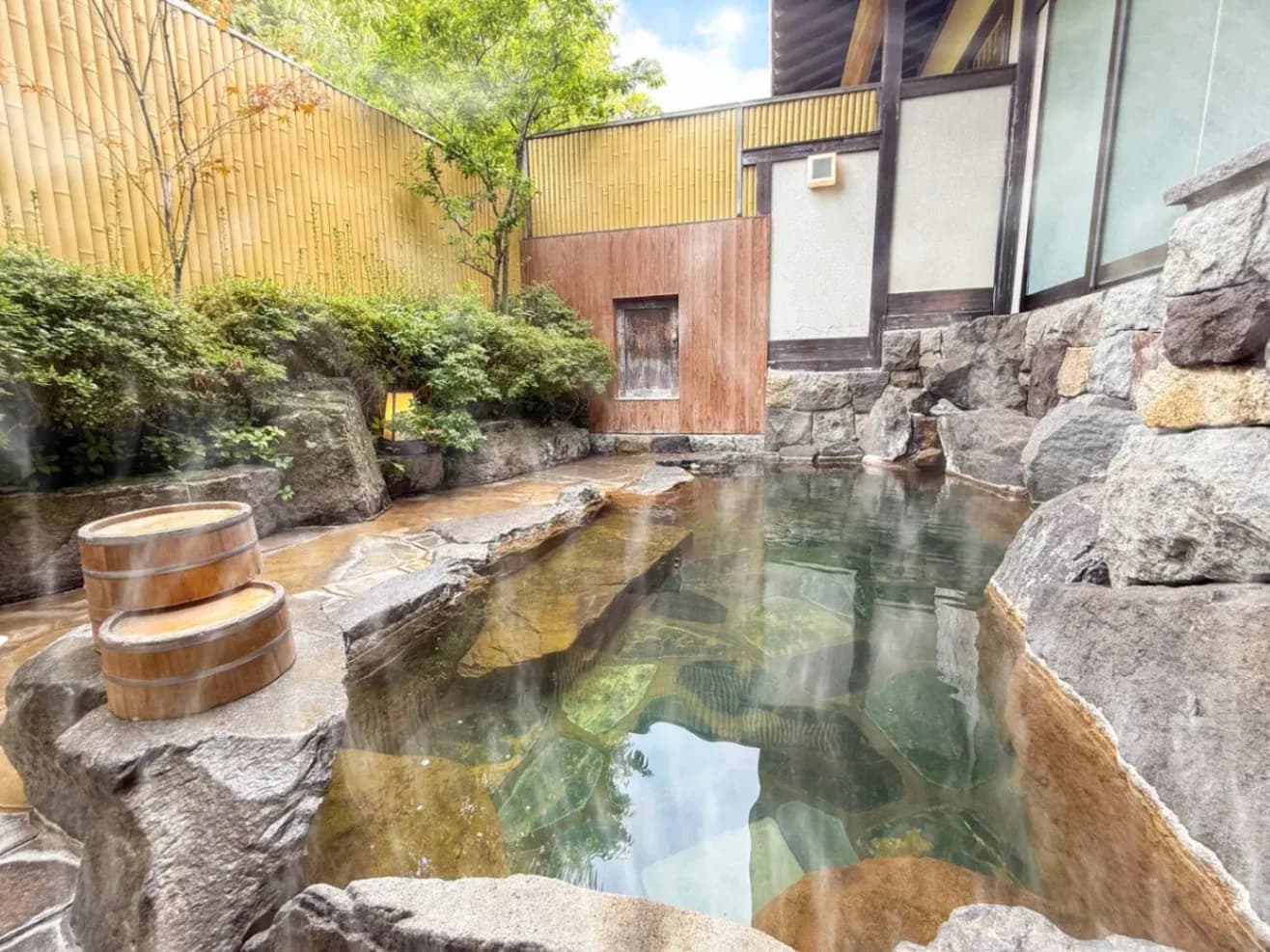
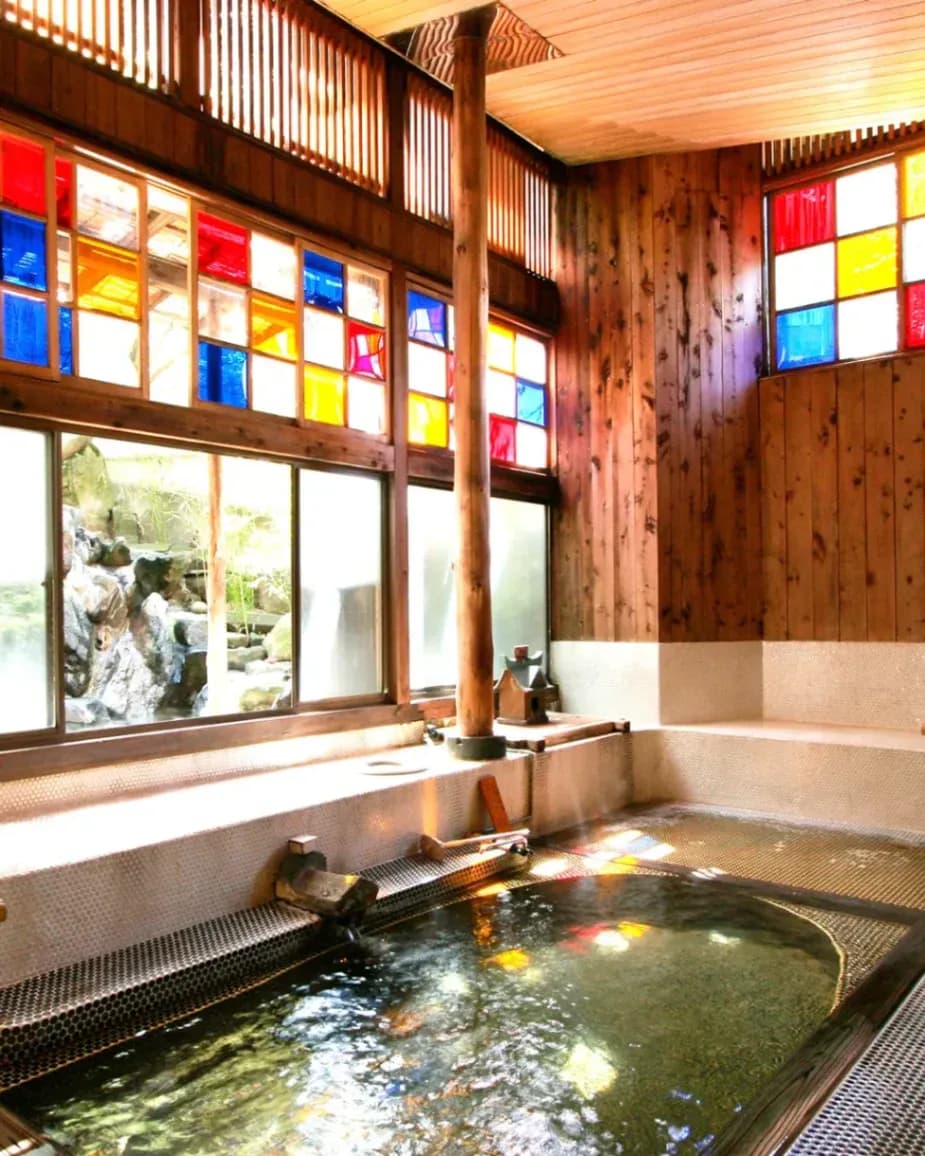
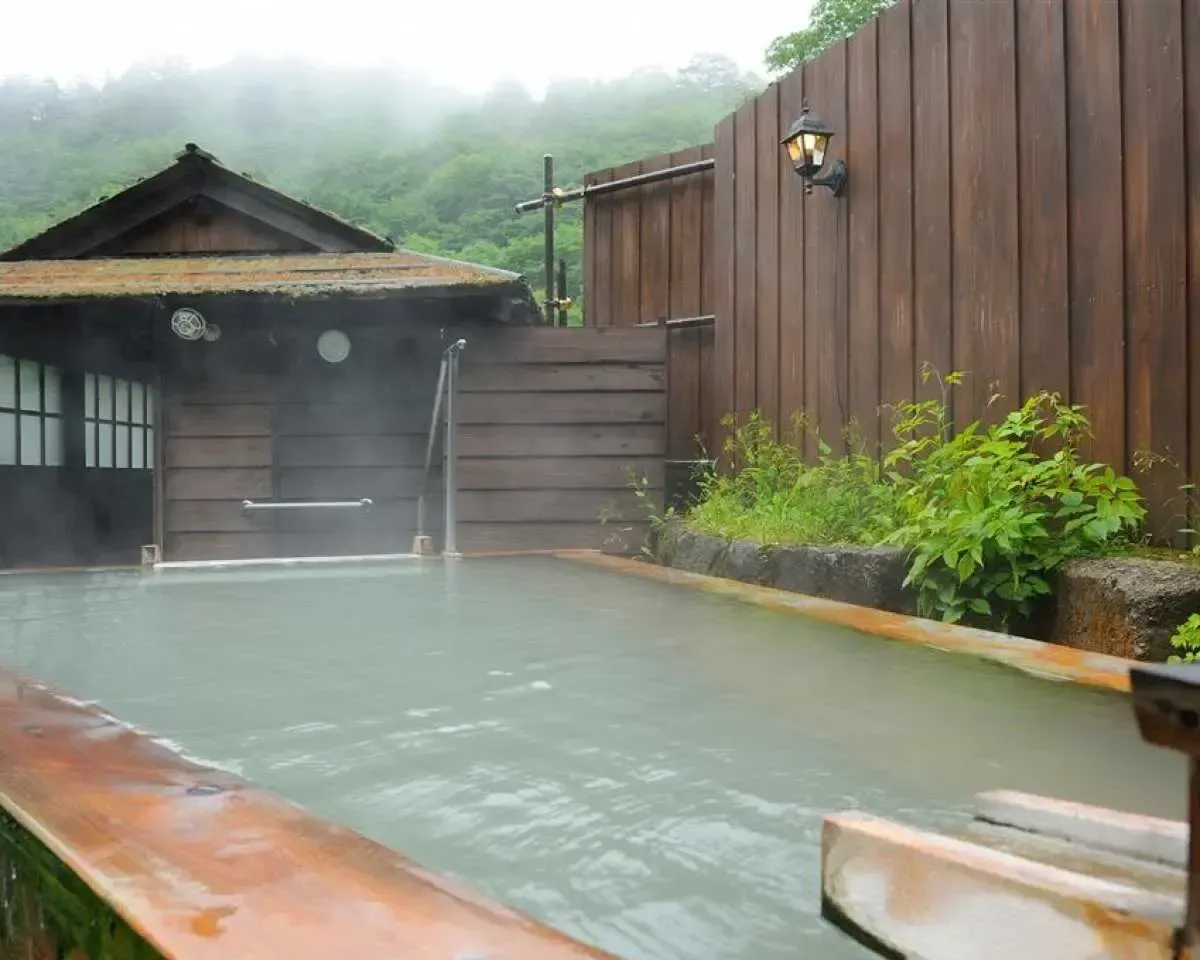
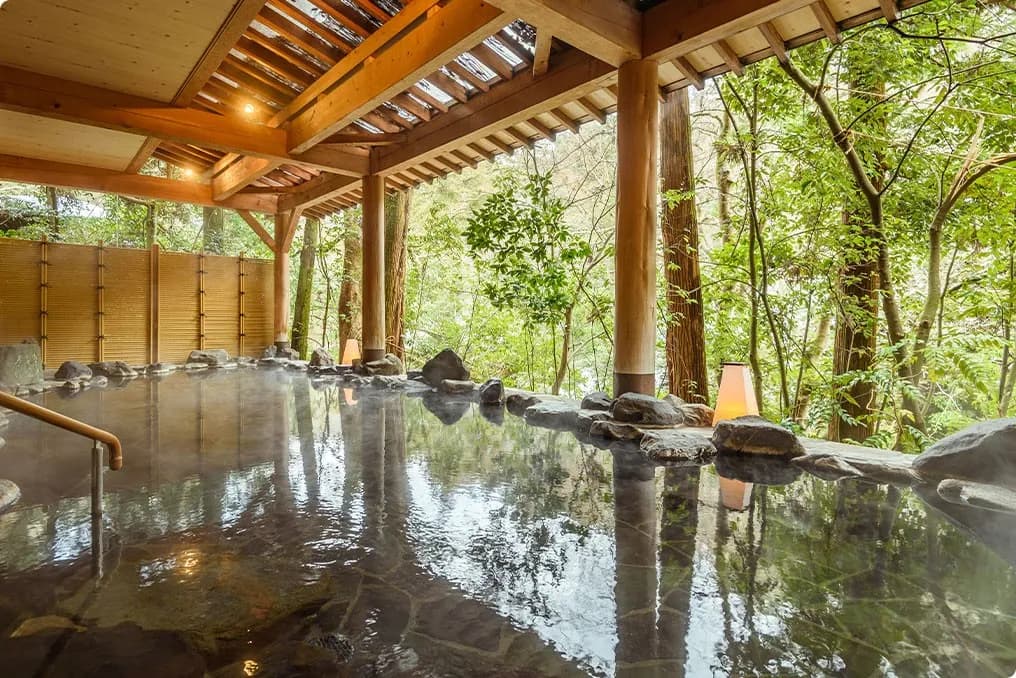
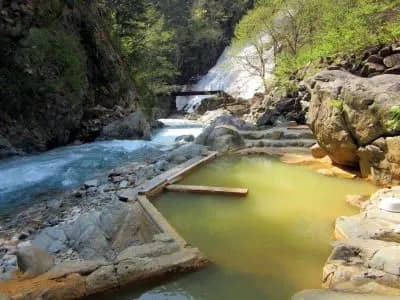
Wakayama Prefecture is the undisputed hot spring capital of the Kansai region. With more than 501 registered sources, its thermal waters span everything from rugged mountain gorges traversed by the UNESCO World Heritage Kumano Kodo pilgrimage trails to dramatic Pacific coastlines. Few prefectures in Japan can match the sheer diversity of spring chemistry, scenery, and bathing styles on offer here. From completely wild, self-dug river baths to centuries-old inns that have welcomed pilgrims and nobles alike, Wakayama's hot springs represent a lifetime of discovery. Below, we have selected ten of the most distinctive and memorable.
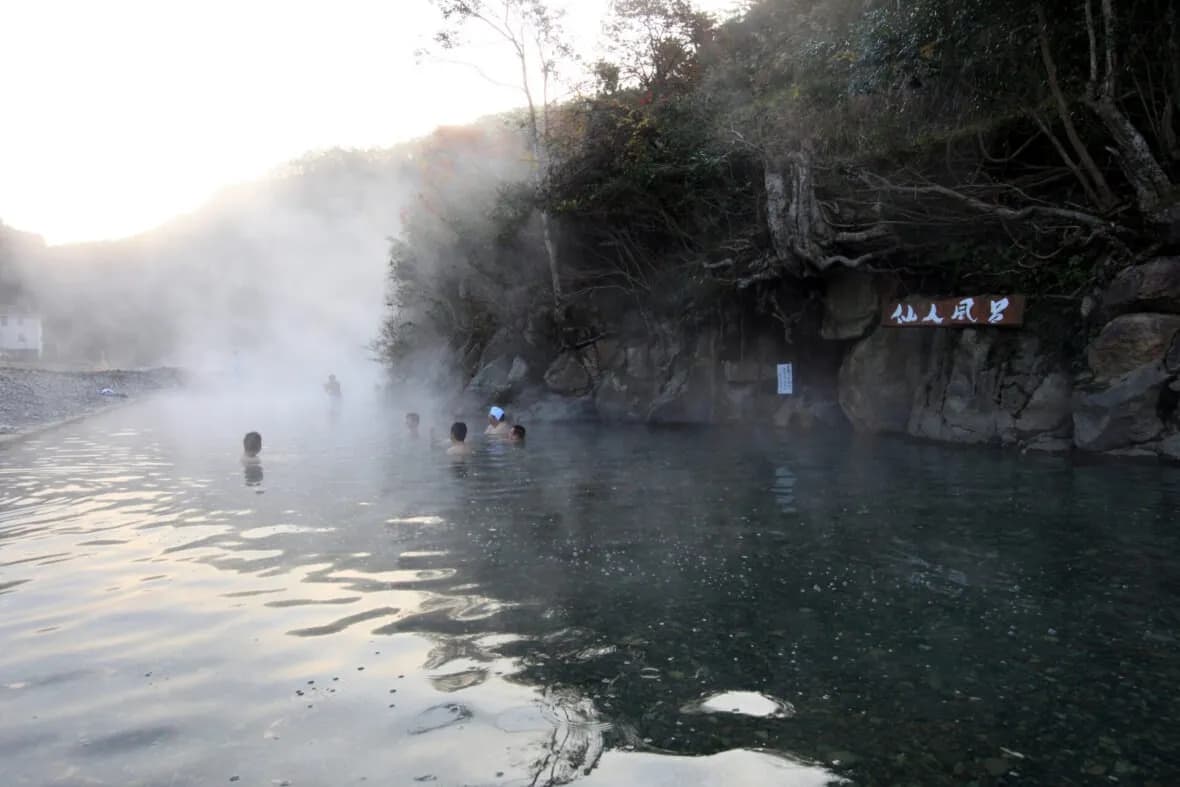
1. Kawayu Onsen — Sennin Buro Wild Bath (Tanabe City, Wakayama)

| Mon | Tue | Wed | Thu | Fri | Sat | Sun | Hol | |
|---|---|---|---|---|---|---|---|---|
| 06:30 - 22:00 | 06:30 - 22:00 | 06:30 - 22:00 | 06:30 - 22:00 | 06:30 - 22:00 | 06:30 - 22:00 | 06:30 - 22:00 | 06:30 - 22:00 | 06:30 - 22:00 |
| Mon | Tue | Wed | Thu | Fri | Sat | Sun | Hol | |
|---|---|---|---|---|---|---|---|---|
| 06:00 - 21:00 | 06:00 - 21:00 | 06:00 - 21:00 | 06:00 - 21:00 | 06:00 - 21:00 | 06:00 - 21:00 | 06:00 - 21:00 | 06:00 - 21:00 | 06:00 - 21:00 |
| Mon | Tue | Wed | Thu | Fri | Sat | Sun | Hol | |
|---|---|---|---|---|---|---|---|---|
| 12:00 - 14:30 | 12:00 - 14:30 | 12:00 - 14:30 | 12:00 - 14:30 | 12:00 - 14:30 | 12:00 - 14:30 | 12:00 - 14:30 | 12:00 - 14:30 | 12:00 - 14:30 |
4. Ryujin Komata River Onsen — Bijin-tei Inn (Tanabe City, Wakayama)
Deeper still into the mountains beyond Ryujin Onsen, a single inn — Bijin-tei ("House of the Beautiful Woman") — is the sole facility drawing from the Ryujin Komata River spring. The inn rests beside the clear waters of the Hidaka River in a secluded valley that feels genuinely remote.
The spring is an alkaline, low-tension cold mineral water with a pH of 8.7, meaning it must be heated before bathing. Despite its modest appearance, the water leaves skin remarkably smooth after a soak — the "bijin" (beautiful woman) reputation is widely upheld by visitors. Water is delivered as a flow-through bath without recycling.
The inn also distinguishes itself through its food: the proprietor personally forages and hunts, bringing wild boar, mountain vegetables, and river fish such as ayu (sweetfish) and amago (red-spotted masu trout) to the dinner table. Kumano beef — a regional Wagyu brand — appears as teppan-yaki or shabu-shabu. From June to August, two species of fireflies (Genji and Heike fireflies) illuminate the riverbanks after dark, creating a magical backdrop to an evening at the spring.
- Spring type: Alkaline Low-Tension Cold Mineral Water
- pH: 8.7
- Water use: Heated flow-through (no recycling)
- Baths: Indoor bath overlooking the Hidaka River
- Day bathing: Please confirm directly with the inn
- Accommodation: Available
- Address: 96-3 Ryujin, Ryujin-mura, Tanabe City, Wakayama TEL: 0739-79-0777
- Access: Approx. 60 min from Tanabe IC by car; approx. 80 min by Ryujin bus from JR Kiitanabe Station
- Season: Year-round
5. Wataze Onsen — Hotel Sasayuri (Tanabe City, Wakayama)
Together with Kawayu and Yunomine, Wataze Onsen completes the trio of springs known collectively as the Kumano Hongu Onsen-kyo. Hotel Sasayuri sits on a small island formed by the Shimumura River, reached via a suspension bridge — the kind of arrival that signals something special is about to begin.
The hotel's open-air baths, described as among the largest in western Japan, occupy an expansive terrace beside the river. In addition to the main communal outdoor bath, eight private open-air baths are available for reservation, giving a total of nine bathing options. Multiple source springs of different chemical compositions — simple alkaline spring, sodium bicarbonate spring, and sodium chloride-bicarbonate spring — feed the baths as flow-through water. The result is silky, skin-smoothing water that reinforces the "beauty spring" reputation of the Kumano region.
Meals feature seasonal Kumano kaiseki cuisine, with hot spring rice porridge served at breakfast. The hotel also operates a free shuttle service to Hosshinnmon-oji, the most popular trailhead for walking the last section of the Kumano Kodo into Hongu. Note: as of July 2024, drilling works were underway in the outdoor bath area to secure additional source flow; confirm current facilities before visiting.
- Spring type: Sodium Bicarbonate Spring / Sodium Chloride-Bicarbonate Spring (multiple sources)
- Water use: Flow-through (source water)
- Baths: Large communal outdoor bath, 8 private outdoor baths, indoor baths (9 types total)
- Day bathing: Available (please confirm)
- Accommodation: Available
- Address: 45-1 Wataze, Hongu-cho, Tanabe City, Wakayama TEL: 0735-42-1185
- Access: Free shuttle from JR Shirahama Station (reservation required, departs 13:00)
- Season: Year-round
6. Tsubaki Onsen — Ryokan Shirasagi (Shirahama-cho, Nishi-muro District, Wakayama)
Drive south along Route 42 for about twenty minutes from the busy resort of Shirahama, and the landscape quiets. The small coastal hamlet of Tsubaki harbors one of Wakayama's most unusual springs: an alkaline sulfur water of almost startling gentleness, the antithesis of the sulfurous volcanic waters found elsewhere in Japan.
The Edo-period gazetteer Kii Zokufudoki (1839) already praised the spring in terms that translate roughly as: "The water is mildly warm and clear; bathing feels as if oil is being poured over the limbs — remarkably pleasant." The hot spring's name "Tsubaki" (camellia) refers to the surrounding camellia groves, while the legend attached to the inn Shirasagi tells of a white heron repeatedly bathing a wounded leg in the spring until healed — hence the inn name ("Shirasagi" meaning white heron).
The spring is a sulfur-bearing alkaline simple thermal water with a pH of 10.1 — among the highest alkalinity of any hot spring in the Kansai region. The water is extremely soft and salt-free, often recommended for sensitive skin, eczema, and infant bathing. The large communal bath at Shirasagi sits at an elevation of sixty meters above sea level; views of the Pacific Ocean, sunset, and the lights of fishing boats at night are part of the experience. A shared kitchen for self-catering therapeutic stays (toji) is available. The spring holds a Class C Pure Onsen certification from the Pure Onsen Association (no additives or dilution).
- Spring type: Sulfur-bearing Alkaline Simple Thermal Spring
- Source name: Horai-yu
- Source temperature: 31.8–31.9°C
- pH: 10.1
- Flow rate: 146 L/min (drilled artesian)
- Water use: Flow-through (heated; no additives or recycling)
- Day bathing: Available (¥600, 11:00–20:00; please confirm in advance)
- Accommodation: Available (therapeutic stay plans available)
- Address: 1056-22 Tsubaki, Shirahama-cho, Nishi-muro District, Wakayama TEL: 0739-46-0321
- Access: Shuttle from JR Tsubaki Station (reservation required); approx. 7 min from Nankishirahama IC
- Season: Year-round
7. Hanayama Onsen — Yakushi no Yu (Wakayama City, Wakayama)
Among hot spring enthusiasts in the Kansai region, Hanayama Onsen has a near-mythological reputation: it is consistently cited as the finest carbonated iron spring (sōdatai tetsusen) in western Japan. The fact that it sits within Wakayama City itself — just five minutes from the Wakayama IC interchange — and yet draws visitors from across the country speaks to the extraordinary quality of its water.
The spring's origins are traced to 803 CE, when the Buddhist monk Gyoki is said to have established the bath. The water rises from 501 meters below ground under the natural pressure of dissolved carbon dioxide alone, without any pump — a rare artesian phenomenon. When it emerges, the water is colorless, but within seconds of contact with air, dissolved iron oxidizes to form the characteristic reddish-brown tint that stains the bath walls and floor. These mineral deposits accumulate so rapidly that staff must chip them away with pneumatic drills on the weekly rest day.
The dissolved solids content of 19,747 mg/kg is roughly sixteen times the official threshold for classification as a therapeutic spring (yōjōsen). The facility holds a Class A Pure Onsen certification (no dilution, no heating, no recycling, no disinfection, no additives) for its source-temperature bath at 25–26°C, alongside a heated main bath at 41.5°C, a low-temperature bath at 38°C, and an open-air bath at approximately 40°C. The recommended "warm-cold alternating method" — cycling between the unheated source bath and the warm main bath — is said to maximize the spring's cardiovascular benefits.
- Spring type: Carbon Dioxide and Iron (II/III) – Calcium/Magnesium – Chloride Spring (hypertonic, neutral, low-temperature)
- Source temperature: 25.2°C
- pH: 6.3
- Dissolved solids: 19,747 mg/kg
- Water use: Flow-through (source bath: Class A Pure Onsen certification)
- Baths: Source bath 26°C, main bath 41.5°C, low-temp bath 38°C, open-air bath ~40°C
- Day bathing: Available (8:00–22:00; closed Thursdays; ¥1,100)
- Accommodation: Available
- Address: 574 Narukami, Wakayama City, Wakayama TEL: 073-471-3277
- Access: Approx. 5 min from Wakayama IC
- Season: Year-round (closed Thursdays)
8. Nanki Katsuura Onsen — Hotel Urashima, Bokido Cave Bath (Nachikatsuura-cho, Higashi-muro District, Wakayama)
| Mon | Tue | Wed | Thu | Fri | Sat | Sun | Hol | |
|---|---|---|---|---|---|---|---|---|
| 09:00 - 19:00 | 09:00 - 19:00 | 09:00 - 19:00 | 09:00 - 19:00 | 09:00 - 19:00 | 09:00 - 19:00 | 09:00 - 19:00 | 09:00 - 19:00 | 09:00 - 19:00 |
9. Yukawa Onsen — Kiyomon-yu Public Bath (Nachikatsuura-cho, Higashi-muro District, Wakayama)
In the mountain interior behind Nachikatsuura town, the Yukawa district shelters a spring of approximately 1,500 years' documented history — one of the oldest therapeutic springs in the Kumano region. While a handful of inns still operate in the area, the most accessible way to experience the water is through the beloved neighborhood public bath Kiyomon-yu.
The bath maintains a pure flow-through style: source water pours continuously from the tap, fills the pool, and overflows — the water is never recycled or chemically treated. A faint scent of sulfur drifts through the bathhouse, and the water temperature is kept comfortably warm. With a pH of 9.8, the spring falls into the strongly alkaline simple spring category; the high alkalinity gently dissolves surface proteins on the skin, producing the smooth "bijin" (beauty water) effect for which this region is known.
Kiyomon-yu is located about fifteen minutes by car from Hotel Urashima and is easily combined with a day visiting the Nachi no Taki waterfall — one of Japan's three great waterfalls — and the Kumano Nachi Taisha shrine. At ¥500 for adults, it offers an affordable taste of authentic local bathing culture.
- Spring type: Alkaline Simple Thermal Spring
- pH: 9.8
- Water use: Flow-through
- Admission: Adults ¥500, Children ¥300
- Hours: 12:00–23:30
- Private family bath: Available (¥1,000 for 50 min, plus admission)
- Day bathing: Available
- Accommodation: Not available (public bath only)
- Address: 1062 Yukawa, Nachikatsuura-cho, Higashi-muro District, Wakayama TEL: 0735-52-0880
- Closed: No fixed rest day
- Season: Year-round
10. Tsuruno-yu Onsen (Minabe-cho, Hidaka District, Wakayama)
According to local legend, a crane repeatedly bathed a wounded leg in this mountain spring until healed — and so the spring has been known as Tsuruno-yu (Crane's Hot Water) ever since. Located in Minabe-cho, a town celebrated for its vast plum orchards, the spring sits about twenty minutes by car from Minabe IC along roads that climb steadily into forested hills. It has served as a neighborhood therapeutic retreat since the Edo period, and it remains refreshingly uncommercial.
The most distinctive feature of the water is its color: a warm reddish-brown to bush-warbler green, stained by an unusually high iron content. The spring is classified as a carbon dioxide-sodium/magnesium bicarbonate cold mineral water; the source requires heating before bathing, but the water is delivered as flow-through without recycling. Both the indoor bath and the open-air bath look out over green mountain ridges and a small stream. Known benefits include recovery from fatigue, improvement of cold sensitivity, neuralgia relief, and care of chronic skin conditions.
Visiting during plum blossom season (late January to mid-February) offers a rare combination: soaking in the russet-colored water while the surrounding hillsides fill with the scent of white and pink plum blossoms. The accommodation consists of a separate inn building and bath facility; plan options range from room-only to full board.
- Spring type: Carbon Dioxide – Sodium/Magnesium – Bicarbonate Cold Mineral Water
- Water color: Reddish-brown to bush-warbler green
- Water use: Heated flow-through (partial circulation filtration)
- Baths: Indoor bath and open-air bath
- Day bathing: Available (please confirm directly)
- Accommodation: Available (room-only to full-board plans)
- Address: 2328 Higashiyoshida, Minabe-cho, Hidaka District, Wakayama TEL: 0739-74-3016
- Access: Approx. 20 min by car from Minabe IC via Route 424 and Prefectural Road 30
- Season: Year-round
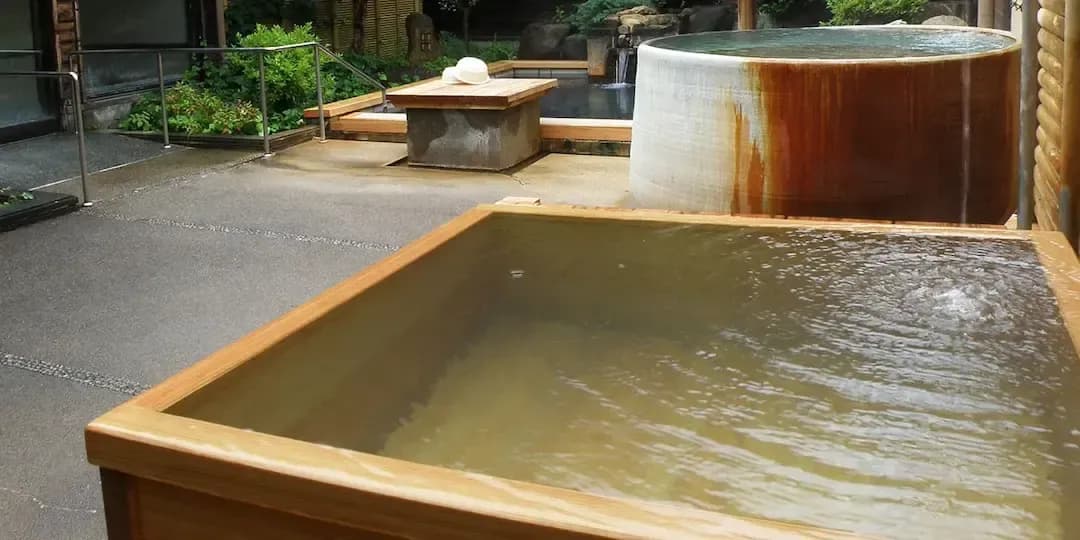
11.Totsukawa Hotspring Hotel Subaru
| Mon | Tue | Wed | Thu | Fri | Sat | Sun | Hol | |
|---|---|---|---|---|---|---|---|---|
| 12:00 - 17:00 | 12:00 - 17:00 | 12:00 - 17:00 | 12:00 - 17:00 | 12:00 - 17:00 | 12:00 - 17:00 | 12:00 - 17:00 | 12:00 - 17:00 | 12:00 - 17:00 |
A Few Things to Know Before You Go
Wakayama's most distinctive springs are concentrated in the mountainous interior and the World Heritage Kumano corridor. Bus services in these areas are limited, and a rental car is strongly recommended for reaching most of the destinations in this guide. Wild bathing sites such as Sennin Buro at Kawayu are suspended during flood conditions — always check with the local tourism association before visiting. The three Kumano Hongu springs (Kawayu, Yunomine, Wataze) are within a short distance of each other and can comfortably be combined into a single overnight itinerary.
The information in this article — including admission fees, opening hours, and spring chemistry data — was compiled through research at the time of writing. Details may have changed since publication. Please verify the latest information through each facility's official website or the relevant tourism association before visiting.