10 Best Hidden & Notable Hot Springs in Nagasaki Prefecture — From Unzen's Sulfur Baths to Border-Island Springs and a Gunkanjima-View Carbonated Soak
Nagasaki Prefecture is home to Unzen, one of Japan's first designated national parks, where volcanic activity beneath the Shimabara Peninsula gives rise to a diverse array of hot springs. Yet the prefecture's thermal riches extend far beyond Unzen and Obama. On Iki Island, floating in the Genkai Sea, a reddish-brown spring has flowed for over 1,700 years. On the northern tip of Tsushima, Japan's border island, bathers gaze across the Korea Strait. Along the rugged western shore of the Goto Archipelago, a humble village bathhouse draws from the islands' only high-temperature artesian spring. At the southern tip of the Nagasaki Peninsula, a rare natural carbonated spring offers views of the UNESCO-listed Gunkanjima. And in the pottery town of Hasami, a skin-softening bicarbonate soak awaits. The interplay of islands, peninsulas, and sea creates hot spring landscapes that no other prefecture can replicate. Here, we present 10 carefully selected destinations, each with its own distinctive personality.
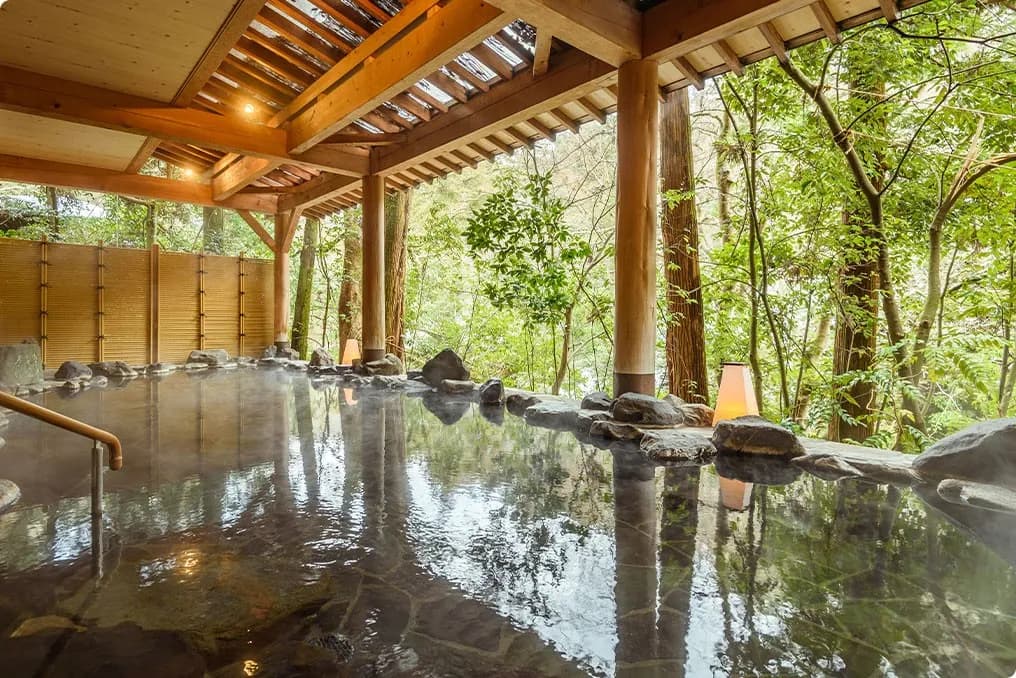
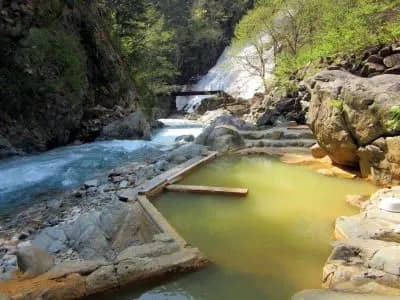
Oku-Iki Sennenyu Hirayama Ryokan stands in the Yunomoto Onsen district on the northwest coast of Iki Island, Nagasaki Prefecture, and is a member of the Association to Preserve Japan's Secret Hot Springs. Legend holds that Empress Jingu discovered the spring in the 5th century and used it to bathe the newborn Emperor Ojin, giving this onsen a heritage spanning more than 1,700 years.
The sodium chloride spring rises at 66.5 degrees Celsius with a pH of 6.6, delivered as an unaltered free-flowing source bath with no dilution or heating. The water emerges clear but turns a striking reddish-brown as iron in the mineral content oxidizes on contact with air, producing the celebrated nigori-yu cloudy bath. Even a brief soak warms the body to the core.
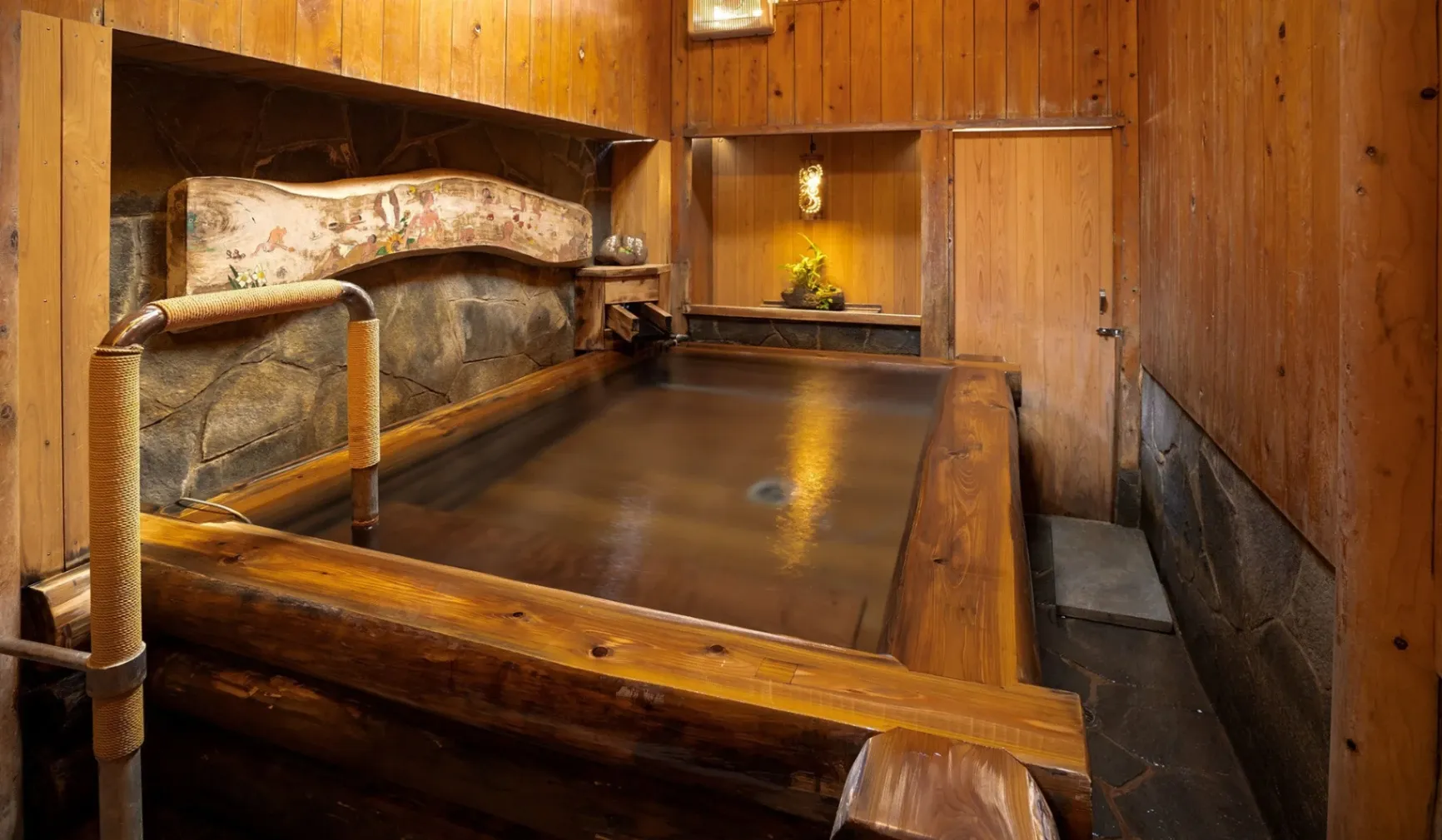
Ryokan Kunisaki is a discreet ten-room hideaway tucked along a back street of Obama Onsen in Unzen City, Nagasaki Prefecture. A member of both the Association to Preserve Japan's Secret Hot Springs and the Association to Preserve Japan's Source Spring Inns, the ryokan draws from a 97-degree-Celsius source at a generous 430 liters per minute, delivering pure sodium chloride water through a heat-exchange system with no dilution.
The dissolved mineral content reaches 7.83 grams per kilogram, of which 6.5 grams is sodium chloride, yielding a remarkably rich saline bath. Guests may choose from gender-separated indoor baths, a private stone bath, a private hinoki cypress bath, and a private open-air bath, all fed by 100 percent free-flowing source water. Obama Onsen is renowned for possessing the highest heat emission of any hot spring in Japan, and the seaside spa town affords magnificent sunset views over Tachibana Bay. The cuisine, built around seasonal local seafood and Shimabara Peninsula produce, complements the refined atmosphere of this intimate inn.
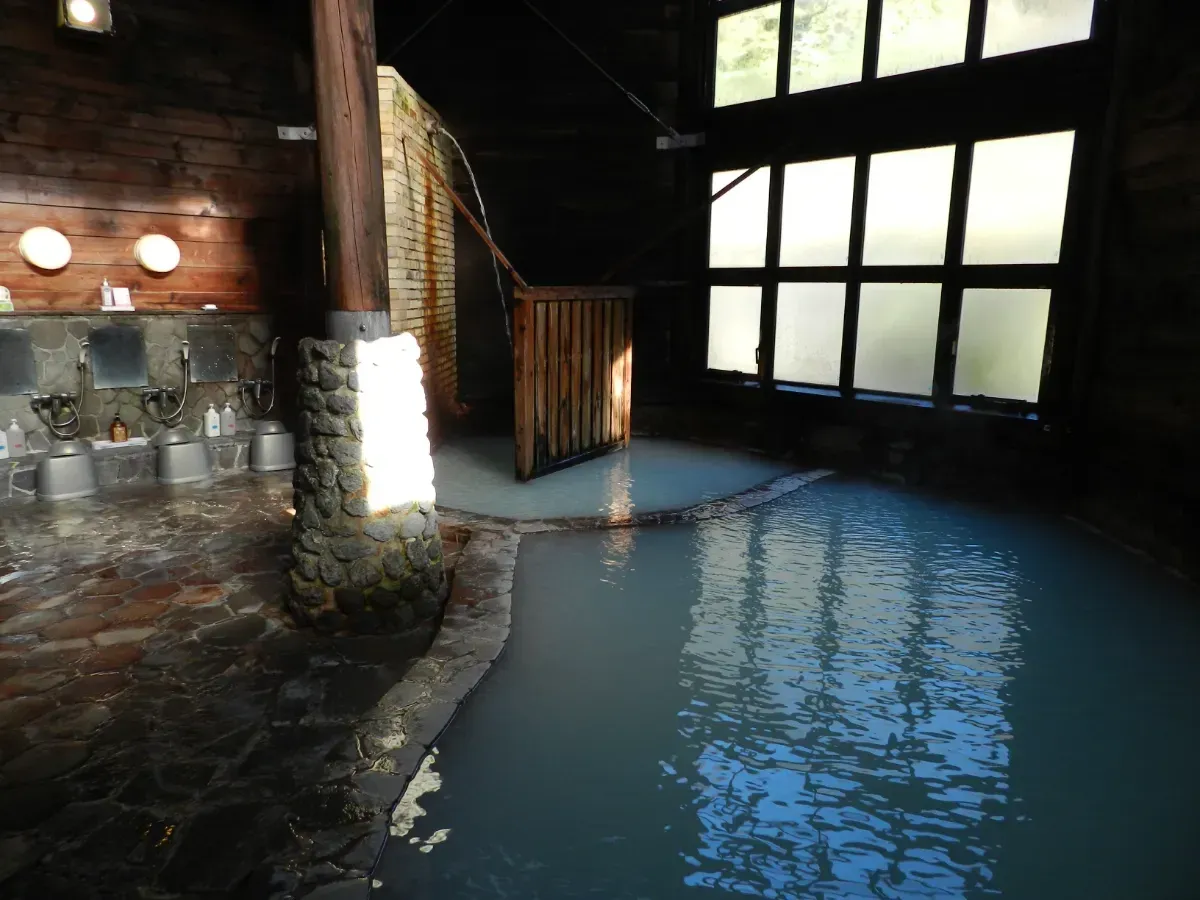
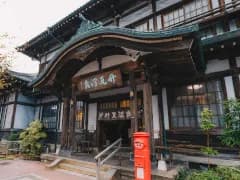
Kojigoku Onsenkan is a public bathhouse situated in the Kojigoku district, approximately 1.5 kilometers from the center of Unzen Onsen. Established as a therapeutic bathing facility in 1731 during the Kyoho era, the site was reportedly visited by the late-Edo period intellectual Yoshida Shoin. The bathhouse opened as a public facility in 1919 and was rebuilt to its current form in 1993.
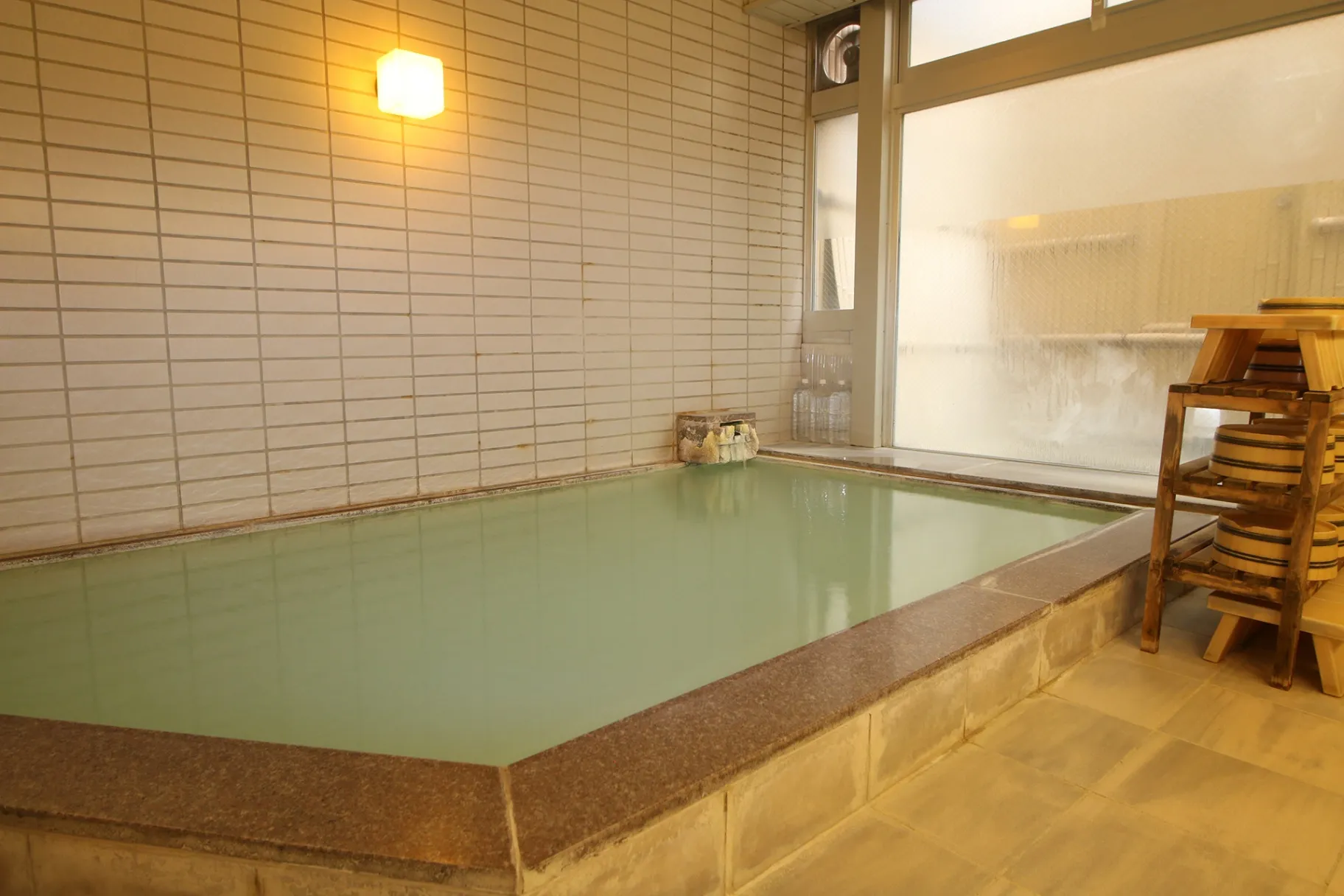
The water is a simple sulfur spring of the hydrogen sulfide type, emerging at 51.1 degrees Celsius with a mildly acidic pH of 4.3. Located directly above the source, the bathhouse receives freshly risen milky-white sulfur water with no intermediary, offering an exceptionally pure bathing experience. The wooden structure, darkened over decades by sulfur deposits, and the high-ceilinged bathing hall evoke the atmosphere of a mountain retreat. Two pools are available: a hotter one at 43 degrees and a cooler one at 40 degrees. Enveloped in the scent of sulfur, the opaque white waters are reputed to benefit neuralgia, poor circulation, chronic skin conditions, diabetes, and hypertension. The bathhouse is widely considered the finest nigori-yu cloudy bath in all of Unzen.
4. Yunosato Onsen Public Bath — Dankyu-buro (Unzen, Unzen City)
引用:Find Unzen HP
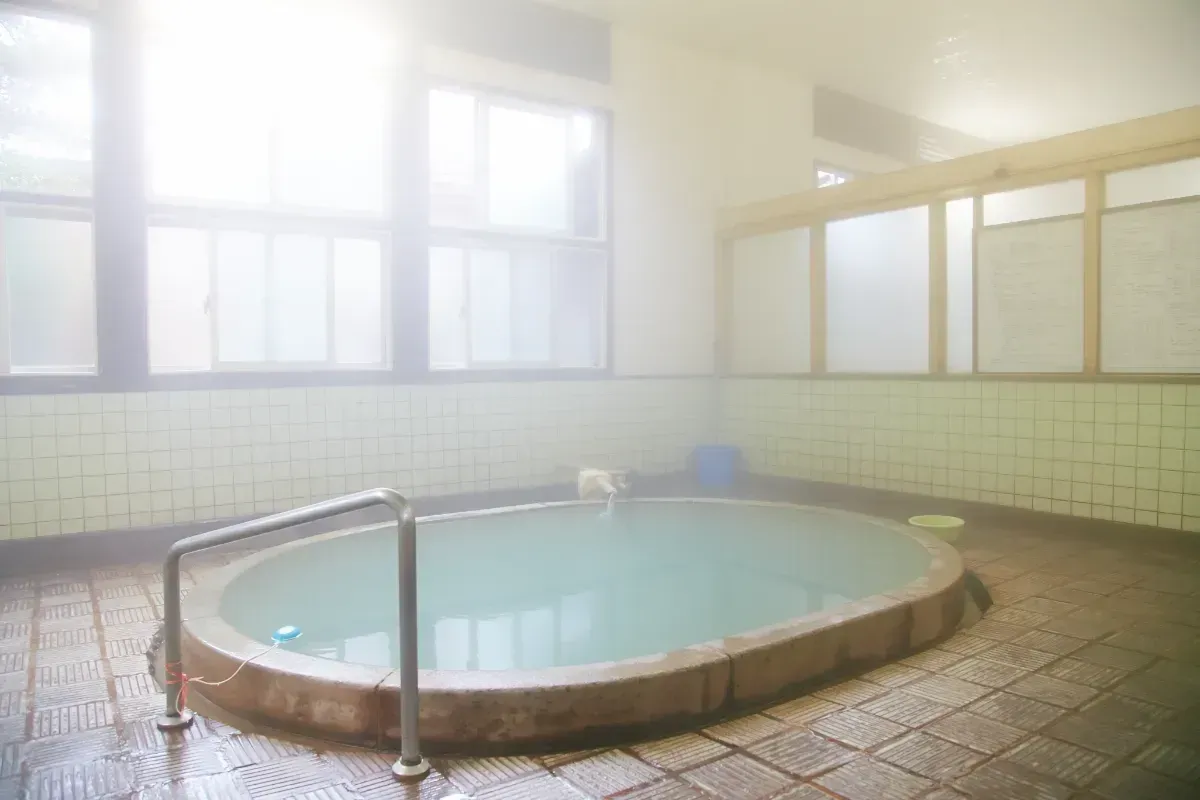
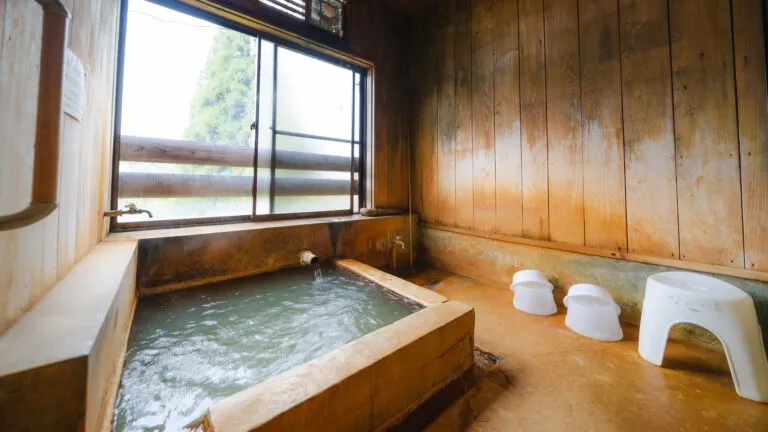
Tucked away in a quiet residential lane behind the Unzen Onsen tourist strip, Yunosato Onsen Public Bath is the oldest communal bathhouse in Unzen, established in 1934. Locals affectionately call it Dankyu-buro, a name derived from the days when pickled-shallot barrels known as dankyu in the local dialect were repurposed as bathtubs. The distinctive deep, oval marble tub preserves this heritage.
The water is a strongly acidic sulfate spring at pH 2.3, sourced from the Shiroishi and Kagamiishi vents of Unzen Jigoku hell. Renowned among residents for relieving neuralgia and chronic skin conditions, the bathhouse remains firmly part of daily local life rather than a tourist attraction. At just 200 yen per visit, it is open from 9:00 to 22:00, closed on Tuesdays. Here visitors can experience an authentic, unpretentious communal soak far removed from the commercialized hot spring facilities nearby.
Otasshan-yu is a traditional public bathhouse in the heart of the Obama Onsen district, established in 1937. Obama Onsen boasts the highest thermal heat output in Japan, with source temperatures reaching 97 to over 100 degrees Celsius. Here, the scalding water is tempered with cold water and delivered as a free-flowing bath. The men's bath features a divided tub, with a hotter side near the inlet and a cooler side, allowing bathers to choose their preferred temperature. The bathhouse retains the atmosphere of the Showa era, kept immaculately clean despite its age, and serves as a cherished daily gathering place for local residents. At just 200 yen per visit, it is open from 6:00 in the morning until 21:00. The sodium chloride water is rich in salt minerals, providing excellent heat retention that keeps the body warm long after bathing. This is a little-known gem where visitors can experience the everyday hot spring culture of Obama Onsen.
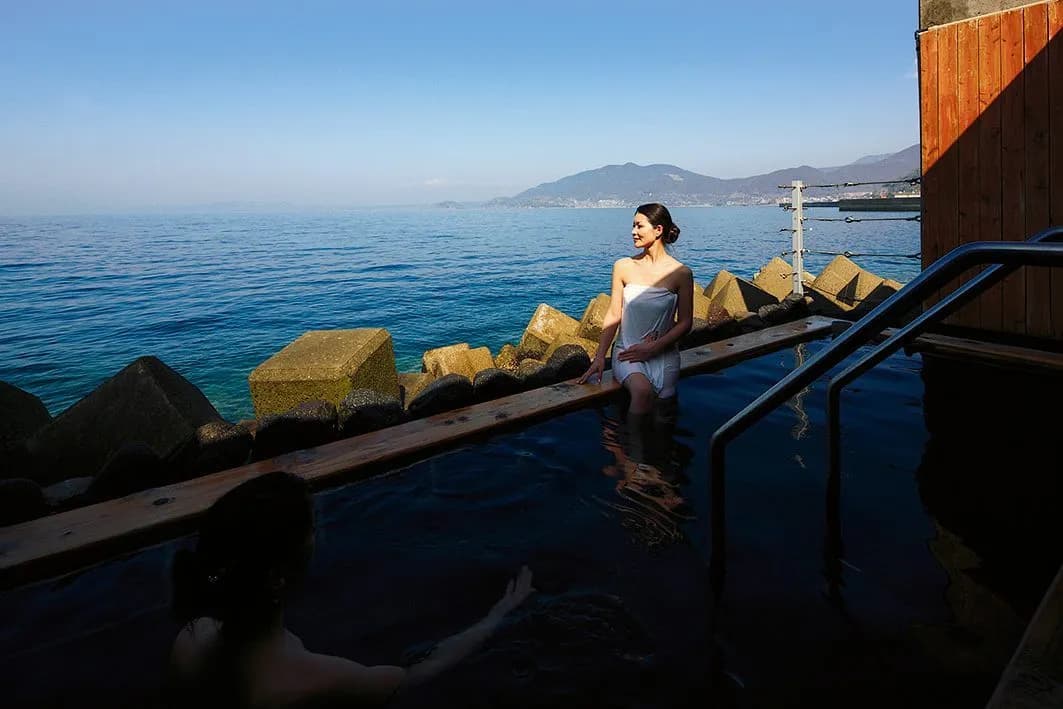
Naminoyu Akane is a one-of-a-kind open-air bath built atop wave-breaking blocks along the shore of Tachibana Bay in Obama Onsen. At high tide, the water surface sits just 20 centimeters above the sea, creating the extraordinary sensation of bathing in the ocean itself. The bath operates by reservation only as a private facility for families, couples, or small groups. The sodium chloride water is drawn from Obama Onsen, which boasts the highest thermal heat emission in Japan. The experience reaches its peak at dusk, when bathers can watch the sun descend into Tachibana Bay while immersed in steaming mineral water. The sound of waves, the distant glow of fishing lights, and the vast expanse of the sea combine for an unforgettable sensory experience. A hot spring steamer is installed beside the bath, allowing guests to steam fresh seafood and vegetables using geothermal heat. The facility may close depending on weather and wave conditions.
Nagisa-no-Yu stands on the northern tip of Tsushima, Japan's northwesternmost inhabited island, in the village of Nishidomari, Kamitsushima. From this seaside hot spring facility, bathers gaze out across the Korea Strait, and on clear days the skyline of Busan, South Korea, is visible to the naked eye. Since antiquity Tsushima has served as a bridge between Japan and the Asian continent, earning it the title of Border Island. The mildly alkaline simple thermal water is gentle on the skin. The facility offers an indoor bath, open-air bath, sauna, cascading bath, and jet bath, with the outdoor tub providing sweeping ocean views. Located roughly two hours by car from the island's main town of Izuhara, the northern reaches of Tsushima attract few tourists, preserving a tranquil, uncommercial atmosphere. The waters are reputed to ease neuralgia, fatigue, muscle pain, and cold sensitivity. Bathing at the very edge of Japan, swept by sea breezes from the strait, is an experience found nowhere else.
8. Natural Carbonated Hot Spring Nomon-yu (Nomozaki, Nagasaki City)
Source: Natural Carbonated Hot Spring Nomon-yu website
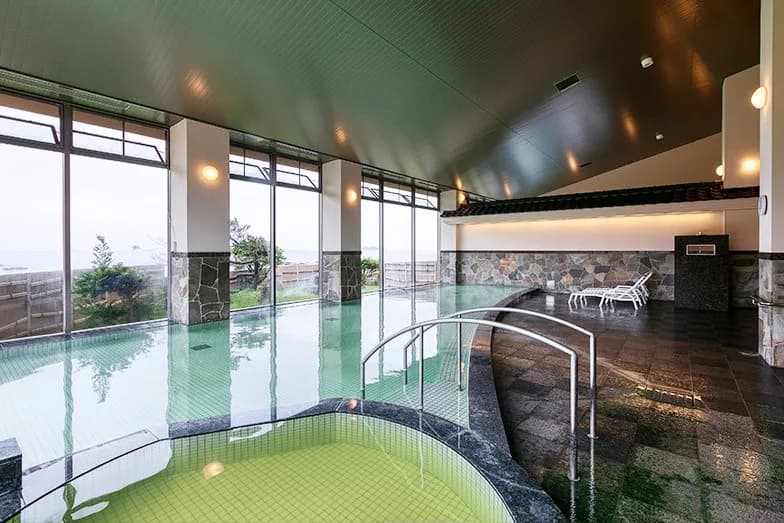
Nomon-yu sits at the southern tip of the Nagasaki Peninsula in the Nomozaki district, home to an exceptionally rare natural high-concentration carbonated spring. The carbonic acid content exceeds 1,000 ppm, ranking among the highest in Japan, and the water also contains approximately 176 mg of metasilicic acid, a mineral prized as a natural skin conditioner. The spring is classified as an iron-bearing carbon dioxide-magnesium-calcium-bicarbonate spring, a remarkably unusual carbonated source for a coastal location. From the main bath, guests enjoy panoramic views of the Goto Sea and the UNESCO World Heritage-listed Gunkanjima (Hashima Island). The recommended bathing method is alternating between the cool 31-degree carbonated pool and the heated baths, a practice said to stimulate the autonomic nervous system and deepen relaxation. The waters benefit high blood pressure, arteriosclerosis, chronic dermatitis, cold sensitivity, and fatigue recovery. The upper floors house Ocean Resort Nomon Nagasaki, where every room offers a view of Gunkanjima.
Yujirou is a day-use hot spring facility in the pottery town of Hasami, Higashisonogi District, Nagasaki Prefecture, reopened in 2010 after a full renovation. The spring water is an alkaline sodium bicarbonate (baking soda) type, celebrated as a skin-beautifying bath thanks to the dual effect of its alkaline and bicarbonate content.
The source naturally contains 72 to 200 ppm of dissolved carbon dioxide, which is further enriched to create a high-concentration carbonated bath. In Germany and Eastern Europe, carbonated springs are known as Heart Baths and have been used therapeutically for centuries. All three indoor baths are fed by free-flowing source water, and even the showers run on hot spring water, an extravagant use of the mineral resource. Hasami Town is famed for Hasami-yaki pottery, a tradition rivaling neighboring Arita, and visitors can combine kiln tours with a relaxing soak. Frequented mainly by local regulars, Yujirou remains a hidden gem largely unknown to tourists.
10. Mingei Modern Inn Unzen Fukudaya (Unzen, Unzen City)
Unzen Fukudaya is a long-established ryokan in the heart of Unzen Onsen, founded in 1968 and having welcomed over 1.1 million guests. Under the concept of Mingei Modern, the inn blends traditional folk-craft aesthetics with contemporary comfort.
The water is a simple acidic sulfur-iron (II) spring of the hydrogen sulfide and ferrous sulfate type, rising at 56.1 degrees Celsius with a strongly acidic pH of 2.4. Every bath in the inn is fed by free-flowing milky-white sulfur water, and the signature experience is the Eight-Bath Circuit, a journey through eight distinctively designed baths within the property. The panoramic open-air Kunpu-no-Yu at the Sansho Annex commands sweeping views of the Unzen mountain range, while the Seseragi-no-Yu outdoor bath in the main building offers a soak amid the murmur of a mountain stream. The indoor Hakuun-no-Yu provides both a hot and a tepid pool, and the Fugen-no-Yu includes a sauna. Multiple private baths are also available. Therapeutic benefits include relief for hypertension, arteriosclerosis, chronic skin conditions, atopic dermatitis, diabetes, and cold sensitivity.
Day-trip bathing is also welcome, making this a rewarding destination for experiencing Unzen's celebrated white sulfur waters to the fullest.
Summary — What to Know Before Exploring Nagasaki's Hot Springs
The hot springs of Nagasaki Prefecture can be efficiently explored by dividing them into five main areas.
Unzen & Obama Area: The core of Nagasaki's hot spring culture. Kojigoku Onsenkan and Dankyu-buro (Unzen) and Otasshan-yu, Naminoyu Akane, and Ryokan Kunisaki (Obama) are all within a 20-minute drive of each other. A 1-night/2-day itinerary combining Unzen's sulfur baths with Obama's seaside springs is ideal. About 50–60 minutes by car from Isahaya IC.
Iki Island Area: Hirayama Ryokan is reached via jetfoil from Hakata Port (about 70 minutes) plus a 25-minute drive. Iki is compact enough for a day's exploration, with Iki beef, Iki shochu, and the Harunotsuji ruins rounding out a 1-night/2-day trip. Ferries may be canceled in rough winter seas, so allow schedule flexibility.
Tsushima Area: Nagisa-no-Yu sits at Tsushima's northern tip. The jetfoil from Hakata to Hitakatsu Port is the most convenient access. A full exploration of Tsushima warrants 2 nights/3 days. A rental car is essential on the island. Combine with the Korea Observatory and Watazumi Shrine.
Goto Archipelago Area: Arakawa Onsen is on Fukue Island's western coast, reached via jetfoil from Nagasaki Port (about 85 minutes) plus a 35-minute drive. A 2-night/3-day trip combining the Goto church group and beaches is ideal. Watch sea conditions in winter.
Southern Nagasaki & Hasami Area: Nomon-yu is just 40 minutes by car from central Nagasaki, pairing well with a Gunkanjima cruise. Hasami Onsen Yujirou is 5 minutes from Hasami-Arita IC, perfect for a stop after touring Arita and Hasami pottery kilns.
Seasonal Notes: Island ferry routes (Iki, Tsushima, Goto) experience frequent cancellations from December through February due to rough seas. Always check weather forecasts and build buffer days into your itinerary. Unzen may receive snow in winter, requiring chains or snow tires. Naminoyu Akane in Obama closes in stormy weather; call ahead to confirm.
The information in this article (admission fees, operating hours, water quality data, etc.) is based on research conducted at the time of writing. Details may have changed or contain errors. Please verify the latest information on each facility's official website or through the local tourism association.