10 Best Hot Springs in Ehime Prefecture — From Ancient Dogo Onsen and the Three Great Springs of Iyo to a Seto Inland Sea Seawater Bath
Ehime Prefecture occupies the northwestern corner of Shikoku, blessed with a mild climate where the Seto Inland Sea meets the Uwa Sea. At the heart of the historic land of Iyo lies Dogo Onsen, recorded in the Nihon Shoki (Japan's oldest official chronicle) and counted among the oldest hot springs in Japan, with a heritage said to span some 3,000 years. Across the centuries it has welcomed Prince Shotoku, Emperor Jomei, the novelist Natsume Soseki, the haiku master Masaoka Shiki, and countless other figures whose lives are woven into Japanese cultural memory. Beyond Dogo, Ehime is also home to the so-called Three Great Hot Springs of Iyo — Dogo Onsen, Nibukawa Onsen, and Hontani Onsen — each preserving a documented history reaching back to the Heian period or earlier. Geographically, the prefecture is just as varied: to the north, the Seto Inland Sea and the island-hopping Shimanami Kaido stretch in a tableau of multi-island scenery; the central spine is dominated by the Ishizuchi mountain range, home to the highest peak in western Japan; and to the south unfold the karst plateau of Shikoku and the deeply indented rias coast of the Uwa Sea. Castle towns, port towns, pilgrimage routes, and remote mountain and fishing villages all share the warmth of Ehime's bathing culture. From this rich landscape we have selected 10 distinctive hot springs spanning the Matsuyama district, the deep moor and mineral springs of the eastern Toyo region, a mountain sulfur spring in the south, and a unique seawater thalassotherapy facility on the Shimanami Kaido.
1. Dogo Onsen Funaya (Matsuyama City, Ehime)
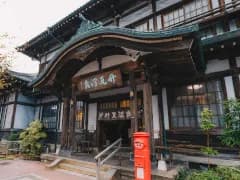
Funaya is the most venerable ryokan in the Dogo Onsen district, with approximately 400 years of unbroken hospitality. Founded during the Kanei era (around 1627) as Funaya Ryokan, it has welcomed literary giants such as Natsume Soseki and Masaoka Shiki as well as members of the Imperial family, earning a reputation as one of the most prestigious traditional ryokan in Japan. Located within walking distance of the historic Dogo Onsen Honkan, the inn features Eifutei, an approximately 1,500-tsubo (5,000 square meter) Japanese garden with flowing streams, moss-covered stone arrangements, and seasonal flora that captivates visitors at every step.
The water is drawn directly from the Dogo Onsen source and classified as an alkaline simple hot spring with a source temperature of 46.8 degrees Celsius and a pH of 9.1. Funaya uses 100 percent source water with no dilution — a level of indulgence rare even in the Dogo district — and is renowned for one of the most abundant water flows among the local ryokan. The colorless, transparent water with its silky touch is celebrated as a beautifying bath and is traditionally indicated for neuralgia, skin conditions, rheumatism, gout, chronic digestive disorders, and anemia. The two main bathhouses, Hinoki-yu (Japanese cypress) and Mikage-yu (Iyo blue granite), both offer outdoor baths and saunas, with morning and evening rotations between men and women. Day-trip bathing is available for 1,800 yen (1,650 yen bath fee plus 150 yen bathing tax) from 11:30 to 22:00, and a complimentary footbath in the garden is open to guests from 12:00 to 20:30. Just a 3-minute walk from Dogo Onsen Station on the Iyotetsu city tram, or about 40 minutes by limousine bus from Matsuyama Airport.
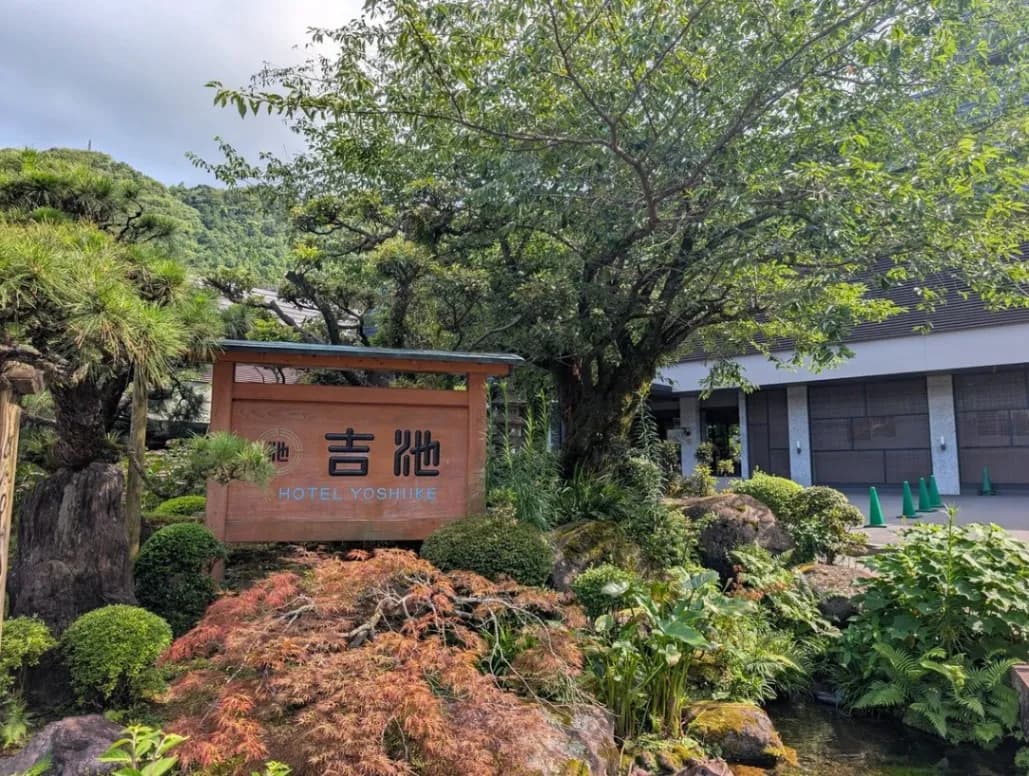
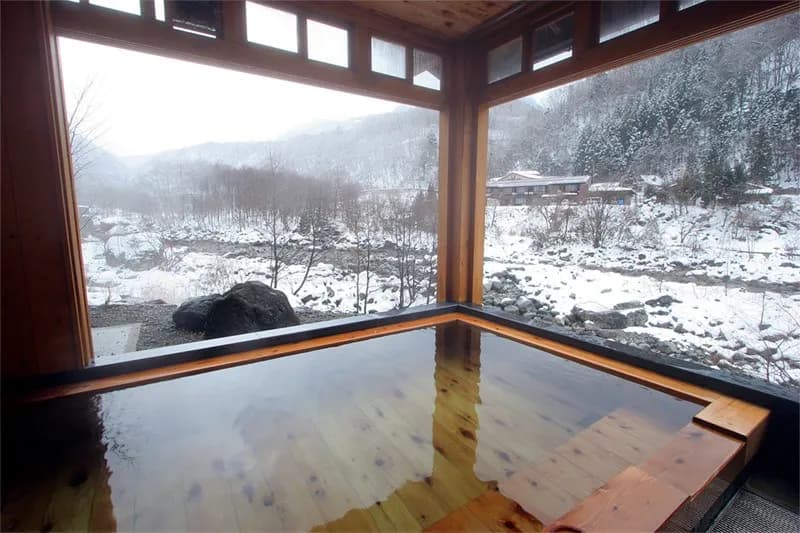
A flagship inn of Nibukawa Onsen, one of the Three Great Hot Springs of Iyo, set beside the clear streams of Nibukawa Gorge in the mountains of Imabari City. The history of Nibukawa Onsen reaches back to the Heian period, when its waters were said to first emerge, and during the Edo period it served as a healing spa for samurai and townspeople of the Imabari Domain. The site was formally redeveloped by the former Imabari clan in 1871, the local cooperative was founded in 1925, and the opening of mountain roads in 1952 catalyzed the rise of today's hot spring village. The hotel sits within Okudogo Tamagawa Prefectural Natural Park.
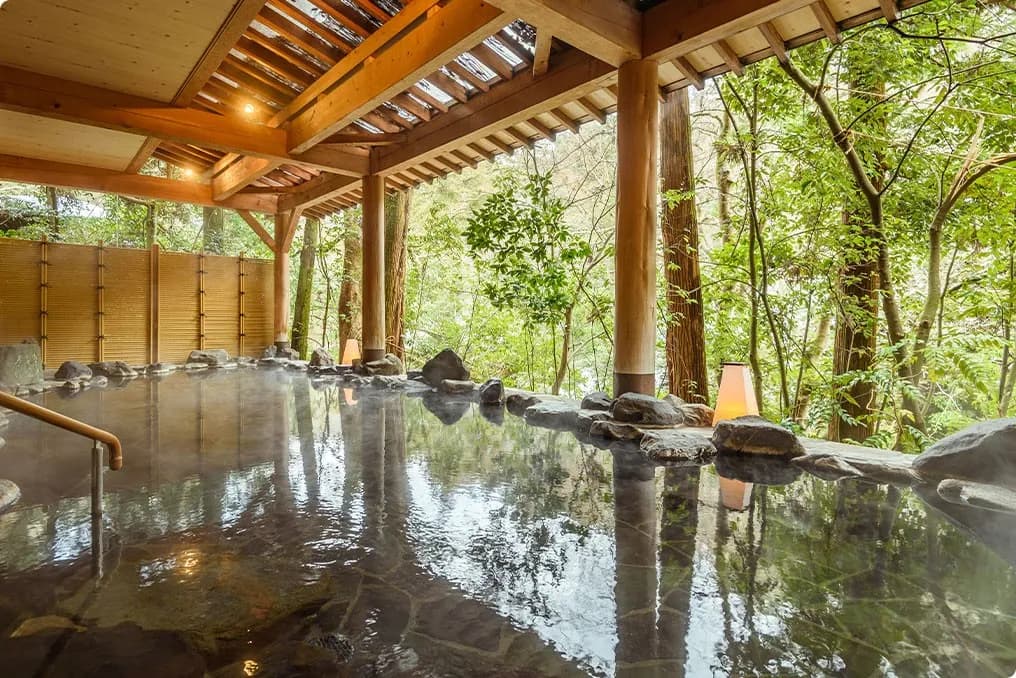
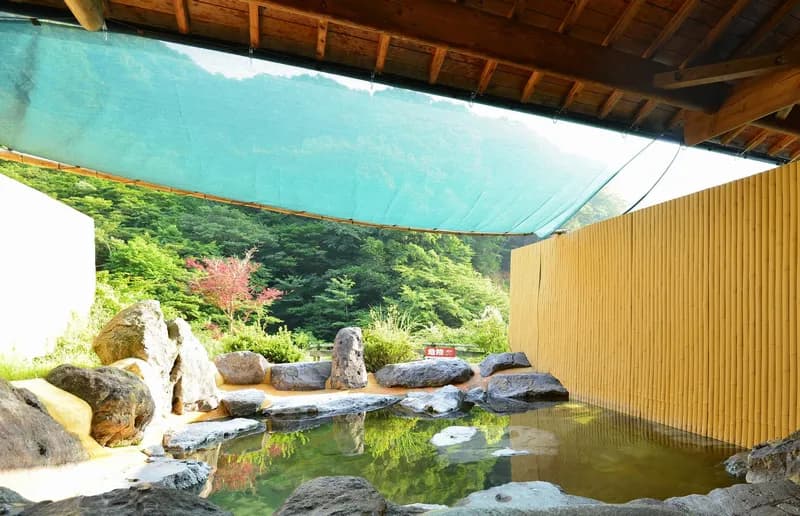
The water is classified as a hypotonic alkaline cold mineral spring with a remarkably high pH of 9.9 and a notable radon content. Although the source temperature is around 20 degrees Celsius and must be heated for bathing, the silky-smooth feel leaves the skin soft and supple, and the spring has long been celebrated as a Bijin-no-Yu (Beauty Bath). It is sought out for benefits to neuralgia, muscle and joint pain, poor circulation, fatigue, and especially skin beauty. The signature feature is the open-air bath framed by the changing seasons of Nibukawa Gorge — vivid greenery in spring, cool streams in summer, fiery foliage in autumn, and silent snowscapes in winter. Of its 28 guest rooms, 5 come with private hot spring baths. Day-trip bathing is welcomed from 6:00 to 17:00 at an affordable 500 yen for adults and 250 yen for children. About 25 minutes by car from Imabari-Yunoura IC on the Imabari-Komatsu Expressway, or 30 minutes by Setouchi Bus from JR Imabari Station — an excellent base for the Shimanami Kaido and the Imabari towel district.
Believed to be the oldest of the Three Great Hot Springs of Iyo, with an astonishingly deep recorded history. The Nihon Shoki notes that in 639 CE the 34th Emperor Jomei visited the Iyo hot spring with his empress (later Empress Saimei), giving the spring more than 1,300 years of documented use. Tucked into a quiet mountain valley along the upper reaches of the Daimyojin River, about 5 km southwest of Iyo-Miyoshi Station, the inn offers seasonal scenic beauty year-round. On April 9, 2026, the facility was renovated under the Sanfuku Group as SPA P SPO Hondani Onsen, gaining a Finnish-style sauna, karaoke room, and campground.
The spring is classified as a hypotonic alkaline cold mineral spring with a source temperature of approximately 19 degrees Celsius, requiring heating for bathing. The colorless, odorless water has a soft, gentle texture that seems to melt into the skin, and has long been cherished as a Bijin-no-Yu. Therapeutic indications include neuralgia, muscle pain, joint pain, frozen shoulder, chronic digestive disorders, cold sensitivity, fatigue recovery, chronic skin conditions, and chronic gynecological ailments. The complex consists of two buildings: the main hall houses an indoor bath and a private family bath, while the annex offers an indoor bath, an open-air bath, a sauna, and a cold-water bath. Day-trip admission is 700 yen for adults, 350 yen for children, and the family bath is 3,000 yen per 90 minutes. Open 10:00 to 22:00 (last entry 21:30), year-round. About 15 minutes by car from Saijo IC on the Matsuyama Expressway, or a short bus ride from JR Nyugawa Station to the Onsenkan-mae stop.
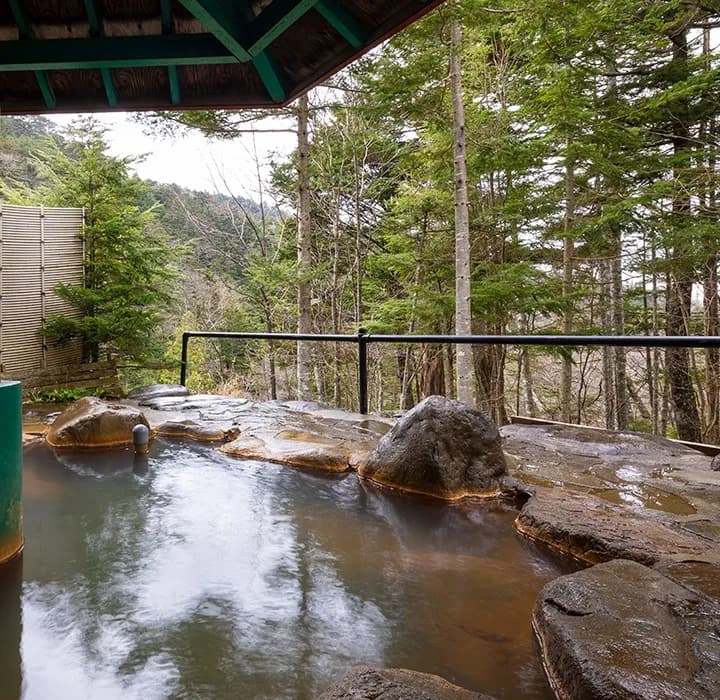
Tucked deep in the mountains of Makigawa, Tsushima-cho, Uwajima City, near the border with Kochi Prefecture, Haraigawa Onsen is a hidden day-trip hot spring known to connoisseurs as one of the rare sulfur springs in Shikoku. The rustic log-cabin-style bathhouse stands quietly amid lush greenery, inviting visitors into an extraordinary stillness far from the bustle of daily life. While this small communal bathhouse may occasionally close due to source equipment issues, that very modesty is part of its charm.
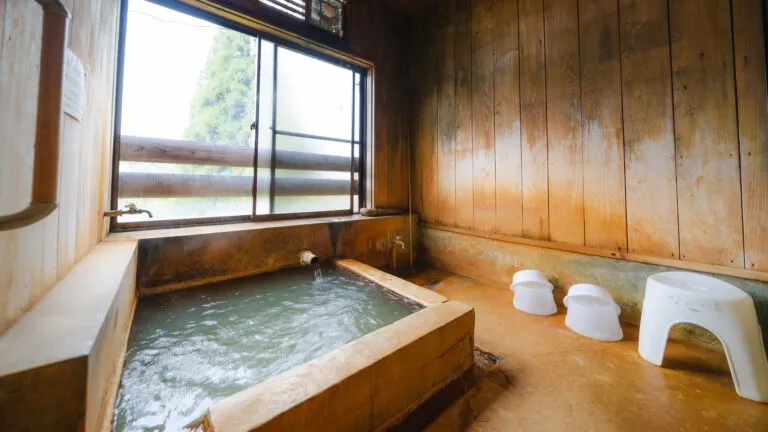
The water is classified as a simple sulfur cold mineral spring with a pH of approximately 8.9 (alkaline) and a source temperature of around 16 degrees Celsius. The facility has long preserved the traditional method of slowly heating the cold spring water with firewood, and a gentle aroma of burning wood drifts through the bathing area. The silky, source-flow water is said to leave the skin moisturized long after bathing, thanks to the effects of sulfur. The waters are reputed to ease a wide range of conditions, including skin ailments, high blood pressure, arteriosclerosis, neuralgia, poor circulation, and fatigue. The facility is divided into two public baths (Sakura-yu and Ume-yu) and three private family baths (Sagiso-yu, Rindo-yu, and Momiji-yu), each available for 50-minute private rental. General bath admission is very reasonable at 450 yen for adults, 150 yen for children, and 350 yen for seniors aged 65 and over. Open 10:00 to 20:30 (last entry 19:30), closed on the 1st and 20th of each month and during the New Year holidays. About 1 hour by car from central Uwajima; mountain roads can be icy in winter, and visitors are strongly advised to call ahead to confirm operations.
A solitary inn standing in a scenic area where the strange rock formations of the nationally designated scenic spot Furuiwaya tower above. Opened in 1974, this public lodging sits at the geographical midpoint of the Shikoku 88 Sacred Temples pilgrimage route and has been beloved both by locals and by ohenro pilgrims. Located about 9 kilometers northwest of central Kumakogen Town, surrounded by deep mountains and clear streams, it offers an ideal quiet setting to escape from the rush of daily life.
The Furuiwaya Onsen water is classified as an alkaline simple cold mineral spring (hypotonic alkaline cold mineral spring) with a pH of 8.9. The source temperature is a chilly 13.8 degrees Celsius, so the water is heated to bathing temperature before being supplied to the baths. Characteristic of alkaline springs, the water has a smooth, silky texture, and bathers often comment on how soft and moisturized their skin feels afterward. With a long history as a therapeutic bathing site, the water is known to provide a wide range of benefits including beautiful skin, relief from rheumatism, fatigue recovery, and improved circulation. The bathing facilities feature elegant stone baths constructed with natural rocks, and large glass windows offer panoramic views of the magnificent Furuiwaya formations and the seasonal mountain scenery. Overnight guests can sample local cuisine such as pheasant soba and Ishizuchi wild boar curry. Day-trip bathing runs from 12:00 to 20:00 (last entry 19:30, closed Wednesdays) at 500 yen for adults, 300 yen for elementary students, and 200 yen for preschoolers; in winter (January 1 to February 28), opening shifts to 15:00. About 50 minutes by car from Matsuyama IC via Route 33, with parking for 50 vehicles.
6. Yawatahama Kuroyu Onsen Minato-yu (Yawatahama City, Ehime)
The only hot spring facility in Yawatahama, and the first in the Chugoku and Shikoku regions to offer a kuroyu (black moor spring) experience. Yawatahama, known for its mandarin oranges and seafood, is a port town serving as a gateway to Kyushu via its ferry terminal, and this public bathhouse stands right next to the port. It is beloved by locals, tourists, and long-distance ferry passengers alike, and was renovated in 2018 to create a clean, modern space.
The defining feature is the kuroyu moor spring drawn from approximately 950 meters underground. Over countless years, plant-derived organic matter such as humic acid has dissolved into the water, giving it a striking amber to dark brown color reminiscent of black tea. Classified as an Iron(II)-bearing sodium-bicarbonate cold mineral spring (hypotonic, alkaline, cold mineral spring), the water provides excellent moisturizing and heat-retention properties, leaving the skin smooth and silky after bathing — earning it the local nickname Beauty Bath. Beyond the spacious indoor main bath, the outdoor area features a fragrant cypress bath and a natural stone rock bath using salt water for skin-tightening effects. The far-infrared gas sauna (85 degrees Celsius for men, 80 degrees for women) is highly rated by sauna enthusiasts, and the cold plunge uses groundwater at a refreshing 17 degrees for men and 15 degrees for women. Open 9:00 to 23:00 (last entry 22:30), year-round. Admission is 700 yen for adults on weekdays and 800 yen on weekends and holidays, with a 100 yen discount every Wednesday. Free parking for 37 cars. After arriving via ferry from Beppu or Usuki in Kyushu, a soak here is the perfect way to wash away travel fatigue.
7. Maintopia Besshi - Besshi Onsen Tenku no Yu (Niihama City, Ehime)
A day-use hot spring on the fourth floor of the Maintopia Besshi tourist complex, built on the industrial heritage of the former Besshi Copper Mine, once described as one of the largest mines in the East. The Besshi Mine, opened in 1691, supported the Sumitomo Group for 283 years until its closure in 1973, and today its tunnels and mine railway draw history fans from across Japan. The current bathhouse reopened in April 2016 after a complete renovation of the former Healthy Land Besshi facility, and was named Tenku no Yu (Sky Bath) for its lofty position at roughly 170 meters elevation overlooking the deep mountains and the Kokuryo River gorge.
The source is the Besshi Kosen No. 3 Spring, a sodium-calcium chloride and bicarbonate cold mineral spring (hypotonic, neutral, cold mineral spring) with a gentle pH of 7.1. As a cold spring it is heated for bathing, but the well-balanced minerals leave the skin smooth and moisturized, and the water is recognized for general indications including neuralgia, muscle and joint pain, sensitivity to cold, frozen shoulder, fatigue, and recovery from illness. Two themed bathhouses, the Wood Bath and the Stone Bath, alternate between men and women on a roughly weekly basis. Each features a main pool, an open-air carbonated spring (around 37.8 degrees Celsius) and oxygen spring (around 42.6 degrees Celsius) created with technology from a local Niihama company, plus jar baths, lie-down baths, jet baths, a far-infrared sauna, a cold plunge, and outdoor relaxation spaces. Rock baths and salt rock baths are available for an additional 450 yen. Open 10:00 to 22:00 (last entry 21:00); admission 650 yen for adults, 550 yen for seniors 65 and over, 300 yen for elementary and junior high students, 200 yen for younger children. About 15 minutes by car from Niihama IC, or 20 minutes by Setouchi Bus from JR Niihama Station. The complex also offers a guided mine tunnel tour, gold panning, a kids park, and the Mori no Kaze restaurant.
8. Auberge Uchiko (Uchiko Town, Kita District, Ehime)
A Japanese-style auberge set in Ryuoh Park, just outside the historic streets of Uchiko Town — a town that flourished from the late Edo to Meiji periods through the production of mokuro (Japanese vegetable wax) and whose traditional townscape is preserved as one of Japan's most evocative historic districts. Slightly removed from the lively streets, Auberge Uchiko offers a Japanese-modern space wrapped in locally produced Uchiko cedar and washi paper, with all 5 detached villa-style rooms (Private Villa and Suite Villa) intentionally without TVs or clocks, providing the experience of "the luxury of doing nothing." The auberge is also renowned for its innovative French cuisine, prepared by chefs over wood fire using carefully sourced Uchiko and Ehime ingredients.
The hot spring is classified as a hypotonic mildly alkaline spring with a pH exceeding 10 — a strongly alkaline water. The free-flowing source water has a distinctive smooth and slightly slippery texture, leaving the skin feeling silky after bathing, and is known for benefits to neuralgia, muscle pain, joint pain, fatigue recovery, and skin beauty. The large bath is designed with extensive use of Iyo blue stone, an Ehime specialty, with full glass walls creating an open and airy atmosphere. In addition to gender-separated indoor baths, the open-air bath paved with blue stone offers panoramic views of Uchiko Town and seasonal natural beauty. An authentic dry sauna (approximately 92-94 degrees Celsius), a cold-water bath (approximately 15-20 degrees), and outdoor relaxation chairs make this a rare facility where both serious onsen and sauna culture can be enjoyed at high quality. Day-use bathing runs from 11:00 to 20:30 (last entry 20:00, closed Wednesdays); admission 1,000 yen for non-resident adults and 500 yen for children. Overnight stays start from 42,200 yen per night with two meals. About 10 minutes from Uchiko-Ikazaki IC on the Matsuyama Expressway, or 5 minutes by taxi from JR Uchiko Station, with 200 free parking spaces.
A natural hot spring day-trip facility in Hatadera 3-chome, eastern Matsuyama, drawing its waters from 1,000 meters underground at the foot of Hantaji Temple — the 50th sacred site of the Shikoku 88 Temple Pilgrimage. Long beloved as a relaxation hub for Matsuyama residents, the facility's combination of large public baths and 20 private family baths makes it equally welcoming to visiting travelers. The spring is classified as an alkaline simple hot spring (hypotonic alkaline low-temperature spring), characterized by gentle, smooth water that is kind to the skin, with benefits ranging from neuralgia, muscle pain, joint pain, stiff shoulders, frozen shoulder, poor circulation, and fatigue recovery.
The defining feature is the variety of bathing options. The large public bath offers 9 different bath types (10 in the women's bath), including an open-air microbubble bath, an electric bath, a 36.5-meter walking bath called the Rehabilitation Bath, and the original Aqua Review unique to Himehiko. The entire bathing floor is paved with Matera stone, a natural mineral that emits far-infrared rays, transmitting warmth from the feet while providing slip resistance. The 20 private family baths are available 24 hours a day (advance reservation required on weekdays), spanning seven room types from premium options with open-air baths, saunas, and cold plunges, to Japanese cypress baths fragrant with Koyamaki wood, to standard rooms made with Matera stone. Public bath admission is 700 yen for adults on weekdays, 750 yen on weekends and holidays, with a discounted morning bath (9-11 AM and 4-7 AM) at 500 yen. Family baths start from 3,000 yen for 60 minutes. About 20 minutes by car from Matsuyama IC, with free parking for 150 vehicles.
10. Mare Grassia Omishima (Omishima-cho, Imabari City, Ehime)
A marine bathing facility on the coast of Omishima Island along the Shimanami Kaido. The name Mare Grassia is Italian for "the bounty of the sea," and true to its name, the facility incorporates the principles of thalassotherapy — marine therapy combining seawater, seaweed, and the maritime climate. Please note that this is not a hot spring as defined by Japan's Onsen Law, but rather a thalassotherapy (seawater bathing) facility that heats seawater drawn from the Seto Inland Sea. With the calm waters of the Seto Inland Sea and its constellation of islands stretching directly before it, the facility has long been beloved by cyclists traversing the Shimanami Kaido, sightseers, and locals alike.
The defining feature is the seawater bath, where water drawn from the Seto Inland Sea is heated for bathing. The abundant minerals and ions in seawater — sodium, magnesium, calcium, potassium, and others — are absorbed through the skin, promoting metabolism, retaining body heat, and toning the skin in line with classical thalassotherapy principles. As the salt concentration is far higher than that of typical fresh water, soaking sessions in the seawater bath are limited to about five minutes to prevent strain on the body. Beyond the signature seawater bath, the bathhouse features a jet-equipped massage bath, a reclining bath, a walking bath, a seasonal event bath featuring herbal infusions or yuzu citrus, a 92-93 degree Celsius far-infrared gas stove sauna, and a flowing 18-degree cold plunge pool. The crowning highlight is the open-air bath overlooking the Seto Inland Sea, where bathers can watch the orange sun sink below the horizon. Open 10:00 to 20:00 (last entry 19:30), closed every Wednesday and the first Tuesday through Thursday of February. Admission is reasonably priced at 700 yen for adults, 350 yen for children, and 560 yen for seniors aged 65 and over, with free parking for 60 vehicles. Towels, soap, and shampoo must be brought from home or purchased on site. About 15 minutes by car from Omishima IC on the Shimanami Kaido — an excellent pairing with a visit to the venerable Oyamazumi Shrine or a Shimanami cycling tour.
Summary — What to Know Before Exploring Ehime's Hot Springs
The hot springs of Ehime Prefecture can be efficiently explored by dividing them into three traditional regions: Chuyo (central, around Matsuyama), Toyo (eastern, around Imabari/Saijo/Niihama), and Nanyo (southern, around Uwajima/Yawatahama/Uchiko).
Chuyo (Matsuyama Area): Five facilities sit in or near this region — Dogo Onsen Funaya, Himehiko Onsen, Kokumin Shukusha Furuiwayasou, Auberge Uchiko, and Hondani Onsenkan. Within Matsuyama City, Funaya and Himehiko are about 20 minutes apart by car. A classic itinerary begins with a stay at Funaya in the Dogo Onsen district — combining a soak with visits to Dogo Onsen Honkan, the Asuka-no-Yu annex, and the lively shopping arcade — followed by a casual day-trip soak at Himehiko Onsen. From there, a 2-night/3-day plan can extend to Furuiwayasou in Kumakogen Town, encountering pilgrim culture at the midpoint of the Shikoku 88 sacred temples, and to Auberge Uchiko for a Japanese-modern stay paired with French cuisine over wood fire. Hondani Onsenkan, although closer to the Toyo region, lies about an hour from Matsuyama IC and makes an ideal stop bridging Chuyo and Toyo.
Toyo (Imabari, Saijo, and Niihama Area): Nibukawa Onsen Hotel, Hondani Onsenkan, Maintopia Besshi (Tenku no Yu), and Mare Grassia Omishima all fall in this region. Starting from Imabari, soak first in the gorge-side beauty bath at Nibukawa, then head out onto the Shimanami Kaido, visit Oyamazumi Shrine on Omishima, and experience seawater thalassotherapy at Mare Grassia Omishima — a quintessential island-hopping route. Adding Hondani Onsenkan in Saijo and Tenku no Yu at Maintopia Besshi in Niihama yields a deeper Toyo itinerary that pairs the ancient waters of the Three Great Springs of Iyo with the industrial heritage of the once-famous Besshi Copper Mine. Hondani and Maintopia Besshi are roughly 30 minutes apart by car.
Nanyo (Uwajima, Yawatahama, and Uchiko Area): Haraigawa Onsen, Yawatahama Kuroyu Onsen Minato-yu, and Auberge Uchiko anchor this region. Driving south on the Matsuyama Expressway, a stay at Auberge Uchiko paired with a stroll through Uchiko's preserved townscape leads naturally to Yawatahama Port, where Minato-yu offers the rare experience of a deep underground moor spring — an excellent fit if you are also taking a ferry to or from Kyushu (Beppu or Usuki). Continuing further south, Haraigawa Onsen rewards adventurous travelers with one of Shikoku's rare sulfur springs in a hidden mountain valley. Uchiko to Yawatahama takes about 45 minutes by car; Yawatahama to Haraigawa about another hour, but the natural and port-town culture of Nanyo more than justify a 2-night/3-day exploration.
Overall, a rental car is essential for fully exploring Ehime's hot springs. While Dogo Onsen, Himehiko Onsen, and Yawatahama's Minato-yu can all be reached fairly easily by public transport, mountain facilities such as Haraigawa Onsen, Furuiwayasou, and Hondani Onsenkan have very limited bus service and are far easier to visit by car. The Shimanami Kaido (Nishiseto Expressway) — a roughly 60 km expressway connecting Onomichi (Hiroshima Prefecture) on the Honshu side with Imabari, hopping between islands such as Omishima and Hakatajima — makes a particularly rewarding way to enter Ehime, especially for cyclists. Ferries arriving at Yawatahama Port from Beppu or Usuki in Kyushu likewise offer a memorable approach via Nanyo. In winter (December to February), snow and ice are common in the Ishizuchi range, the Shikoku karst plateau, and other mountain areas, so snow tires or chains are recommended. Some facilities — including Hondani Onsenkan and Haraigawa Onsen — may close temporarily for renovations or equipment issues, and others have seasonal schedules. Always confirm the latest operating status on the official website or by phone before your visit.
The information in this article (admission fees, hours, water quality data, etc.) was compiled based on research at the time of writing. Errors or changes may occur. Please verify the latest information on each facility's official website or local tourism association.