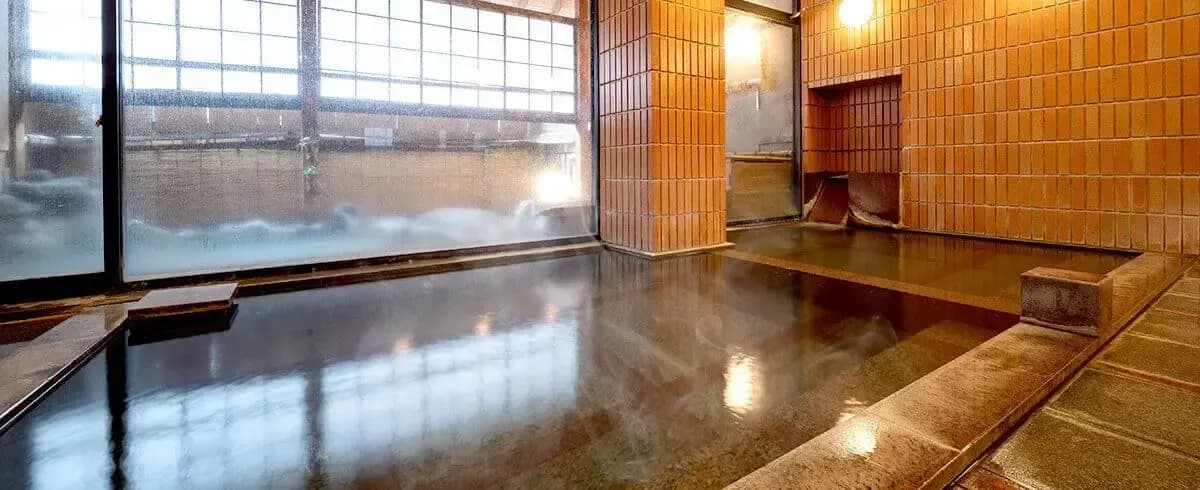
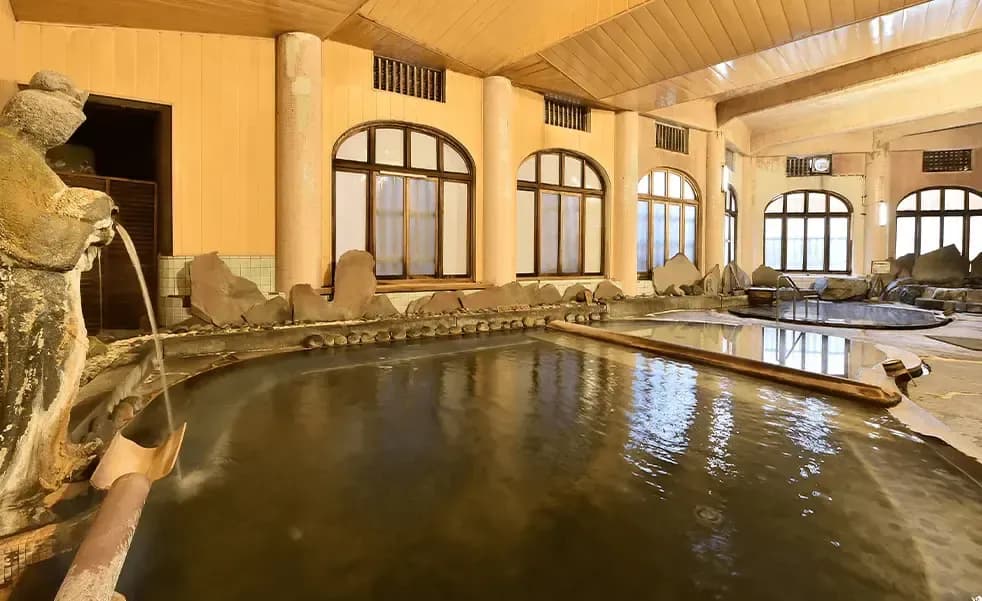
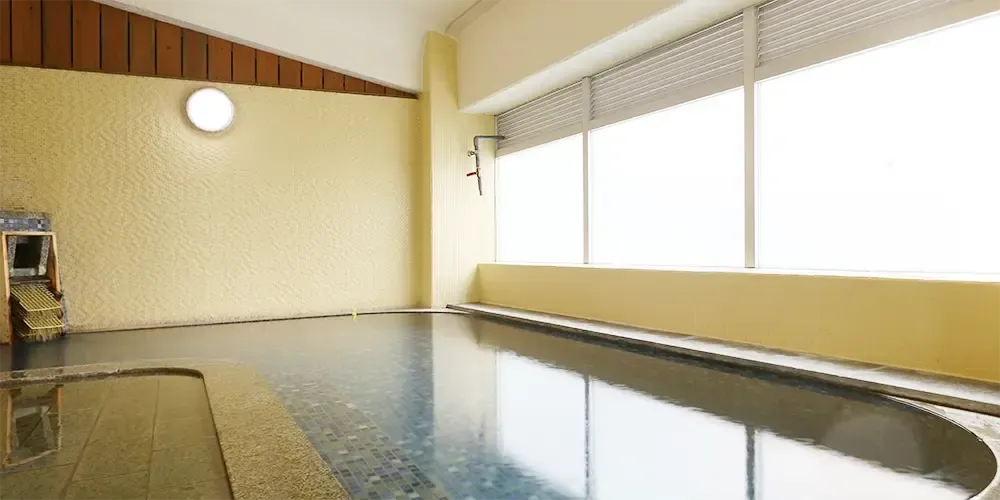
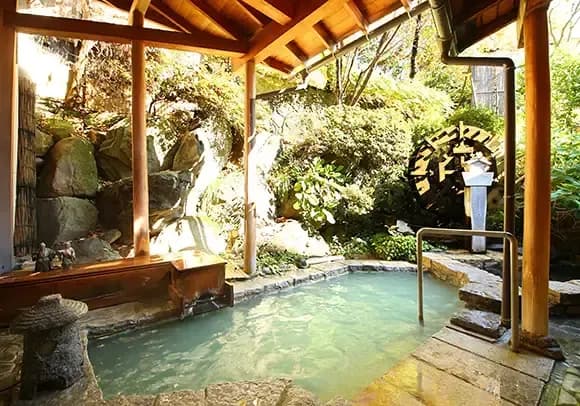
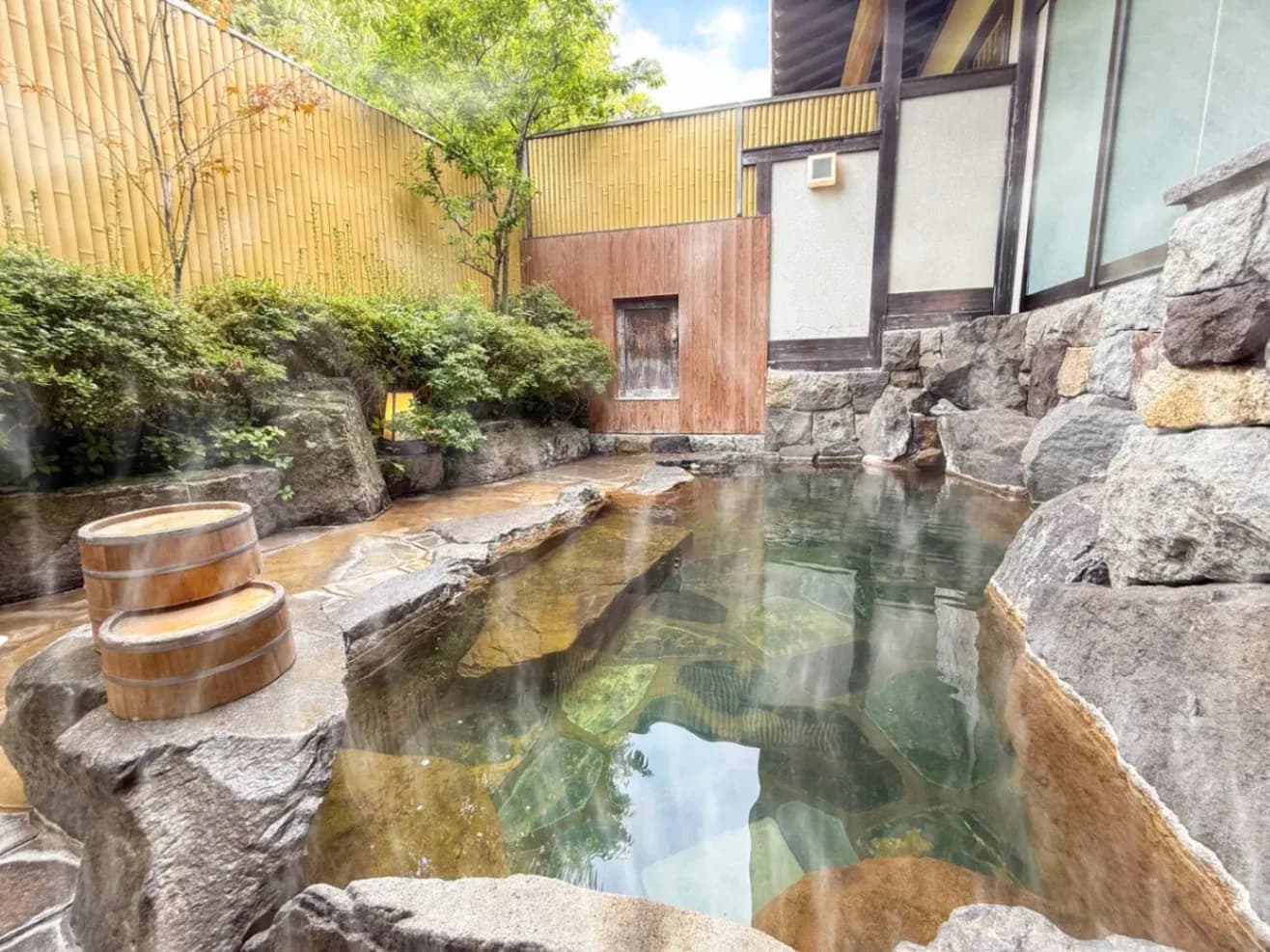
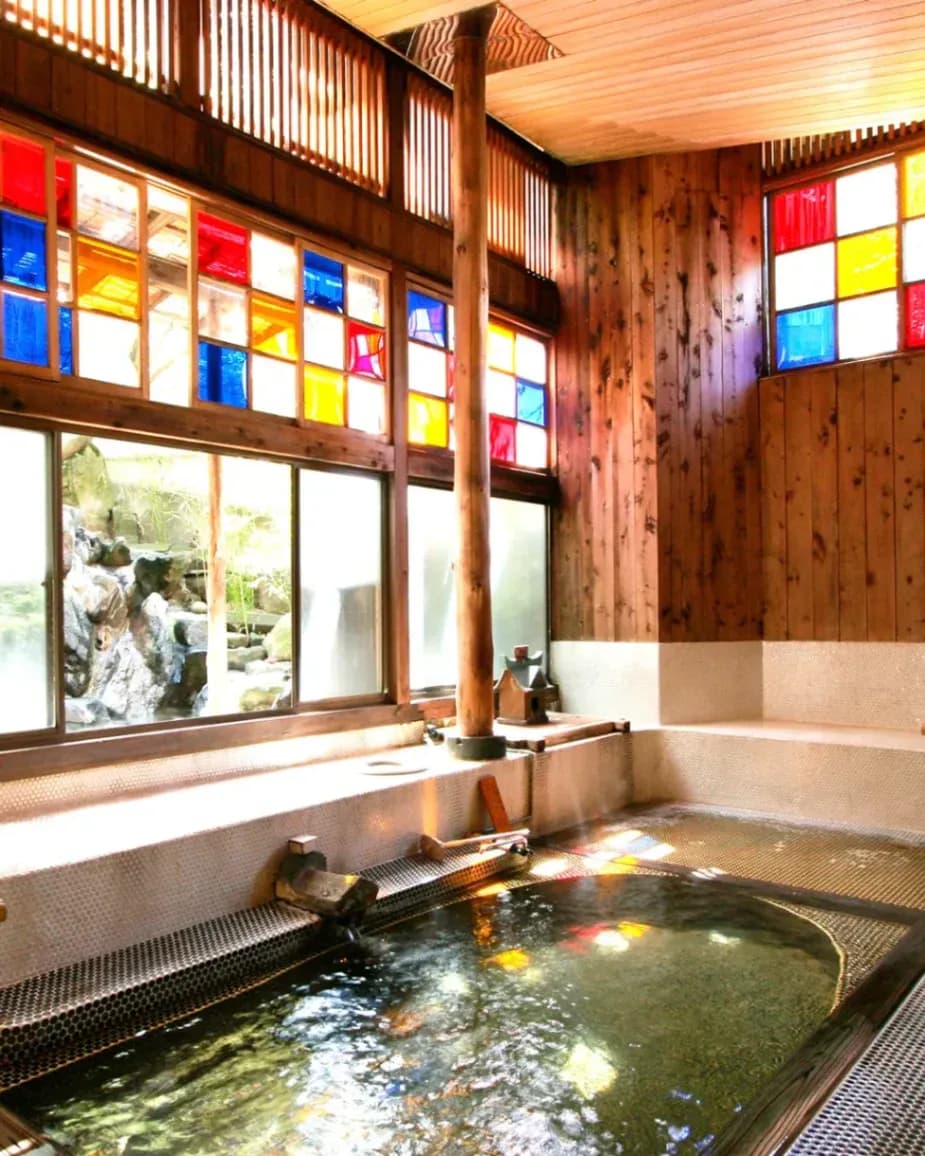
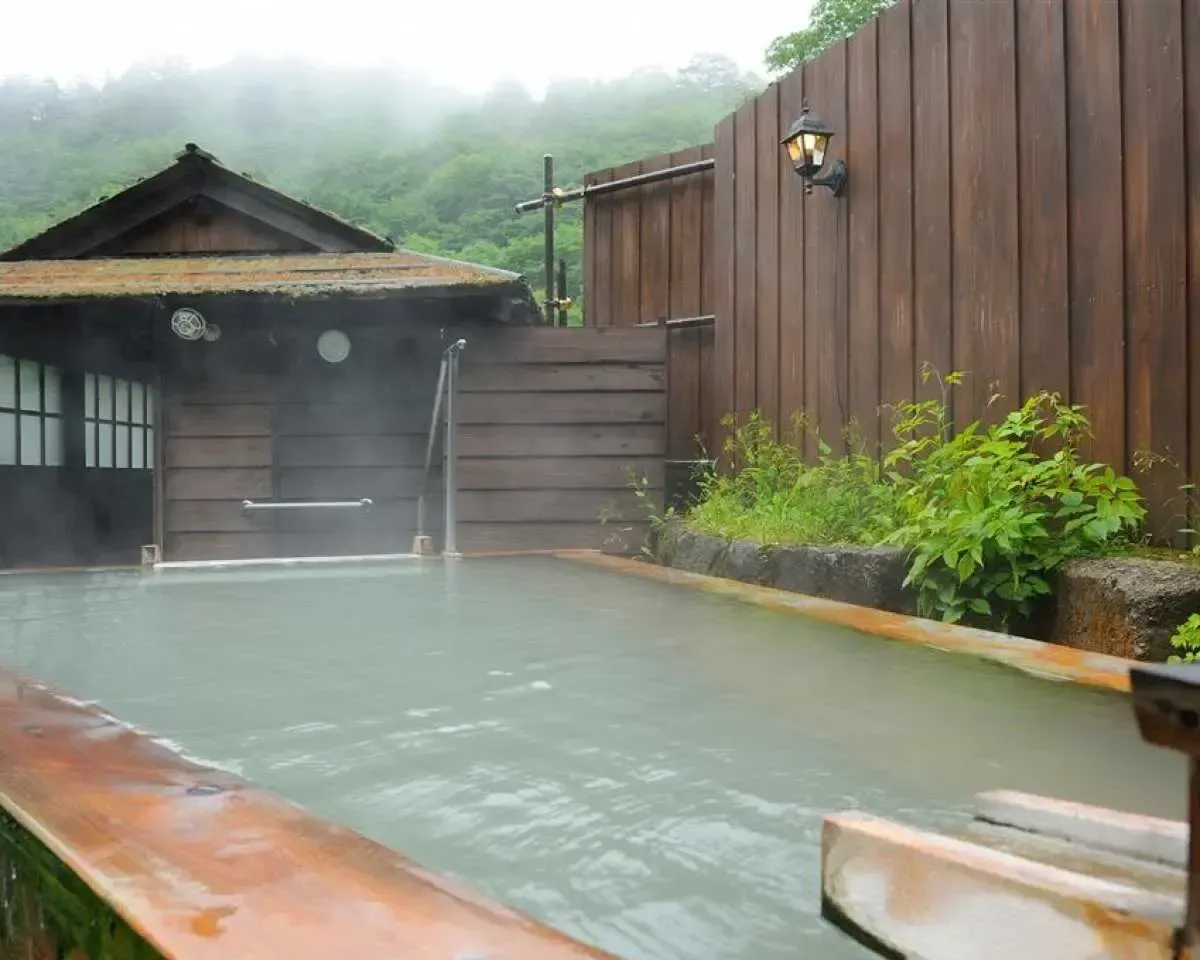
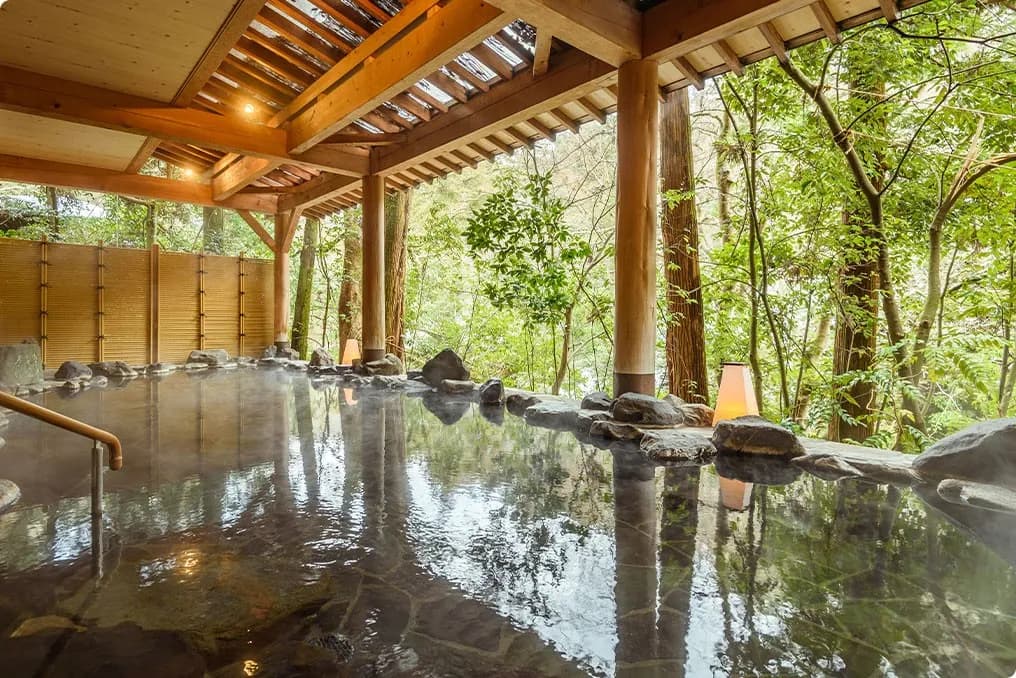
Osaka is Japan's second-largest metropolitan area, and hot springs rarely come to mind alongside its skyline and street food. Yet the mountains ringing the Osaka Plain — the Hokusetsu range to the north, the Kawachi hills to the east, and the Senshu foothills to the south — hold a genuine cluster of radium springs, simple thermal springs, and sulfur springs. Nose Town, in Toyono District, sits on several sources at once: Nose Onsen and Yamakuu Onsen remain open today, while Shio no Yu Onsen Shiki has since closed. In Izumisano City, the Inunakiyama Onsen area is considered the only true onsen district in Osaka Prefecture, tied to a mountain ascetic tradition said to have been founded by the monk Kukai (Kobo Daishi) more than 1,300 years ago. In Kawachinagano City, Amami Onsen Nantenen occupies a wooden building designed by Tatsuno Kingo — the architect behind Tokyo Station — now registered as a national Tangible Cultural Property. Fushio Onsen in Ikeda City, Okumizuma Onsen and Matsuba Onsen in Kaizuka City, and Settsukyo Hananosato Onsen in Takatsuki City each draw on distinct water sources and settings that locals have relied on for generations. Even inside Osaka City itself, a neighborhood bathhouse in Konohana Ward, Kamigata Onsen Ikkyu, keeps a true source-fed bath running in the middle of the city. That mix of big-city convenience and mountain seclusion is what makes Osaka's hot springs worth seeking out. Below are 10 of the prefecture's most distinctive springs.
1. Amami Onsen Nantenen (天見温泉 南天苑) — Kawachinagano City

| Mon | Tue | Wed | Thu | Fri | Sat | Sun | Hol | |
|---|---|---|---|---|---|---|---|---|
| 11:30 - 22:00 | ◯ | ◯ | ◯ | ◯ | ◯ | 11:30-14:00 | ◯ | 11:30-14:00 |
2. Inunakiyama Onsen Yamanoyu (犬鳴山温泉 山乃湯) — Izumisano City
| Mon | Tue | Wed | Thu | Fri | Sat | Sun | Hol | |
|---|---|---|---|---|---|---|---|---|
| 10:00 - 18:00 | ◯ | ◯ | ◯ | ◯ | ◯ | ◯ | ◯ | ◯ |
3. Nose Onsen (能勢温泉) — Nose Town, Toyono District
| Mon | Tue | Wed | Thu | Fri | Sat | Sun | Hol | |
|---|---|---|---|---|---|---|---|---|
| 11:00 - 21:00 | ◯ | × | ◯ | ◯ | ◯ | 10:00-21:00 | 10:00-21:00 | 10:00-21:00 |
4. Shio no Yu Onsen Shiki (汐の湯温泉 四季) — Nose Town, Toyono District (Closed)
https://www.tan-ken.com/ja/onsen/65be314d-7e78-46fd-8606-357870b3e979
5. Fushio Onsen Fushioukaku (伏尾温泉 不死王閣) — Ikeda City
| Mon | Tue | Wed | Thu | Fri | Sat | Sun | Hol | |
|---|---|---|---|---|---|---|---|---|
| 11:00 - 22:00 | ◯ | ◯ | ◯ | ◯ | ◯ | ◯ | ◯ | ◯ |
6. Okumizuma Onsen (奥水間温泉) — Kaizuka City
| Mon | Tue | Wed | Thu | Fri | Sat | Sun | Hol | |
|---|---|---|---|---|---|---|---|---|
| 11:00 - 20:00 | ◯ | ◯ | ◯ | ◯ | ◯ | ◯ | ◯ | ◯ |
7. Matsuba Onsen Takinoyu (松葉温泉 滝の湯) — Kaizuka City
| Mon | Tue | Wed | Thu | Fri | Sat | Sun | Hol | |
|---|---|---|---|---|---|---|---|---|
| 09:00 - 21:00 | ◯ | ◯ | ◯ | ◯ | ◯ | ◯ | ◯ | ◯ |
8. Settsukyo Hananosato Onsen Sansuikan (摂津峡花の里温泉 山水館) — Takatsuki City
| Mon | Tue | Wed | Thu | Fri | Sat | Sun | Hol | |
|---|---|---|---|---|---|---|---|---|
| 11:30 - 20:00 | ◯ | ◯ | ◯ | ◯ | ◯ | ◯ | ◯ | ◯ |
9. Yamakuu Onsen (山空海温泉) — Nose Town, Toyono District
| Mon | Tue | Wed | Thu | Fri | Sat | Sun | Hol | |
|---|---|---|---|---|---|---|---|---|
| 10:00 - 18:00 | ◯ | ◯ | ◯ | × | × | 10:00-19:00 | 8:00-19:00 | 8:00-19:00 |
10. Kamigata Onsen Ikkyu (上方温泉 一休) — Konohana Ward, Osaka City
| Mon | Tue | Wed | Thu | Fri | Sat | Sun | Hol | |
|---|---|---|---|---|---|---|---|---|
| 10:00 - 24:00 | ◯ | ◯ | ◯ | ◯ | ◯ | ◯ | ◯ | ◯ |
Summary: What to Know Before Exploring Osaka's Hot Springs
Osaka's hot springs group naturally into four areas: Nose, Senshu, the Hokusetsu-Kawachi corridor, and Osaka City itself.
Nose Area. Nose Onsen, Yamakuu Onsen, and the now-closed Shio no Yu Onsen Shiki all sit in the hills of Nose Town, Toyono District. Reaching them typically means a train to Myoken-guchi or Nissei-Chuo Station on the Nose Electric Railway followed by a local bus, or relying on a facility's own shuttle — check the timetable in advance, since services are infrequent. Winters in the Hokusetsu range bring real cold and occasional snow, so drivers should plan for icy mountain roads. Shio no Yu Onsen Shiki is included here for context but is closed and cannot be visited; Nose Onsen and Yamakuu Onsen remain in operation.
Senshu Area. Inunakiyama Onsen Yamanoyu sits in the hills above Izumisano City, reached by bus from Izumisano Station on the Nankai Main Line. The Inunakiyama onsen district shares its access road with the pilgrimage route to Shippodaki-ji Temple, so a day trip pairs naturally with the gorge's walking trails and waterfalls — bring insect repellent in summer and expect a noticeable chill in the ravine come winter. Okumizuma Onsen and Matsuba Onsen Takinoyu are both in Kaizuka City, generally reached by shuttle or community bus from Kaizuka Station on the Nankai Main Line. Their location at the foot of the Izumi mountains makes them easy to combine with a visit to Mizumadera Temple.
Hokusetsu-Kawachi Corridor. Amami Onsen Nantenen is within walking distance of Amami Station on the Nankai Koya Line, making it one of the few inns on this list reachable entirely by public transport. The Tatsuno Kingo building is worth seeing on its own, though day-trip bathing policies vary, so confirm availability on the official website before visiting. Fushio Onsen Fushioukaku, in Ikeda City, is typically reached by shuttle or taxi from Ikeda Station on the Hankyu Takarazuka Line. Settsukyo Hananosato Onsen Sansuikan lies along the Settsukyo gorge, reached by bus from JR Takatsuki Station; the gorge is known for cherry blossoms in spring and autumn foliage in November, so the scenery changes considerably by season.
Osaka City. Kamigata Onsen Ikkyu, in Konohana Ward, is within walking distance of stations on the JR Yumesaki Line and Osaka Metro Chuo Line — the single most convenient stop on this list, and an easy add-on for anyone visiting Universal Studios Japan nearby. A genuine source-fed bath inside a neighborhood sento is unusual in a city this size, making it a solid option for travelers who want real onsen water without leaving central Osaka.
A few points apply across the list. As at most Japanese bathing facilities, visitors with visible tattoos should contact the facility in advance rather than assume entry, since policies vary by inn. Baths are generally separated by gender, though swimwear is not typically required — check each facility's own rules if in doubt. Reservations are recommended for the smaller inns, particularly Amami Onsen Nantenen and Fushio Onsen Fushioukaku, since day-trip bathing hours can be limited or subject to change. Cash remains the safer default at the smaller mountain facilities, even though card payment is increasingly common at larger day spas. Every facility on this list is reachable by public transportation, but bus services in Nose and the Senshu hills run infrequently, so build extra time into the schedule rather than planning a tight connection.
The information in this article (admission fees, operating hours, water quality data, etc.) is based on research conducted at the time of writing. Details may have changed or contain errors. Please verify the latest information on each facility's official website or through the local tourism association.