Kyoto Prefecture is best known for its ancient capital, but its northern edge juts far out into the Sea of Japan as the Tango Peninsula. This coastal region built its livelihood on fishing and Tango chirimen silk crepe, and its hot springs cluster almost entirely in Kyotango City. Within the city limits, four distinct spa areas sit along the coast: Kizu, Yuhigaura, Kumihama, and Kobama.
Kizu Onsen is said to be the oldest hot spring in Kyoto Prefecture. Legend holds that the Nara-period monk Gyoki discovered it in 743 AD after watching a wounded white heron heal itself in the water, earning the spring its nickname, Shirasagi (White Heron) Onsen. Yuhigaura Onsen next door is far younger, first tapped by local operators around 1980, and takes its name from the sunset views that earned its beach a spot among Japan's 100 Best Sunsets. Kumihama Onsen faces the calm waters of Kumihama Bay, while Kobama Onsen sits on the shallow, gently curving Hacchohama beach — each area has its own coastal character.
This guide covers 7 inns within Kyotango City where a genuine flow-through (kakenagashi) source could be confirmed. Kyoto Prefecture has other hot springs further along the Tango Peninsula, such as Oku-Ine Onsen, but this list is limited to the coastal springs of Kumihama-cho and Amino-cho that have been researched to date. Kizu Onsen and Yuhigaura Onsen each contribute two inns, making it possible to compare how neighboring properties handle the same source water.
1. Kamai Onsen Ippen-an (蒲井温泉 いっぺん庵) — Kumihama-cho, Kyotango City

| Mon | Tue | Wed | Thu | Fri | Sat | Sun | Hol | |
|---|---|---|---|---|---|---|---|---|
| 09:00 - 21:00 | 09:00 - 21:00 | 09:00 - 21:00 | 09:00 - 21:00 | 09:00 - 21:00 | 09:00 - 21:00 | 09:00 - 21:00 | 09:00 - 21:00 | 09:00 - 21:00 |
What to Know Before Visiting Kyotango's Hot Springs
Kyotango's springs fall into four coastal areas: Kumihama Bay, Kizu Onsen, Yuhigaura Onsen, and Hacchohama (Kobama).
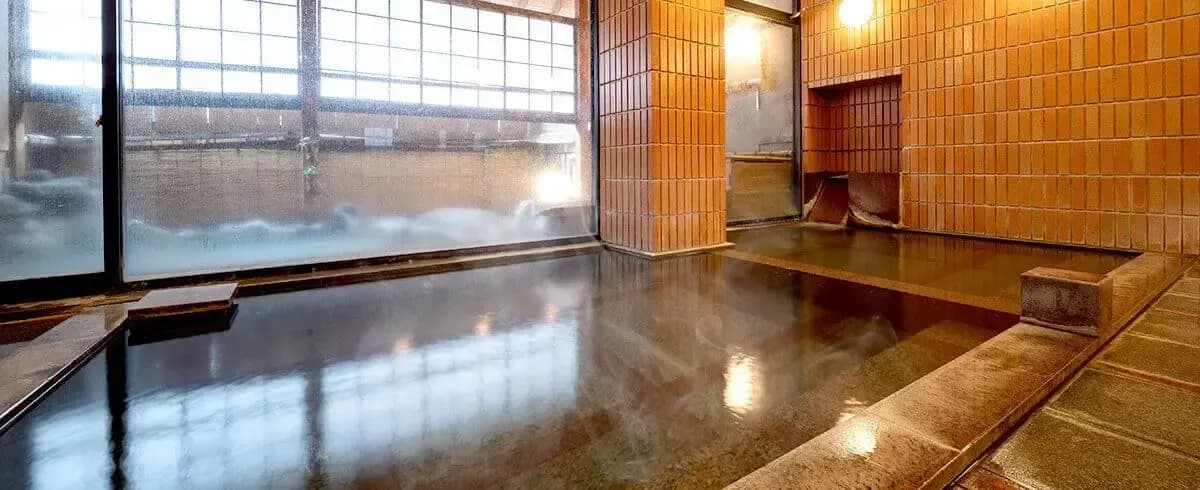
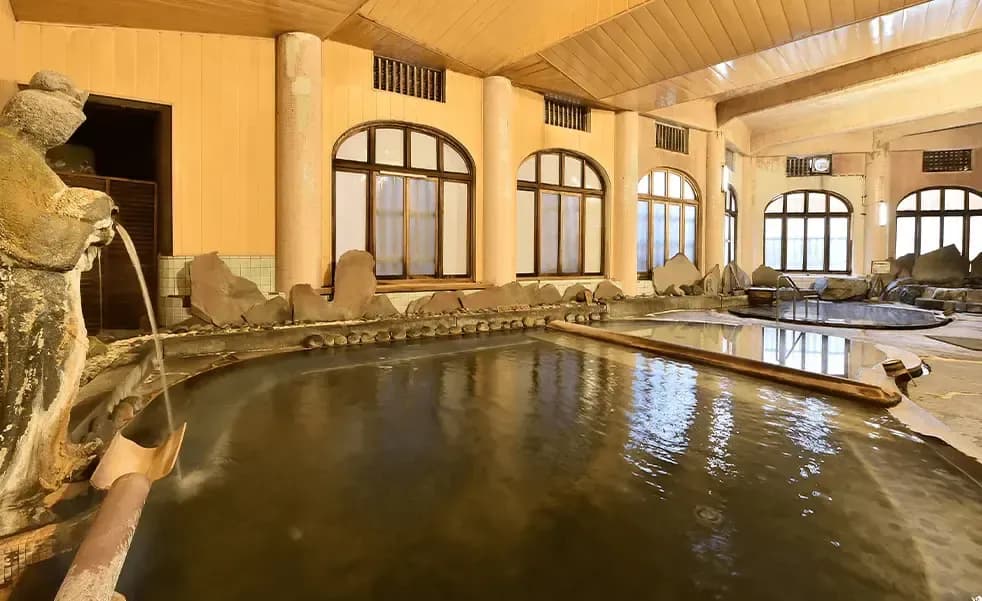
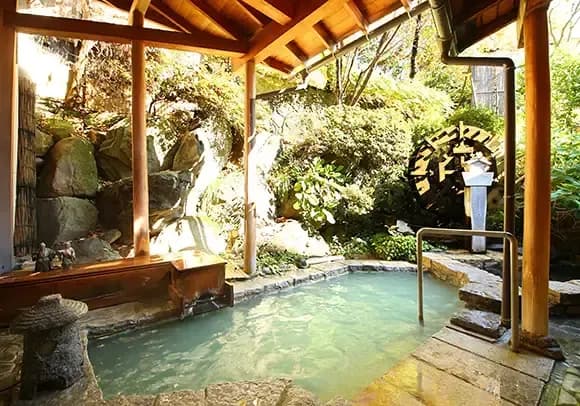
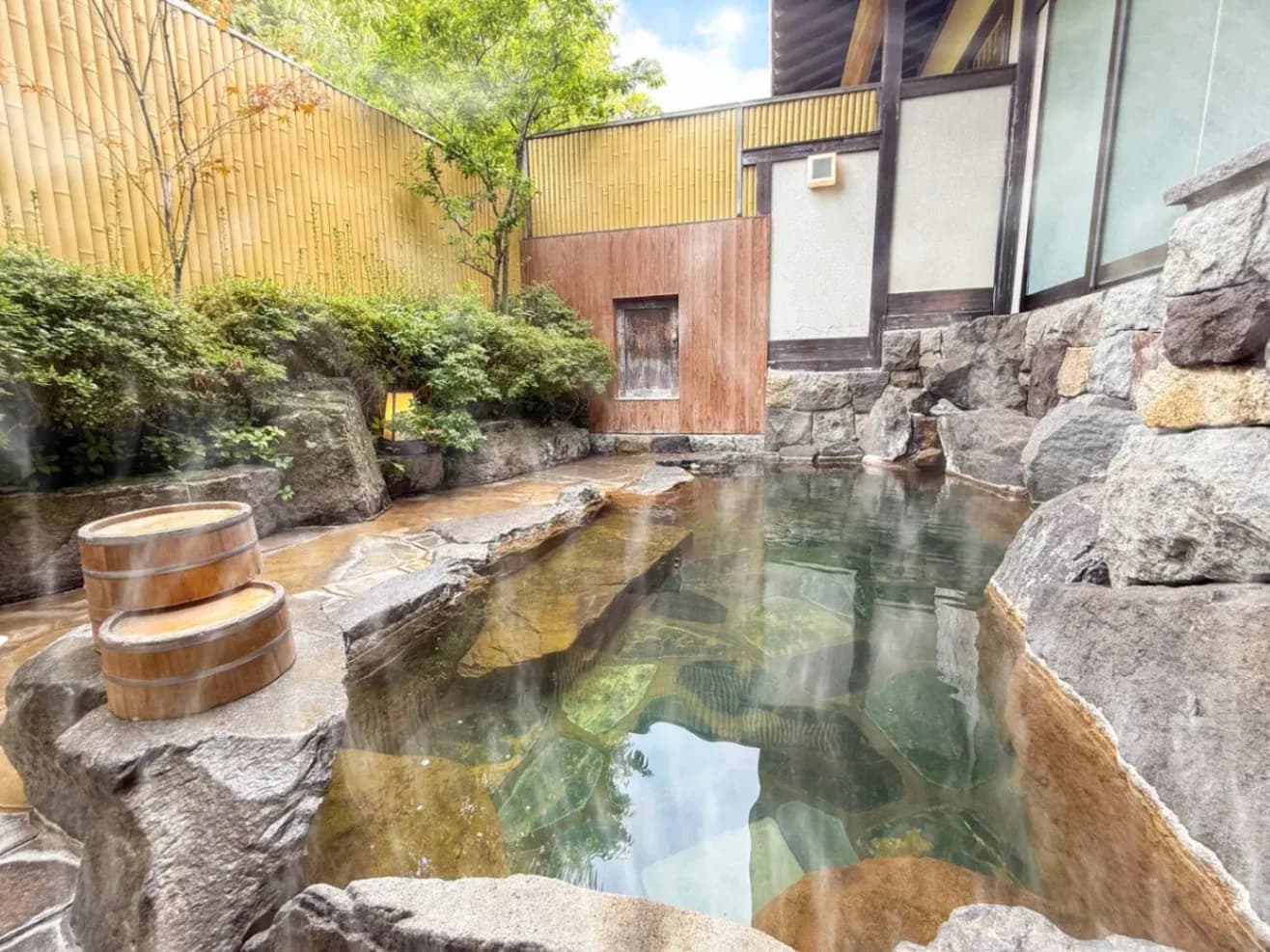
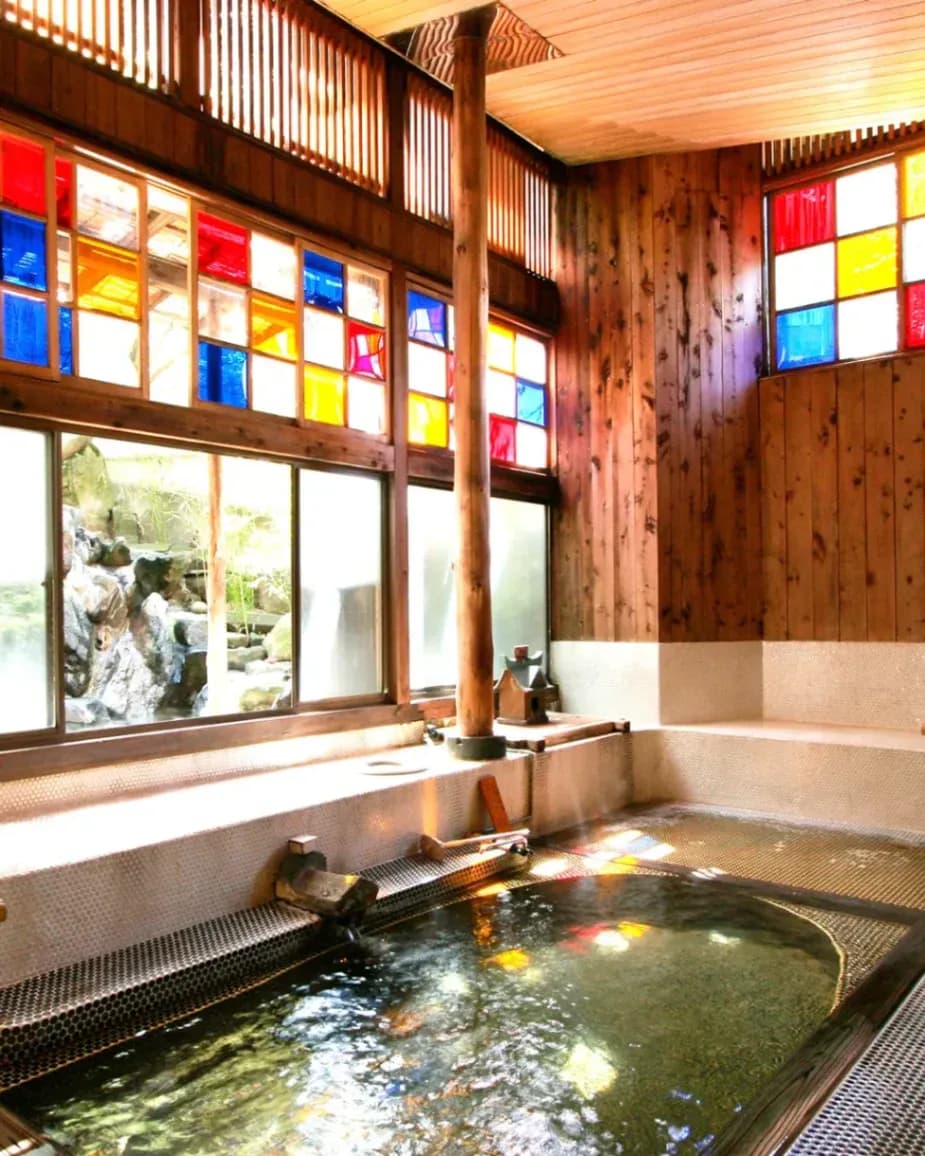
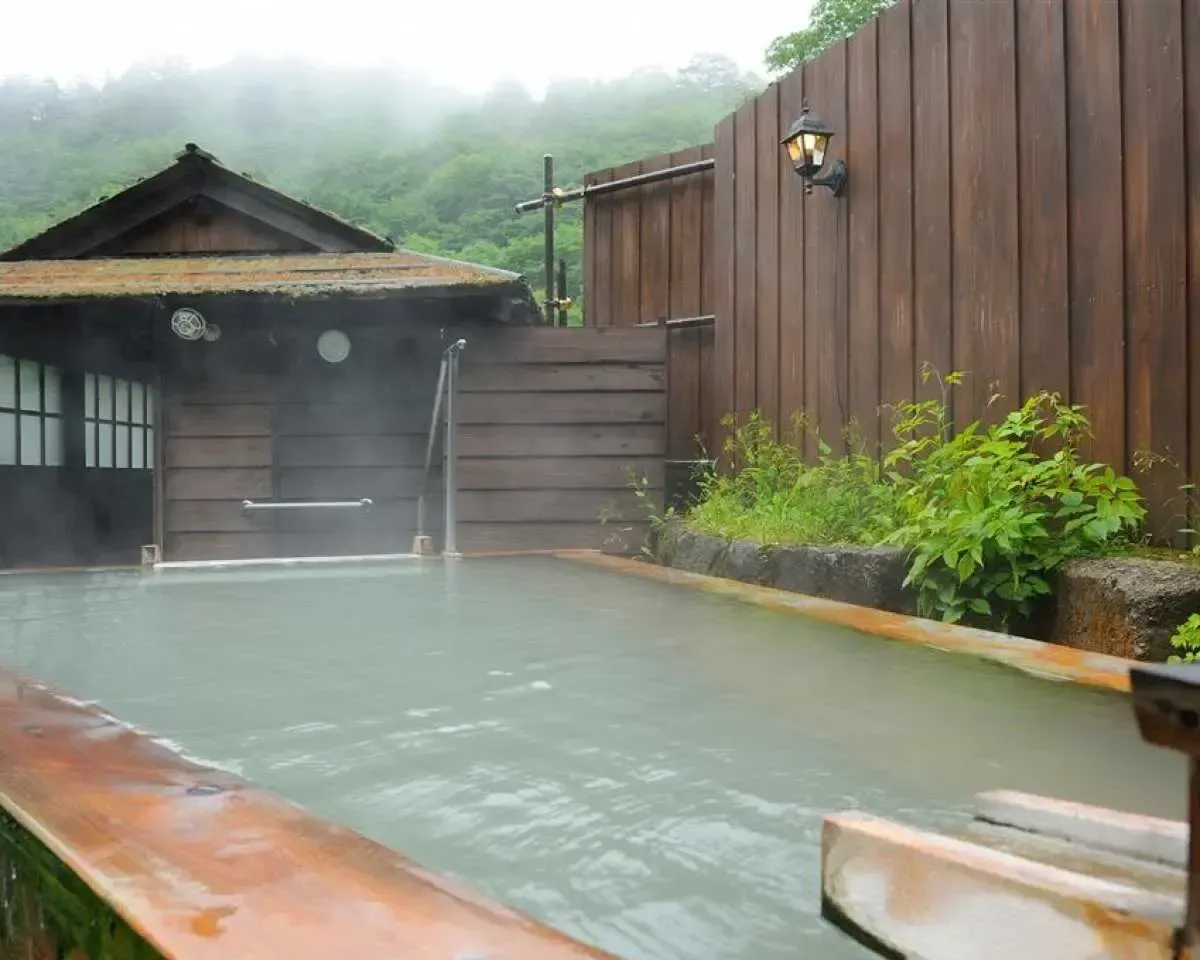
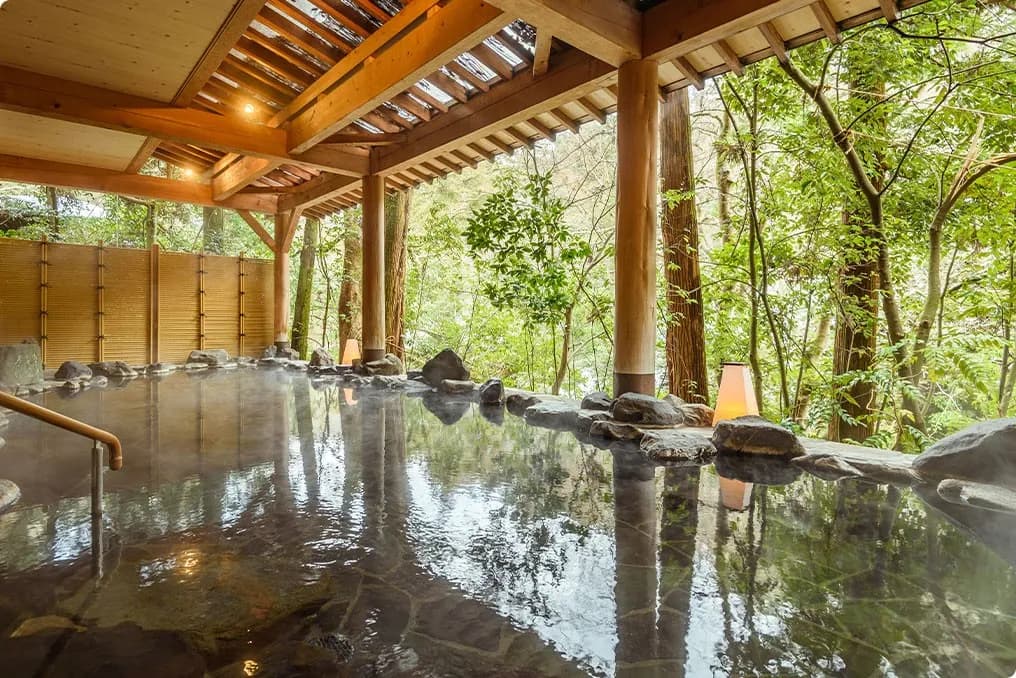
Kumihama Bay area. Two very different inns sit in Kumihama-cho. Kamai Onsen Ippen-an is a hideaway on a bluff over the Sea of Japan that takes only seven groups a day, each housed in its own detached cottage. Its own source, Choja-no-yu, is a sodium-calcium chloride spring with a faintly milky color, piped 100 percent free-flowing into every room's indoor and open-air bath. Day-trip bathing isn't offered; stays start at 29,160 yen per person with two meals, and Kamai Beach is about a 3-minute walk away. Kumihama Onsen Yumotokan, closer to the bay itself, is known for what's said to be the largest open-air bath in northern Kinki, holding up to 100 bathers at once. It blends a 51.2°C, pH 8.07 source with a cooler 32.0°C, pH 7.97 source, with no added heat or dilution. Day bathing is an easy 600 yen for adults and 200 yen for children, open 9:00 a.m. to 9:00 p.m. It's about 40 minutes by car from Kyotango-Omiya IC, or a reserved shuttle from Shotenkyo Station.
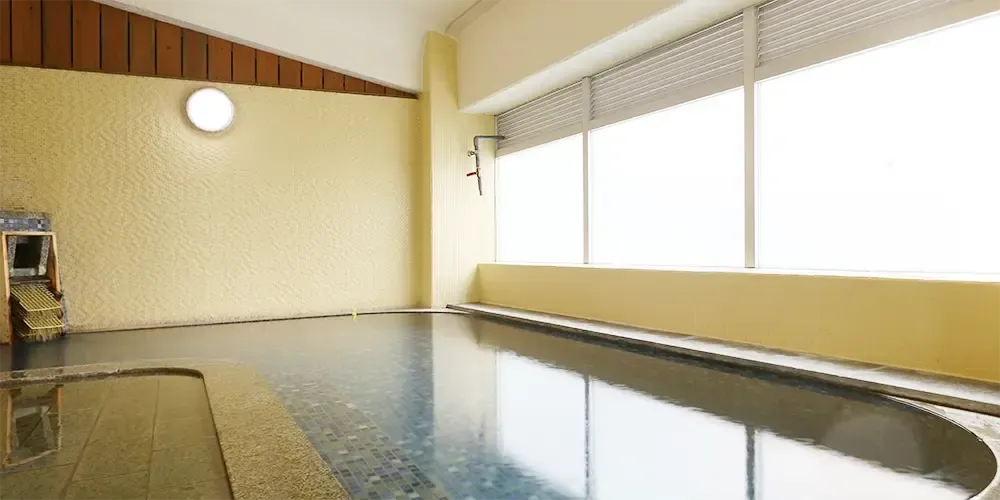
Kizu Onsen. The source here is an alkaline simple spring at about 41°C, flowing at a hefty 1,400 liters per minute. Ryokan Kinpeirou, a "crab inn" with over 140 years of history, channels 100 percent free-flowing water into its private baths and is a one-minute walk from Yuhigaura-Kitsuonsen Station — most guests come for the matsuba crab courses in winter. Kitsukan, a four-room, single-story inn taking only four groups a day, draws on the same source and pipes it straight into its indoor bath; the whole property can be booked privately, and a Japanese garden lends it a quiet, secluded feel. Neither inn publishes day-trip bathing terms, so call ahead if that's the plan.
Yuhigaura Onsen. Tapped by local drillers to a depth of about 950 meters around 1980, this is a younger spring than Kizu's. The beach in front of it is ranked among Japan's 100 Best Sunsets, and placed second nationwide in the scenic-view category of Japan's 2022 Onsen Election. The water is an alkaline simple spring, colorless and known locally as a "beauty bath" for how smooth it leaves the skin. Kaikatei Hanagozen, run directly by a seafood wholesaler, is a Kyoto-style sukiya inn where most rooms come with a private open-air bath fed by undiluted source water; its winter crab kaiseki is a signature dish. Yuhi Roman Ichibokan sits about 30 seconds' walk from the beach, with a roughly 42°C source served in both a main bath and a reservable private outdoor bath; rooms with Shigaraki-ware view baths look straight out over the sunset. Both inns are overnight-focused, with day bathing generally not available.
Hacchohama (Kobama). Kobamaso, a kappo (fine-dining) inn in Amino-cho's Kobama area, is a two-minute walk from the shallow, curving Hacchohama beach. Its sodium-calcium chloride spring emerges at 50.2°C and is served 100 percent free-flowing, with no dilution, reheating, or recirculation — the water is certified as a therapeutic spring and can even be sampled as a drinking spring. The bath, named Yuemon, includes indoor and outdoor tubs, a private bath, and a foot bath, and a day-use lunch plan is available for non-staying guests. Dinner features a seafood barbecue built around local Tango fish, and room-only stays start at a reasonable 4,700 yen. It's about 30 minutes by car from Kyotango-Omiya IC, with a reserved shuttle available from Amino Station.
A few points apply across all seven. Only Kumihama Onsen Yumotokan and Kobamaso clearly accept day-trip bathers; the other five are overnight-focused, so anyone hoping for a daytime soak should call ahead to confirm. Credit cards are explicitly not accepted at Kinpeirou, Kitsukan, Kobamaso, Yumotokan, or Hanagozen, so carrying cash is the safer plan; card policy at the remaining two (Ippen-an and Ichibokan) isn't published either. All seven baths are separated by gender, not mixed, and swimwear is not standard practice — Kobamaso's private bath and the reservable open-air baths at several inns are the option for those preferring not to bathe with strangers. None of the inns publishes a tattoo policy, so travelers with tattoos should check by phone before visiting. Getting there without a car takes some planning: Kinpeirou and Kitsukan are walkable from Yuhigaura-Kitsuonsen Station, but Ippen-an, Yumotokan, Hanagozen, and Kobamaso all require a reservation-only shuttle from the nearest station, and none of the seven has a taxi rank reliably waiting at the platform. Winter brings matsuba crab to nearly every dinner table here, while summer opens up swimming along the Sea of Japan — a seasonal rhythm shared by all seven inns despite their differences in size and setting.
The information in this article (admission fees, operating hours, water quality data, etc.) is based on research conducted at the time of writing. Details may have changed or contain errors. Please verify the latest information on each facility's official website or through the local tourism association.