Kagawa Hot Springs: 6 Honest Picks Sorted by How the Water Is Run
Kagawa, on the calm Seto Inland Sea, is famous for Sanuki udon rather than for its hot springs. Unlike its volcano-backed neighbors, the prefecture has limited thermal resources, and no one would call it a major onsen destination. Yet along the edges of the Sanuki plain, up its river valleys, and out on the islands, a handful of distinctive baths survive.
Rather than padding a list to a round "top ten," this guide covers only the six springs whose origins and, crucially, whose water handling could be confirmed. That last point matters more here than almost anywhere. Not all six are free-flowing (kakenagashi) springs: some pour fresh source water straight into the tub, some reheat and filter it in a recirculating system, and a couple of inns simply don't disclose their method. Knowing which is which is the shortcut to choosing the right bath.
The region's springs are also tied to pilgrimage and old highways. Shionoe Onsen in Takamatsu is said to have been opened by the Nara-period monk Gyoki, making it the oldest hot spring district in Kagawa. In the temple town below Kotohira Shrine, Kotohira Kadan has welcomed pilgrims since 1627. Ryokan Takeyashiki sits at the gate of Okuboji, the temple that completes the 88-temple Shikoku pilgrimage, while Shimayado Mari carries the food-and-bath culture of Shodoshima island.
1. Bussanzan Onsen Tenpyo-yu (仏生山温泉 天平湯) — Takamatsu City
引用:仏生山温泉 天平湯HP
Busshozan Onsen Tenpyoyu is a day-trip hot spring facility that opened in 2005 in the historic temple town of Busshozan, located in southern Takamatsu City, Kagawa Prefecture. Busshozan has been a thriving temple gate district since the Edo period, developed around Honen-ji Temple, the family temple of the Matsudaira clan, lords of the Takamatsu domain. The area is designated as the Busshozan Historic Street Urban Landscape District, preserving its rich cultural heritage. Hot spring drilling began in 2002 and successfully struck a high-quality spring, adding a new dimension to this historically significant town.
The spring source, named Busshozan Sunamushi Onsen, produces a sodium bicarbonate-chloride spring (weakly alkaline, high-concentration, low-temperature hot spring) with a pH of 7.5, a source temperature of 32.6°C, and a total mineral content of 10,847.8 mg/kg. The water is exceptionally rich in minerals, containing sodium ions (3,322 mg), bicarbonate ions (5,259 mg), and chloride ions (1,809 mg). These properties leave the skin silky smooth after bathing, earning the spring its reputation as a beauty bath that draws visitors from far and wide. Although the water requires heating due to its low source temperature, no dilution water is added, and all bathing pools operate as flow-through hot spring baths.
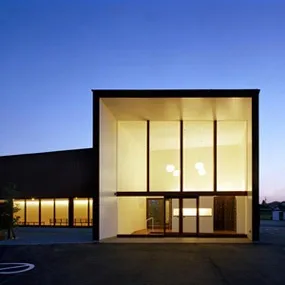
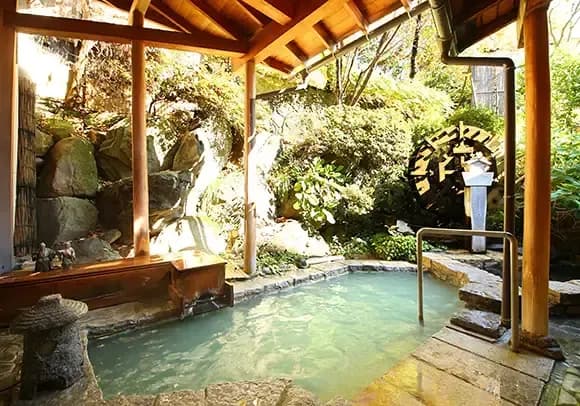
The facility was designed by Takamatsu-born architect Shohei Oka and received the Good Design Award in 2007, a testament to its refined and sophisticated aesthetic. Three outdoor baths made of Japanese cypress (hinoki), Japanese cedar (hiba), and stone are arranged around a central courtyard, each offering a different temperature and ambiance, alongside indoor baths. Window-side tatami seating along the corridors invites leisurely relaxation. The facility also features a unique secondhand bookshop called Busshozan Bunko, where visitors can purchase books to read while soaking in the outdoor baths, embodying the distinctive concept of combining hot spring culture with literary enjoyment.
Operating hours are 11:00–24:00 on weekdays and 9:00–24:00 on weekends and public holidays (last entry at 23:00), with Tuesdays as the regular closing day (the following day if Tuesday falls on a public holiday). Admission is a reasonable 700 yen for adults and 350 yen for children aged 3 and above. Free parking for 80 vehicles is available on-site, making the facility easily accessible by car. By rail, it is a 10-minute walk east from Busshozan Station on the Kotoden Kotohira Line, and a special combined train and bath ticket called the Kotoden Kotochan Nyuyoku Kippu is available for added value. On-site dining and rest areas are also provided for a full day of relaxation.
2. Shimayado Mari (島宿真里) — Shodoshima, Shozu District
In the Noma district of Shodoshima Island, an area known as Hishio-no-Sato -- "the village of soy sauce" -- for its 400 years of brewing history, Shimayado Mari sits quietly along a lane lined with the white-plastered walls and cedar barrels of soy sauce breweries. The inn began as a small guesthouse run by the previous proprietress, Rie Mato, and was later inherited by her son, Yasuyuki Mato, who carefully renovated the early-Showa-era wooden buildings -- now registered as a national Tangible Cultural Property -- reusing beams, pillars, and old barrel timber salvaged from former soy sauce warehouses. Over the years the inn was gradually expanded, eventually growing into eight guest rooms, each given its own distinctive name.
The hot spring at Shimayado Mari draws from its own private source, Rie Onsen, named after the inn's founding proprietress. It is an alkaline simple hot spring rich in metasilicic acid, colorless and odorless yet prized as a "beauty bath" for the silky feel it leaves on the skin. Every bath in the inn runs on an unadulterated source-fed supply, with no added water, heating, or recirculation -- what fills the tubs is the spring water exactly as it emerges from the ground. The pH and source temperature are not publicly disclosed, but guests consistently praise how deeply the water warms the body, one reason so many return again and again.
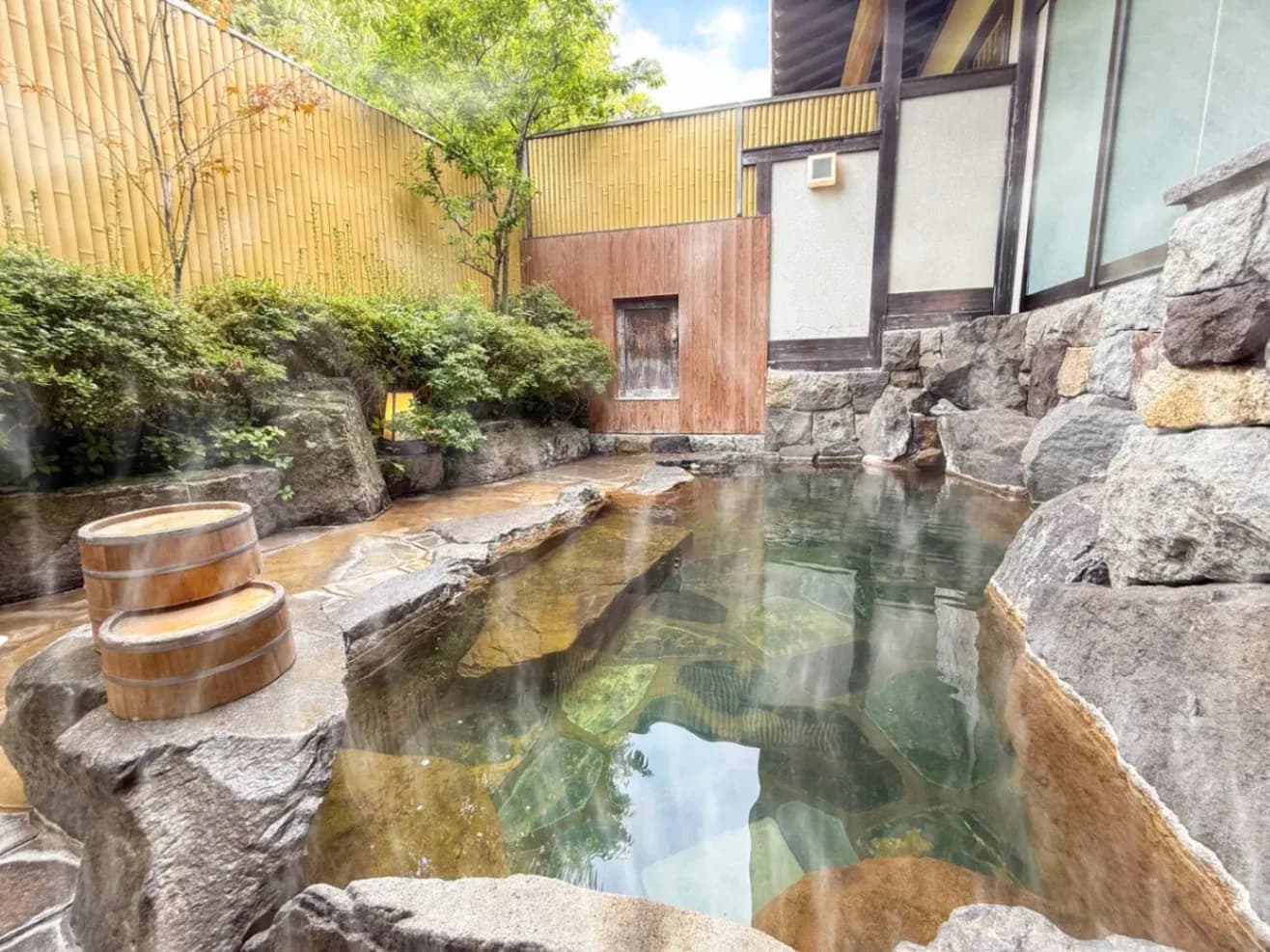
Each of the eight guest rooms comes with its own private bath fed directly from the source, letting guests soak whenever they please without concern for others. Beyond the room baths, the inn also offers two reservable communal baths: Ishi-no-yu, a stone-lined indoor bath that opens onto a semi-open-air space, and Take-no-yu, an open-air bath enveloped by the rustle of a bamboo grove. True to its soy-sauce-village setting, dinner is a kaiseki course built around the island's soy sauce and simmered tsukudani traditions, capping off an evening soothed by both the bath and the quiet of island night.
Reaching Shimayado Mari means traveling via one of Shodoshima's ferry ports. The inn is a relatively convenient 5-minute drive from Sakate Port and about 20 minutes from Ikeda Port. A reservation-based shuttle service is also available, timed to meet arriving ferries. With only eight rooms in total, guests rarely cross paths with one another, making it a fitting choice for travelers who want to savor the bath and their surroundings in quiet privacy. Pairing a stay with visits to the soy sauce breweries nearby or Shodoshima Olive Park rounds out the experience nicely.
At the very edge of the Shikoku Pilgrimage's 88-temple route, just outside the gate of Okubo-ji, the final temple, stands a single quiet inn: Ryokan Takeyashiki. For generations, pilgrims who have walked the long henro trail to its end have rested their tired feet here, savoring the sense of completion that comes with reaching the last temple. The inn's own Yakushiyu hot spring carries a legend of its own: Kobo Daishi (Kukai) is said to have passed through this valley at age 42, sensed it to be a blessed land, and struck the rock with his ritual vajra staff to open a water source. A statue of Yakushi Nyorai, the Buddha of healing, watches over the bath's spout, giving the water a story that goes beyond simple bathing.
The spring is classified as a sodium bicarbonate cold mineral spring, alkaline and hypotonic. Because its source temperature falls below 25°C by definition, the official website explains that the water is heated to a comfortable soaking temperature and run through a circulation filtration system for hygiene management — meaning it is not a source-fed, non-circulated bath. Even so, the mineral concentration is said to be five to six times the standard required to qualify as an onsen under Japanese law, and the water is credited with easing joint pain, neuralgia, and chronic digestive troubles.
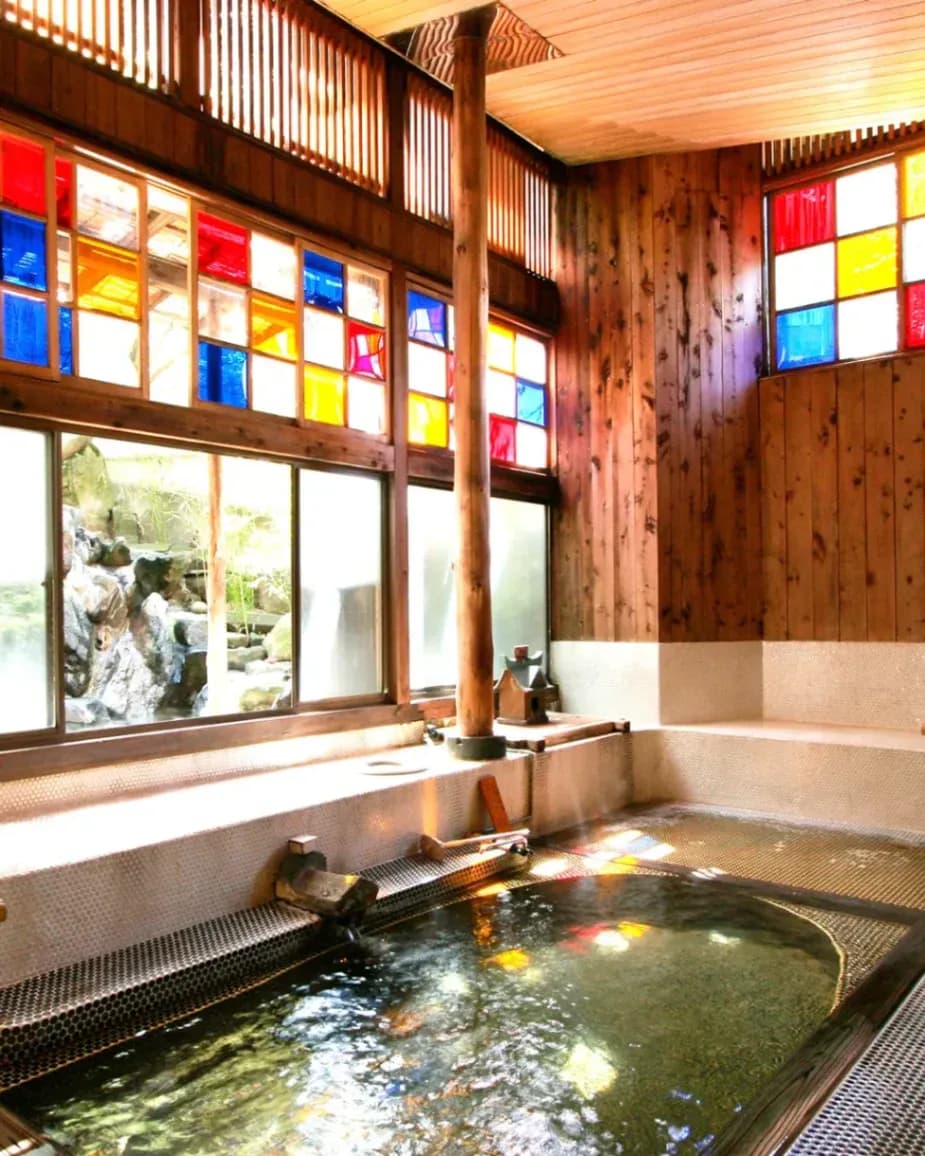
The bathing hall itself features large windows overlooking the inn's garden, offering a quiet soak surrounded by mountain stillness. The building is one of the few remaining single-story, sukiya-style ryokan in Kagawa Prefecture, set within roughly 3,800 tsubo (about 12,500 square meters) of grounds landscaped as a Japanese garden, where fireflies appear in summer. The kaiseki cuisine is also well regarded, built around wild mountain vegetables from the local Tawa area and, in winter, a hearty wild boar hot pot.
Overnight stays typically include two meals, and plans tailored to pilgrims are available. Day-trip visits are possible too, but only through the seasonal day-trip course, which bundles a meal, a bath, and rest in a private room (roughly 5,000 to 7,000 yen before tax, available between 11:00 and 21:00) — bathing-only visits are not offered. Spending a night, or even just a few hours, at the doorstep of the pilgrimage's final temple makes for a fittingly peaceful close to the Shikoku henro journey.
Deep in the mountain village where the Doki River begins its course, at the foot of the Asan mountain range, Yuzanso Asankotonami sits in quiet seclusion. The site first opened in 1988 as the village-run retreat Village Miai-kan, a beloved local bathhouse for many years, before closing its doors in 2014. Three years later, in May 2017, the Hotel New Awaji Group rebuilt and reopened it as Yuzanso Asankotonami. The name combines "Asan," for the mountain range that cradles the inn, with "Kotonami," the name of the former town that once stood on this land -- a name that carries both mountain and memory.
The bath draws on the inn's own private source, Miai Onsen. It is classified as a simple carbon-dioxide cold mineral spring, with a source temperature of just 10.6 degrees Celsius and an alkaline pH of 8.6, yielding a clear water with a faint greenish tint. The official website describes it only as "filled with our private Miai Onsen spring water," without specifying whether the bath is free-flowing or recirculated, though the use of 100% private source water is consistently emphasized. Being a cold spring, the water cannot be used straight from the source and is warmed before reaching the tubs; guest reviews note that the reclining bath runs at around 35 degrees Celsius.
The inn offers two main bathing areas. The riverside bath Seseragi, embraced by forest and river, combines a rock bath, a deep bath, a reclining bath, an indoor bath, and a sauna, all within earshot of a nearby waterfall and birdsong. The second is the private open-air bath Nagomi-yu, available in two styles -- one with a sauna, one with a heated stone-bed lounge chair -- for guests who want the space to themselves. The on-site Mana Spa forest-healing facility also offers treatments. Of the inn's 28 rooms, four Satoyama Hut rooms, built into the hillside, are among the rare lodgings in the area where guests can stay together with their dogs.
Day-trip bathing at the Seseragi riverside bath runs from 12:30 to 16:00, priced at 1,800 yen for adults and 1,000 yen for children (free under age 3), though acceptance may be suspended on busy days, so calling ahead (0570-078857) is recommended. Overnight stays with two meals start from 21,600 yen per person on weekdays (two guests sharing a room), with check-in from 15:00 to 19:30 and check-out at 11:00. By car, the inn is about 15 minutes from Mima IC on the Tokushima Expressway, or about 50 minutes from Sakaide IC on the Seto-Chuo Expressway. From JR Kotohira Station, a Kotosan bus takes about 35 minutes, and a free shuttle (reservation required) also runs once daily timed to the Nanpu limited express. This is a hot spring best savored slowly, amid the quiet of the satoyama and the gentle touch of its private mineral water, framed by the changing seasons.
5. Shin-Kabakawa Kanko Hotel Beppin-no-yu (新樺川観光ホテル べっぴんの湯) — Shionoe, Takamatsu City
Shionoe Onsen, nestled in the mountains along the upper reaches of the Koto River, is regarded as the oldest hot spring area in Kagawa Prefecture. According to the Japan Hot Spring Association, it was discovered roughly 1,300 years ago, and the priest Kobo Daishi (Kukai) is said to have practiced ascetic training here and encouraged villagers to bathe, drawing people to settle in the area. Shinkabakawa Kanko Hotel's own official website credits the revered monk Gyoki with discovering the spring here 1,250 years ago, with Kobo Daishi said to have trained at the site afterward -- the area's broader legend and the hotel's own origin story running side by side through the centuries. Known affectionately as 'Beppin no Yu' (the beautiful-skin bath), the hotel has long welcomed hot-spring cure-seekers as part of Takamatsu's quiet mountain retreat.
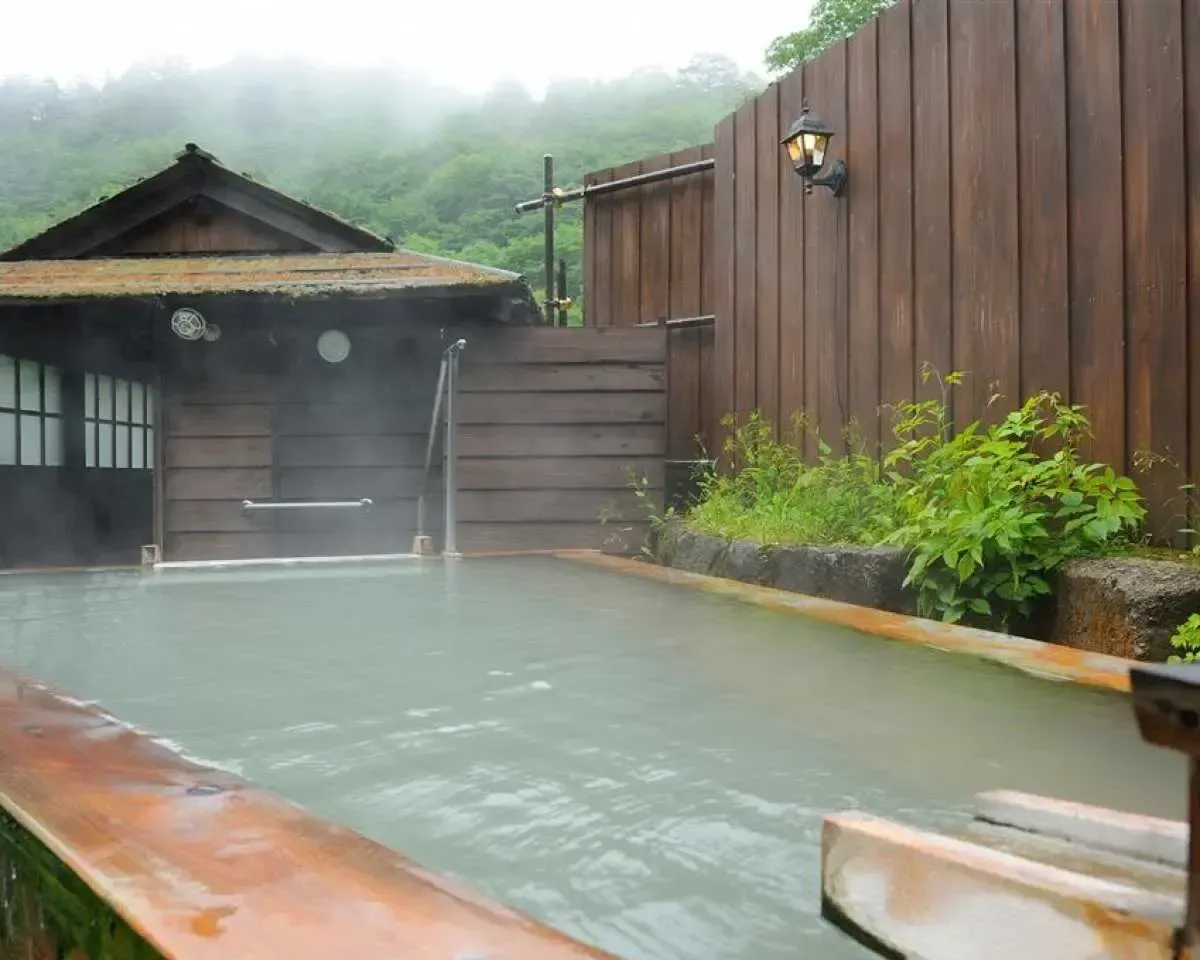
The defining feature of this water is its strongly alkaline pH of 9.12. Colorless, clear, and mild to the touch, it gently dissolves surface oils and dead skin cells, leaving bathers with noticeably smoother skin -- earning it a reputation as a 'beauty bath.' The main bath is not advertised as source-fed (kake-nagashi); it is managed through a circulation system according to the facility. Among the many baths of Shionoe Onsen, also known as Koto River Onsen, each with its own character, Shinkabakawa's water stands out for its especially silky texture.
The hotel's main indoor bath, named 'Shobu no Yu,' is complemented by an open-air bath with mountain views and a low-temperature steam sauna for a gentler sweat. Most notable of all, every one of the hotel's 74 guest rooms has its own hot-spring-fed indoor bath, letting guests soak whenever they like without regard to the large bath's operating hours. Dinner features a kaiseki course built around local ingredients, rounding out an evening meant to ease the fatigue of travel.
Beyond overnight stays, day-trip bathing is also available, open year-round from 10:30 to 21:00 (last entry 20:00). Admission is reasonably priced at 820 yen for adults, 620 yen for seniors (65 and over), 510 yen for children from elementary age through 12, and 300 yen for infants aged 2 and up, making it an easy stop about 30 minutes by car from central Takamatsu. By car, it is roughly 30 minutes via Route 193 from the Takamatsu Chuo Interchange; by public transport, about 70 minutes by Kotoden bus on the Shionoe Line from JR Takamatsu Station to the Shionoe bus stop. With mountain scenery that changes through the seasons, from fresh spring greenery to autumn color, it makes for a relaxing soak in the oldest hot spring water Kagawa has to offer.
At the foot of the wooded approach leading up to Kotohira-gu Shrine's main hall stands an inn with nearly 400 years of history: Kotohira Onsen Kotohira Kadan, founded in 1627. Established in the early Edo period to welcome pilgrims visiting Kotohira-gu, the inn was rebuilt in 1905 by its 16th proprietor, Genjiro Miyoshi, into a kaiseki ryokan centered on detached sukiya-style cottages named Kotohira Kadan. Guest registers spanning the generations record the names of imperial family members and nobility, along with literary figures such as Mori Ogai and Akiko Yosano, cementing its reputation as the traditional lodging of choice for Konpira pilgrims.
The inn draws its water from its own source, Kotohira-cho Chikoin Onsen, classified as a simple weakly radioactive cold mineral spring, hypotonic and weakly alkaline. Because the source temperature is a cool 19.3 degrees Celsius, the water is heated before filling the baths. Notably, it is not a chloride spring but a simple weakly radioactive type. The spring is officially credited with easing neuralgia, muscle pain, joint pain, frozen shoulder, motor paralysis, joint stiffness, bruises, sprains, chronic digestive complaints, hemorrhoidal conditions, poor circulation, post-illness recovery, fatigue, gout, arteriosclerosis, and high blood pressure, among other benefits.
The heart of the bathing facilities is the main bath, Kissho no Yu, which combines an open-air bath and an indoor bath in an open layout overlooking Mount Kotohira and the town below. Two private open-air baths, Nagomi no Yu and Mori no Yu, are also available for an additional fee with reservation, ideal for families or couples wanting a quieter soak. The garden grounds hold three sukiya-style cottages: Sen-tei, Enjukaku, and Choseiden, the last of which is a stately structure relocated from Tadotsu in the early Showa era and said to have once served as the tea room of the Marugame domain's lord. Staying in one of these historic cottages offers a chance to imagine the writers and dignitaries who once lodged here.
Day-trip bathing is available from 1:00 PM to 3:00 PM at 1,500 yen for adults and 1,000 yen for children, though irregular closures for group bookings mean a phone call to confirm (0877-75-3232) is essential before visiting. Access is convenient: about 15 minutes by car from Zentsuji IC on the Takamatsu Expressway via National Route 319, or roughly a 15-minute walk from JR Kotohira Station on the Dosan Line, with a free shuttle available on request. Many visitors combine a soak here with a climb up the famous 785 stone steps of Kotohira-gu, making it a fitting way to close out a day of pilgrimage.
The most useful way to sort these six is by how the water is handled, because a bath fed straight from the source is a different experience from one that reheats and recirculates it. Here is the honest breakdown, stated only as far as published information allows.
Confirmed free-flowing (kakenagashi). Two of the six qualify. Bussanzan Onsen Tenpyo-yu, a day-trip bathhouse in central Takamatsu, runs all of its tubs on 100 percent free-flowing source water, with no recirculation. Its easy city access makes it the natural first soak for most visitors. The other is Shimayado Mari on Shodoshima island, where the free-flowing own-source water is served in the private baths attached to the guest rooms — not in a shared public bath — so it is an overnight experience rather than a drop-in one. The inn's cooking, built on the island's traditional hishio (fermented soy) culture, is as much a reason to stay as the water.
Circulated (reheated and filtered). Ryokan Takeyashiki in Sanuki City and Beppin-no-yu at the Shin-Kabakawa Kanko Hotel in Shionoe both run recirculating systems that reheat and filter the water, so neither is a free-flowing spring — visit them with that in mind. Their appeal lies elsewhere: Takeyashiki stands at the gate of Okuboji, the temple that ends the 88-temple pilgrimage, and Beppin-no-yu belongs to Shionoe Onsen, the Gyoki-founded district that is the oldest in the prefecture and long served as Takamatsu's mountain retreat.
Undisclosed water handling. Yusanso Asankotonami (Miai Onsen) in Manno-cho and Kotohira Kadan in Kotohira do not clearly state whether they heat, dilute, or recirculate, so this guide labels them neither kakenagashi nor circulated. Asankotonami sits along a quiet stretch of the upper Doki River, and Kotohira Kadan, founded in 1627, is a long-established inn on the approach to Kotohira Shrine. If the water handling matters to you, ask directly when you book.
Practical notes for overseas visitors. Facility-specific rules here are not all published, so confirm the essentials by phone before you go. In particular, ask about tattoo policy, whether baths are gender-separated or offer private/room baths (Shimayado Mari's room baths and options at several inns suit anyone who prefers not to share), reservation requirements, and whether payment is cash-only, as smaller Japanese inns often are. On transport: Tenpyo-yu is reachable within Takamatsu, and the western pair (Asankotonami, Kotohira Kadan) pairs well with a Kotohira Shrine visit, but Beppin-no-yu in the Shionoe hills and Takeyashiki near Okuboji are far easier with a car. Shimayado Mari is different again — it sits on Shodoshima, reached by ferry from Takamatsu and other ports, so lock in the boat schedule before booking the room.
Kagawa's spring water is limited, but its baths are bound up with old highways, temple gates, and island life. You can't say "they're all kakenagashi" — and shouldn't — but once you understand how each bath is run, every one of the six earns its place. Admission fees, hours, and day-use availability vary by facility, so check each spring's own page and its official information for the latest terms.
The information in this article (admission fees, operating hours, water quality data, etc.) is based on research conducted at the time of writing. Details may have changed or contain errors. Please verify the latest information on each facility's official website or through the local tourism association.