Tucked just off the lively Musashi-Koyama shopping street in Shinagawa Ward, Tokyo, Musashi-Koyama Onsen Shimizu-yu is a neighborhood sento that has been run by the same family for three generations since its founding in 1924. Back when conventional wisdom held that no hot springs exist in Shinagawa, the second-generation owner, facing a struggling business, took a bold gamble and drilled for a spring anyway. In 1994, the effort paid off with a black-water spring struck at a depth of 200 meters, and customer numbers reportedly tripled overnight. His successor, third-generation owner Taro, later reasoned that a bathhouse might as well have a second hot spring, and in 2007 drilled an even deeper 1,500-meter well, striking one of Tokyo's most concentrated therapeutic springs, Ogon-no-Yu, the Golden Spring. Having two chemically distinct sources beneath a single sento is rare nationwide, and the bathhouse is recognized as the first in Japan to be certified as both a deep-source hot spring and a therapeutic spring, drawing onsen enthusiasts and certified onsen meisters from across the city.
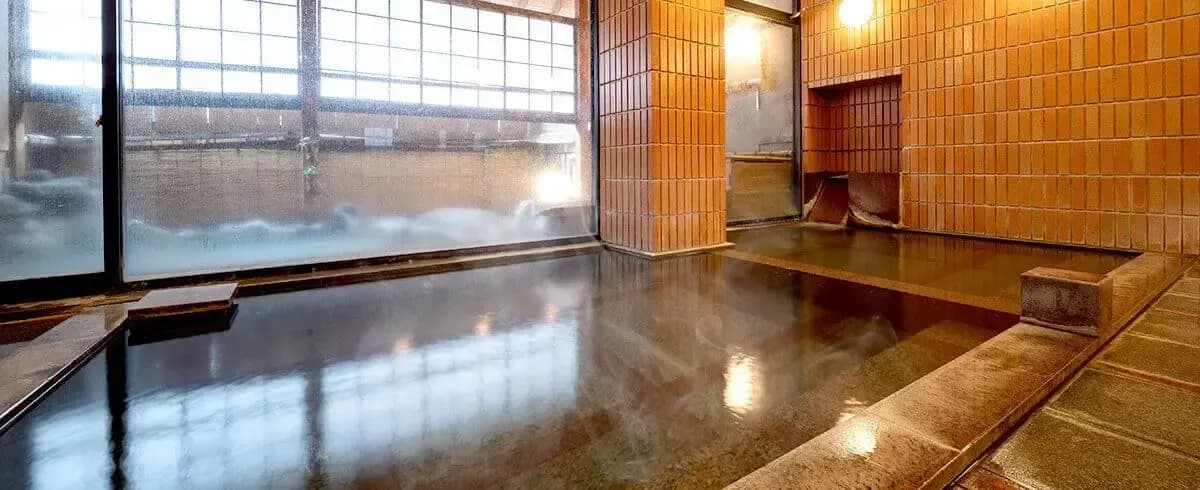
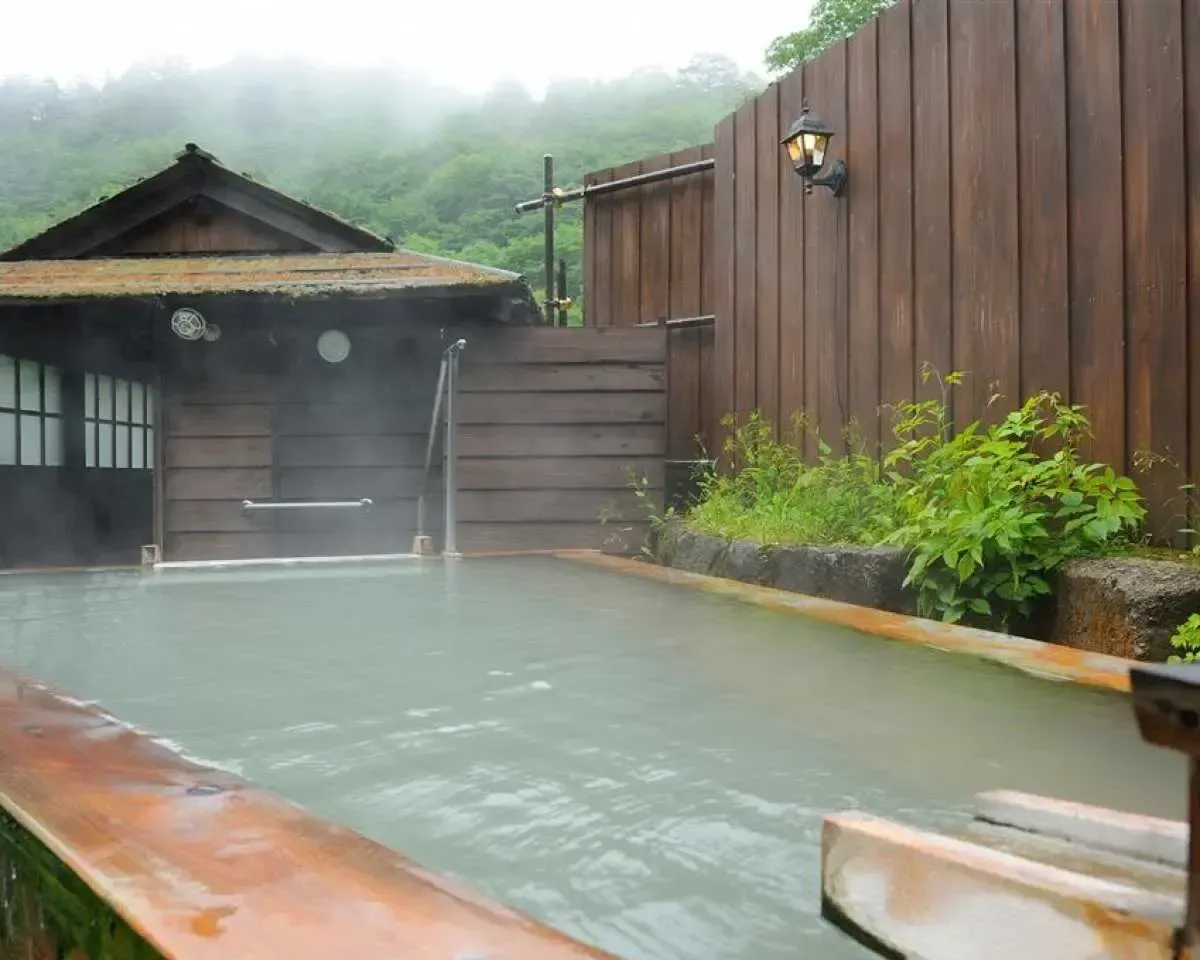
The defining feature of Shimizu-yu is the chance to soak in two utterly different natural hot springs under one roof. Kuro-yu (Black Spring) is a metasilicic-acid-rich sodium bicarbonate mohru spring drawn from strata over a million years old, with a source temperature of 18.6 degrees Celsius and a pH of 8.3. Loaded with humic acid and minerals, it emerges a deep amber-brown with the distinctive toasty scent of mohru water; because the source runs cool, it is heated, circulated, and chlorine-treated, with high-concentration nanobubbles infused to soften the water against the skin. Ogon-no-Yu (Golden Spring), by contrast, rises from 1,500 meters below ground as an ancient-seawater-derived, hypertonic sodium chloride spring, with a source temperature of 38.0 degrees Celsius, a pH of 7.8, and an intensely concentrated 18.66 grams of dissolved minerals per kilogram, including abundant iodine. Its deep milk-tea color carries a faint petroleum-like scent, and it is delivered straight from the source with no dilution or added heat. Few places anywhere let bathers compare two genuinely different hot springs, in mineral makeup, color, and aroma, side by side in a single visit.
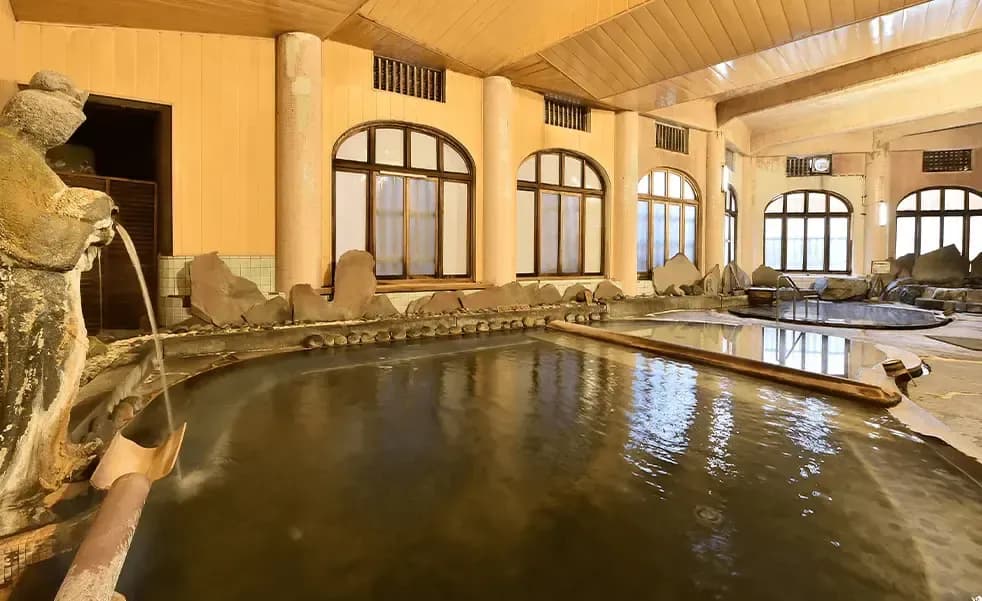
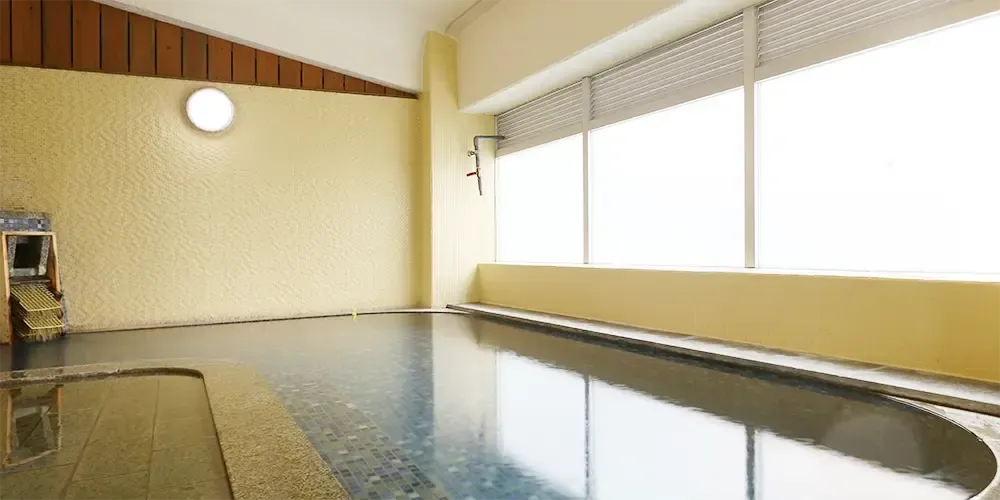
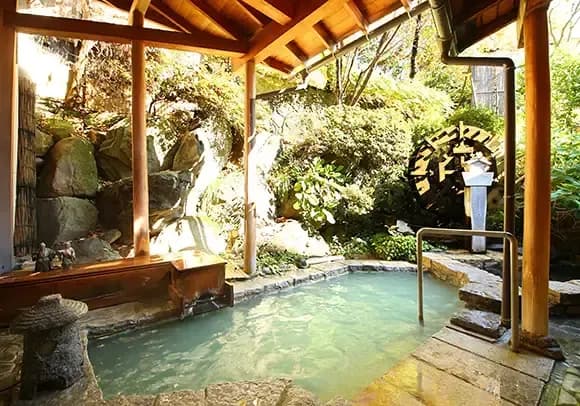
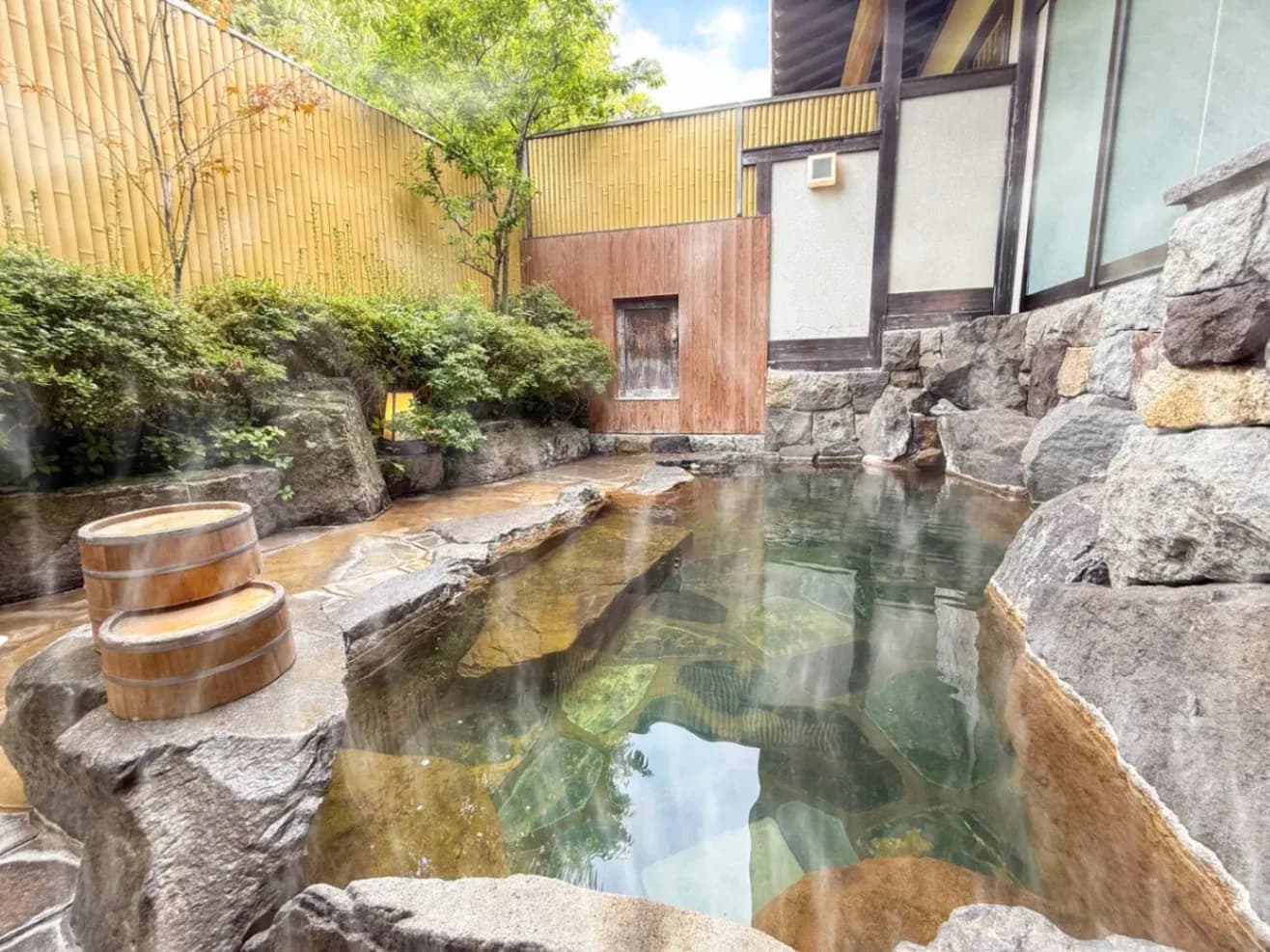
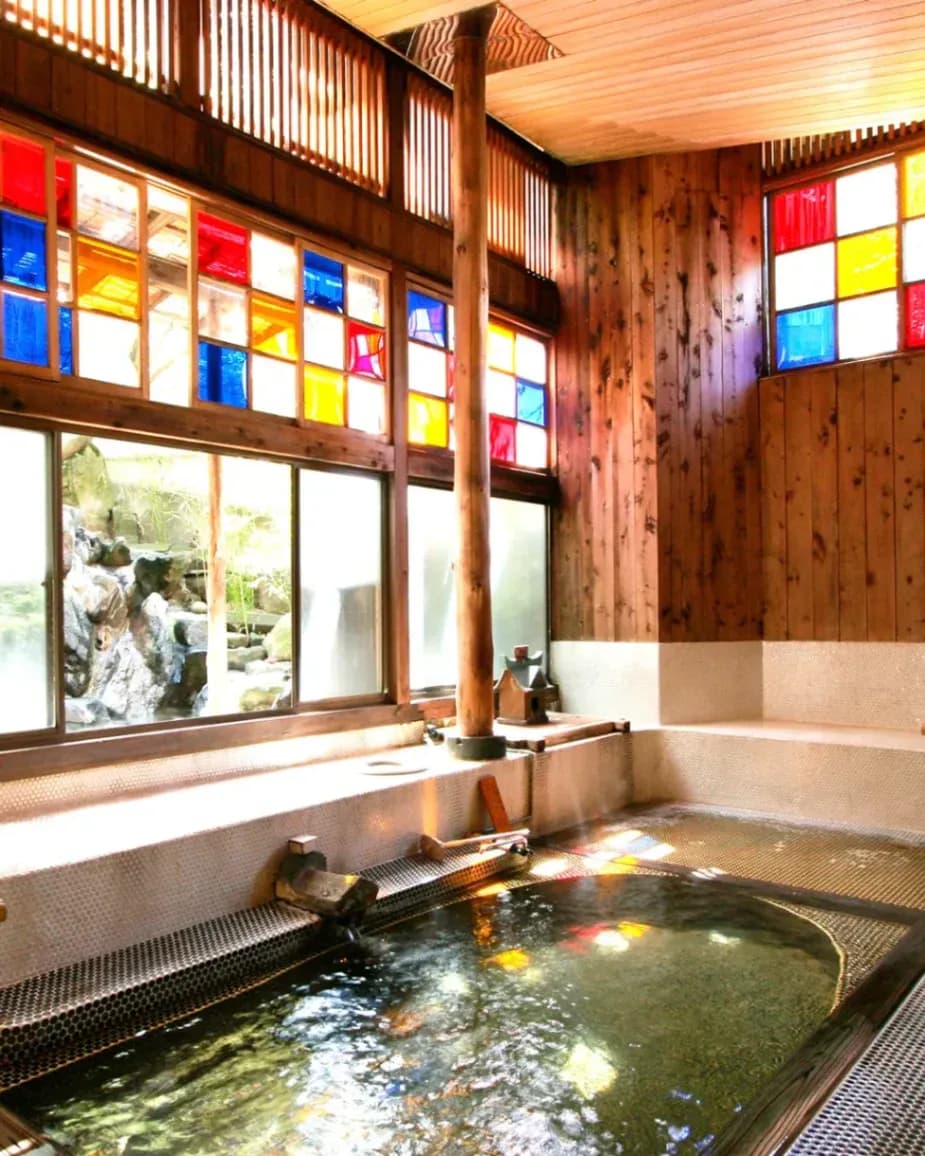
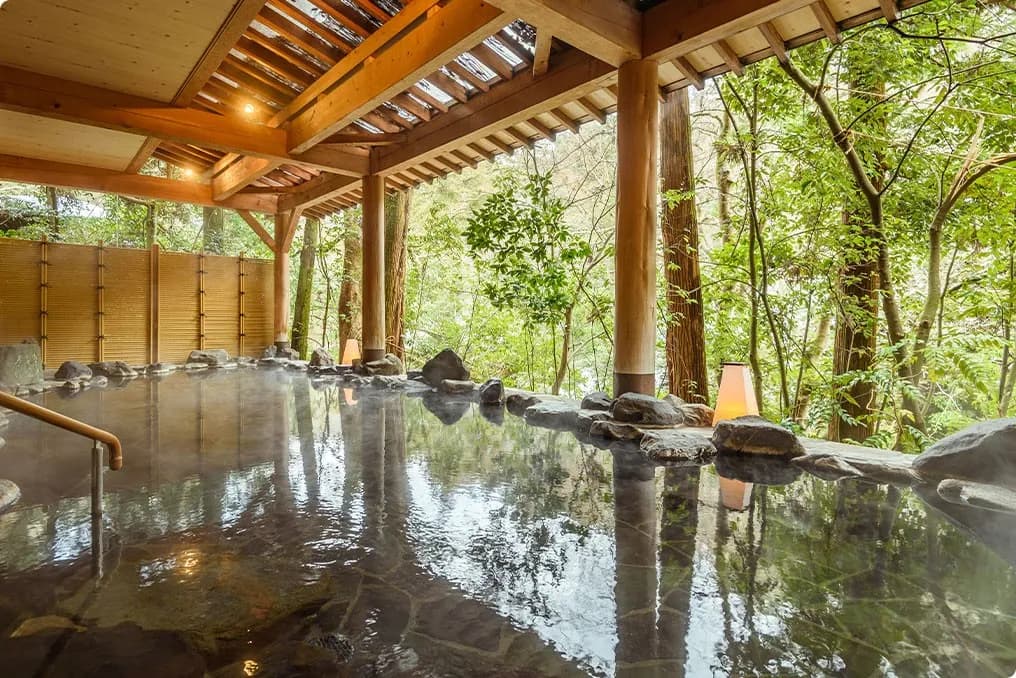
The bathing area is modest in size but cleverly laid out. The open-air bath is arranged on two levels, with Ogon-no-Yu on the upper tier and Kuro-yu on the lower, letting bathers move between the two and feel the contrast directly; six deck chairs invite lingering in the evening breeze afterward. The indoor bath features a hyper jet bath, an electric bath, and a jacuzzi, while a roughly 90 degree Celsius dry sauna paired with a cold plunge pool draws its own loyal following. Upstairs, a women-only ganban-yoku rock-bed sauna (1,500 yen for 45 minutes) and a free rest area are available, and the front desk sells the bathhouse's signature hot-spring eggs, drinks, and snacks. Despite sitting in a corner of the down-to-earth Musashi-Koyama shopping street, the facility delivers the satisfaction of a full-fledged onsen destination, which is precisely why it draws both loyal locals and hot-spring enthusiasts from far afield.
The bathhouse is open 12:00-24:00 on weekdays, Saturdays, and public holidays, and from as early as 8:00-24:00 on Sundays, with Mondays as the regular closing day (open instead if Monday is a public holiday). At sento-level prices, 550 yen for adults, 500 yen for junior high schoolers, 200 yen for elementary schoolers, and free for infants, the chance to enjoy two genuine natural hot springs is remarkable value. It's a five-minute walk from Musashi-Koyama Station on the Tokyu Meguro Line and about five minutes by car from the Ebara-machi exit of the Shuto Expressway Route 2, with on-site parking for 10 cars (free for the first two hours), making it an easy stop after work or while shopping in the arcade. Since it stays open late into the night, visitors hoping to avoid weekend crowds might do best to arrive right at opening on a weekday or late at night. Anyone visiting Musashi-Koyama should make a point of comparing the two springs firsthand, Kuro-yu and Ogon-no-Yu, rather than settling for just one.