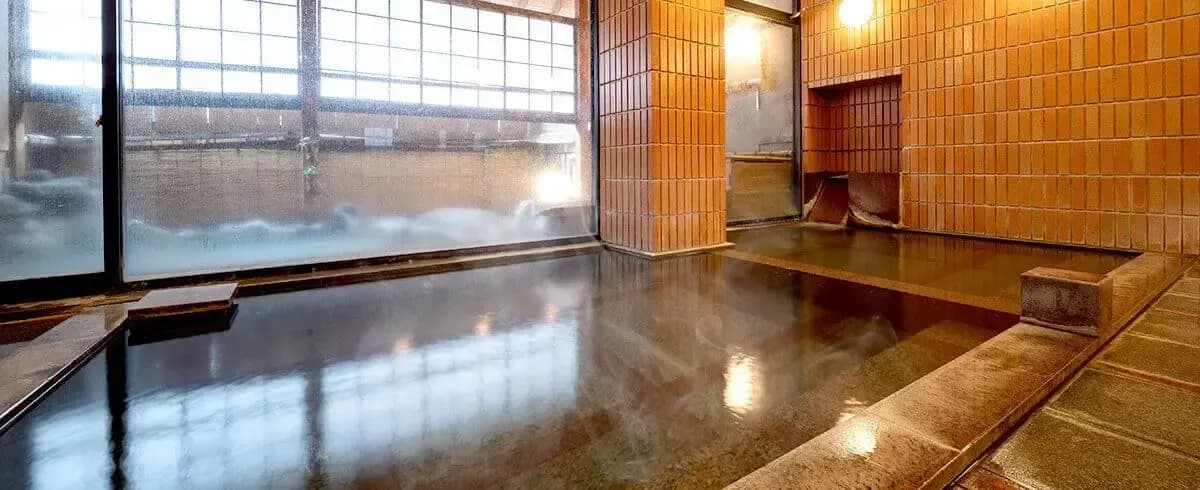
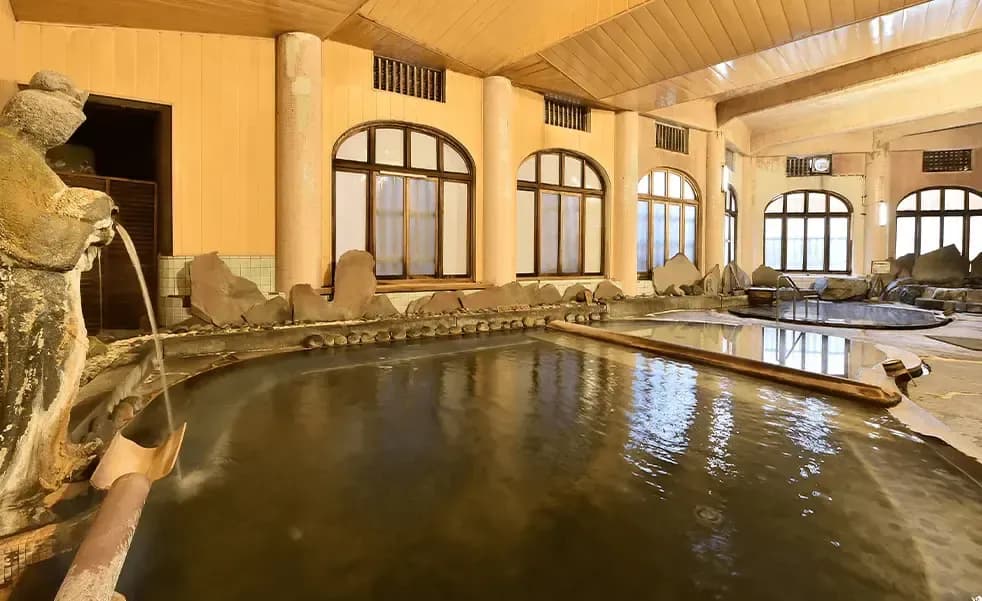
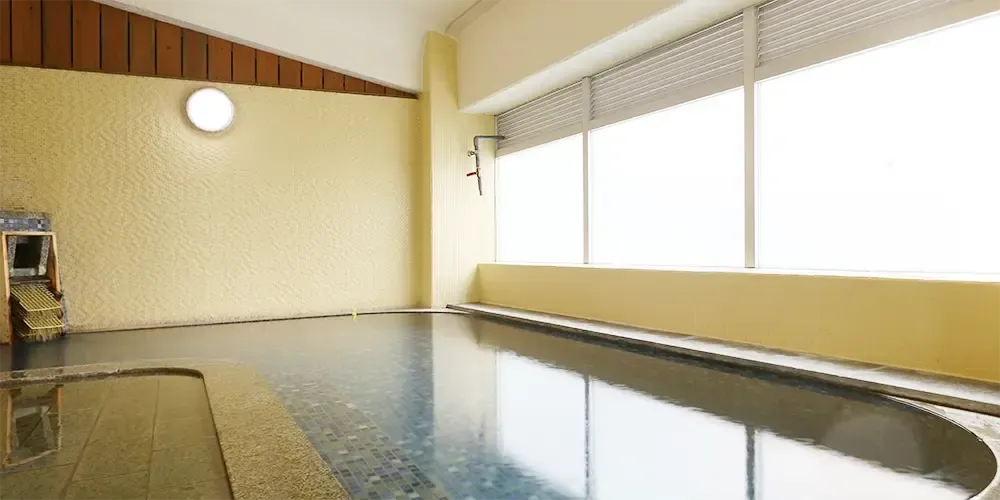
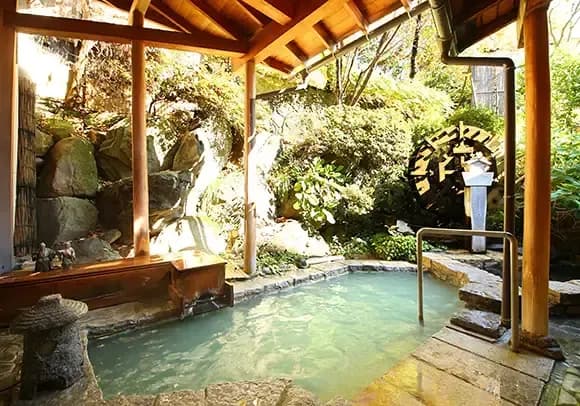
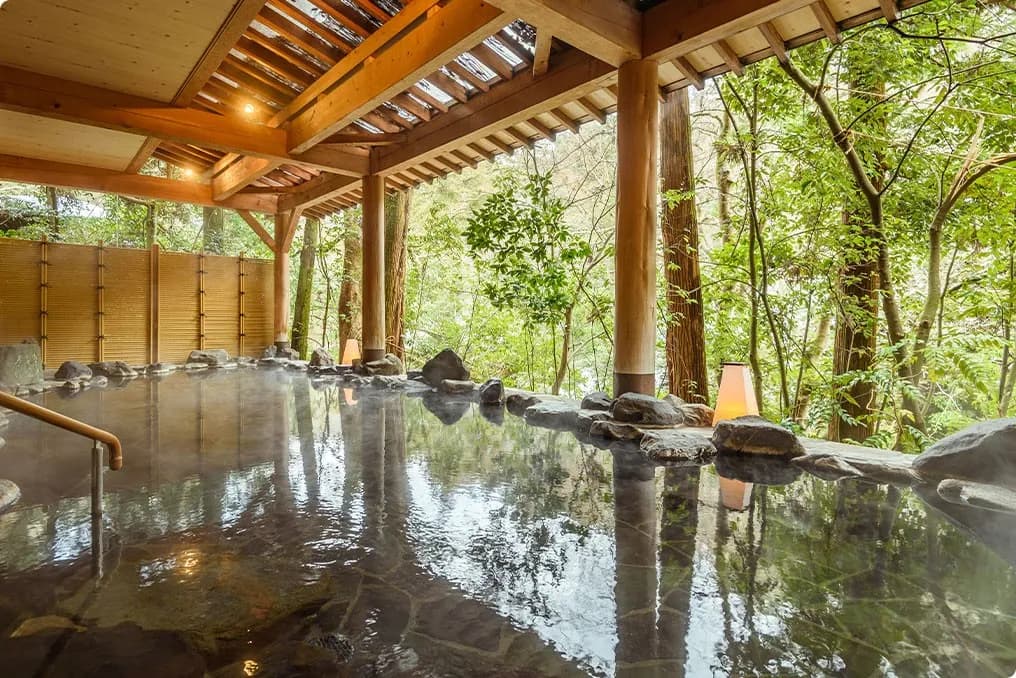
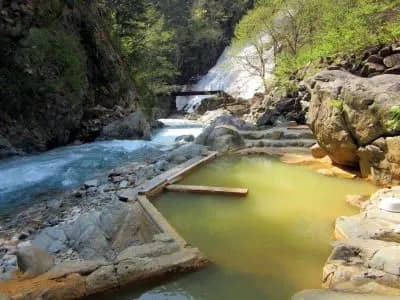
Chiba Prefecture has no active volcanoes, one of the few prefectures in Japan without one. That rules out the strongly acidic, sulfur-laden baths found at destinations like Kusatsu or Beppu. Instead, the bedrock of the Boso Peninsula formed from an ancient seabed that rose out of the ocean over geological time, and water trapped deep within these layers still rises to the surface across the region, shaping a hot spring culture unlike any other in Japan.
The signature waters here are moor springs and kuroyu (black water), formed as ancient plant matter decomposed underground over millennia. Kameyama Onsen Hotel in Kimitsu City, Kiyomoto in the Yoro Valley (Ichihara City), and Onjuku no Yu in Onjuku Town all produce baths ranging from amber to near-black. Along the coast, Inubosaki Onsen in Choshi City and Shirako Onsen Tokaiso in Shirako Town draw on fossil seawater trapped in strata roughly 10,000 years old. Joint research by the Choshi Geopark and the Chiba Institute of Science has confirmed the age of this fossil seawater through radiocarbon dating, making it a scientifically notable find among Japan's hot springs.
How each facility treats its water varies considerably, and it is worth knowing the difference before you go. Nomizo Onsen Senju no Yu, Benten Kousen, and Shichirigawa Onsen are genuine source-fed baths, drawn straight from the ground without dilution or recirculation. Shirako Onsen Tokaiso, by contrast, dilutes, heats, filters, and chlorinates its water. At Kameyama Onsen Hotel, Inubosaki Onsen, and Chikura Onsen Chikurakan, treatment differs from bath to bath within the same facility, and Kiyomoto draws on its own private kuroyu source without disclosing whether the water is diluted or recirculated.
Rather than a single headline "hidden hot spring" destination, Chiba rewards visitors who compare each bath on its own terms. Below are 9 of the prefecture's most distinctive hot springs.
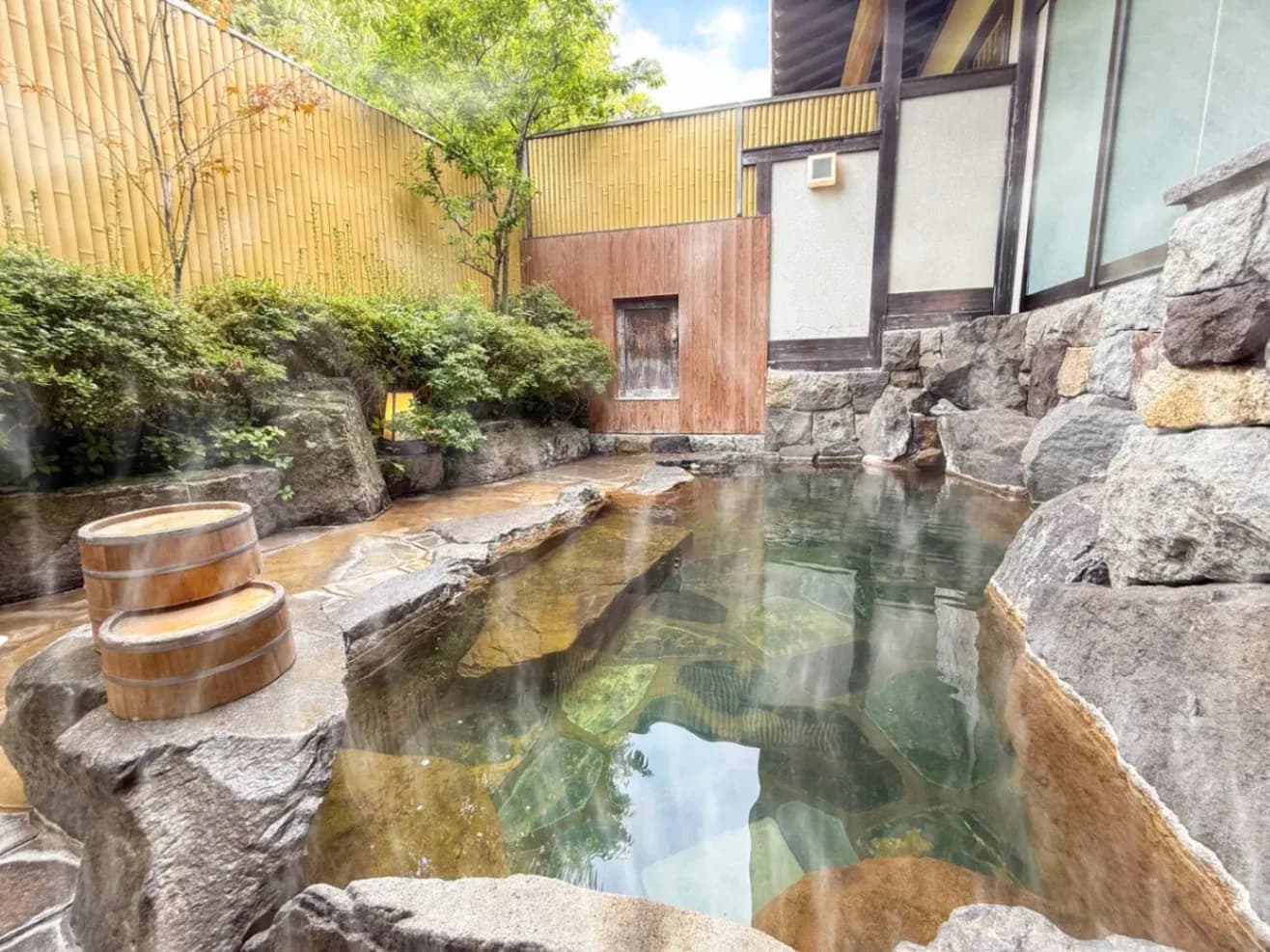
1. Nomizo Onsen Senju no Yu (濃溝温泉 千寿の湯) — Kimitsu City

| Mon | Tue | Wed | Thu | Fri | Sat | Sun | Hol | |
|---|---|---|---|---|---|---|---|---|
| 10:30 - 21:00 | ◯ | × | ◯ | ◯ | ◯ | ◯ | ◯ | ◯ |
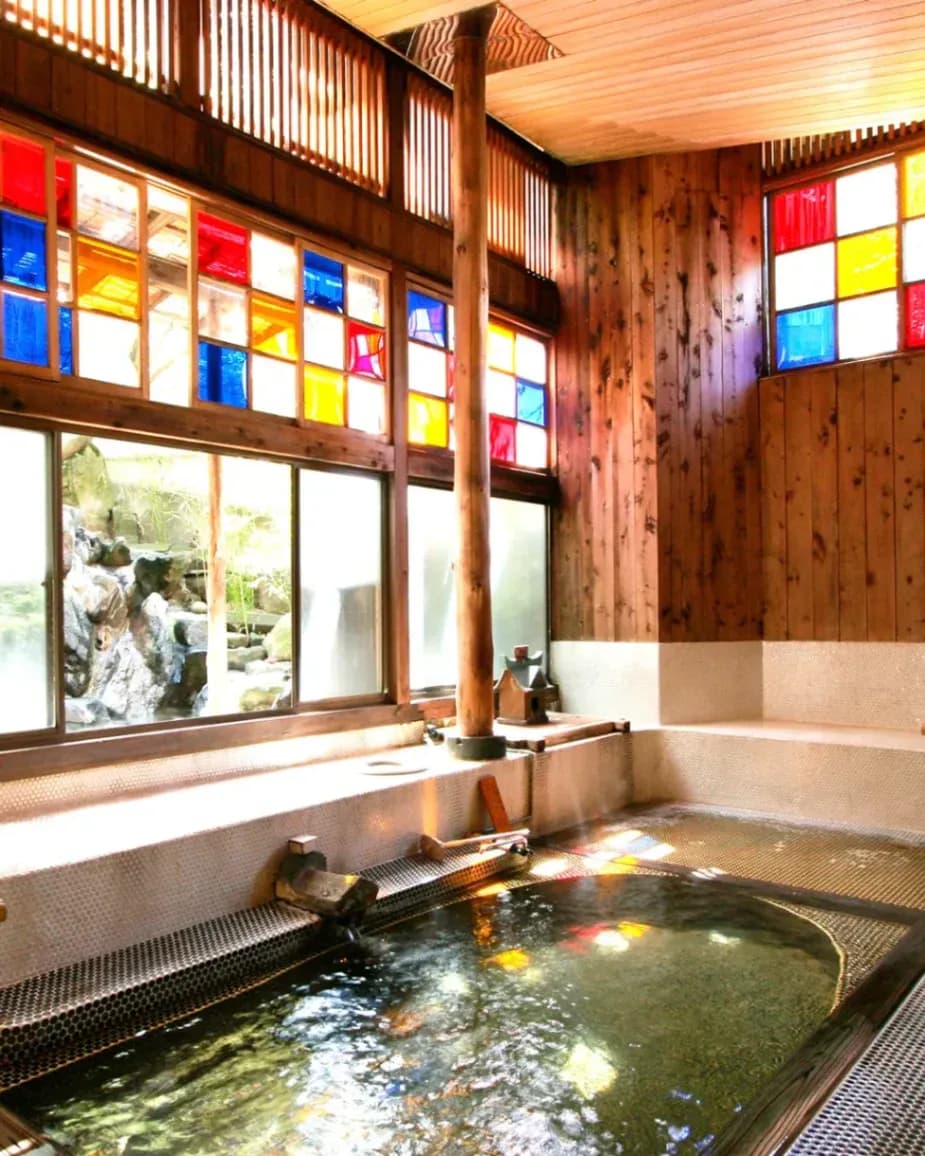
2. Irori no Yado Shichirigawa Onsen (いろりの宿 七里川温泉) — Kimitsu City
| Mon | Tue | Wed | Thu | Fri | Sat | Sun | Hol | |
|---|---|---|---|---|---|---|---|---|
| 08:00 - 22:00 | ◯ | ◯ | ◯ | ◯ | ◯ | ◯ | ◯ | ◯ |
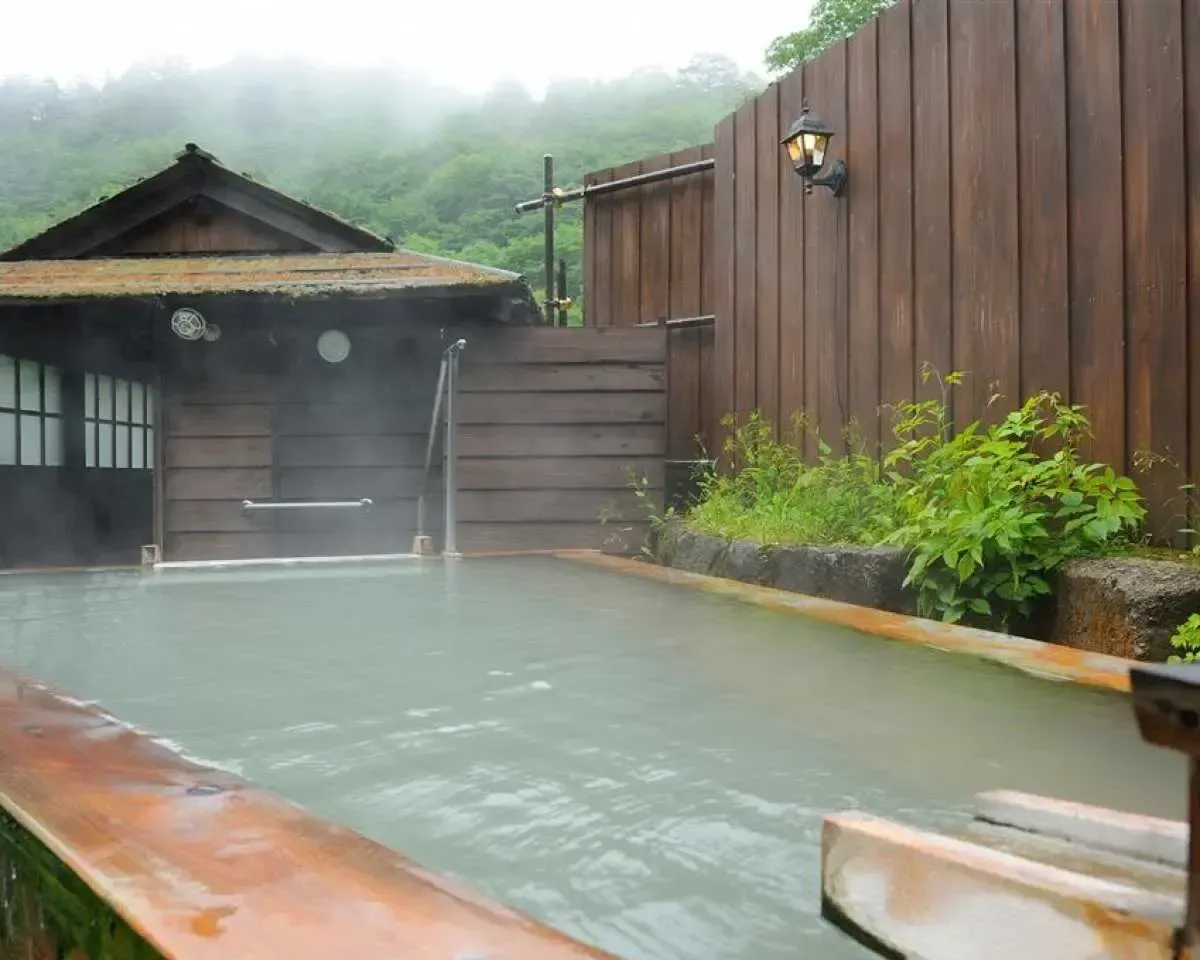
3. Benten Kousen (弁天鉱泉) — Minamiboso City
| Mon | Tue | Wed | Thu | Fri | Sat | Sun | Hol | |
|---|---|---|---|---|---|---|---|---|
| 10:00 - 15:00 | ◯ | ◯ | ◯ | ◯ | ◯ | ◯ | ◯ | ◯ |
4. Kameyama Onsen Hotel (亀山温泉ホテル) — Kimitsu City
| Mon | Tue | Wed | Thu | Fri | Sat | Sun | Hol | |
|---|---|---|---|---|---|---|---|---|
| 11:30 - 18:00 | ◯ | ◯ | ◯ | ◯ | ◯ | ◯ | ◯ | ◯ |
5. Onjuku no Yu (御宿の湯) — Onjuku Town, Isumi District
| Mon | Tue | Wed | Thu | Fri | Sat | Sun | Hol | |
|---|---|---|---|---|---|---|---|---|
| 16:00 - 19:00 | ◯ | × | ◯ | ◯ | ◯ | 14:00-19:00 | 14:00-19:00 | 14:00-19:00 |
6. Shirako Onsen Tokaiso (白子温泉 東海荘) — Shirako Town, Chosei District
| Mon | Tue | Wed | Thu | Fri | Sat | Sun | Hol | |
|---|---|---|---|---|---|---|---|---|
| 12:30 - 17:30 | ◯ | ◯ | ◯ | ◯ | ◯ | × | ◯ | ◯ |
7. Youroukeikoku Onsen Kiyomoto (養老渓谷温泉 喜代元) — Ichihara City
8. Inubosaki Onsen Motoyu Kuroshio-no-yu (犬吠埼温泉 元湯 黒潮の湯), Inubosaki Hotel — Choshi City
| Mon | Tue | Wed | Thu | Fri | Sat | Sun | Hol | |
|---|---|---|---|---|---|---|---|---|
| 12:00 - 21:00 | 15:00-21:00 | 15:00-21:00 | ◯ | ◯ | ◯ | 09:00-21:00 | 09:00-21:00 | 09:00-21:00 |
9. Chikura Onsen Chikurakan (千倉温泉 千倉館) — Minamiboso City
| Mon | Tue | Wed | Thu | Fri | Sat | Sun | Hol | |
|---|---|---|---|---|---|---|---|---|
| 12:30 - 19:00 | ◯ | ◯ | ◯ | ◯ | ◯ | ◯ | ◯ | ◯ |
Summary: What to Know Before Exploring Chiba's Hot Springs
Chiba's hot springs fall into four natural groupings: the inland Boso hills, the Minamiboso coast, the Sotobo/Kujukuri shore, and Choshi at the peninsula's eastern tip.
Inland Boso. Nomizo Onsen Senju no Yu, Shichirigawa Onsen, Kameyama Onsen Hotel, and Kiyomoto all sit in the hills of central Boso. Nomizo Onsen Senju no Yu stands right at the entrance to Nomizo Falls and Kameiwa Cave, so a soak pairs naturally with sightseeing. Shichirigawa Onsen and Kameyama Onsen Hotel are both in Kimitsu City, roughly 30-40 minutes apart by car. Kiyomoto sits along the Yoro River in Ichihara City, about a 20-minute walk from Youroukeikoku Station on the Kominato Railway, but since July 2022 it has operated as a stay-only property, so day-trip bathing is not available there. Public transport is limited across this area, making a rental car the practical choice.
Minamiboso Coast. Benten Kousen and Chikura Onsen Chikurakan both sit along the coast of Minamiboso City. Benten Kousen is about 10 minutes by car from Iwai Station on the JR Uchibo Line, while Chikura Onsen Chikurakan offers a reservation-only shuttle from Chikura Station on the same line. Both inns cap the number of parties accepted each day and limit reservation windows for their baths, so booking ahead is effectively mandatory. On a clear day, Benten Kousen's outdoor bath offers a view of Mount Fuji across Tokyo Bay.
Sotobo and Kujukuri. Onjuku no Yu, in Onjuku Town, and Shirako Onsen Tokaiso, in Shirako Town, both sit along the JR Sotobo Line. Onjuku no Yu is about a 6-minute walk from Onjuku Station, making it one of the easier stops on this list for travelers without a car. Shirako Onsen Tokaiso does not accept day-trip bathers on Saturdays, so plan a weekday or Sunday/holiday visit instead. This stretch of coast pairs well with a day of surfing or swimming at Kujukuri Beach.
Choshi. Inubosaki Onsen Motoyu Kuroshio-no-yu, at the Inubosaki Hotel, sits at the easternmost point in the prefecture. From Choshi Station, transfer to the Choshi Electric Railway and get off at Inubo Station, about a 5-minute walk from the hotel. Pairing the visit with Inubosaki Lighthouse, famed as one of the first places in Japan to see the New Year's sunrise, and the Choshi Geopark adds useful context for the fossil seawater beneath the bath.
A few practical points apply across the list. Bathing is generally separated by gender at all nine facilities, and swimwear is not worn in the baths themselves, though policies for any day-use family or private baths vary by inn. As at most Japanese hot springs, visitors with visible tattoos should contact the facility in advance rather than assume entry, since none of these nine publish an explicit tattoo policy online. Reservations are strongly advised at the smaller properties, especially Benten Kousen and Chikura Onsen Chikurakan, and required at Kiyomoto, which has not accepted day-trip guests since 2022. Cash remains the safer default at these small, family-run baths, even as card payment becomes more common elsewhere in Japan. Every facility on this list can technically be reached by public transport, but bus and taxi services in the Boso hills run infrequently, so a rental car is the more realistic way to visit more than one or two in a single day.
The information in this article (admission fees, operating hours, water quality data, etc.) is based on research conducted at the time of writing. Details may have changed or contain errors. Please verify the latest information on each facility's official website or through the local tourism association.