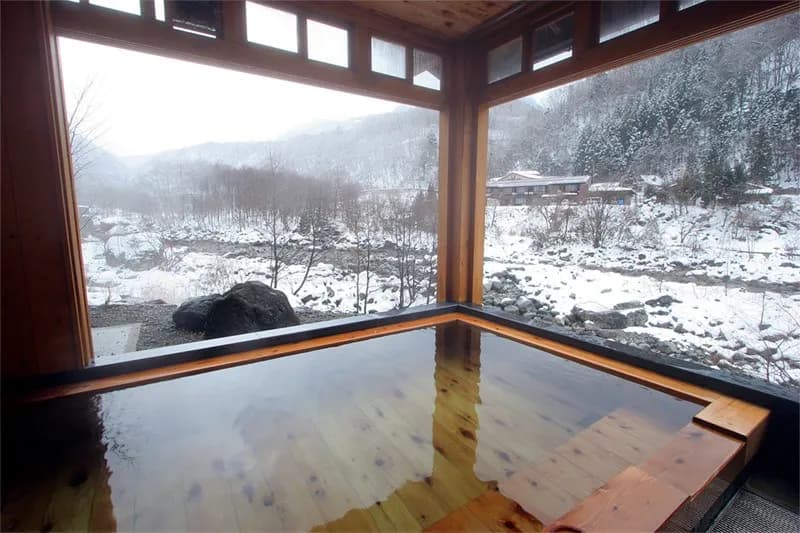
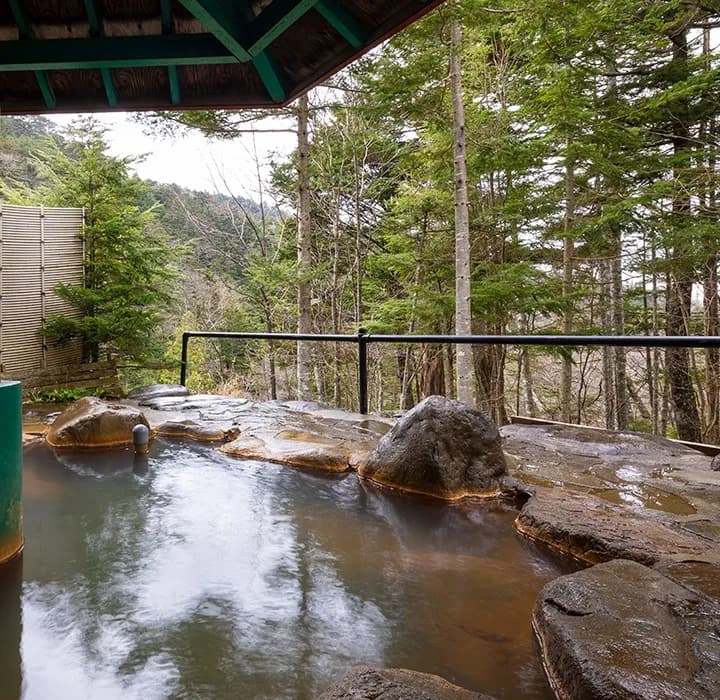
Nyuto Onsen (乳頭温泉郷): Seven-Bath Yu-Meguri Guide to Akita's Secluded Hot Springs
Nyuto Onsen (Nyuto Onsen-kyo, 乳頭温泉郷) is a cluster of seven hot spring inns scattered through the beech forest at the foot of Mt. Nyuto, inside Towada-Hachimantai National Park in Senboku City, Akita. The seven baths are Tsurunoyu, Taeno-yu, Kuroyu, Ganiba, Magoroku, Ogama, and Kyukamura Nyuto Onsen-kyo, sitting at roughly 600-800m elevation. Records of the inns date back to the Edo period, when the area served as a therapeutic bathing ground, and thatched and cedar-bark bathhouses still carry that old toji (hot-spring cure) atmosphere.
What sets Nyuto apart is that each of the seven inns has its own source, and the village holds more than ten separate springs. The water ranges from acidic to weakly alkaline, so you can compare sulfur springs, sulfate springs, and simple springs within walking distance. Even under the single name "Nyuto," the color and feel of the water differ from inn to inn.
Those differences show up directly in the spring types. Tsurunoyu, the oldest inn, draws on four sources within about a 50m radius and is known for its milky, sulfur-bearing mixed-gender open-air bath. Taeno-yu uses two of its own sources: the iron-bearing "Kin-no-yu" (gold bath), a calcium-magnesium sulfate spring, and the softer simple spring "Gin-no-yu" (silver bath). Kuroyu is a high-volume sulfur spring where you can see the "jigoku" (hell) field of bubbling source water up close. Magoroku is a hydrogen-sulfide spring long called a "mountain medicine bath," Ogama is an inn built from a relocated wooden schoolhouse, Ganiba is a weakly alkaline open-air bath ringed by beech forest, and Kyukamura Nyuto Onsen-kyo is a stay-oriented facility with two source types.
The village is also set up for hopping between baths. Overnight guests can buy a yu-meguri pass (yu-meguri techo) that allows one bath at each of the seven inns and rides on the "Yu-meguri-go" shuttle bus that loops the village. Day-trip visitors have a yu-meguri map that covers the shuttle (bathing fees separate). Prices, validity, and sales conditions can change, so confirm the current details with the Nyuto Onsen Association before your trip.
This guide links to the individual pages for each bath (with spring data and access details), then walks through how to plan a seven-bath tour, access from Tazawako Station, winter cautions, and inbound-traveler questions such as tattoos, mixed bathing, reservations, and payment.
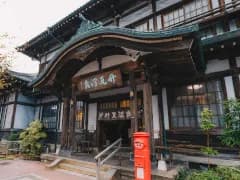
1. Nyuto Onsen-kyo: Tsurunoyu Onsen (Senboku City, Akita)
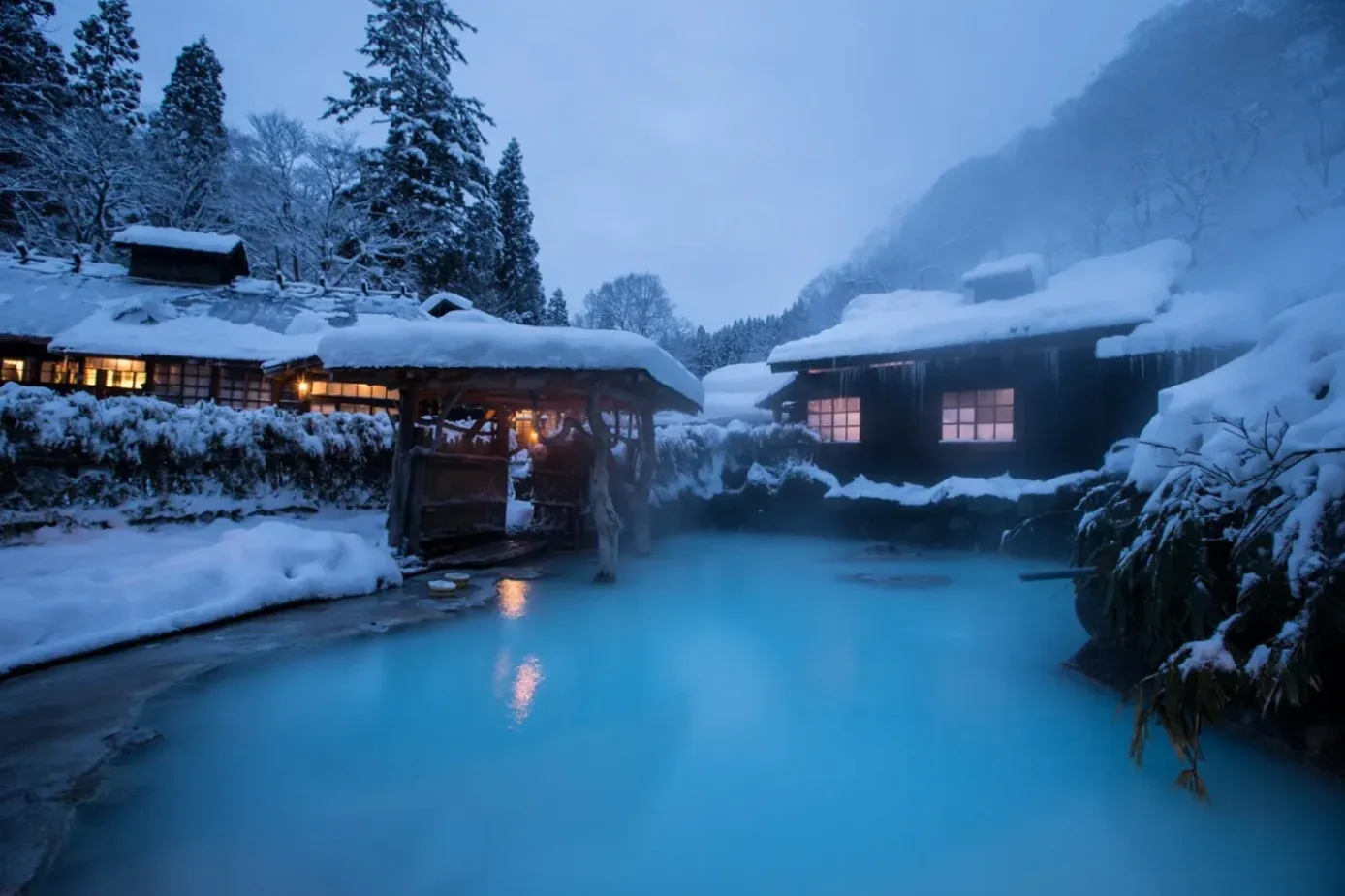
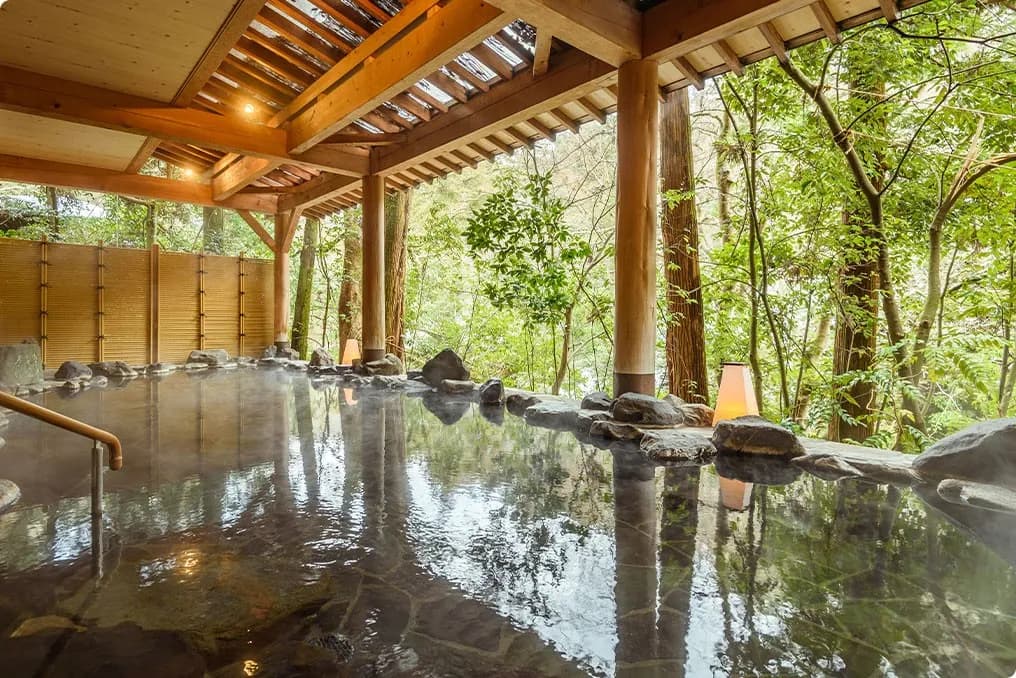
2. Nyuto Onsen-kyo: Taeno-yu Onsen (Senboku City, Akita)
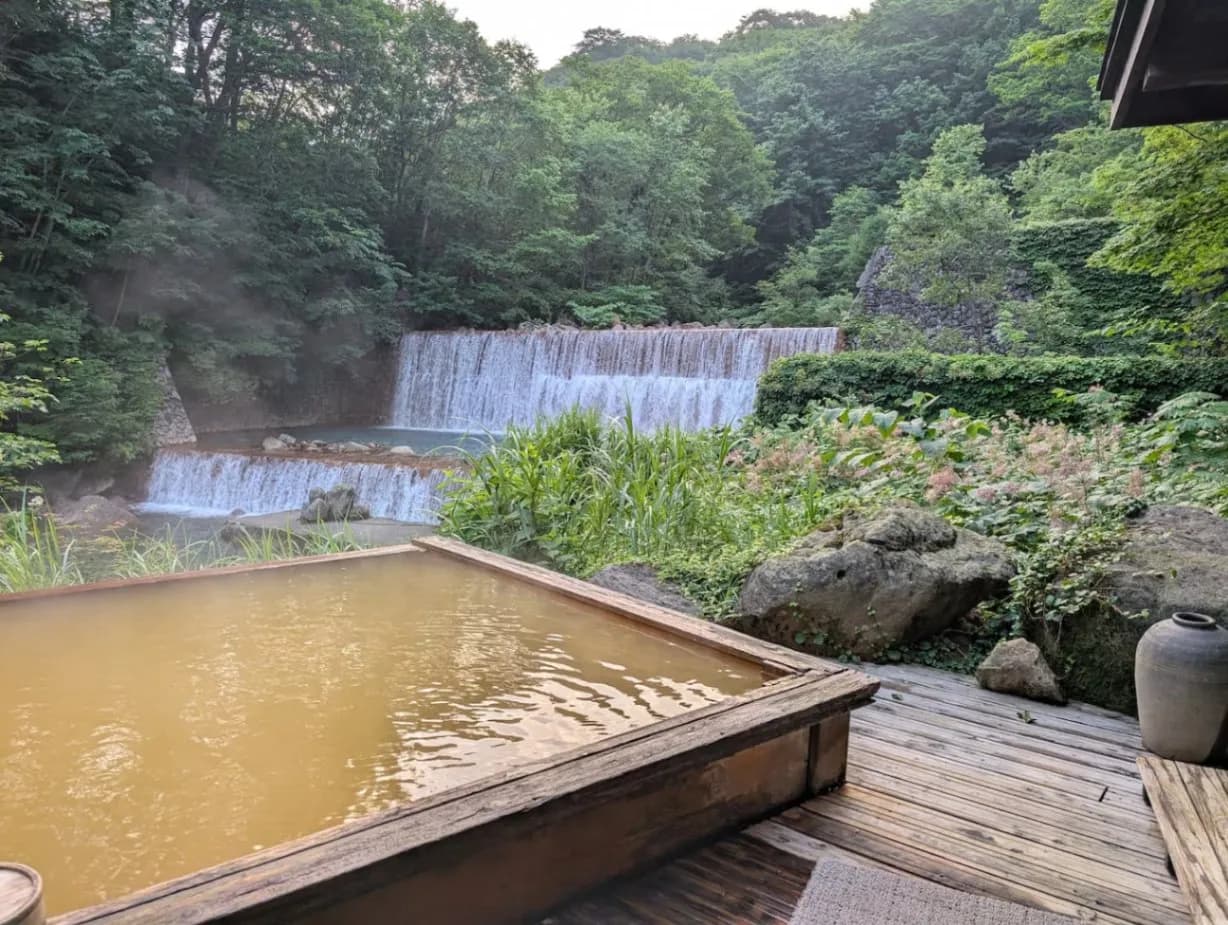
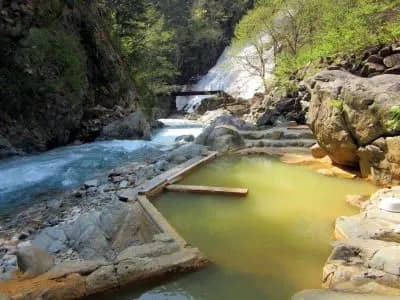
3. Nyuto Onsen-kyo: Kuroyu Onsen (Senboku City, Akita)
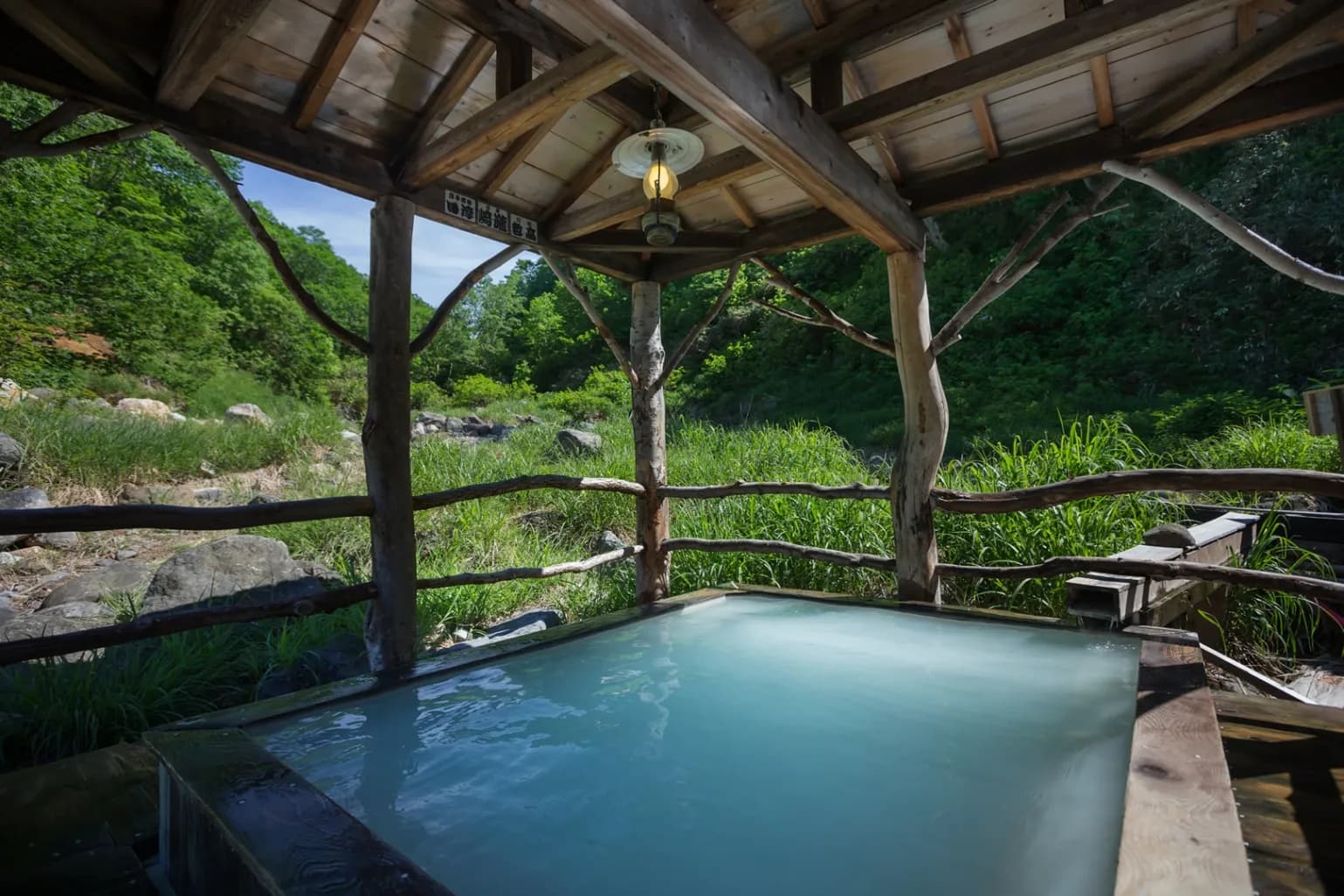
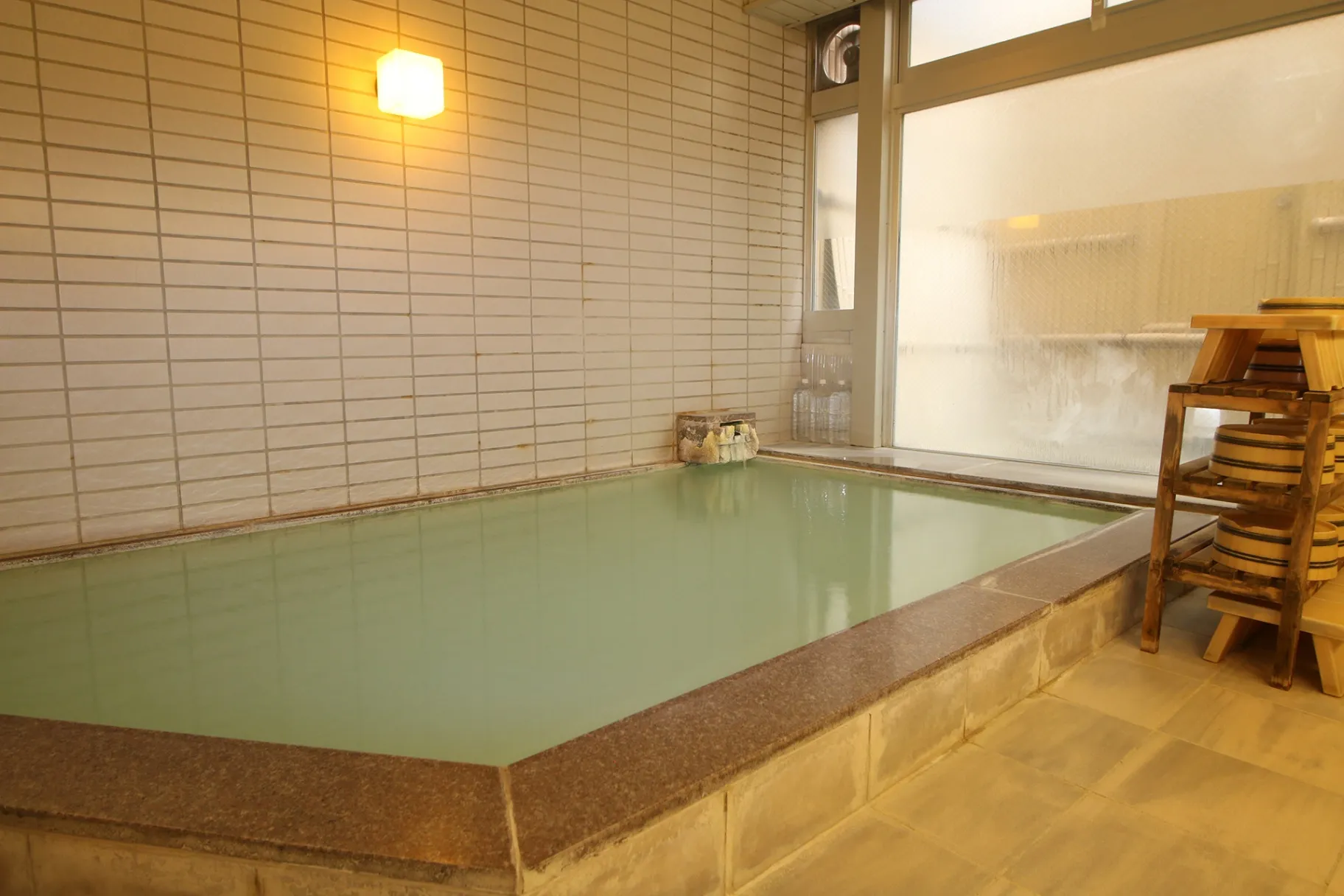
4. Nyuto Onsen-kyo: Magoroku Onsen (Senboku City, Akita)
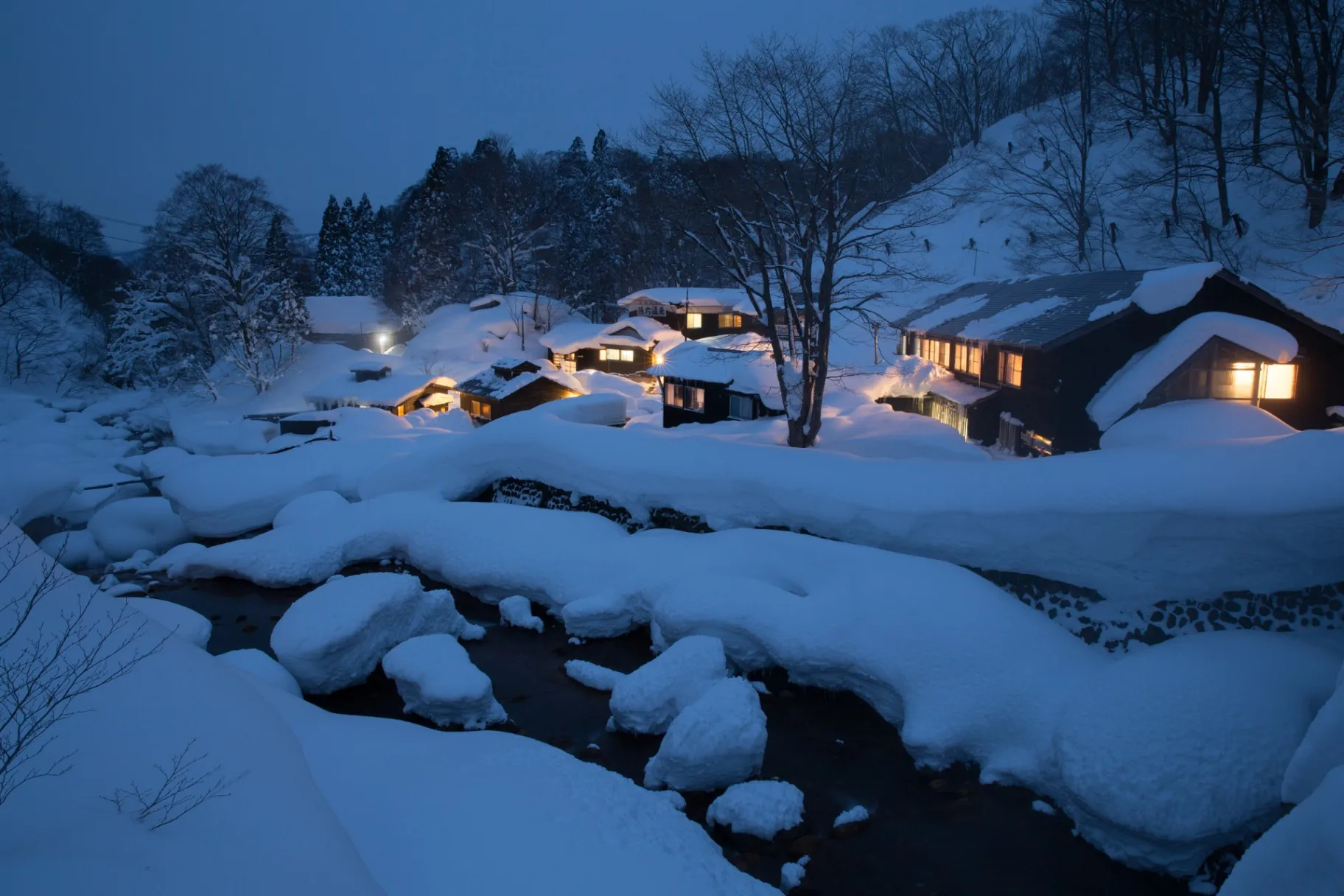
5. Nyuto Onsen-kyo: Ogama Onsen (Senboku City, Akita)
Planning a Seven-Bath Tour of Nyuto Onsen
The seven inns of Nyuto sit close enough to reach on foot or by the loop shuttle. The first thing to grasp is that the water differs by inn even within one village. Choosing by purpose makes it hard to go wrong: milky water at Tsurunoyu, two contrasting waters in one visit at Taeno-yu, or sulfur aroma and volume at Kuroyu.
Choosing by spring type. For milky, sulfur-bearing water, aim for Tsurunoyu and Kuroyu; for softer sulfate or simple springs, Taeno-yu; for the hydrogen-sulfide "medicine bath" feel, Magoroku. Being able to compare acidic-leaning and weakly alkaline waters in one village is the particular pleasure of Nyuto. That said, "bath-hopping" through several springs in a single day is taxing on the body. To avoid onsen fatigue, keep the number of baths modest and take breaks with plenty of water.
The yu-meguri pass and map. These two systems are the key to touring efficiently. The overnight-guest yu-meguri pass covers one bath at each of the seven inns plus the "Yu-meguri-go" shuttle. The day-trip yu-meguri map does not include bathing fees but lets you use the shuttle. Both are paid, and prices, conditions, and validity are revised from time to time, so check the Nyuto Onsen Association's official information before visiting. Day-trip bathing itself can also be limited by hours, days, or an inn's own circumstances, with overnight guests given priority.
Access. The public-transport gateway is JR Tazawako Station, roughly 2 hours 50 minutes from Tokyo Station on the Akita Shinkansen "Komachi" as a rough guide. From the station, an Ugo Kotsu route bus toward Nyuto Onsen takes about 50 minutes. Buses are infrequent, so check the timetable in advance for both directions. By car, the usual route is from the Morioka IC on the Tohoku Expressway via National Route 46. Treat all times and fares as estimates that can change.
Winter cautions. Within the village, Kuroyu and Magoroku close in winter, operating roughly from spring to late autumn (dates vary by year). The other inns stay open through winter, but the mountain road from Tazawako Station is snow-covered and icy for a long stretch of the year; by car you will need studless tires or chains. Winter offers the snow-viewing open-air bath, but road conditions and each inn's operating status must be checked ahead.
Spring types, hours, and day-trip details for each bath are on the individual pages linked above. Confirm the latest fees, hours, and seasonal closures with each facility and the Nyuto Onsen Association.
Frequently Asked Questions
Q1. Can I visit Nyuto Onsen as a day trip (no overnight stay)? Most of the seven inns accept day-trip bathers, but acceptance can vary by time of day, day of week, and how busy the inn is, with overnight guests given priority. Kuroyu and Magoroku close in winter. Check each facility's official reception hours for the day you plan to visit.
Q2. Do I need tattoos covered? Is mixed bathing (konyoku) required? Nyuto's inns are traditional and policies vary by facility, so check each inn directly about tattoos. Some baths, including Tsurunoyu's famous open-air bath, are mixed-gender (konyoku), but inns also provide women-only baths or women-only time slots, and there are indoor gender-separated baths. Staying overnight makes it easier to bathe in the quieter morning and evening hours.
Q3. Do I need a reservation, and how do I pay? Overnight stays should be booked in advance, especially at popular inns like Tsurunoyu. Day-trip bathing is generally walk-in but can be restricted during busy periods. Many rural inns here operate largely on a cash basis, so carry enough yen and do not assume cashless payment; confirm accepted methods with each inn.
Q4. How do I get there by public transport from Tazawako Station? From JR Tazawako Station, take the Ugo Kotsu route bus toward Nyuto Onsen, about 50 minutes as a guide. Buses are infrequent, so check the timetable first. If you drive, the usual route is via the Morioka IC on the Tohoku Expressway and National Route 46.
Q5. Can I bathe in winter? Kuroyu and Magoroku close in winter, but the other inns stay open. The mountain road is snow-covered and icy for much of the season, so a car needs studless tires. Confirm operating and road conditions before you go.
The information in this article (bathing fees, hours, spring data, seasonal operating periods, etc.) is based on details available at the time of research and may contain errors or have changed. Please confirm the latest information with each facility's official website or the Nyuto Onsen Association before visiting.