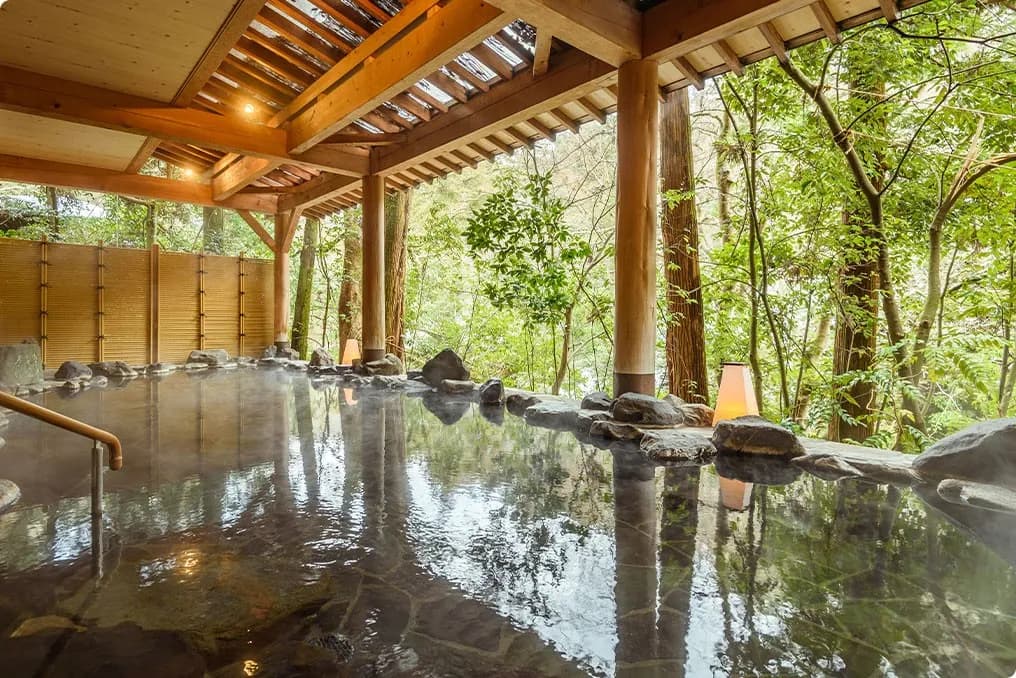
Beppu, in Oita Prefecture, is one of Japan's largest hot spring cities. Beneath the fan of land sloping from Mt. Tsurumi and Mt. Garan toward Beppu Bay run countless veins of geothermal water. The city has more than 2,000 hot spring sources and ranks first in Japan for both the number of sources and the volume of water it discharges. Steam rises from roadside gutters as you walk, a reminder that the whole town is built on top of hot springs.
Beppu's waters are far from uniform. Eight districts—Beppu, Hamawaki, Kankaiji, Horita, Myoban, Kannawa, Shibaseki and Kamegawa—are known collectively as the "Beppu Hatto" (Eight Hot Springs of Beppu), and each has its own water quality and color. The coastal districts of Beppu and Hamawaki lean toward clear chloride springs, while up the hillside in Myoban the water turns to a cloudy, sulfur-scented acidic spring. A 20-minute drive within the same city can feel like arriving at a completely different hot spring resort.
The symbol of Beppu sightseeing is the "Hell Tour" (Jigoku Meguri 地獄めぐり). The seven Hells—including Umi Jigoku (Sea Hell), Chinoike Jigoku (Blood Pond Hell), Tatsumaki Jigoku (Tornado Hell) and Shiraike Jigoku (White Pond Hell)—let you view steam, hot mud and boiling water bursting from the ground up close, and four of them are designated National Scenic Beauty spots. Note that the Hells are for viewing only: you cannot bathe in them. In Beppu the usual rhythm is to view the Hells for sightseeing and soak at a public bathhouse or inn for your actual bath, often combining both in a single day.
Public bathhouse culture is the other half of Beppu. Takegawara Onsen, founded in the Meiji era and famous for its sand bath (suna-yu), and Kannawa Mushi-yu, a steam bath said to have been opened by the monk Ippen in the Kamakura period, are among many historic baths you can enter for a few hundred yen. Municipal baths are plentiful too, so day-trip bathing is very easy and affordable. Dropping into a local public bath between sights is very much part of the Beppu experience.
This article gives an overview of Beppu as a base for the Hell Tour and bath hopping, then introduces six baths in the Beppu area that have their own detail pages on this site. They fall into two contrasting groups: in-town public baths you can enjoy from a few hundred yen (Takegawara Onsen and Kannawa Mushi-yu), and hillside hidden springs of acidic and sulfur water (Myoban's Tsuru-no-yu, Hebin-yu and Nabeyama-no-yu, and the strongly acidic Tsukahara Onsen Kako-no-izumi)—a lineup that lets you experience the range of the Beppu Hatto through the contrast of town and mountain.
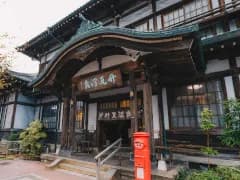
1. Takegawara Onsen 竹瓦温泉 (Beppu, Oita)

| Mon | Tue | Wed | Thu | Fri | Sat | Sun | Hol | |
|---|---|---|---|---|---|---|---|---|
| 06:30 - 22:30 | ◯ | ◯ | ◯ | ◯ | ◯ | ◯ | ◯ | ◯ |
2. Kannawa Mushi-yu 鉄輪むし湯 (Beppu, Oita)
| Mon | Tue | Wed | Thu | Fri | Sat | Sun | Hol | |
|---|---|---|---|---|---|---|---|---|
| 06:30 - 20:00 | ◯ | ◯ | ◯ | ◯ | ◯ | ◯ | ◯ | ◯ |
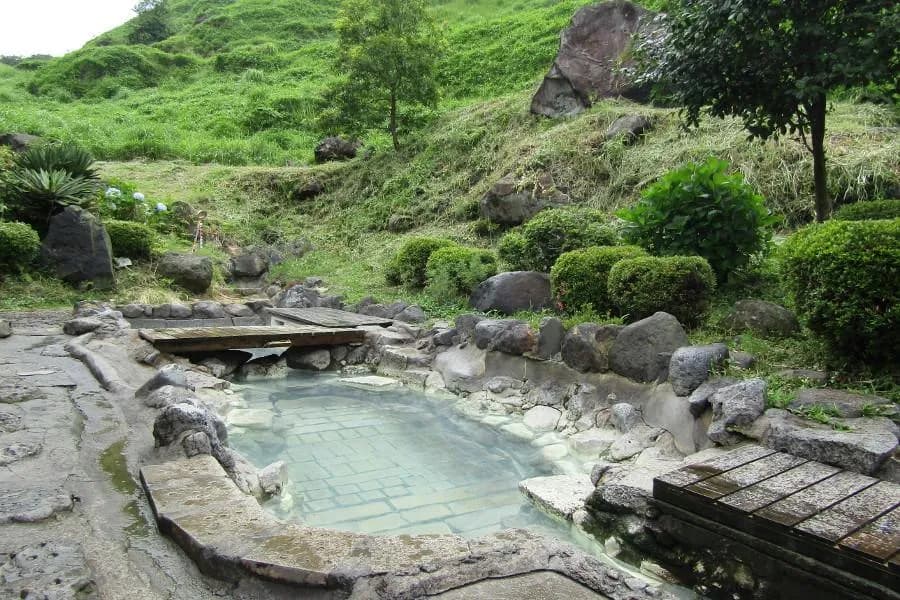
3. Myoban Onsen Tsuru-no-yu 明礬温泉 鶴の湯 (Beppu, Oita)
| Mon | Tue | Wed | Thu | Fri | Sat | Sun | Hol | |
|---|---|---|---|---|---|---|---|---|
| 00:00 - 24:00 | ◯ | ◯ | ◯ | 09:00-21:00 | ◯ | ◯ | ◯ | ◯ |
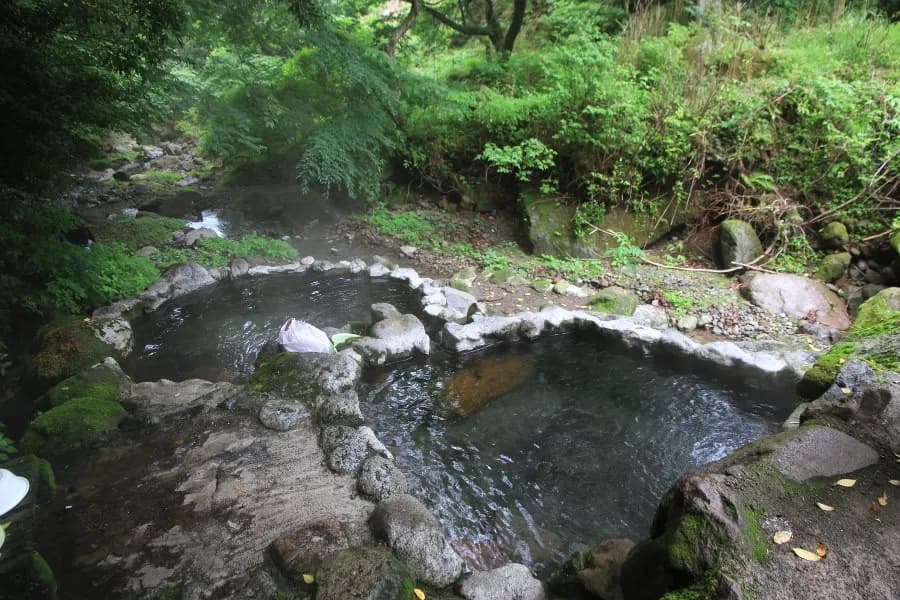
4. Myoban Onsen Hebin-yu 明礬温泉 蛇の湯 (Beppu, Oita)
5. Myoban Onsen Nabeyama-no-yu 明礬温泉 鍋山の湯 (Beppu, Oita)
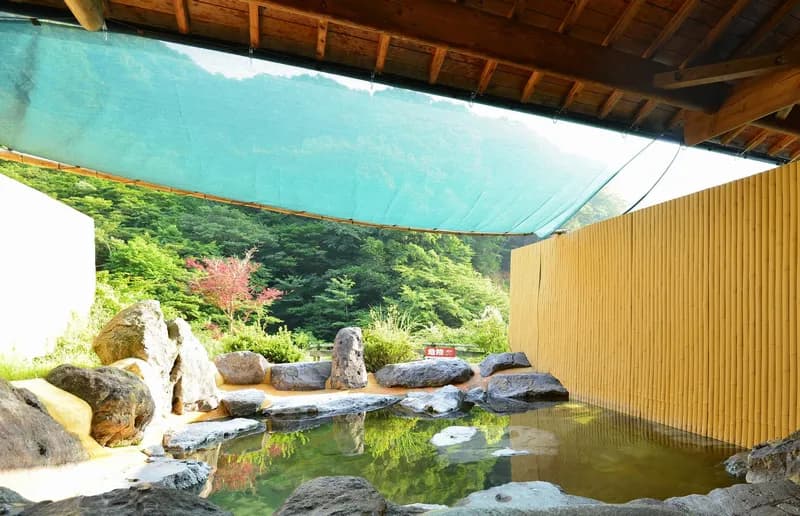
6. Tsukahara Onsen Kako-no-izumi 塚原温泉 火口乃泉 (Yufu, Oita)
| Mon | Tue | Wed | Thu | Fri | Sat | Sun | Hol | |
|---|---|---|---|---|---|---|---|---|
| 09:00 - 18:00 | ◯ | ◯ | ◯ | ◯ | ◯ | ◯ | ◯ | ◯ |
Touring the Hells: Route, Tickets and Parking
The practical details for working through the seven Hells.
The route. Five of the seven—Umi Jigoku, Oniishibozu Jigoku, Kamado Jigoku, Oniyama Jigoku and Shiraike Jigoku—are clustered in the Kannawa area and can be walked in sequence. Starting at Umi Jigoku and continuing through Oniishibozu, Kamado and Oniyama before finishing Kannawa at Shiraike makes for the most natural line. The remaining two, Chinoike Jigoku (Blood Pond Hell) and Tatsumaki Jigoku (Tornado Hell), sit about 3 km away and are best saved for last, reached by bus or car. The official access guide treats the two as a single stop on the route, so they are naturally seen together.
Time needed. Allow roughly 3.5 hours to see all seven, varying with bus waits and your own pace.
Tickets. According to the Beppu Jigoku Association's official site, the combined ticket covering all seven costs 2,400 yen for adults (high school age and up) and 1,200 yen for children (elementary and junior high school) following a revision on 1 February 2025; groups of 20 or more pay 2,000 and 1,000 yen. The ticket is valid for two days—the day of purchase and the following day—so an unfinished tour can carry over to the next morning. The Hells are open 8:00 to 17:00, every day of the year.
Parking. The official site states that each Hell has free parking. Chinoike Jigoku's own site puts its free lot at 150 spaces. Capacity is not published for the others, so allow extra time in peak season.
Getting there by bus. From the west exit of JR Beppu Station, take a Kamenoi bus bound for Kannawa (routes 2, 5, 24 or 41), about 20 minutes, and get off at Umi Jigoku-mae or Kannawa—one minute on foot from there. Chinoike Jigoku and Tatsumaki Jigoku are about 40 minutes and 390 yen from Beppu Station, or about 7 minutes and 140 yen from JR Kamegawa Station, which is the closer starting point.
Fees, hours and parking details reflect information available at the time of research and are subject to revision. Please check the Beppu Jigoku Association's official site before visiting.
Frequently Asked Questions
Q. Can I visit Takegawara Onsen and Kannawa Mushi-yu on a day trip? Yes—both are municipal public baths in Beppu open for day-trip bathing. Takegawara has an indoor bath for a few hundred yen, with its famous sand bath (suna-yu) for a separate fee; Kannawa Mushi-yu is a steam bath where you wear a provided cotton robe and steam in the geothermal vapor. Hours, closing days and fees vary and can change, so check the official information or the Beppu City Tourism Association before you go. Bring your own towel and soap.
Q. Can I combine the Hell Tour with actually bathing? Yes. The Hells such as Umi Jigoku and Chinoike Jigoku are for viewing only and cannot be bathed in, but the Kannawa area where the Hells cluster is packed with public baths, "hell-steam" cooking spots and inns. A common plan is to tour the Hells in the morning and then soak at Kannawa Mushi-yu, a nearby bathhouse or your inn's bath afterward.
Q. What does "Beppu Hatto" refer to? It is the collective name for the eight hot spring districts scattered across Beppu: Beppu, Hamawaki, Kankaiji, Horita, Myoban, Kannawa, Shibaseki and Kamegawa. Their water ranges from chloride springs to acidic sulfur springs, so simply changing districts gives you a full bath-hopping experience.
Q. How much is the Hell Tour and how long does it take? The combined ticket is 2,400 yen for adults, and seeing all seven takes roughly 3.5 hours. The route, parking and bus details are in the section above.
Q. Can I bathe at Myoban's wild baths or Tsukahara Onsen on a day trip? The three free wild baths above Myoban—Tsuru-no-yu, Hebin-yu and Nabeyama-no-yu—are maintained by local volunteers and generally open at any hour. On the slopes of Mt. Garan, Tsukahara Onsen Kako-no-izumi is a staffed day-use facility. All sit up in the hills, where a car is the practical option; see the summary below for what to bring and watch out for at the wild baths.
Summary: Making the Most of Beppu's Waters Alongside Sightseeing
Beppu is a rare hot spring city where you can pair "sightseeing at the Hells" with "bathing at public baths and hidden springs" in a single day. The route, tickets and parking for the Hells are covered in the section above; what follows is about the water.
In-town public baths. The Hells are viewing spots; for bathing, the public baths are the heart of the experience. Takegawara Onsen, founded in 1879, occupies a stately building with a karahafu gabled roof registered as a National Tangible Cultural Property, and is known for the sand bath where attendants cover you in warm sand. Kannawa Mushi-yu, said to have been opened by the monk Ippen in the Kamakura period, is a steam bath where you sweat surrounded by the scent of sekisho leaves laid across the floor. Both can be enjoyed in town from a few hundred yen and make an easy entry point to day-trip bathing. Bring your own towel and soap, and note that hours and closing days differ by facility.
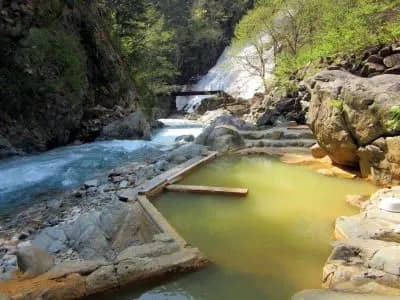
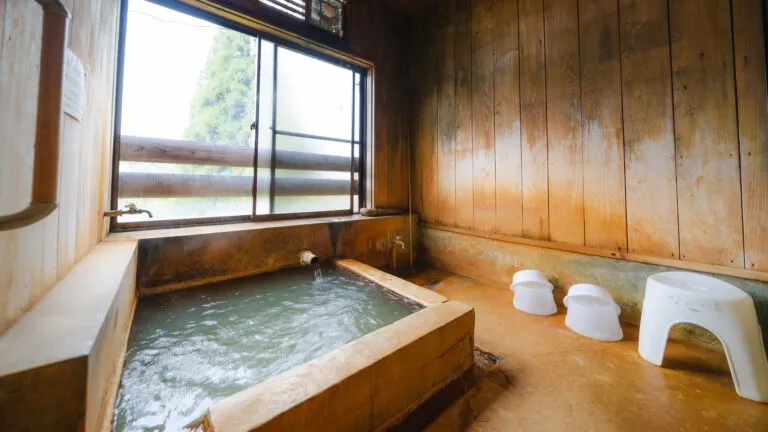
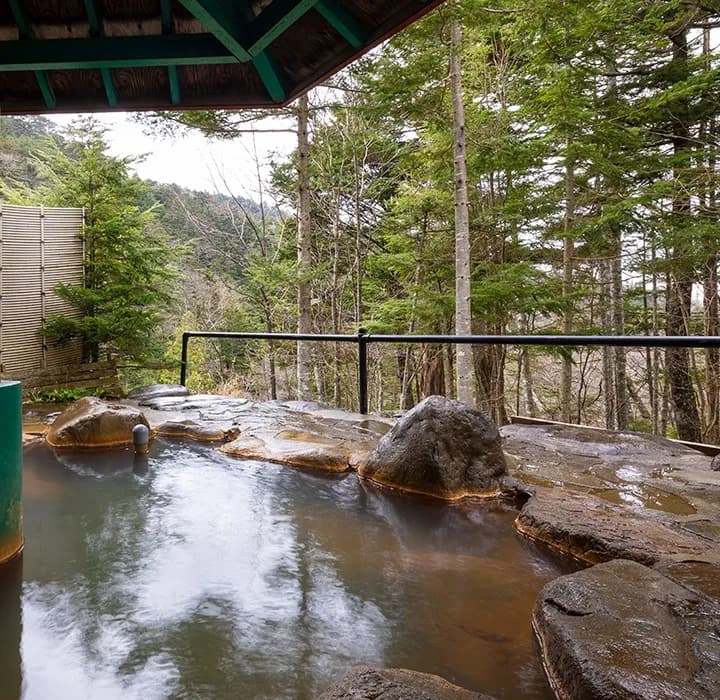
Myoban's three hidden wild baths. Up the hillside from Kannawa, Myoban Onsen is known for its rows of Edo-era "yunohana" (bath-flower) huts—the production technique is a designated Important Intangible Folk Cultural Property. Scattered in the mountains around it are three wild baths called the "Three Hidden Springs of Beppu": Tsuru-no-yu, a sulfur-scented yellowish bath; Hebin-yu, a scenic riverside rock bath fed by a simple spring; and Nabeyama-no-yu, a whitish mud bath ringed by raw, steaming ground. Each differs in both water and scenery. All are free baths maintained by local volunteers with only simple changing facilities, and most are mixed-gender, so women will want a bathing garment. With hot source water and uneven footing, visiting in daylight and wearing sturdy footwear is wise.
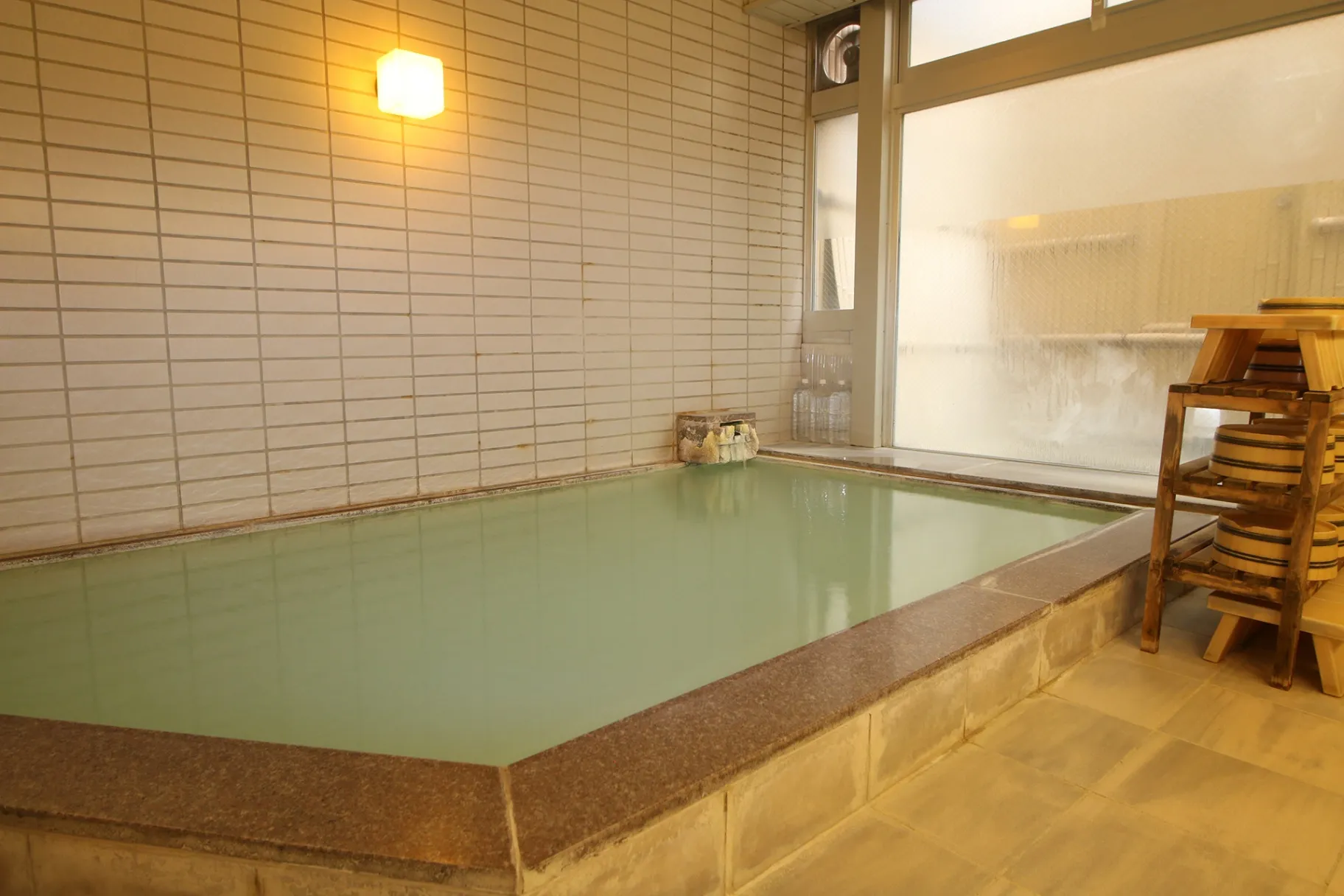
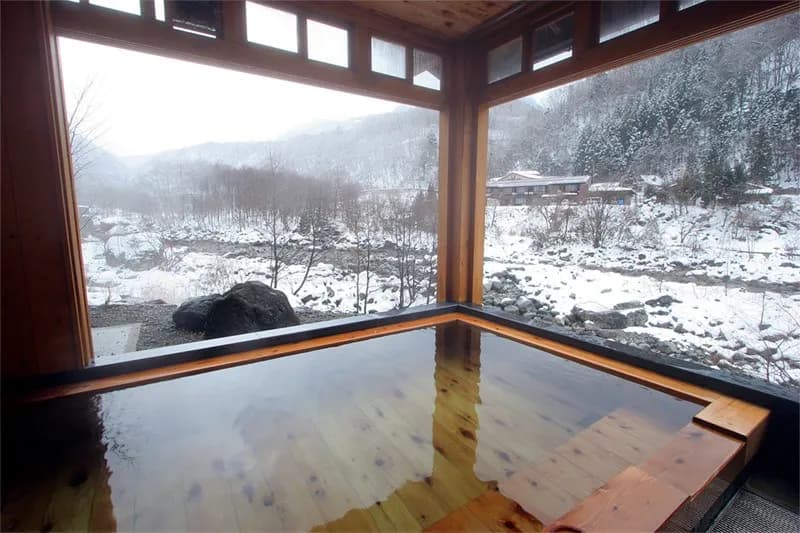
Tsukahara Onsen. On the slopes of Mt. Garan, Tsukahara Onsen Kako-no-izumi is one of Japan's most strongly acidic springs, with a pH said to be around 1.4. Rich in iron and aluminum, its water takes on a yellow-green tint on contact with the air and is sharp enough on the skin to feel a distinct sting. It is a staffed day-use facility with indoor, open-air and private baths. Paired with a look at the nearby crater, it lets you feel the raw volcanic activity of the Beppu area through both water and landscape.
Building a day. Tour the Hells and try hell-steam cooking in Kannawa in the morning, take an in-town bath at Takegawara or Kannawa Mushi-yu at midday, then head up to Myoban's wild baths or the strongly acidic Tsukahara in the afternoon. Combining viewing and bathing this way lets you experience the full range of the Beppu Hatto's water quality in a single day. The in-town public baths are easy to reach on foot or by bus, while the hillside wild baths of Myoban and Tsukahara are more practical by car. Rather than treating the Hell Tour or the bathhouses in isolation, savoring the difference between town and mountain waters is the way to appreciate Beppu deeply.
The information in this article (bathing fees, opening hours, water-quality data, ticket prices, etc.) is based on details available at the time of research and may contain errors or have since changed. Please confirm the latest information with each facility, the Hell Tour association and the Beppu City Tourism Association.